- Publisher(s) : Matagot, Kolossal Games
- Deisgner(s) : Dmitry Knorre, Sergey Machin
- Artist(s) : Alexandra Karenskaya, Maria Efremova
- Players : 2–4
- Playing time : 30–60 Min
- Weight BGG : 2.33
What's this?
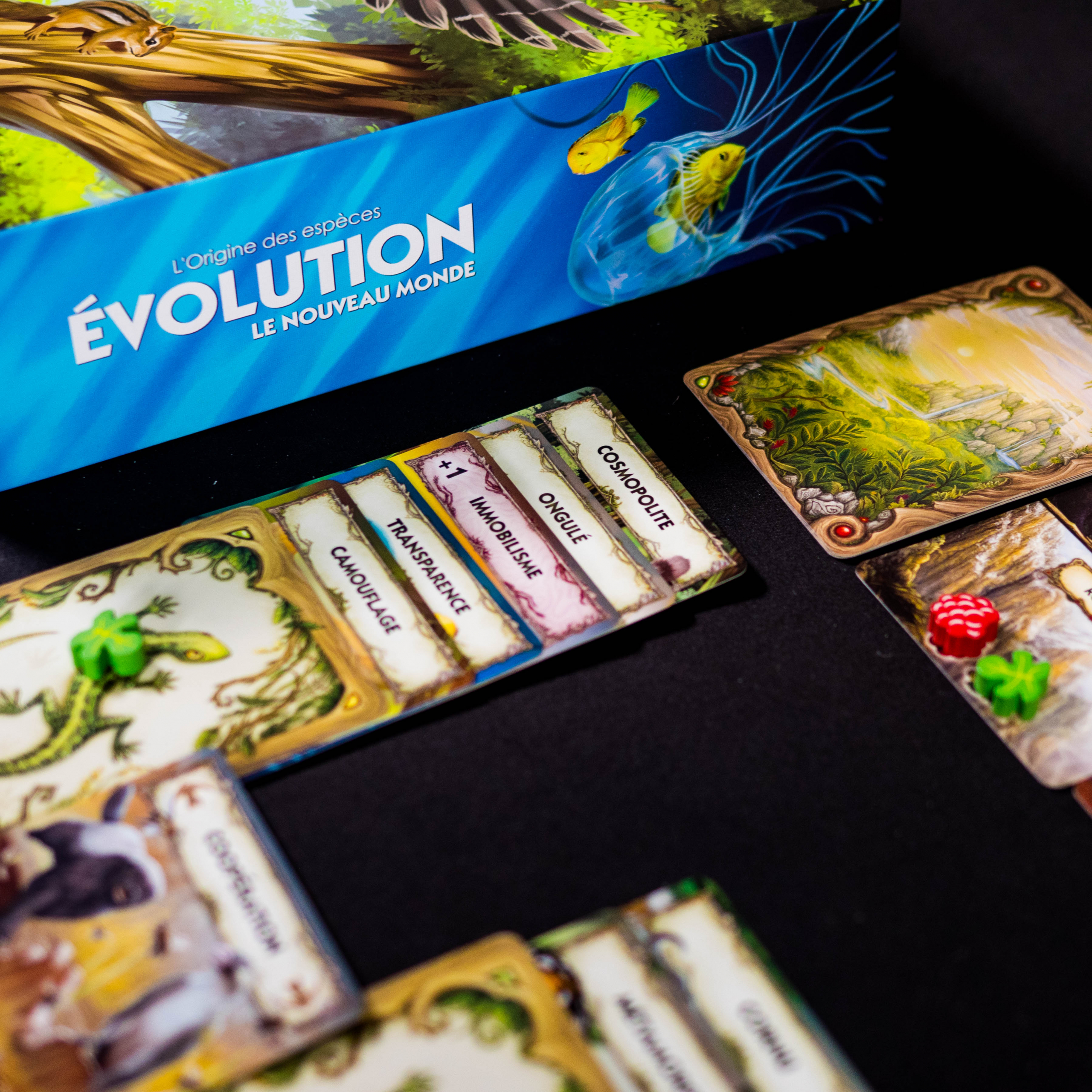
Evolution: New World is an evolutionary card game in which you embody the forces of nature, shaping animal species capable of surviving in a constantly changing ecosystem. Each player creates their own animals, assigns them genetic traits, and attempts to make them survive, thrive, and thrive through six Eras.
How do you play?
A game lasts 6 Epochs . Each Epoch consists of 4 successive phases : Development , Zones , Feeding , and Extinction .
1. Development Phase
Players take turns playing an Evolution card from their hand, to:
-
Create a new animal (card placed face down, without line),
-
Add a trait to an existing animal (card placed face up).
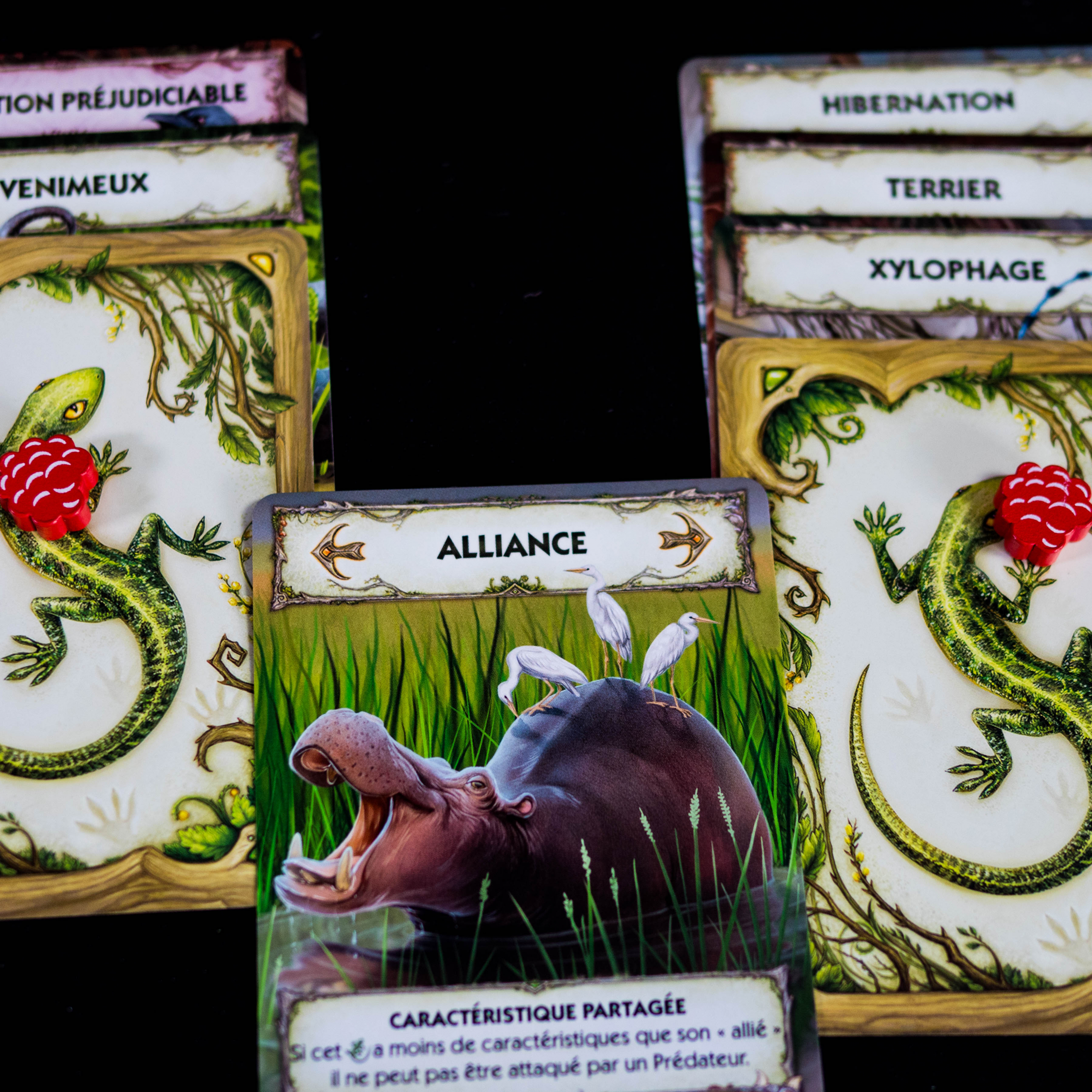
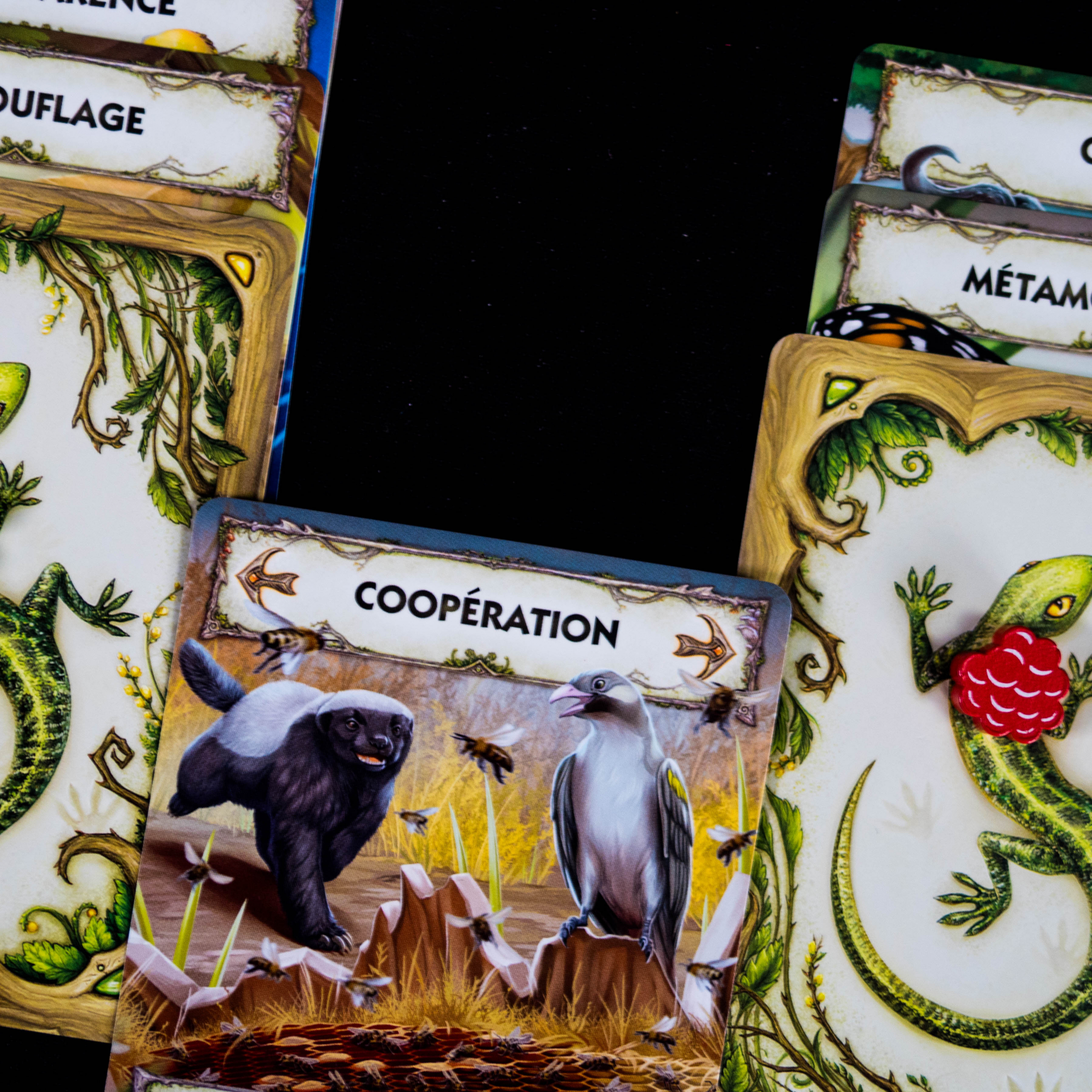
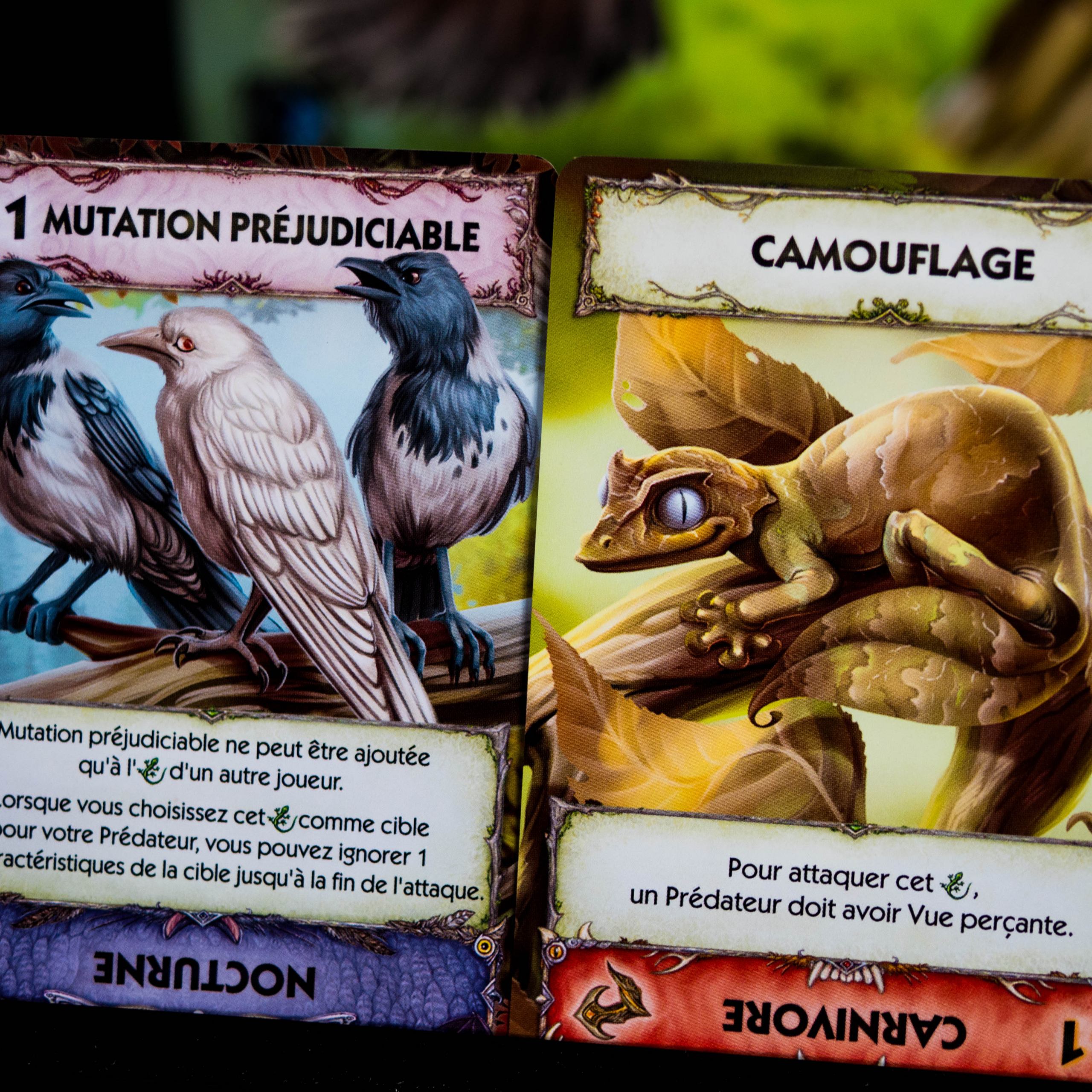
Traits allow animals to adapt to their environment, attack, store fat, cooperate, flee, etc. Some traits are paired ( linked to two animals), others are negative (added to opponents to handicap them, such as parasites or mutations).
2. Zone Phase
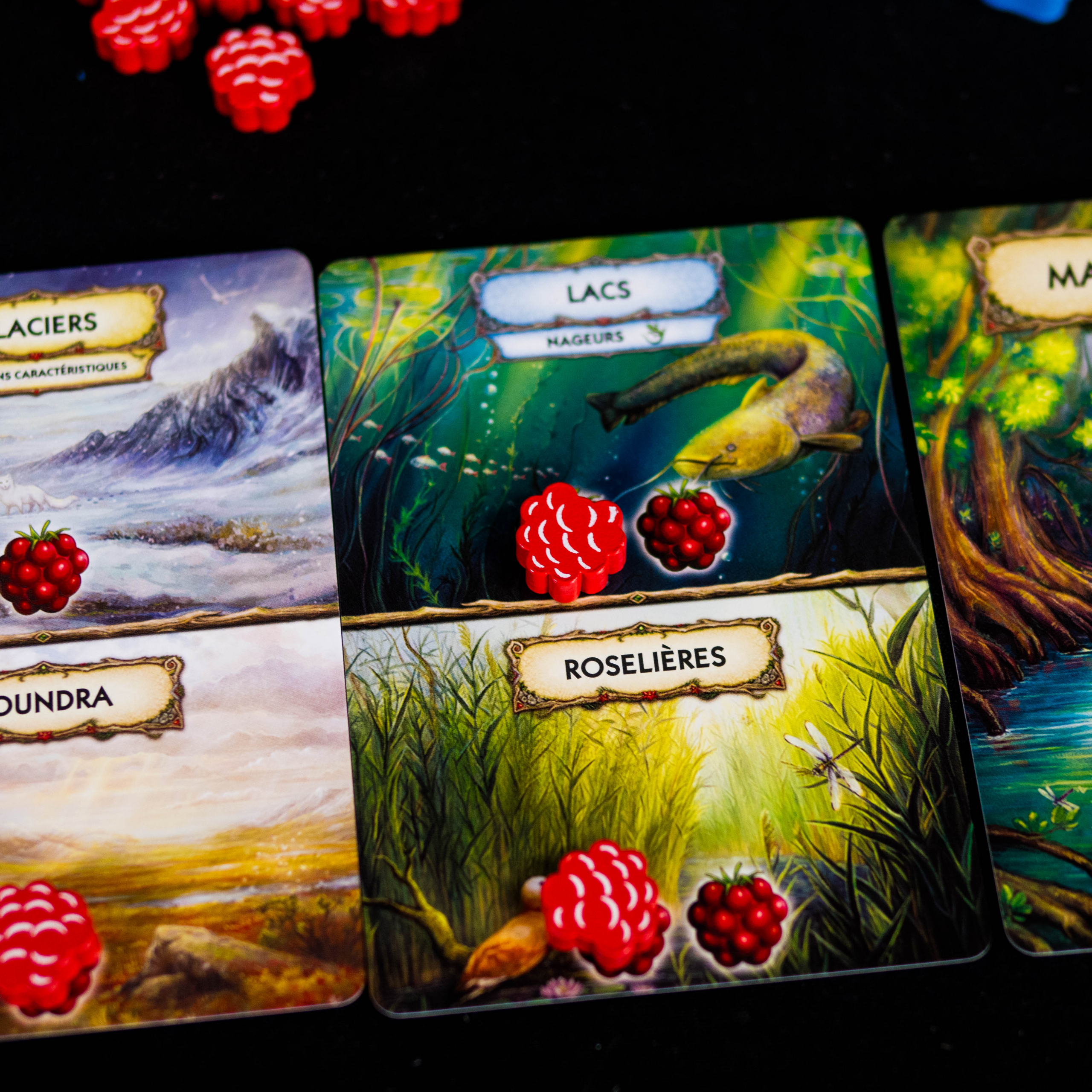
A new Zone card is revealed, providing food and shelter. These cards form the environment in which animals will attempt to forage. Some areas (such as lakes or glaciers) require specific traits to access.
3. Feeding phase
This is the crucial phase: each player must feed their hungry animals by:
-
Looking for food in an accessible area,
-
Taking shelter , which protects from predators,
-
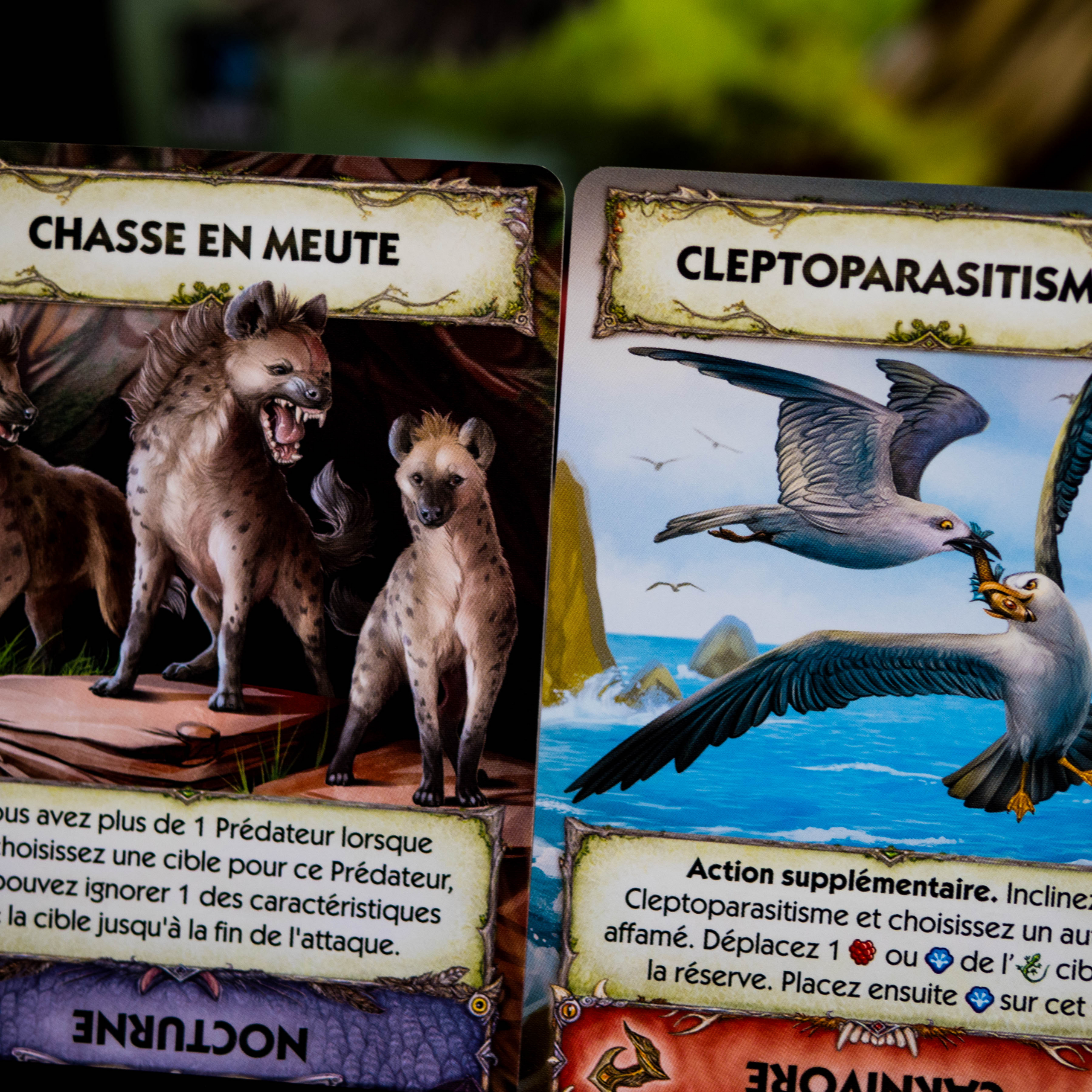
Attacking with a predator (if the animal has the “Carnivore” trait).
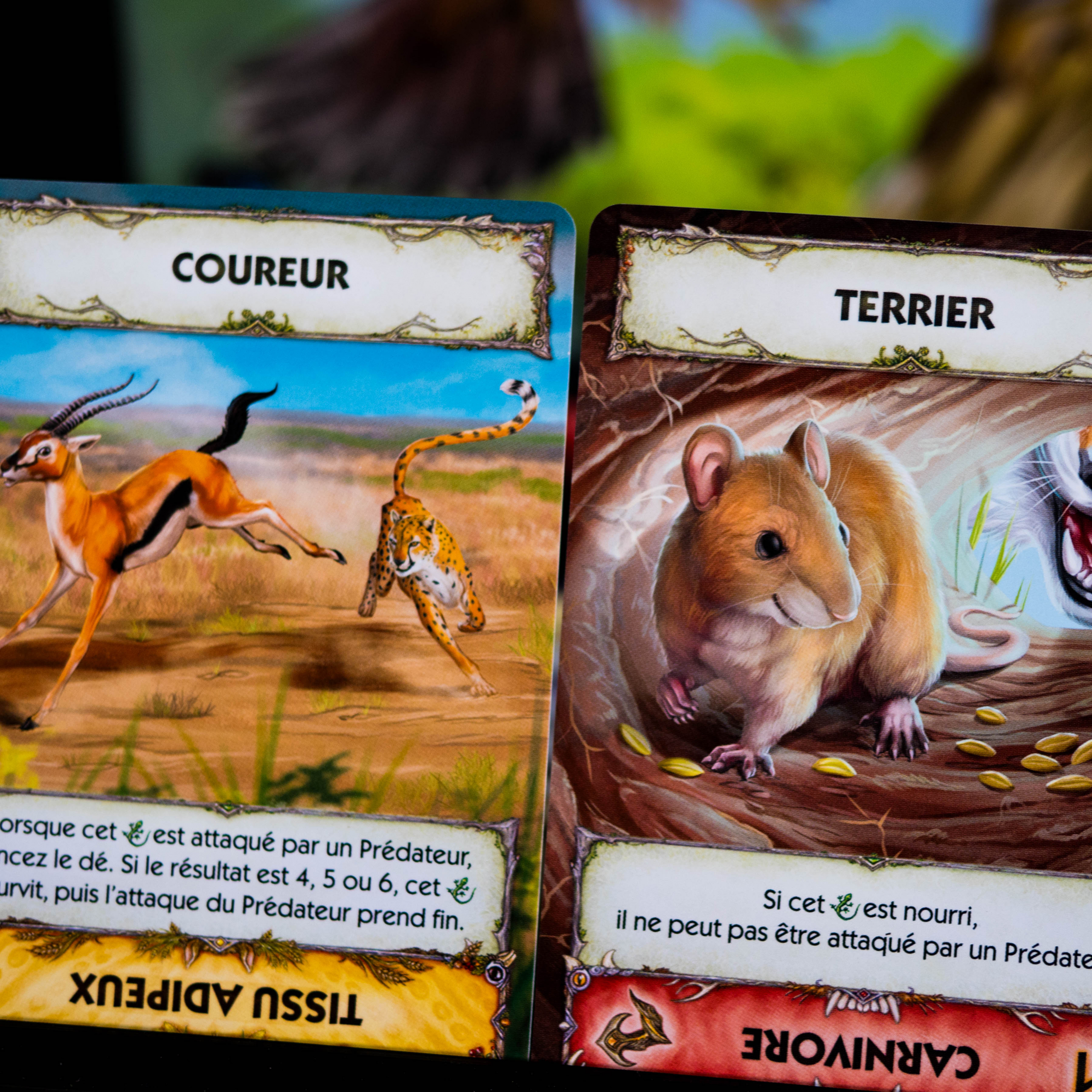
Traits like “Cooperation,” “Communication,” “Running,” and “Adipose Tissue” are automatically activated to provide advantages when feeding. The strategy is to feed your animals efficiently while preventing others from doing so.
4. Extinction Phase
Starving animals die unless they possess traits that allow them to survive (hibernation, stored fat, etc.). The cards are then reset for the new Era. Each player draws a number of cards equal to their surviving animals + 2, up to a maximum of 6 cards in hand.
End of game
At the end of the 6th Era, the points are counted:
-
+3 points per surviving animal,
-
+1 point per trait (even negatives added by other players),
Is it good?
Evolution: The New World is a card game offering original, strategic and highly interactive mechanics.
Players must anticipate each other’s actions and species, and adapt their animals to changes in the environment, food availability, and threats from opposing predators.
Every decision matters, whether it’s playing a card, attacking a creature, or recovering a resource.
It’s often a matter of timing and adaptation , depending on the intentions of the other players. There’s even a “mind game” dimension, where you bluff through attack or protection cards.
Should you attack? Hide? Cooperate?
The feeding phase reinforces this tension: you have to choose the right moment to take food from an area… or to strike an opponent at the right time.
The theme is very well integrated into the trait cards, whose effects are both coherent and intuitive. The rules are clear but relatively dense : the first game will take a little time to fully grasp all the subtleties of the many traits.
The wide variety of evolution cards guarantees excellent replayability: each game is different depending on the draws and trait strategies chosen.
Note, however, a possible “snowball” effect: a player who develops powerful predators early can dominate if their opponents don’t draw the right defensive traits in time. As in any card game, a degree of chance in the draw can influence the game.
But Evolution: The New World remains a game highly recommended for fans of interactive and tactical card games, with a strong theme and excellent replayability.
Review Evolution: The New World
Positives
- Strong and well-integrated theme
- Wide variety of maps
- Strong interaction between players
- Bluff and anticipation
- Successful illustrations and ergonomics
Negatives
- Lots of features to learn in the first few games
- Possible “snowball” effect
- Chance of the draw
- Can become punitive