- Designer(s) : Synapses Games
- Auteur(s) : Hisashi Hayashi
- Artiste(s) : The Creation Studio, Adam P. McIver, Ryo Nyamo
- Players : 2–4
- Playing time : 90 Min
- Weight BGG : 3.27
What's this?
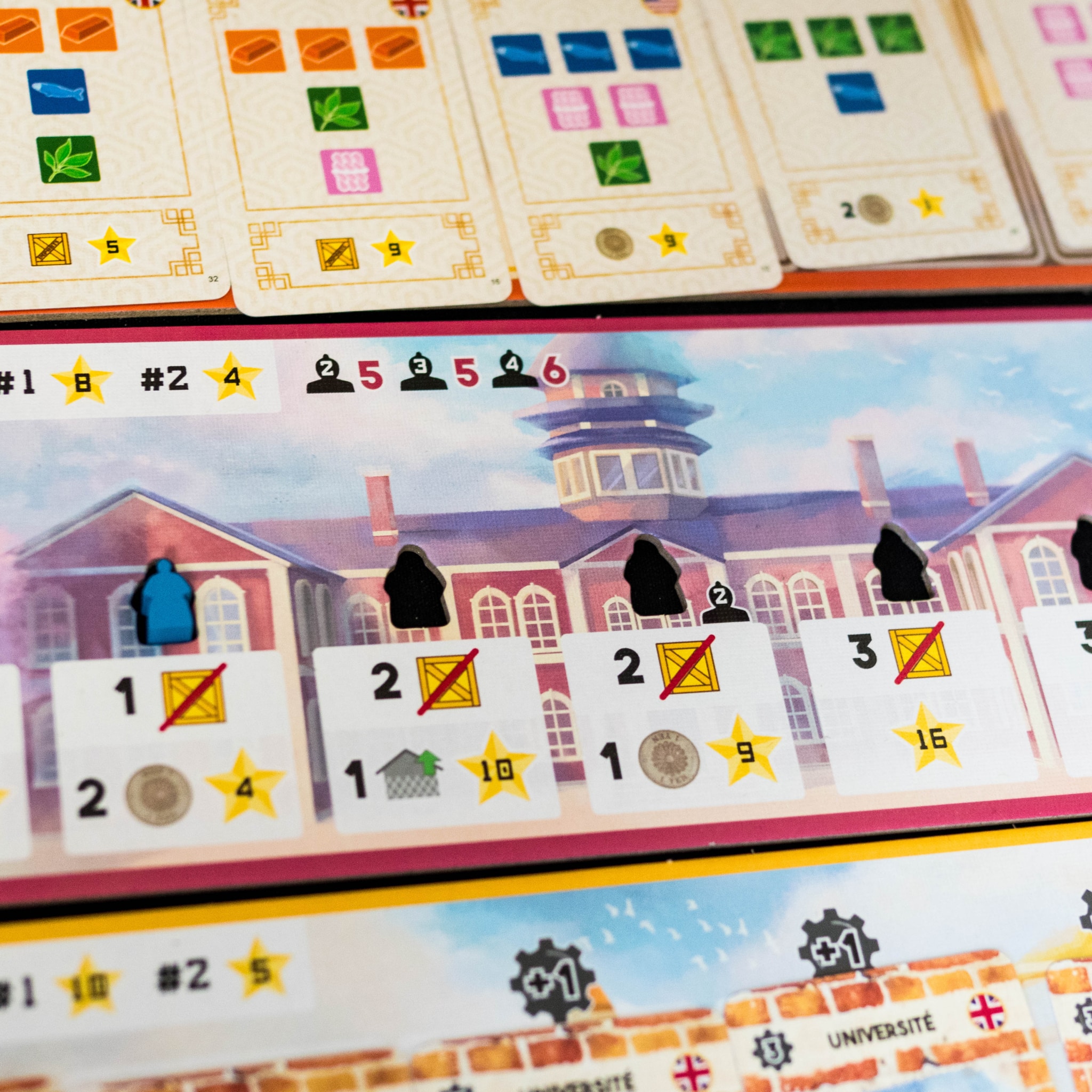
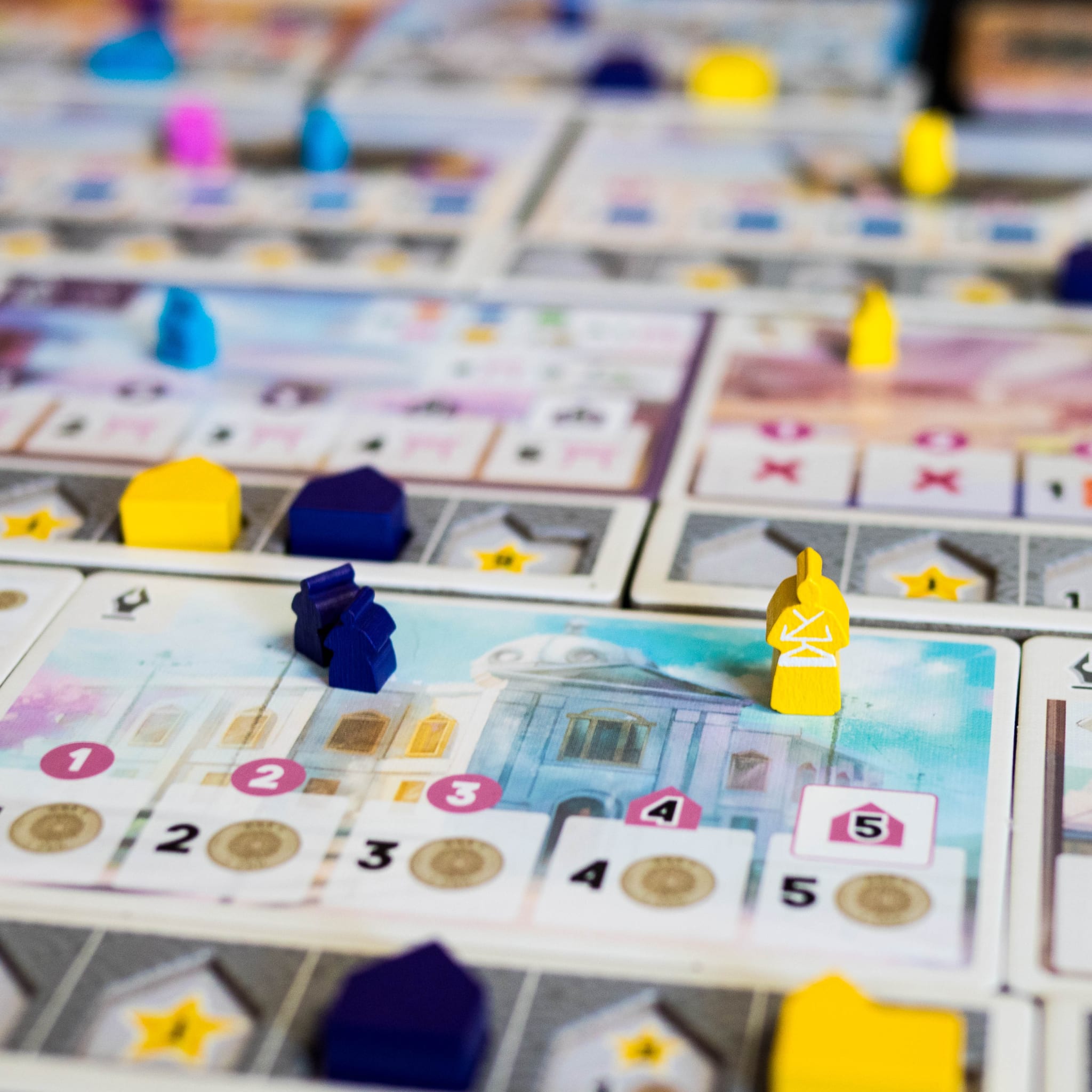
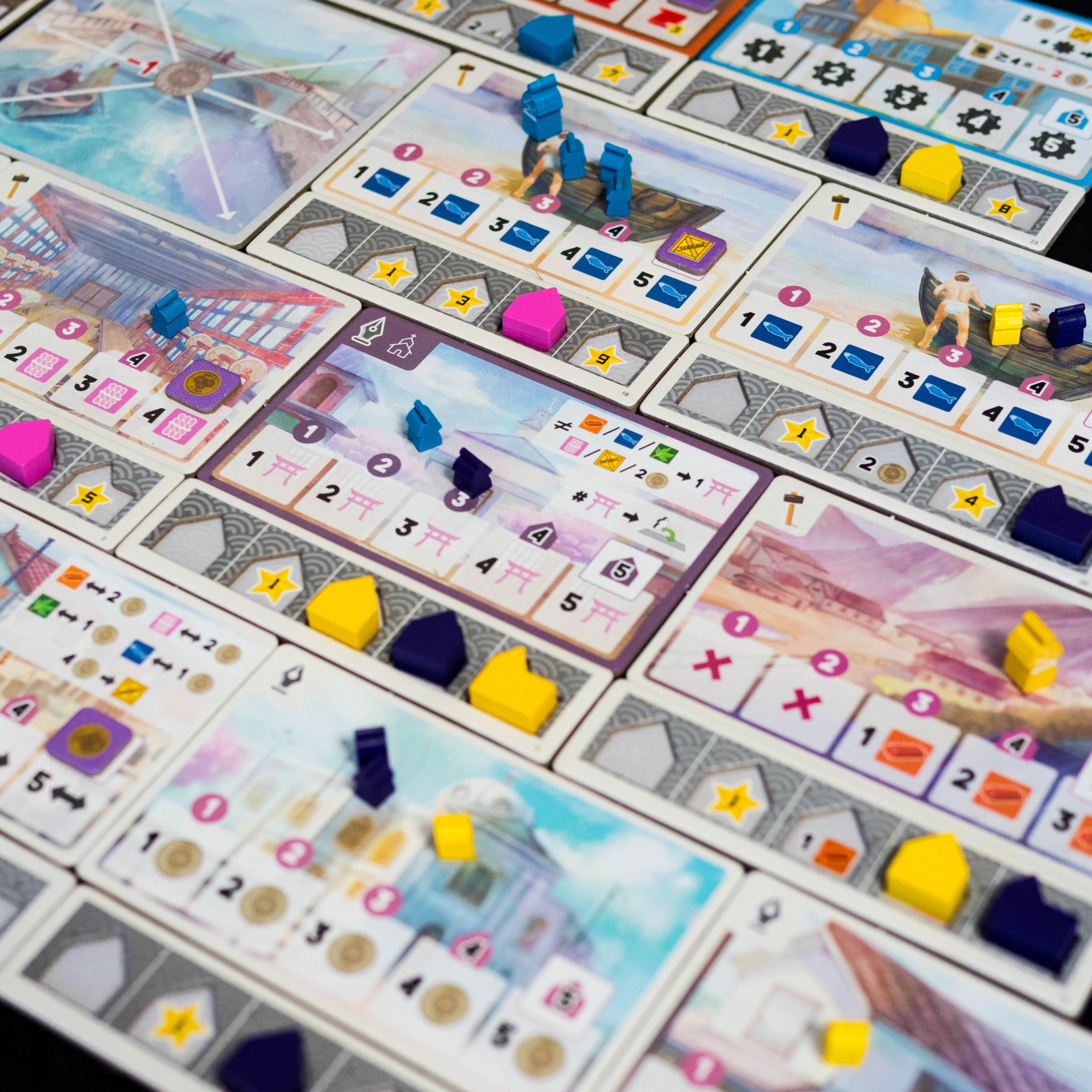
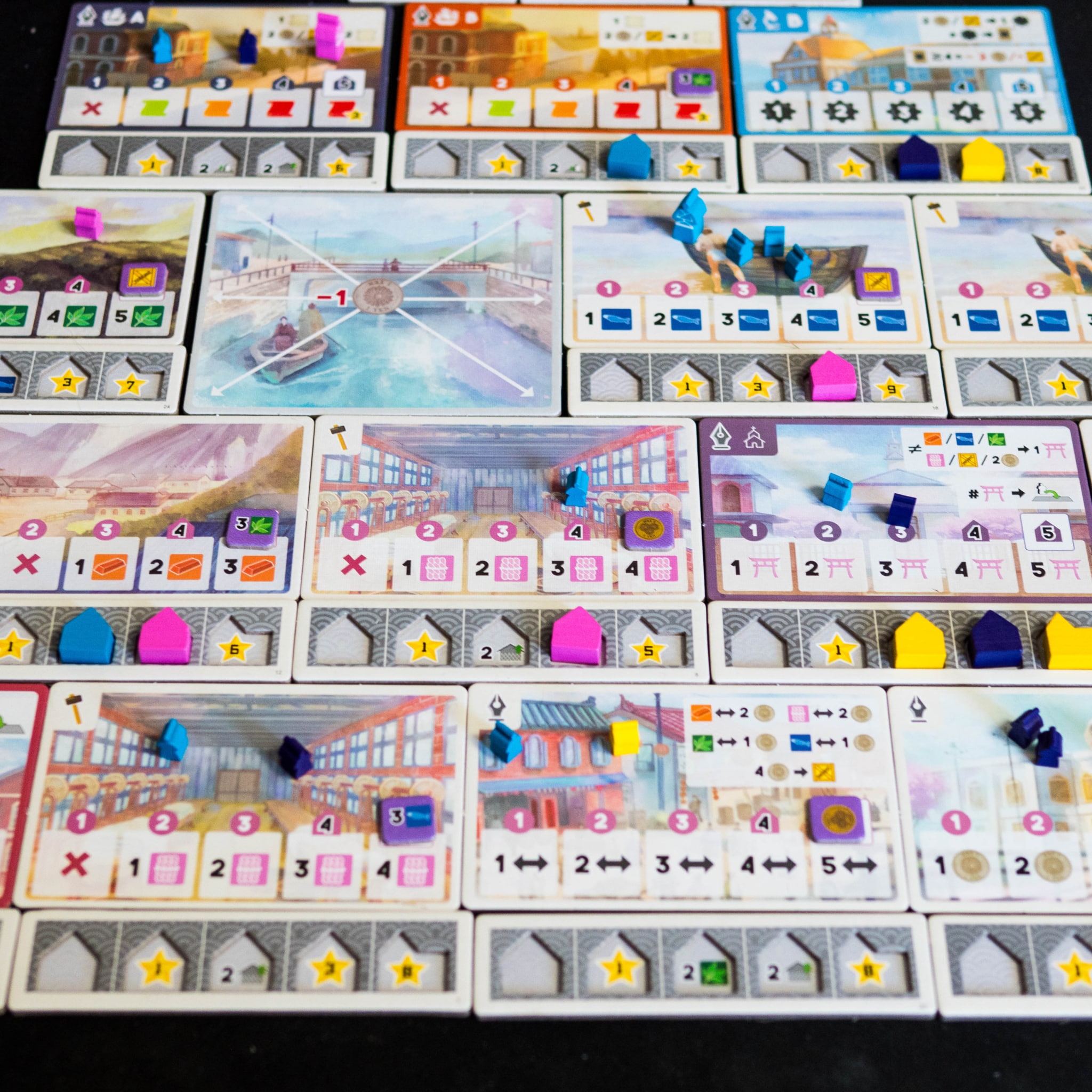
Yokohama is a strategy and management game where placement and movement are central to the mechanics. Each player has a president and numerous assistants whom they will gradually distribute throughout the city’s different districts. The more assistants are concentrated in a district, the greater their power there and the more advantageous their actions become.
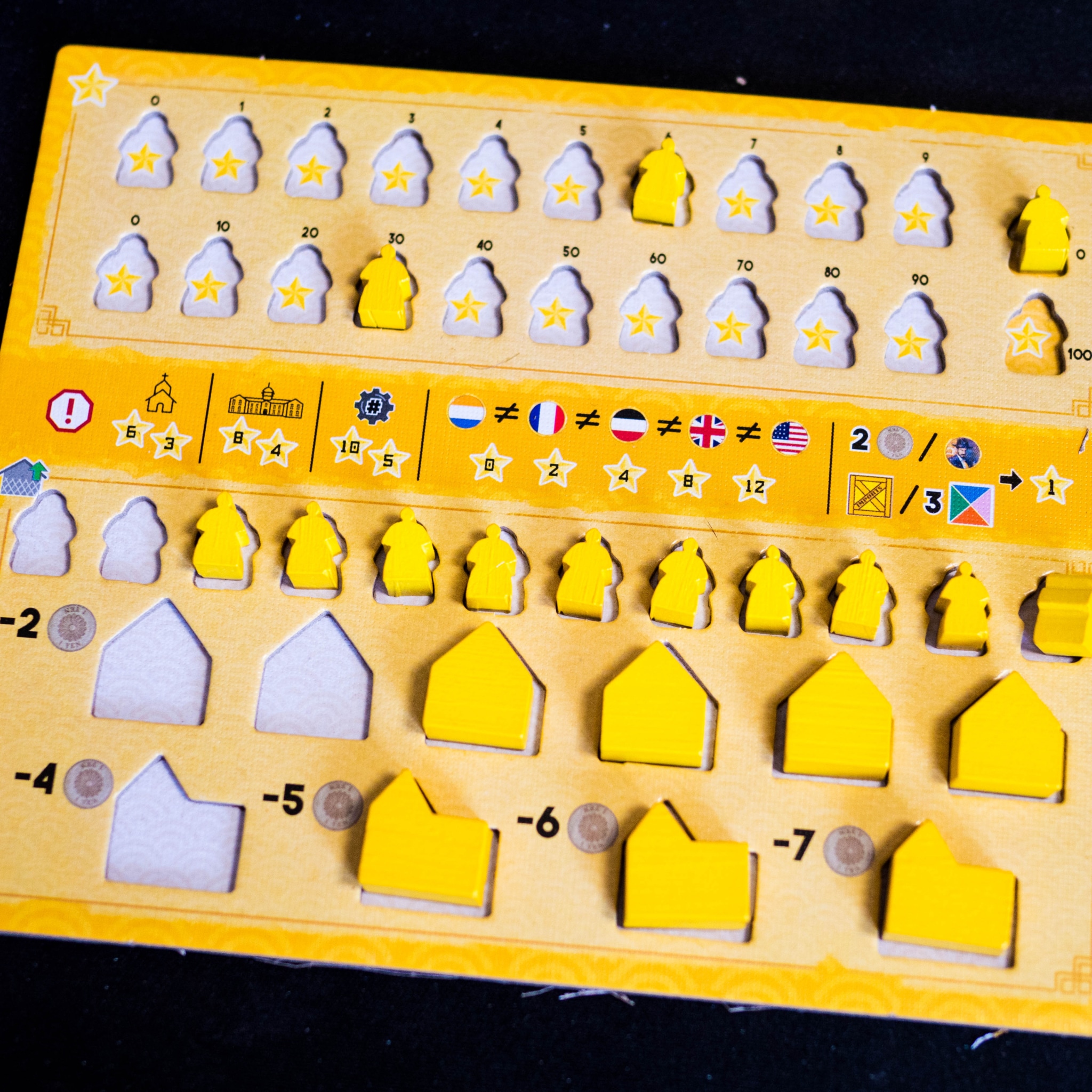
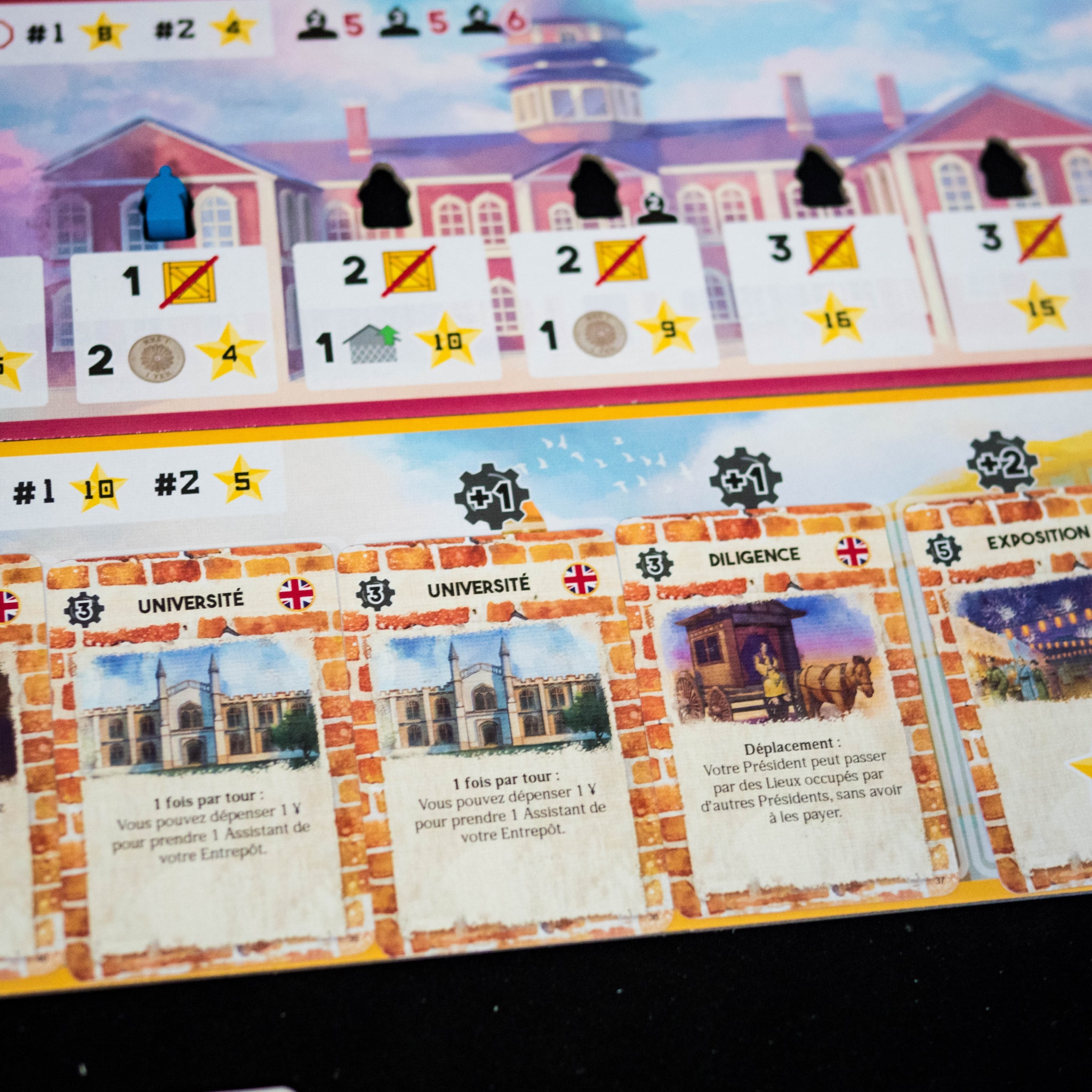
The game also offers several ways to score points: command cards, technologies, Shophouses, Trading Houses, objectives, foreign mercenaries, and end-game bonuses. This multitude of possibilities allows each player to gradually build their own strategy.
How do you play?
Step 1: Placement (Required)
To take action, you must first send your troops into the field! You have two options :
-
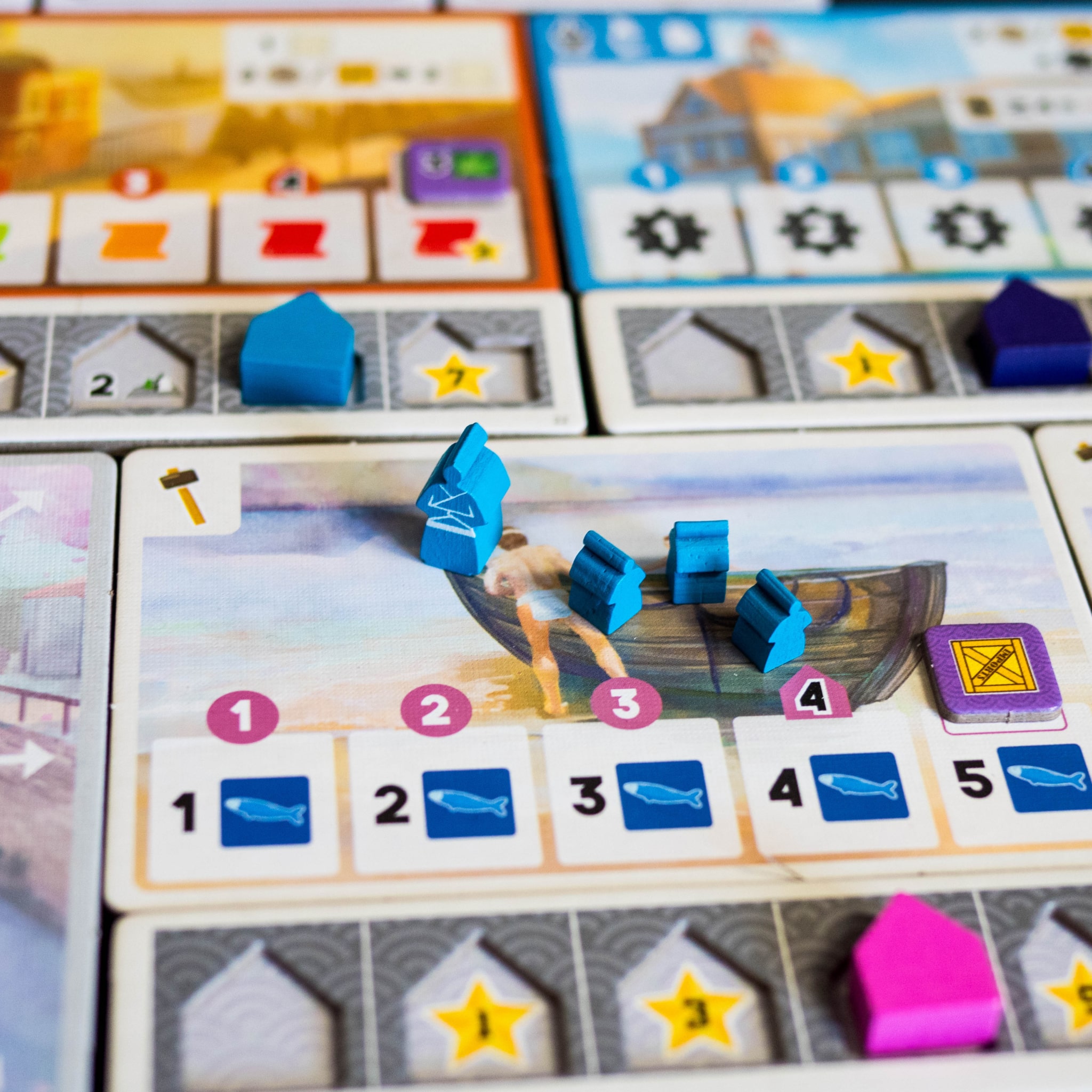
Option A: Place up to 3 Assistants of your hand in 3 different locations .
-
Option B: Place 2 Assistants of your hand in the same location .
Placement rules: You can only place Assistants on unblocked Locations . If an opposing President is present on the targeted Location, you must pay them 1 ¥ per Assistant placed .
Step 2: Travel (Required)
You then move your President figurine :
-
Golden rule of movement: You can cross as many adjacent locations as you want, provided that at least one of your Assistants is already present there !
-
Opponent Blockade: If you cross a Location occupied by an opposing President, you must pay him 1 ¥ .
-
Destination: You must end your movement at a Location containing at least one of your Assistants and no opposing President . (If you cannot or do not wish to move, you can alternatively take control of your President and Assistants and proceed directly to Phase C ).
Step 3: Action of the Location (Mandatory)
Once you arrive at the location, you calculate your Level of Influence over that Place :
-
Each Assistant present = +1
-
Your President = +1
-
A shop in your color = +1
-
A trading house = +1
Step 4: Level 5 Token Bonus (If possible)
If you have reached an influence level of 5, you can collect the Level 5 token.
Step 5: Building a Shop or Trading House (Optional)
If your action was level 4 or higher , you have the right to build an infrastructure of your own making on the Location :
-
Shop: Provides permanent control, 1 influence and unlocks bonuses .
-
Trading House: Only one per tile ! In addition to giving you 1 influence , it earns you 1 ¥ each time an opponent performs an action on this Location .
Step 6: Assistants’ Recall (Mandatory)
After performing the action of the Location, you regain control of all your Assistants who were on that tile .
2. Secondary Action Phases (Phase A and Phase C)
At the beginning or end of your turn, you can perform several opportunity actions for free :
-
Call upon a Foreign Trader (1x per turn): Discard an unlocked Trader token to perform the action of a Location where you have Assistants, even if your President is not there !
-
Validate Tiles Objective: Place an Assistant on a common objective whose conditions you fulfill to score immediate victory points .
-
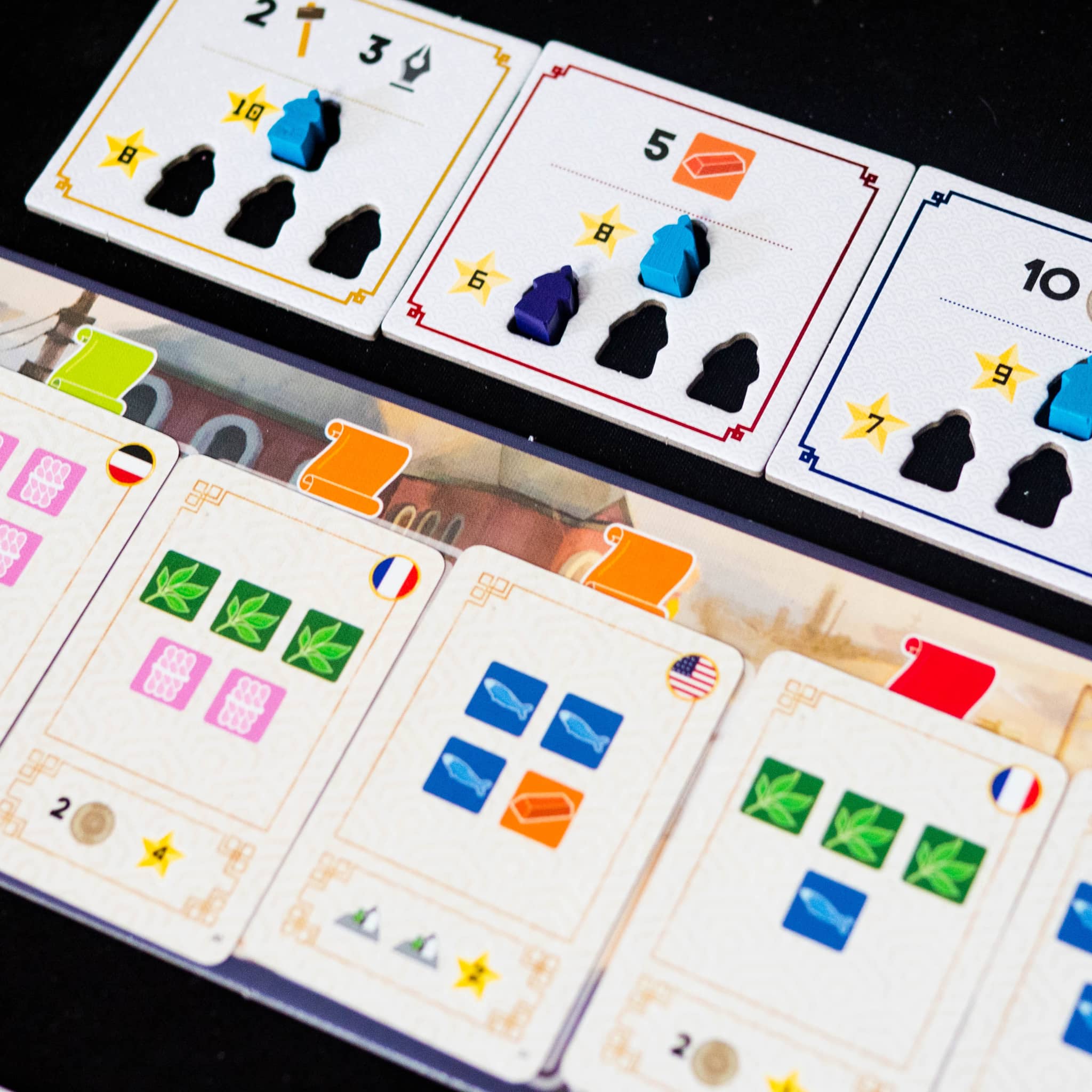
Validate Order Cards: Pay the resources required by your customer orders to earn rewards (points, yen, infrastructure) and collect valuable flag icons .
3. End of Game and Final Scoring
The game ends when one of the following conditions is met by a player :
-
A player places their 8th Shop or their 4th Trading House .
-
The Command card deck can no longer replenish the Port .
-
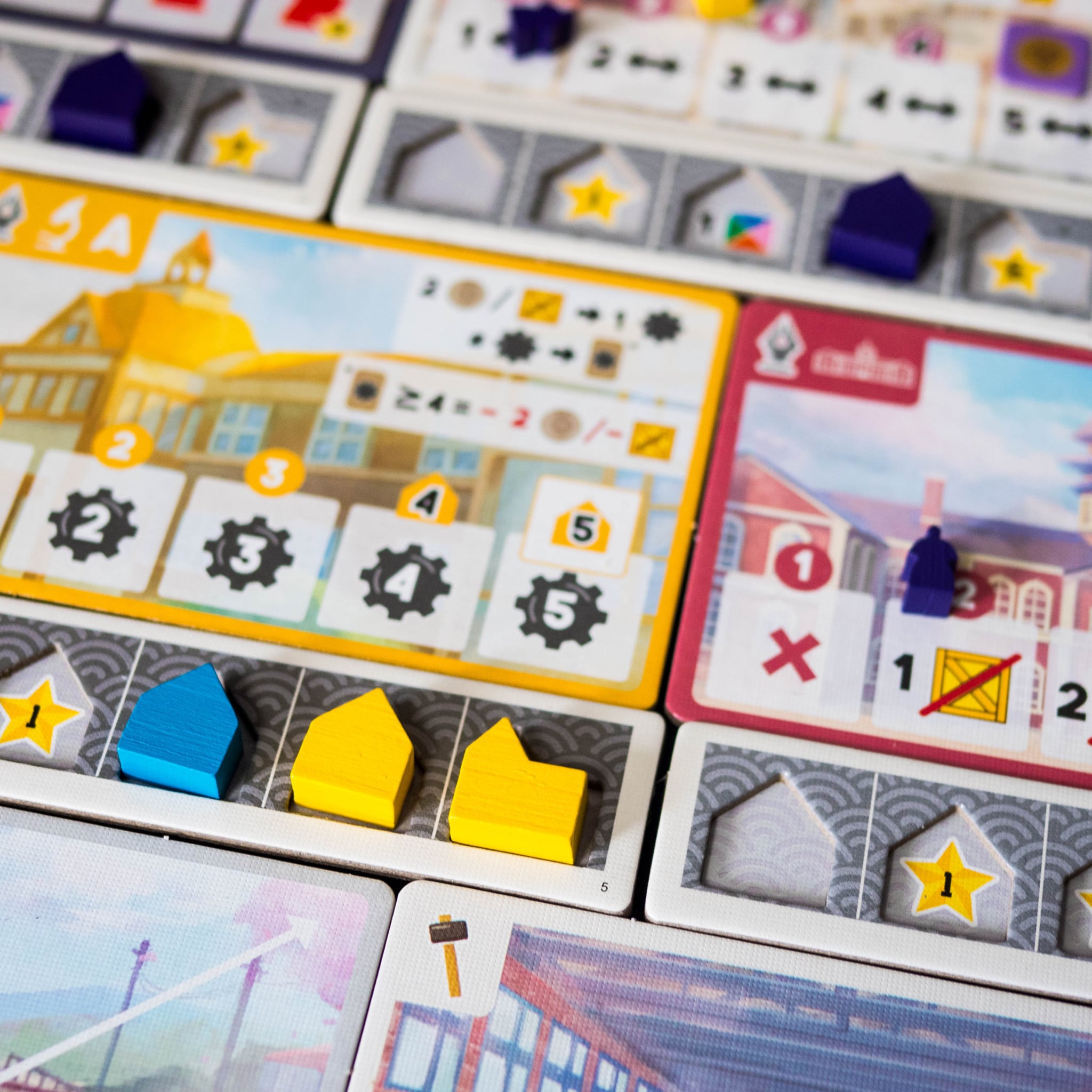
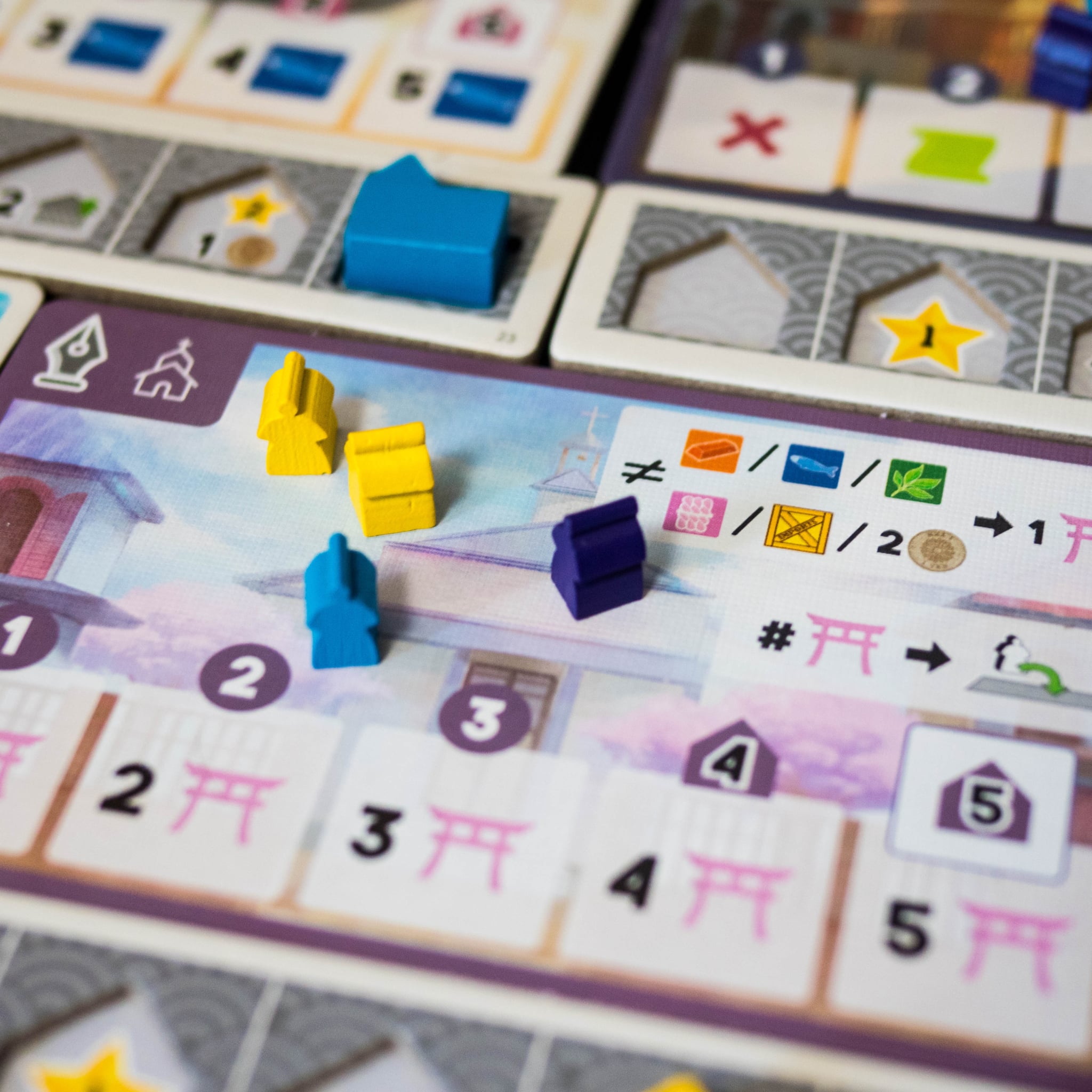
The Church or Customs Office level contains a required number of Assistants .
Is it good?
A particularly clever placement game
Yokohama ‘s greatest strength lies in its assistant movement and placement system. Unlike traditional worker placement, here you must plan and optimize your placements to build an efficient network of assistants around your president. This mechanic is extremely satisfying: you need to know where to place your assistants, thinking several moves ahead, and above all, how to move your president around without losing too much money along the way. This system also creates genuine interaction between players, with obstacles and forced payments.
Many paths to the points
Another strength is its replayability and modularity. Since the board is made up of modular tiles, the city’s geography changes completely with each setup. There’s also a wide variety of scoring opportunities: you can focus on commands, develop your technologies, build in specific areas, aim for majorities on the management boards (Church and Customs), or develop your resource engine. Therefore, there are multiple paths to victory and numerous strategies to explore.
A very satisfactory increase in power
At first, our actions are limited by the few assistants we have, but the more assistants we recruit, the more shops and trading houses we build, the more technologies we obtain, and the more we gradually unlock new possibilities.
The game offers a particularly satisfying engine creation experience . You start with fairly limited possibilities before seeing your network gradually expand. Each new element reinforces the previous ones and allows you to perform increasingly powerful actions.
There are a few flaws nonetheless.
The game offers a huge number of possibilities and requires understanding several systems before you can really see how they fit together. The first part can therefore be quite laborious, especially when you have to discover the different areas and their effects.
The game also requires a great deal of planning and optimization. If you place your assistants haphazardly without having thought things through, you can quickly find yourself stuck or waste turns.
I also have a minor criticism regarding the illustrations in this new edition, which I don’t find particularly attractive, especially when compared to those of another recently re-released Japanese-themed game: IKI , by Sorry We Are French. This is obviously very subjective, but I think Yokohama could have benefited from a more striking art direction.
Verdict
Yokohama is an excellent resource management and placement game that clearly rewards foresight. Its system of assistant networks and presidential movement is particularly well-executed and gives the game a very strong mechanical identity. Even today, few games use a similar mechanic.
The game also offers a good progression. Each assistant placed prepares for a future action, and each building strengthens your presence on the board. Once you understand the core mechanics, the different ways to score points, and how the various tiles work, Yokohama becomes an extremely satisfying game, with numerous strategic possibilities and a real desire to play again.
Yokohama Review
Positives
- Original and very satisfactory placement and movement system
- The importance of anticipation and optimization
- Interaction between players with blocking and payments
- Modular game board and excellent replayability
- Numerous strategies and paths to victory
- Very satisfactory power increase and engine creation
- Numerous strategic possibilities
Negatives
- The first part was quite demanding.
- Many systems to learn
- It requires significant planning to avoid empty runs
- The art direction of this rather unremarkable edition is quite ordinary.