- Publisher(s) : Matagot
- Designer(s) : Pablo Jiménez, Angel Pintero
- Artist(s) : Jun Sato
- Players : 1–4
- Playing time : 30 - 40 Min
- Weight BGG : 2.00
It's what ?
KANO is a visual and tactical strategy and optimization game in which you play as a Japanese artist composing an illustrated scroll ( Emakimono ) . By judiciously selecting your paint pots and respecting the gravity of your painting, you create patterns to accumulate prestige and win the title of best painter of the Kanō school .
How do we play?
Reorganize the paint cans
At the start of your turn, pass the bag of paint pots to the player on your left.
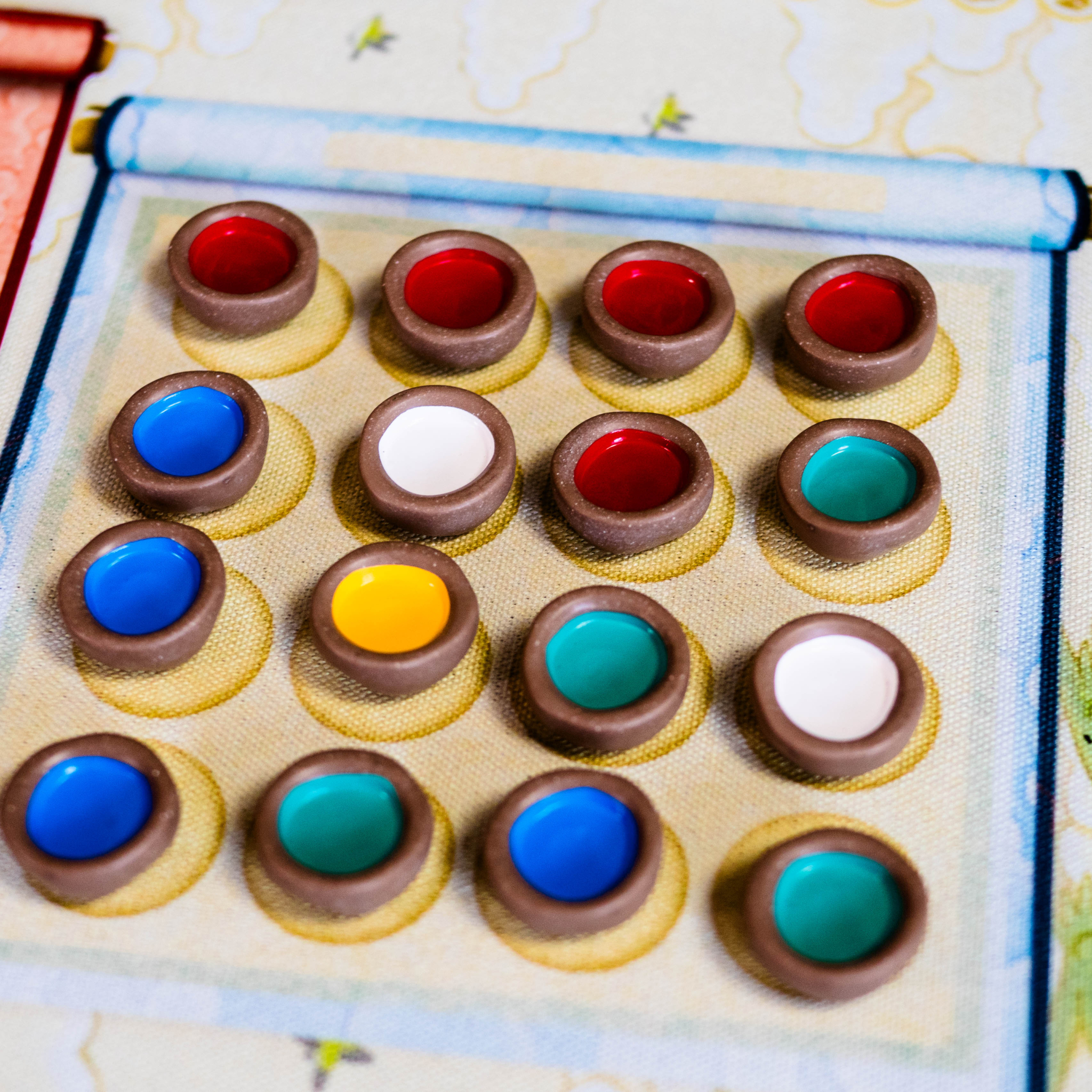
You can then, if you wish, swap two adjacent pots horizontally or vertically on the mat. This optional action allows you to create a more interesting selection and group several pots of the same color.
Collect your paint cans
You must then retrieve at least one pot from the central mat.
You can take several of them provided they are the same color and adjacent in a row or column .
Paint your picture while respecting gravity
Now place all the collected pots on your personal tray.
The pots must always fall into the lowest free space in their column : you cannot therefore leave a gap under a pot.
It is also possible to replace a pot already present on your tray, provided that it is accessible, i.e. that there is no pot above it.
Create your artwork to score points
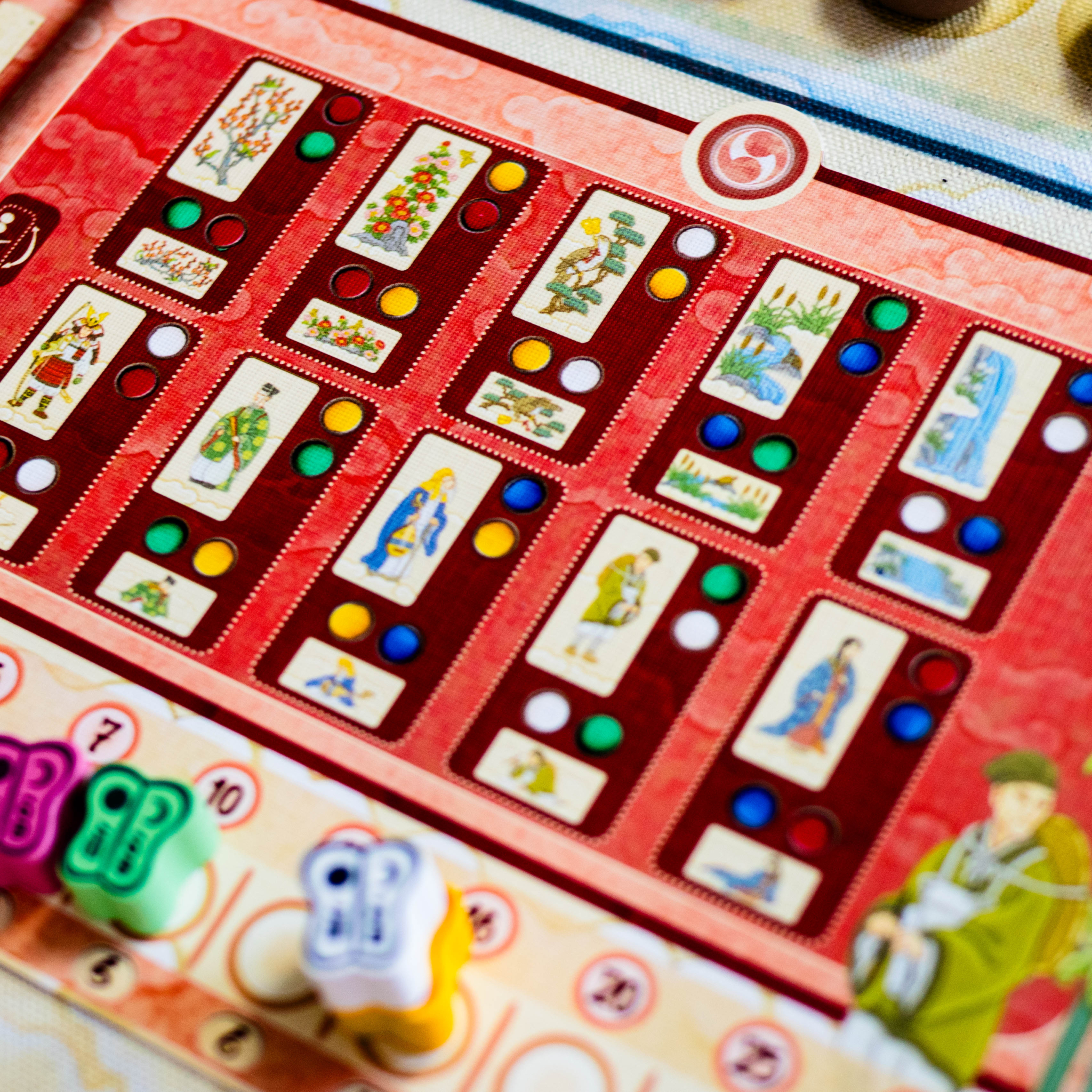
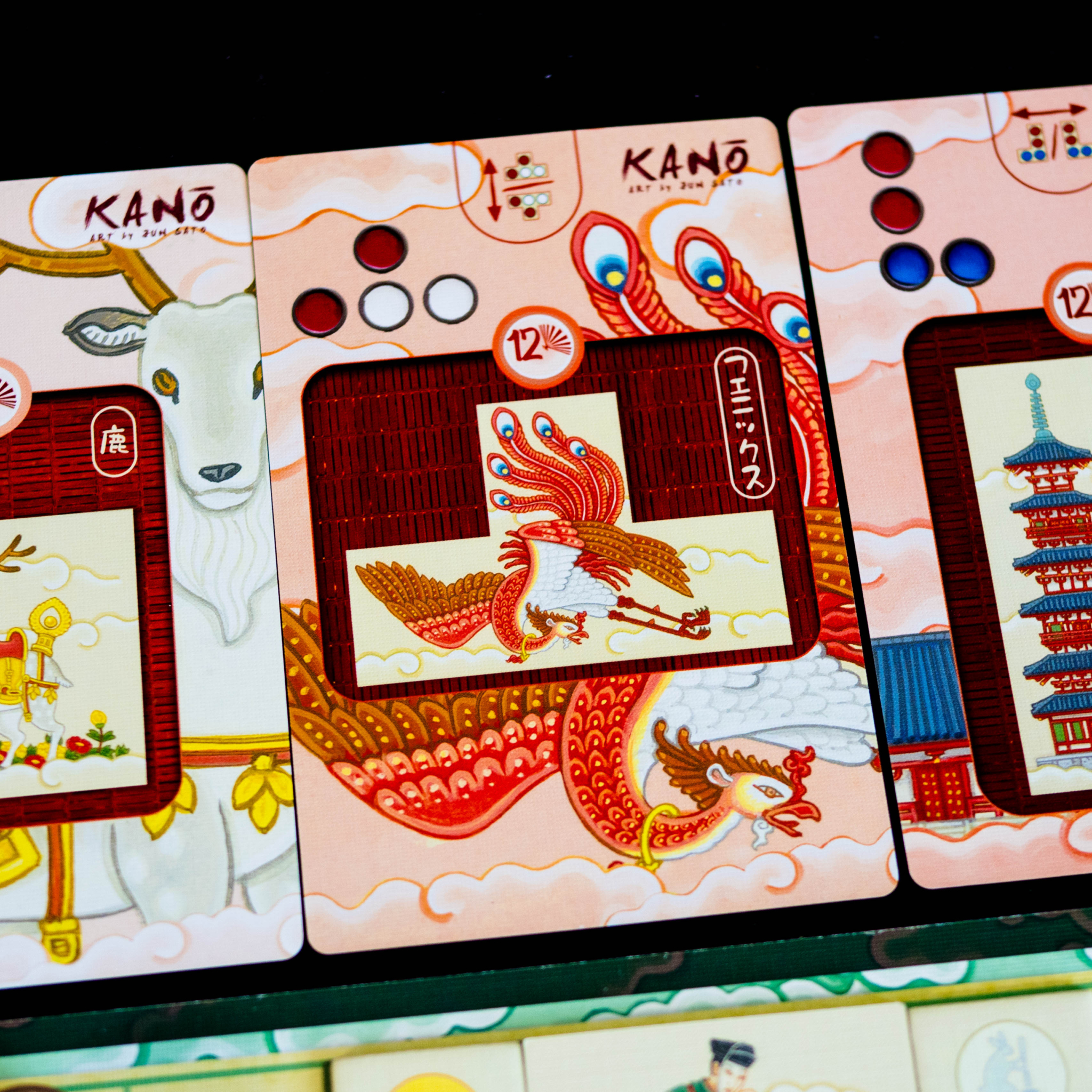
After placing your pots, check if you have created one or more patterns that correspond to the artworks available on your game aid.
To validate a work, the colours must correspond exactly to the indicated pattern.
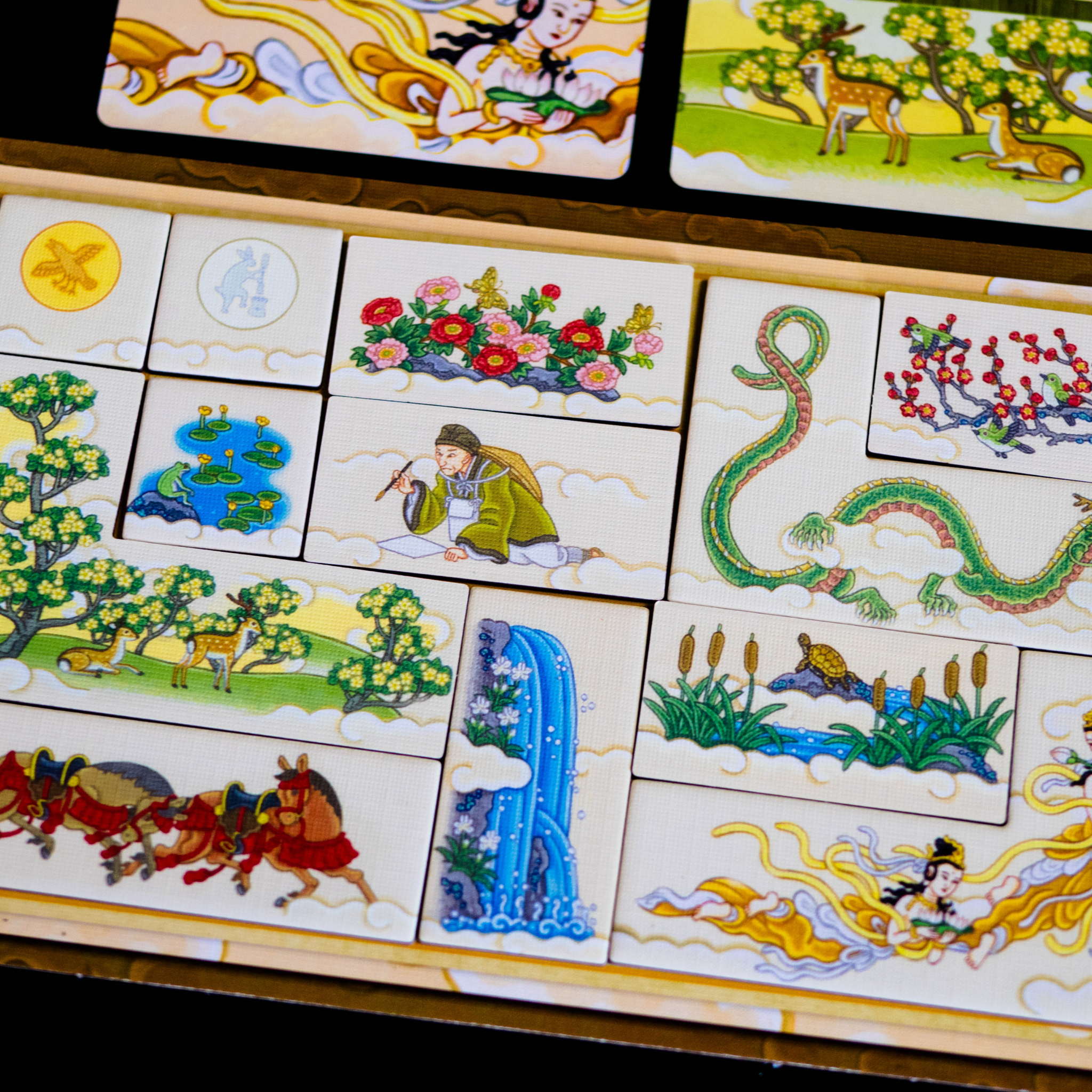
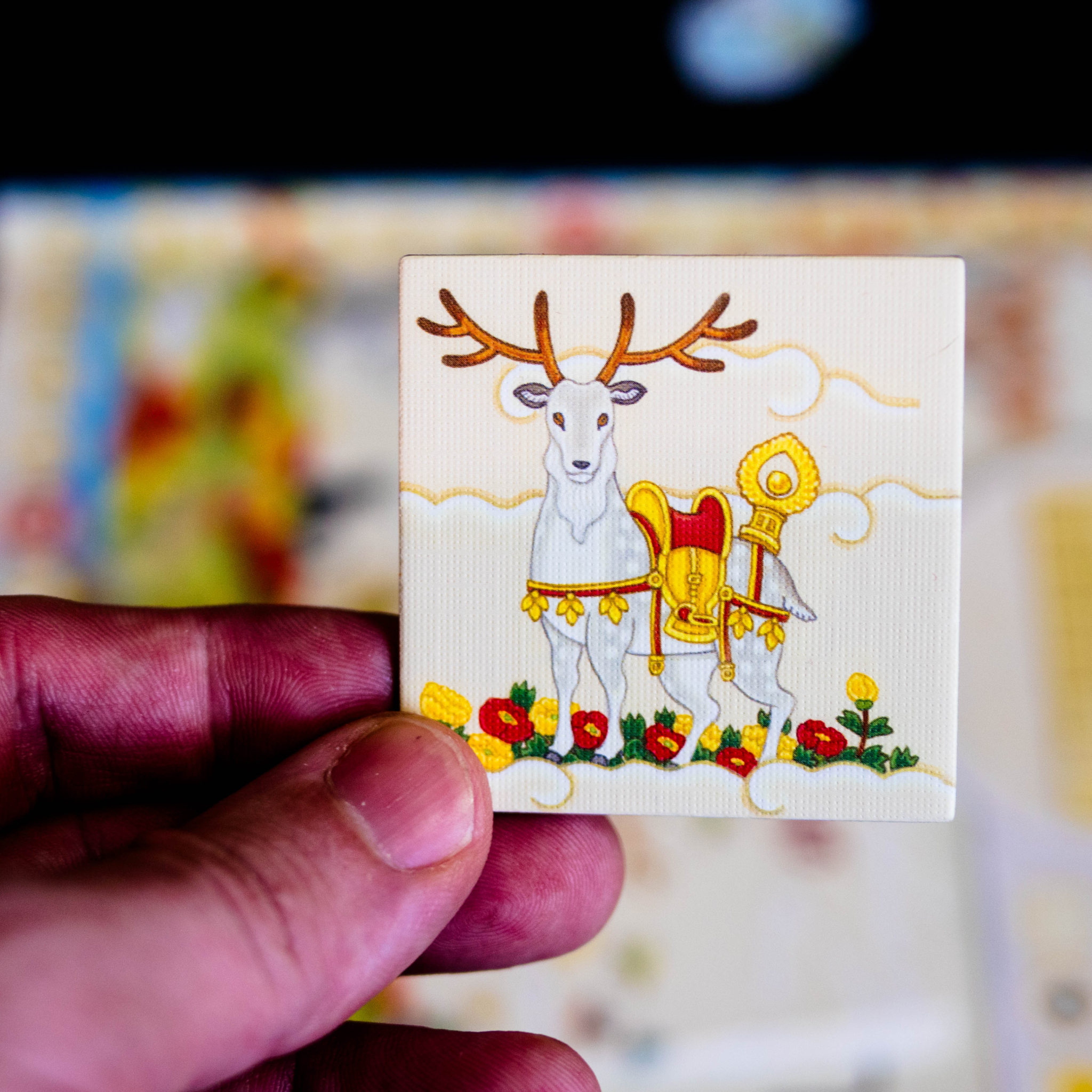
When a piece of art is completed, take the corresponding tile and place it on your board in place of the used pots. The pots are then returned to the bag.
Please note, you are not required to immediately create a design from the available options . You can keep your pots to try creating a different pattern on a future turn.
Manage the remaining pots
At the end of your turn, you cannot keep more than four pots visible on your board.
End of game and scoring
As soon as a player has filled all the spaces on their personal board, they announce the end of the game. The other players then finish their current turn so that everyone has played the same number of turns.
The final tally includes several elements:
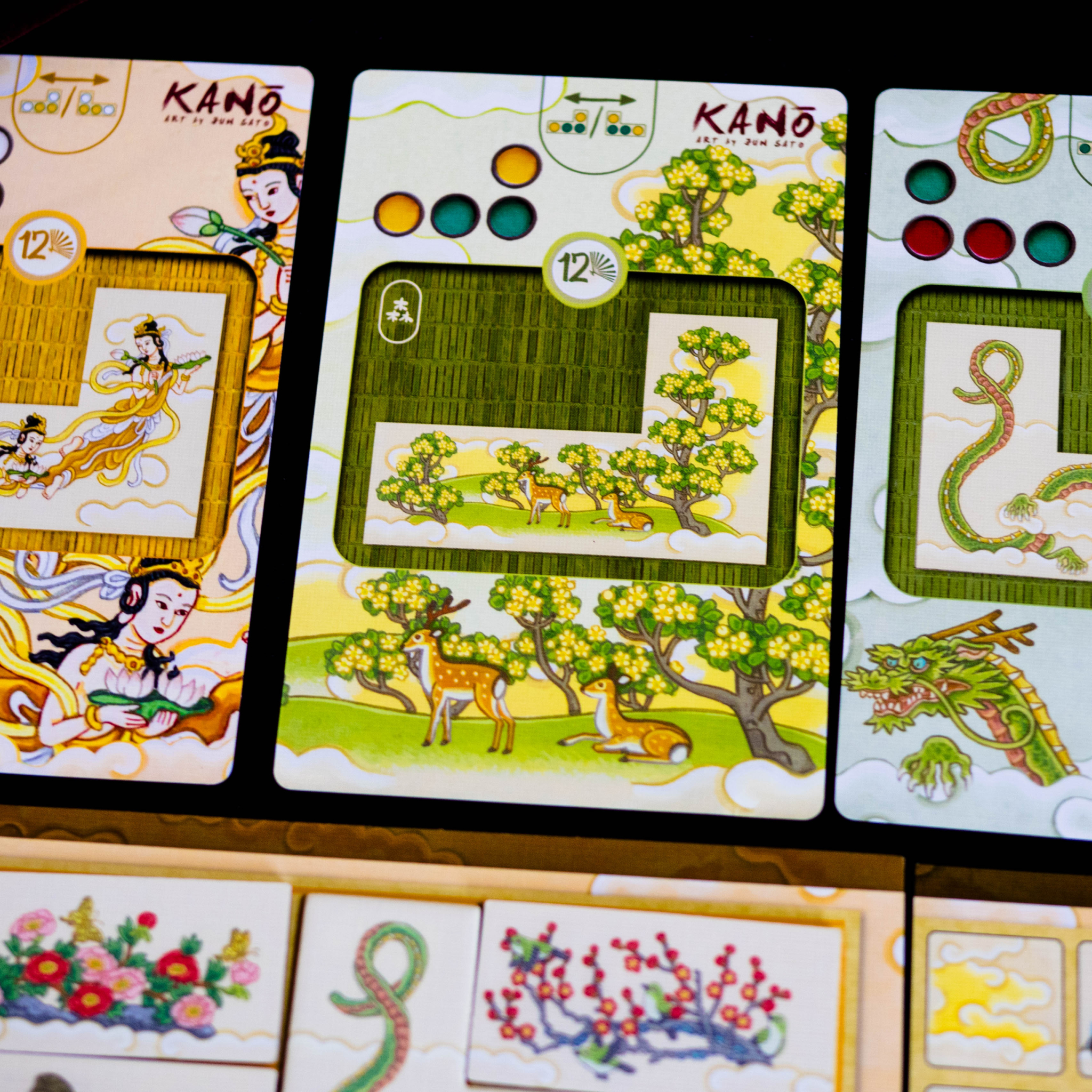
- Major works: each major work completed earns 12 points.
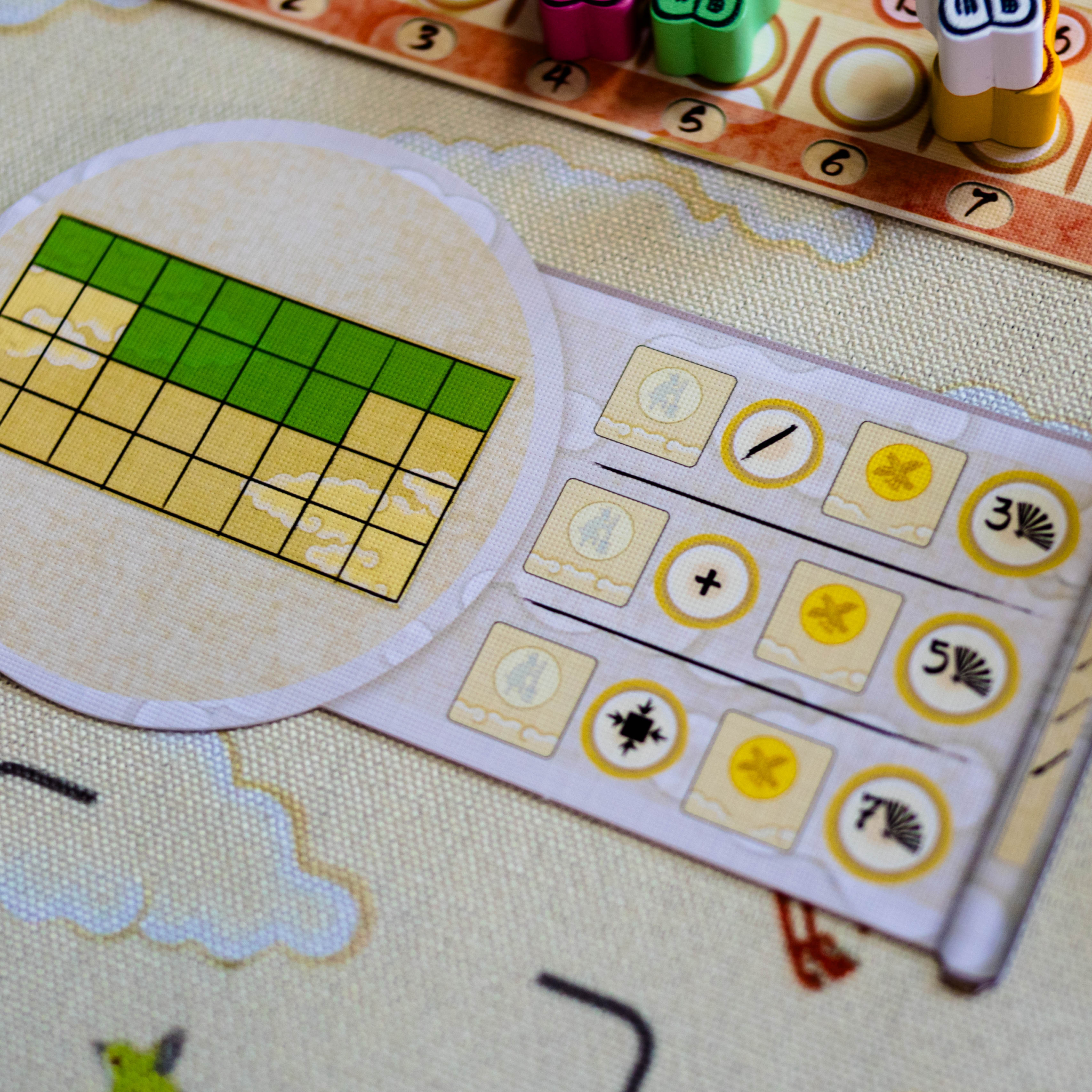
- The common white objective: depending on the sheet chosen and the conditions met, it yields from 3 to 7 points.
- The common red objective: it rewards the different types of works produced from those indicated on the sheet, with a scale ranging from 1 to 30 points.
- The works produced: a work of one square earns 1 point, a work of two squares earns 3 points and a work of three squares earns 7 points.
- The complete board: filling all the spaces on your personal board earns 3 additional points.
It's good ?
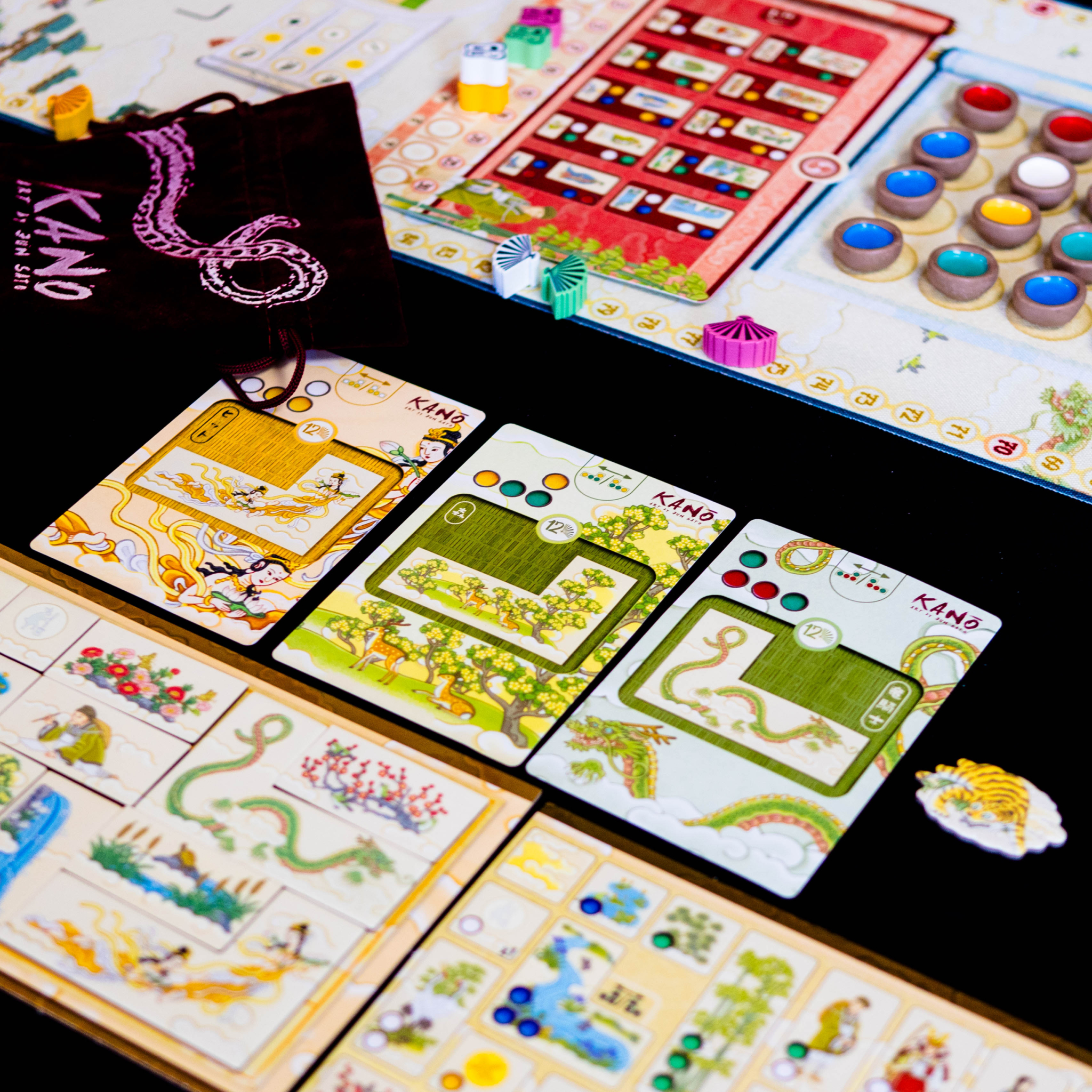
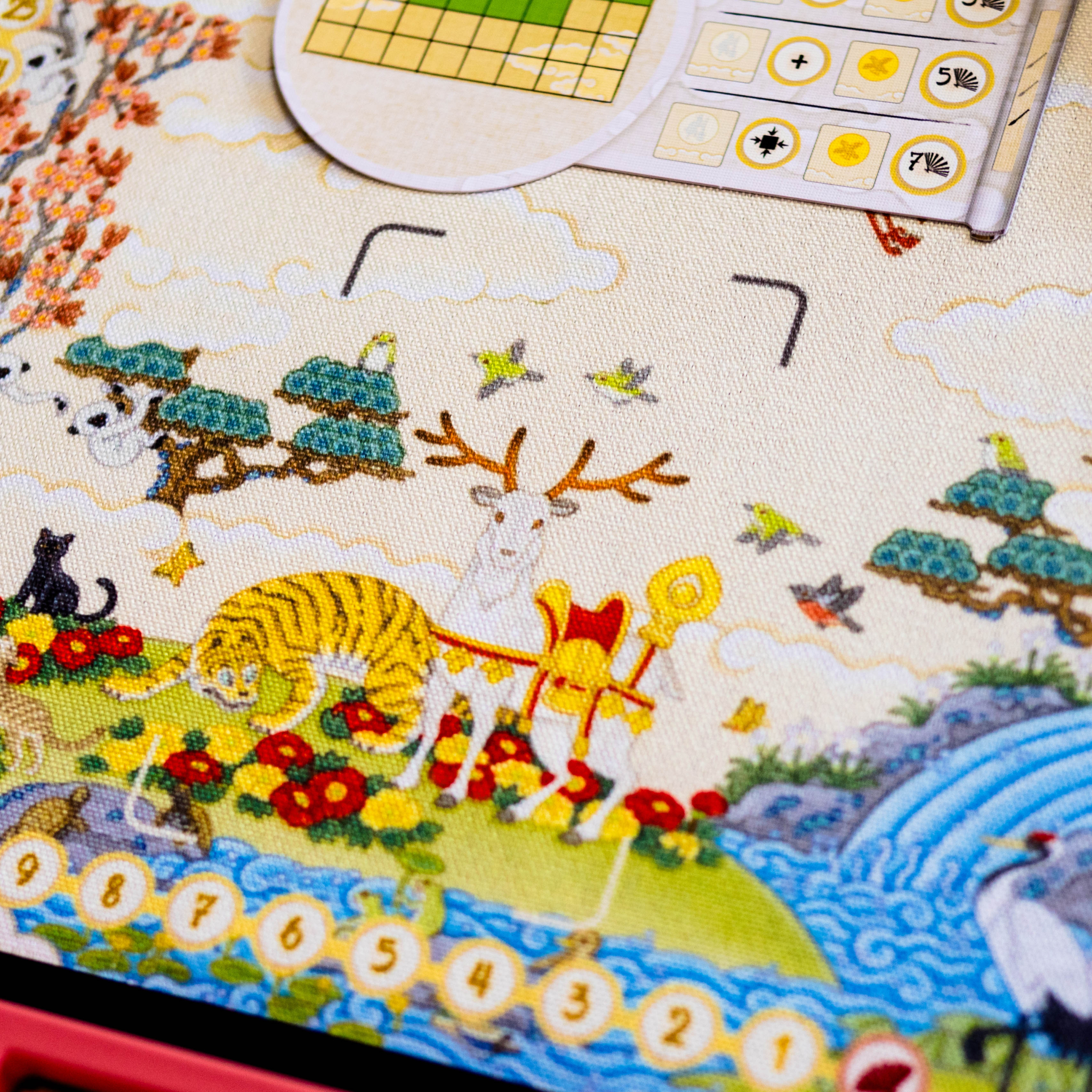
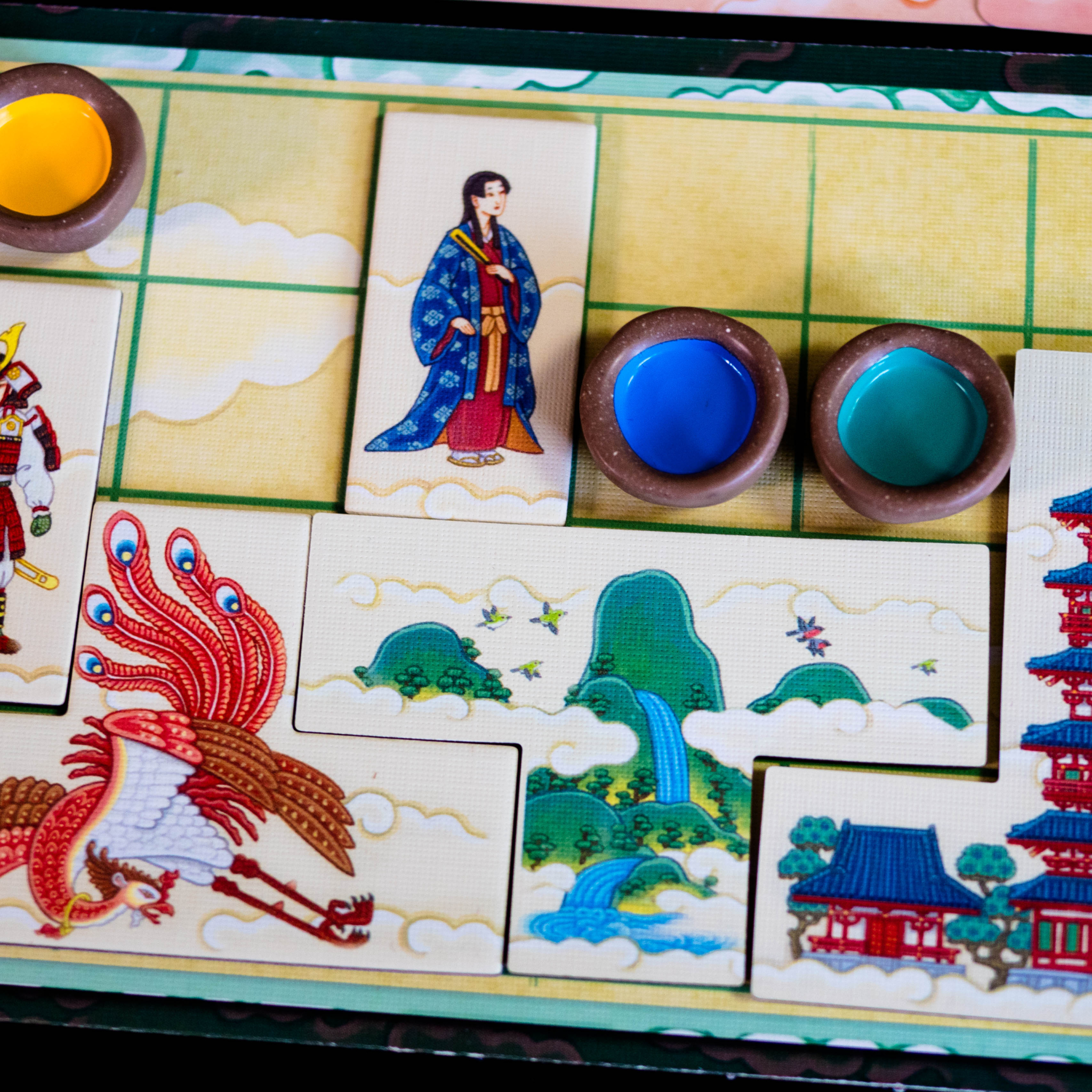
What strikes you when you place Kano on the table is the beauty of the components: the fabric mat, the tangible paint pots, and the Japanese art prints. Yes, the game is visually stunning and exudes Japanese art!
Here, the game doesn’t try to reinvent the wheel of tile-placement games, but rather adds its own personal touch. The mechanics revolve around selecting paint pots, with the ability to swap two pots (a bit like in Candy Crush). This idea brings a fresh twist to this type of game, further complicated by the effect of gravity on your personal board. You’ll sometimes have to adapt your plans if an opponent snatches the right colors before your turn, as each artwork requires specific paint pots.
Kano offers compelling features for fans of placement, optimization, and planning. As is often the case in this type of game, you’ll plan your artworks several turns in advance. Naturally, you’ll need to consider the various scoring objectives and major artworks to maximize your points.
One could, however, criticize it for its innovations, which remain rather subtle in terms of gameplay and don’t truly revolutionize the genre. It’s a fairly chill game, in which you’ll never really get stuck and where it’s quite easy to adapt. There are a huge number of different works to create with colors, perhaps even a few too many! The question of replayability and repetitiveness also remains for players seeking more depth.
With its color selection mechanic, combined with gravity and patterns to reproduce, Kano offers a placement and optimization game that could appeal to fans of abstract and chill games, with a particularly attractive visual.
Kano Review
Positives
- Beautiful materials and a very successful Japanese artistic theme.
- An original paint pot selection mechanism.
- The constraint of gravity which adds a tactical dimension to positioning.
- An accessible and chill game, with no risk of getting stuck.
Negatives
- New features that don't really revolutionize the genre.
- A depth that might disappoint the most demanding players.
- A risk of repetition over time.
- A large number of different works makes adaptation easier and prevents getting stuck