Skip to content Skip to sidebar Skip to footer

Moon Colony Bloodbath: build your colony… and above all, try to keep it alive!

What's this?

What if colonizing the Moon was actually a very bad idea? With Moon Colony Bloodbath , Donald X. Vaccarino, already known for Dominion , offers a management and engine-building board game in which players must develop their lunar colony while facing the many problems that threaten its survival.

How do you play?

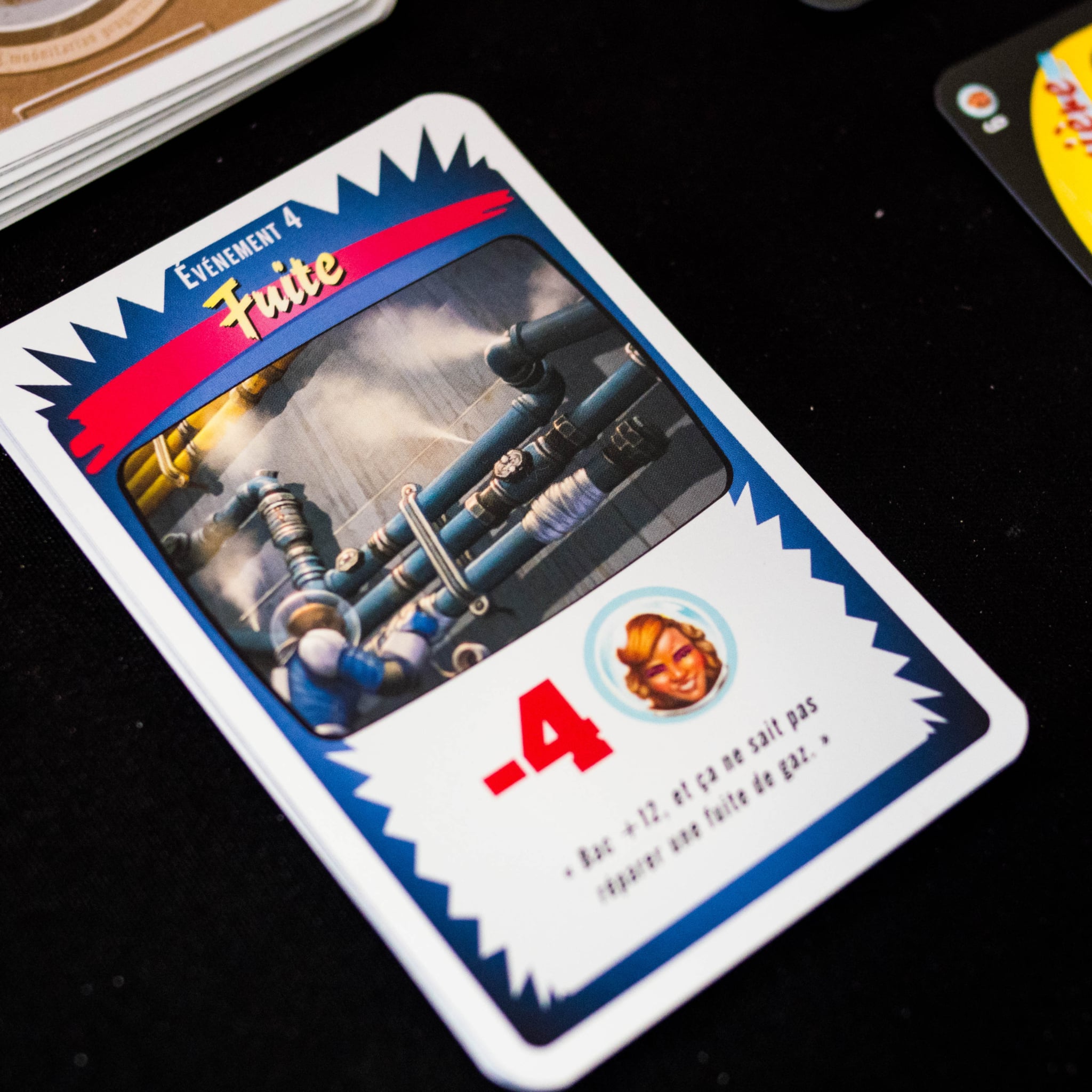
Each turn, the top card of the event deck is revealed.

All players then simultaneously apply the instructions on this card.

This could be a positive event, a disaster, a Robot, a Twist, or a T work card allowing players to develop their colony.

The added cards are placed on top and can therefore immediately trigger a new event.

This mechanic gives the game a particularly unpredictable side: players do not simply endure the deck, they contribute to shaping it themselves.

Work cards and shares

Work cards are central to the development of your colony.

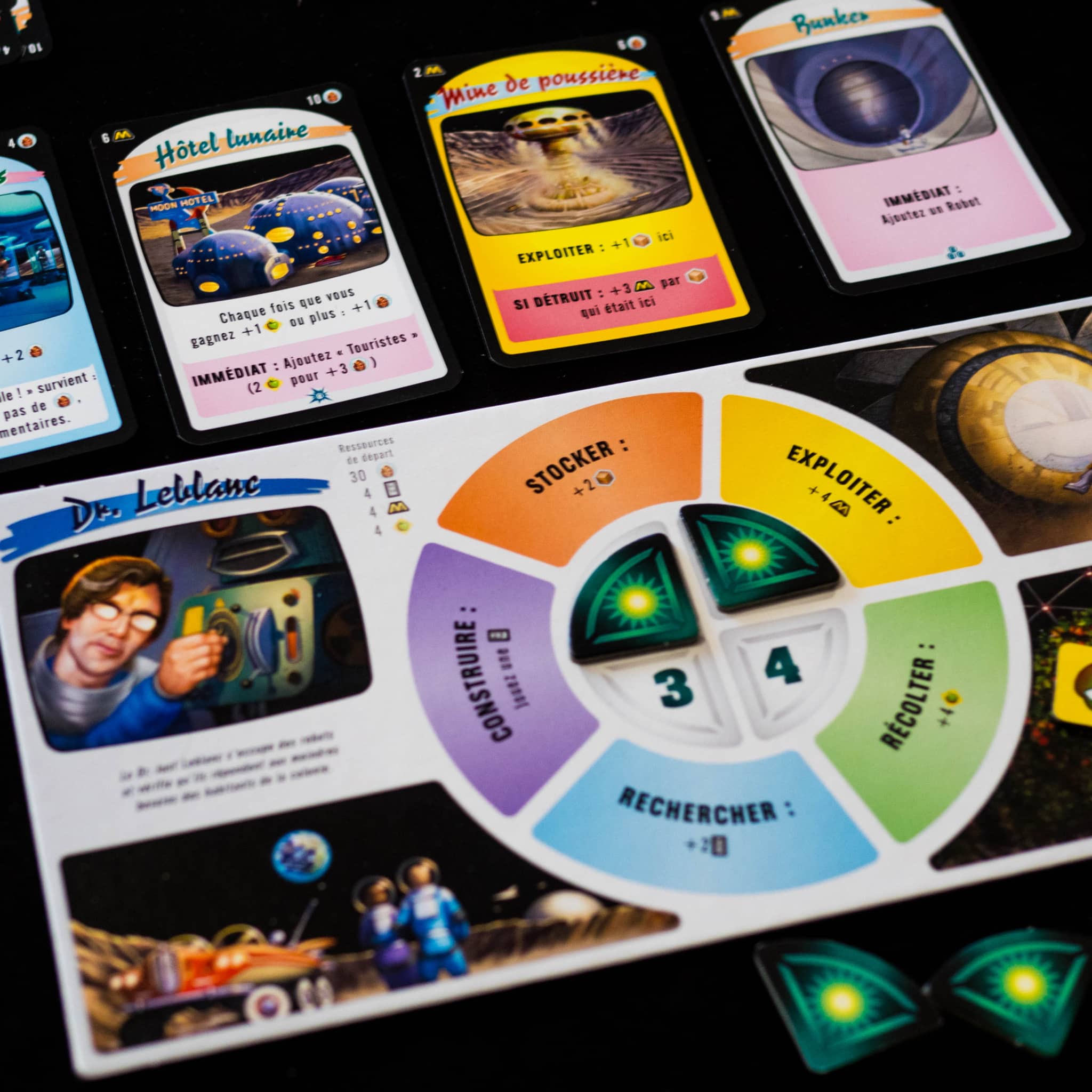
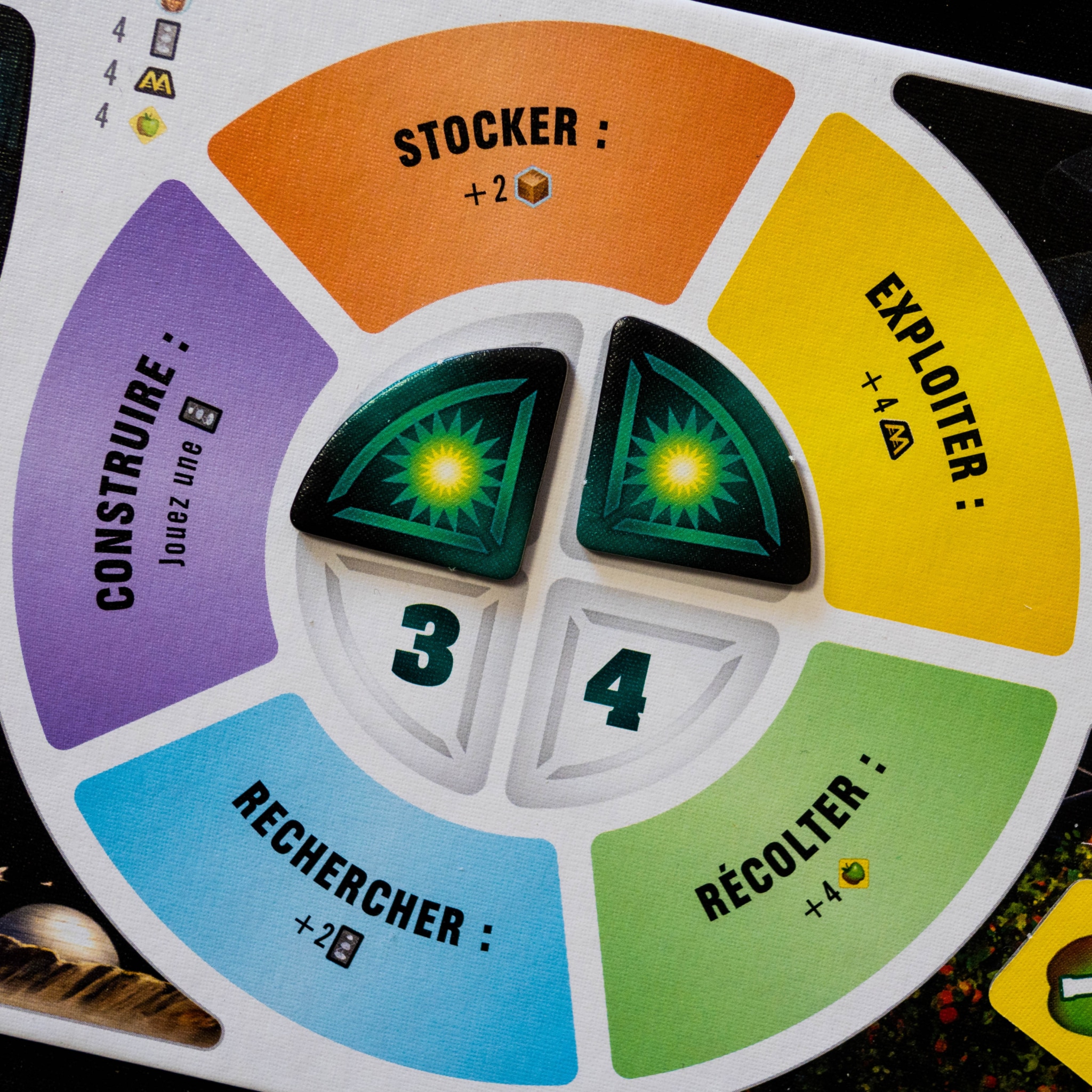
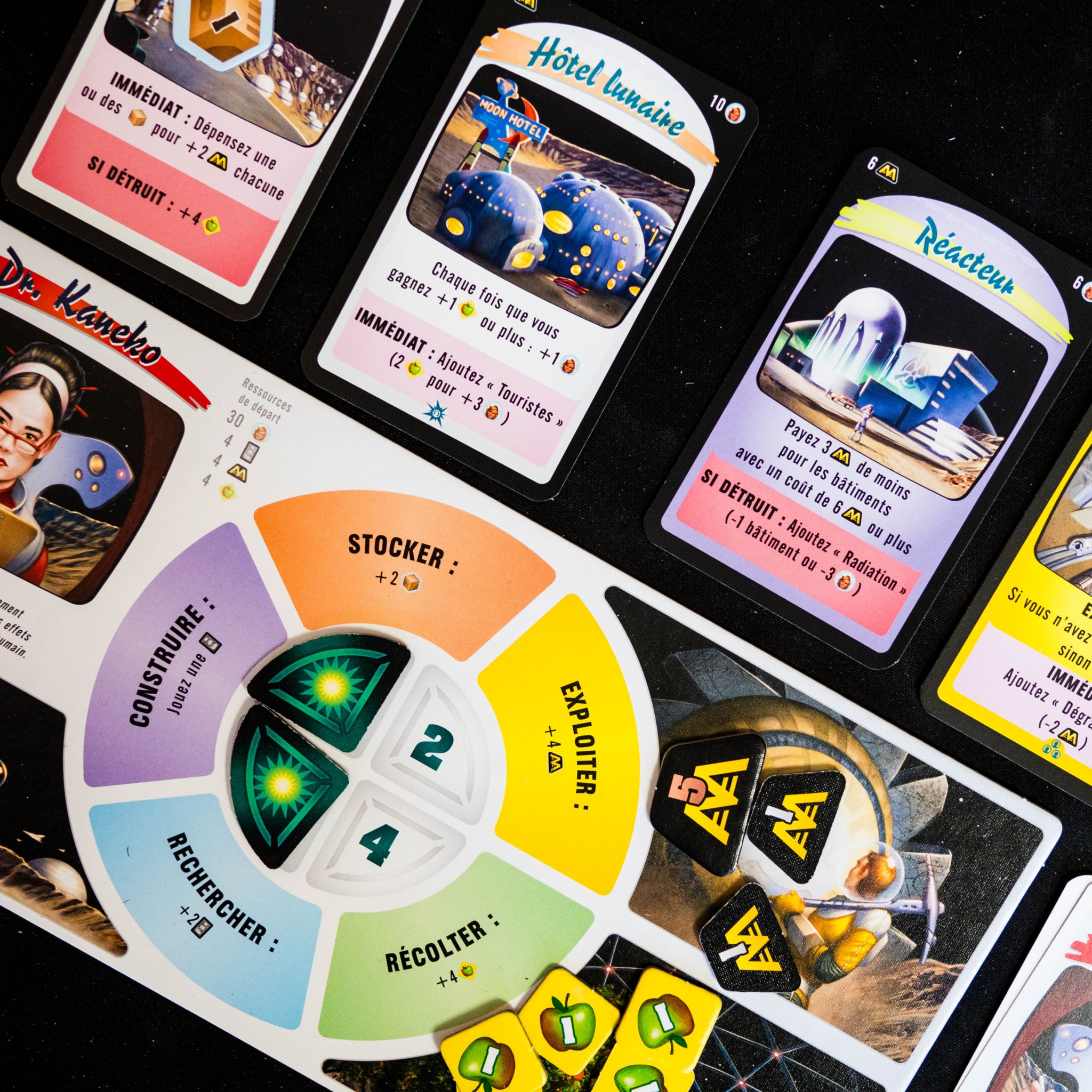
When one of them appears, each player simultaneously chooses an action by placing their Action token on their board.

The 5 available actions are:

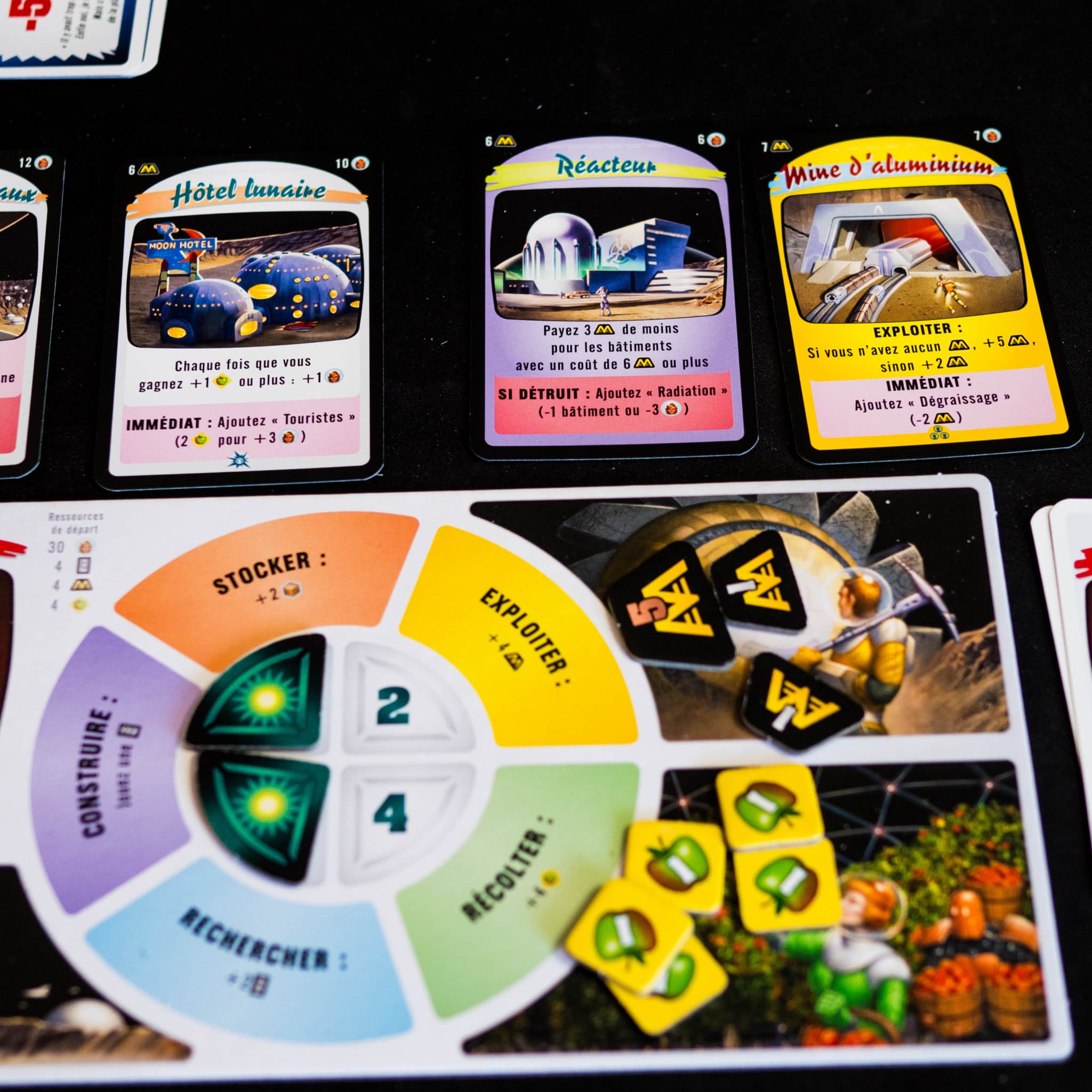
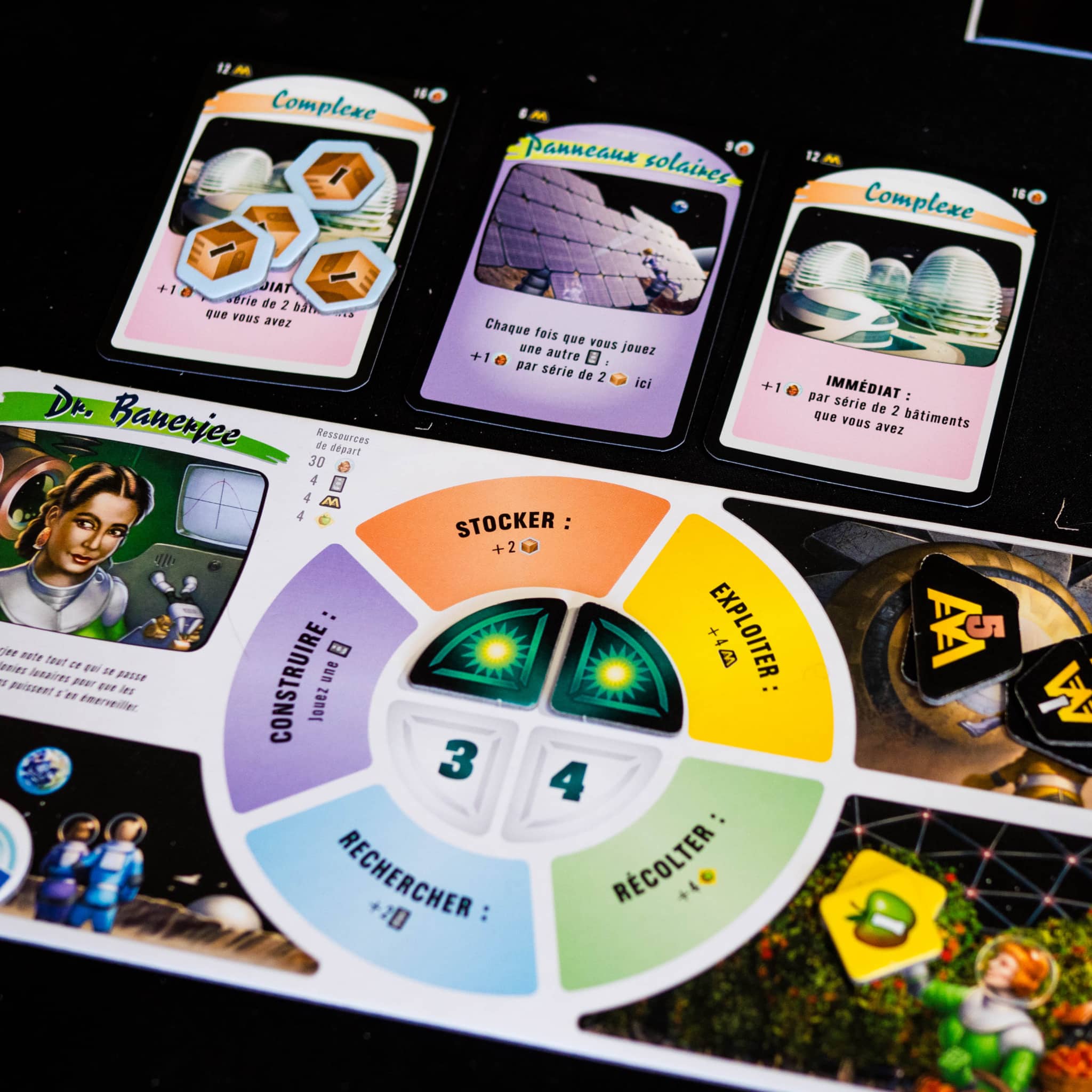
  • Store : You gain 2 crates to place on the buildings of your colony.
  • Exploit : You gain 4 credits. This resource can be used to construct new buildings and power several effects.
  • Harvesting: You gain 4 units of food. Certain buildings can improve this production and gradually transform a simple action into a true engine of resource generation.
  • Research: You draw 2 cards from the deck. This action allows you to refresh your hand and prepare for future constructions.
  • Build : Play a card from your hand by paying its cost in credits.

Building buildings and developing its engine

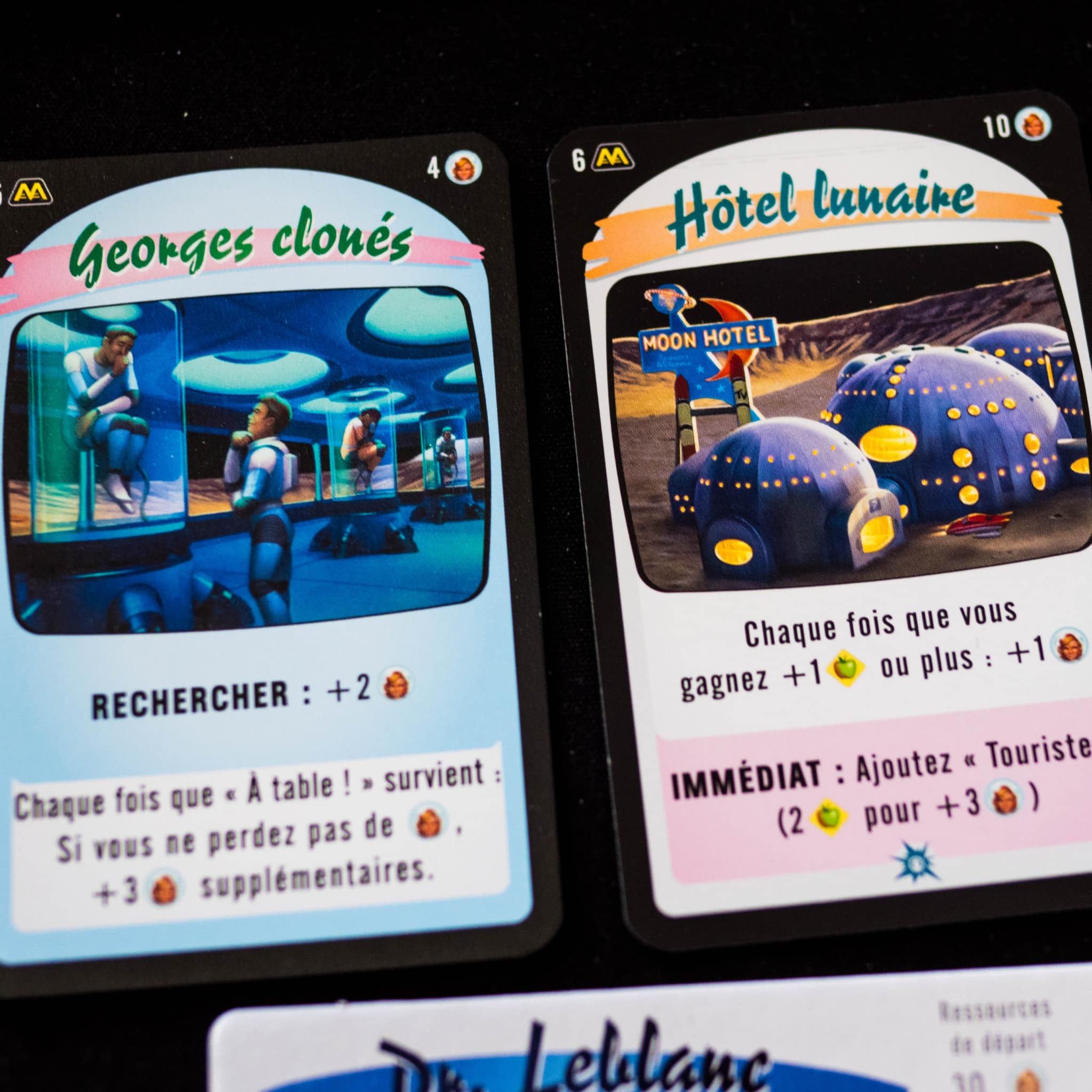
Building is one of the core mechanics of Moon Colony: Bloodbath . Buildings can then enhance your various actions. Effects can be combined, and multiple identical buildings can be present in your colony. 

Resources and inhabitants

The local people are your most important resource.

They represent the population of your colony and also constitute your condition for defeat.

Some buildings have a printed number of inhabitants on them. If you lose a building, its inhabitants return to your player board.

The other resources are mainly used to power your engine:

  • Food allows you to feed your population;
  • the funds are used in particular for construction;
  • Crates can be placed on your buildings to activate certain abilities .

Managing the Progress package: Robots, Events and Perks

The shared deck of cards constantly evolves as the players take action :

  • Events: Triggered by Trouble cards , they apply crises to everyone: famines, paralyzing administrative paperwork, air leaks or lunar tremors .

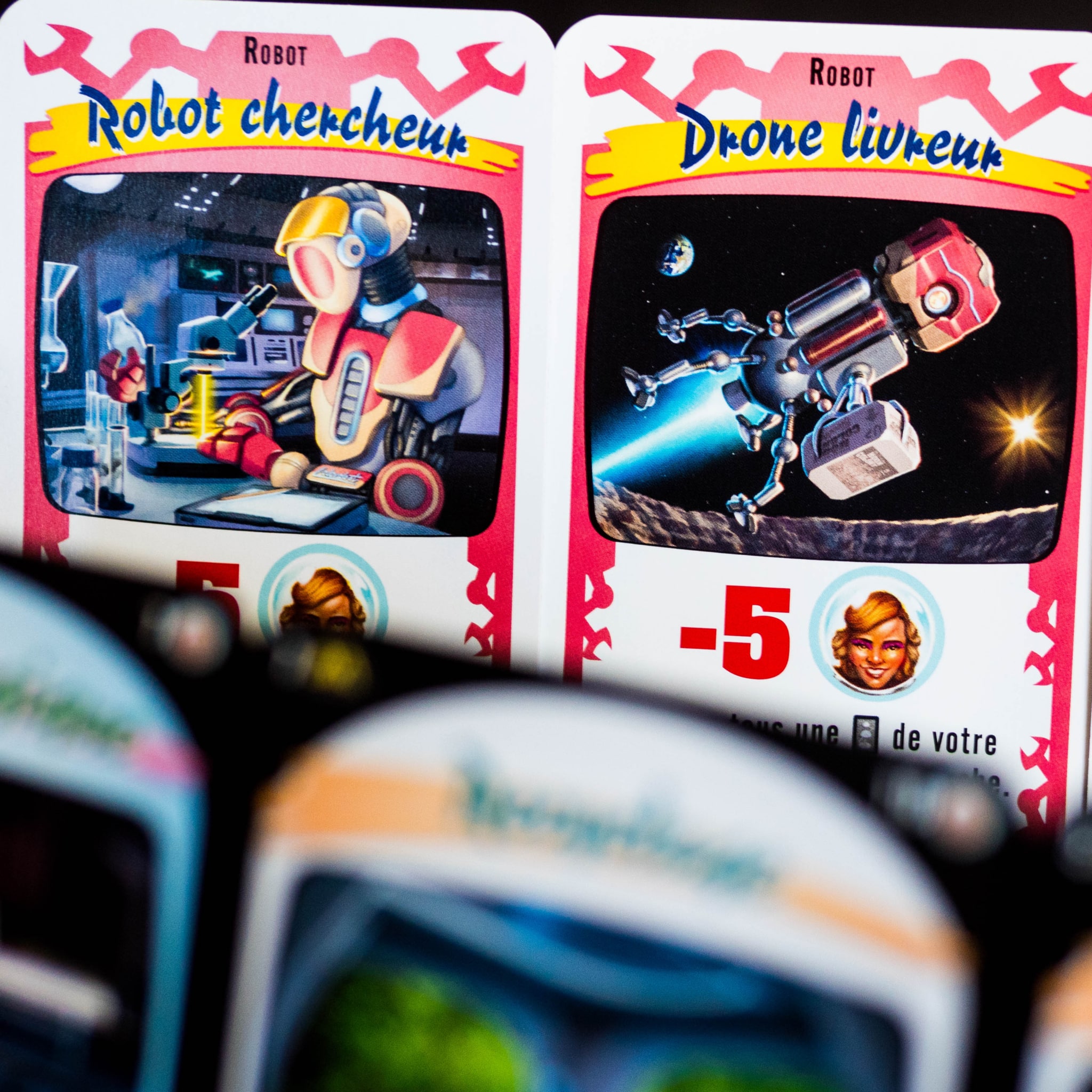
  • Robots: Added during computer bugs, these mechanical servants directly reduce your population when they appear before performing their tasks .

  • Advantages & Developments: Beneficial cards that you can add to the top of the deck to gain personal or collective bonuses .

Losing Settlers and End of Game

Whenever you have to lose settlers, you first take them from your main board . If your reserve is empty, you are forced to destroy one of your buildings , which shifts the settlers living there to your board.

Is it good?

The great originality of Moon Colony Bloodbath lies in its methodical destruction of everything you build as the rounds progress. This goes against the grain of most management games, where you become increasingly powerful and can build more and more as the game goes on. In Moon Colony Bloodbath , you must instead survive as long as possible, and the game particularly well conveys this constant tension of survival.

Building your game engine can also backfire. A building might, for example, increase food production, making your engine progressively more efficient, but having many buildings can also make certain events much more dangerous . This relationship between development and risk-taking is particularly well-conceived.

The idea of ​​revealing cards from a shared deck at the start of each round—events, cards that benefit certain players, etc.—is also an effective mechanic. Even though each player builds their own colony, this shared deck creates a form of interaction, both positive and negative, for everyone at the table. This adds real dynamism to the game and contributes to its smooth flow.

Similarly, thanks to the simultaneous actions during work turns, there is virtually no downtime. Turns follow one another quickly, reactions are immediate, and the game duration remains very short.

Moon Colony Bloodbath clearly adopts a rather punishing approach, where a colony that begins to collapse can quickly trigger a veritable chain reaction. The game is intentionally cruel: losing buildings means losing action bonuses and making subsequent actions less effective. These negative chain reactions can quickly accumulate when the cards in the shared deck are not revealed in the desired order.

However, one could criticize the significant element of chance in the card draw . The order in which the cards from the common deck appear can be particularly cruel: suffering a famine or seeing a destructive robot appear at the worst possible moment, without having had the opportunity to harvest anything beforehand, can quickly become catastrophic.

If you’re looking for a true management game where you precisely control your development, look elsewhere. Here, you ultimately have very little control, and you often feel more like you’re at the mercy of the game than truly mastering your strategy. Moon Colony Bloodbath should be seen more as an atypical game, almost a party game, rather than a true strategy game.

But regardless, Moon Colony Bloodbath takes a different approach to deck-building: each player develops their own lunar colony while sharing a common deck capable of triggering both opportunities and disasters. This creates a constant tension between developing one’s engine, taking risks, and maintaining enough inhabitants to survive until the end of the game.

If you enjoy the content and would like to support the site, please purchase your games through our affiliate links. The price remains the same for you, but it allows us to earn a small commission. Thank you for your support!

Moon Colony Bloodbat Review
7.5Satisfying
Moon Colony Bloodbath turns the management game genre on its head by challenging you to develop your colony while trying to survive disasters caused by a shared deck. It's an original, fluid, and intentionally punishing experience, but one that leaves a significant role for chance and the feeling of being at the mercy of events.

Positives

  • An unusual concept that breaks away from classic management games
  • A constant tension surrounding survival
  • A shared deck that creates interaction between players
  • An interesting dynamic between development and risk-taking
  • Simultaneous actions that greatly reduce downtime
  • Fluid and relatively short sections

Negatives

  • A large element of chance is involved in drawing cards.
  • Some cards can be particularly cruel at the wrong time.
  • Little control over how the game unfolds
  • A feeling of being more at the mercy of the game than of actually mastering one's strategy
  • Negative chain reactions can quickly become difficult to stop.

Leave a Comment

0.0/10

If you enjoy the content and want to support the site, purchase your games through our affiliate links. The price remains the same for you, but we earn a small commission. Thank you for your support!