- Publisher(s) : Days of Wonder
- Designer(s) : Asger Aleksandrov Granerud, Daniel Skjold Pedersen
- Artist(s) : Vincent Dutrait
- Players : 1–6
- Playing time : 30 - 60 Min
- Weight BGG : 2.20
What's this?
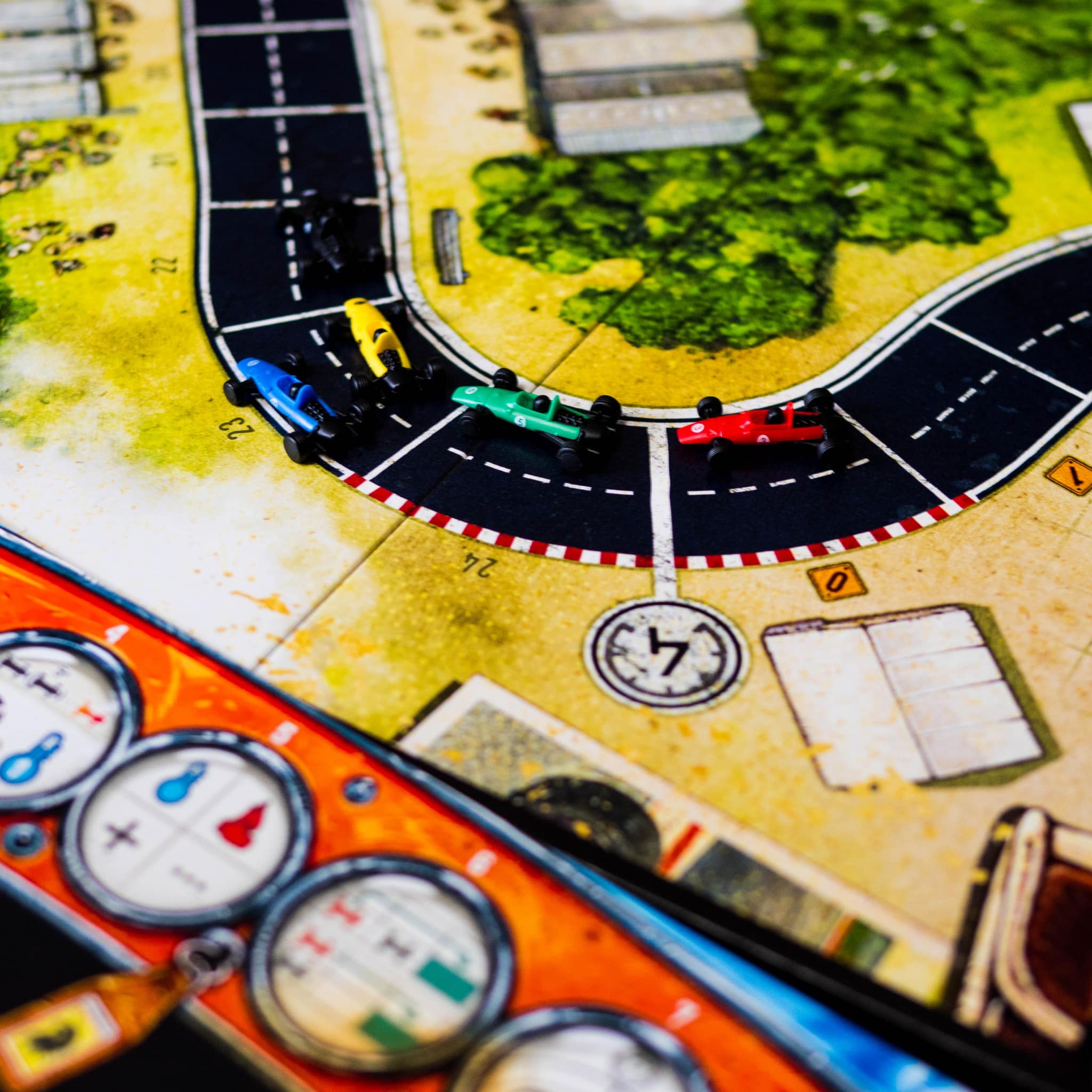
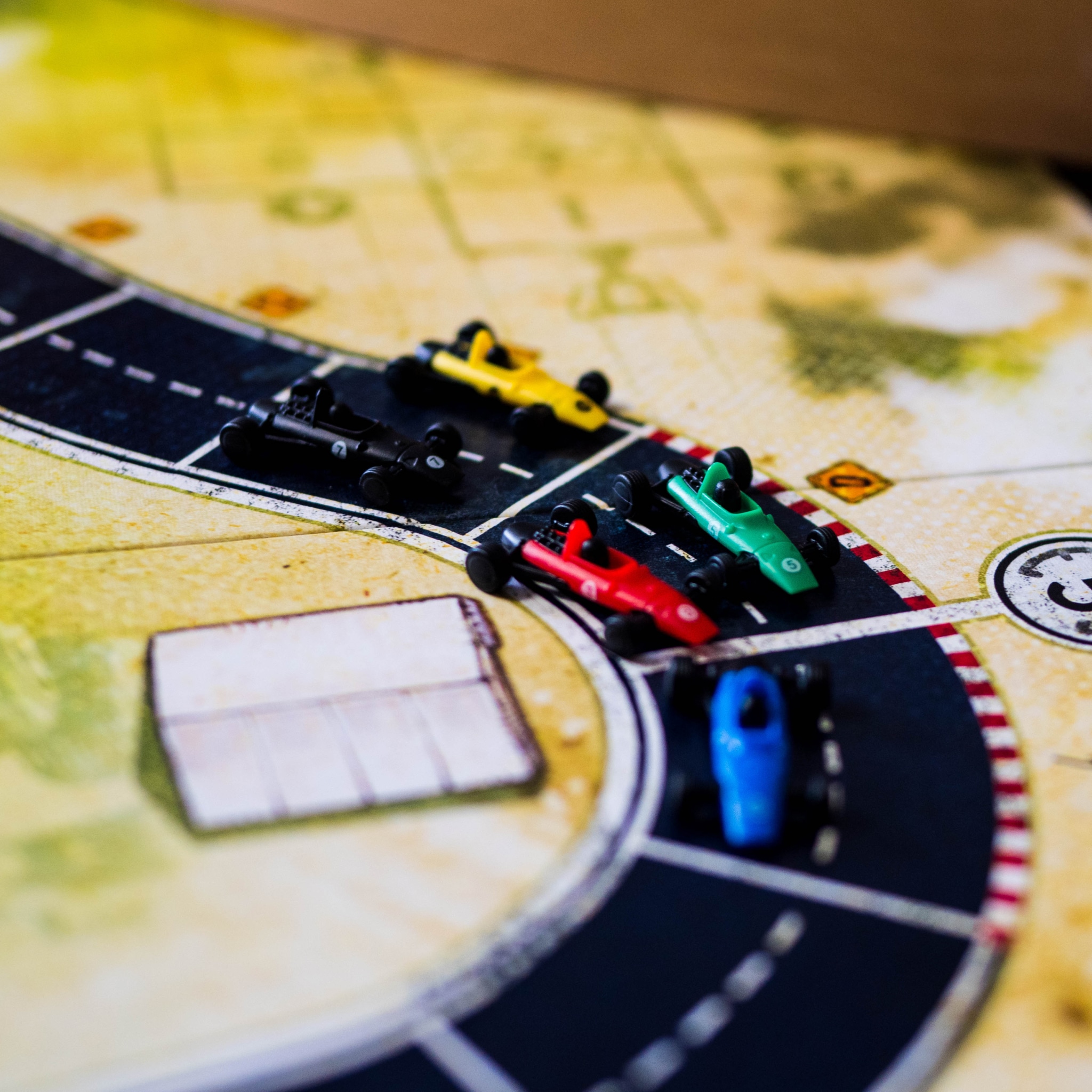
Heat: Pedal to the Metal is a fast-paced racing game designed by Asger Harding Granerud and Daniel Skjold Pedersen , illustrated by the talented Vincent Dutrait , and published by Days of Wonder . Playable by 1 to 6 players with games lasting approximately 60 minutes , the game transports you to the heart of the legendary Grand Prix races of the 1960s.
How do you play?
A game of Heat is played in a series of quick rounds where all players act simultaneously during programming, then resolve their moves in the order of the race .
In each round, the players go through the following phases:
Phase 1: Simultaneous Programming
-
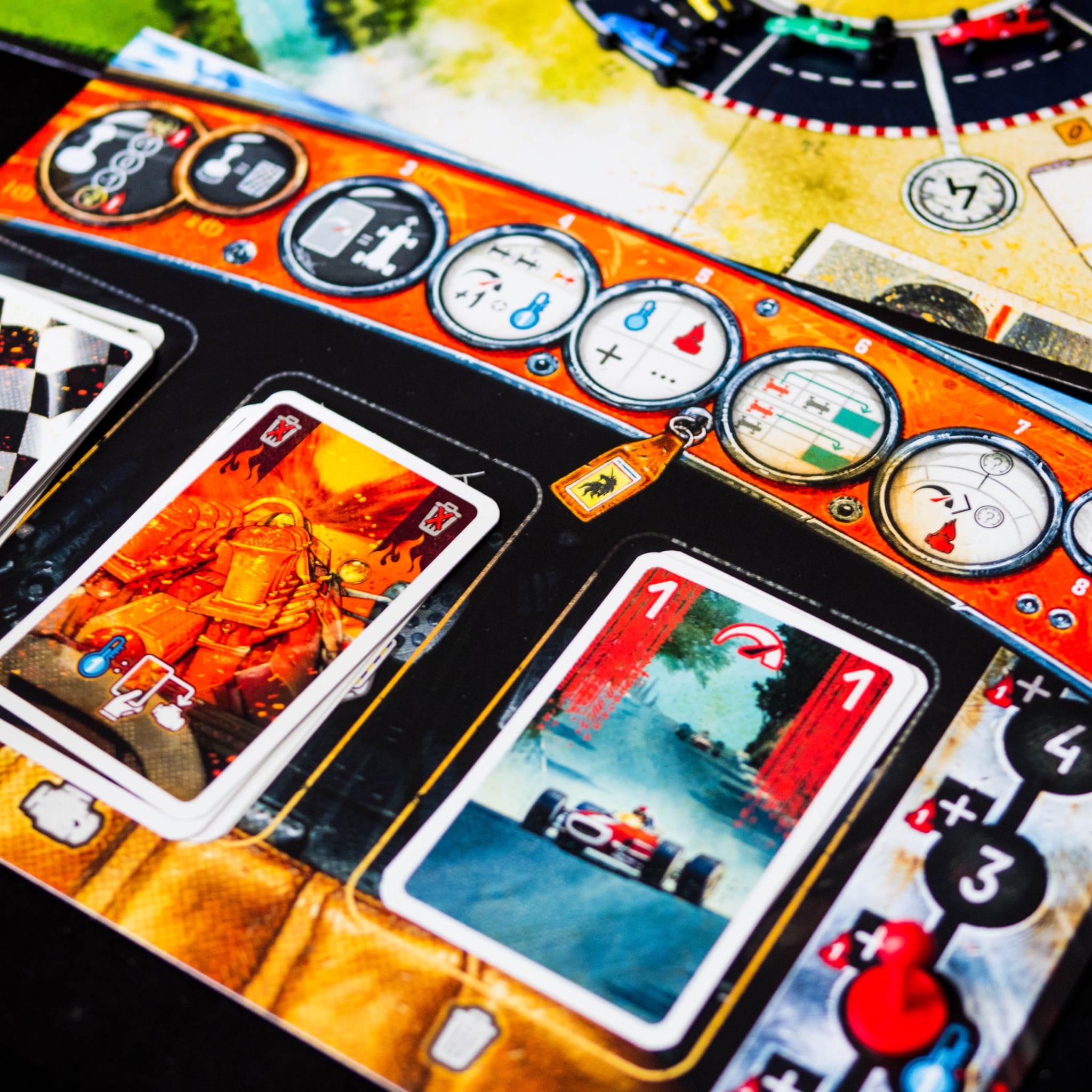
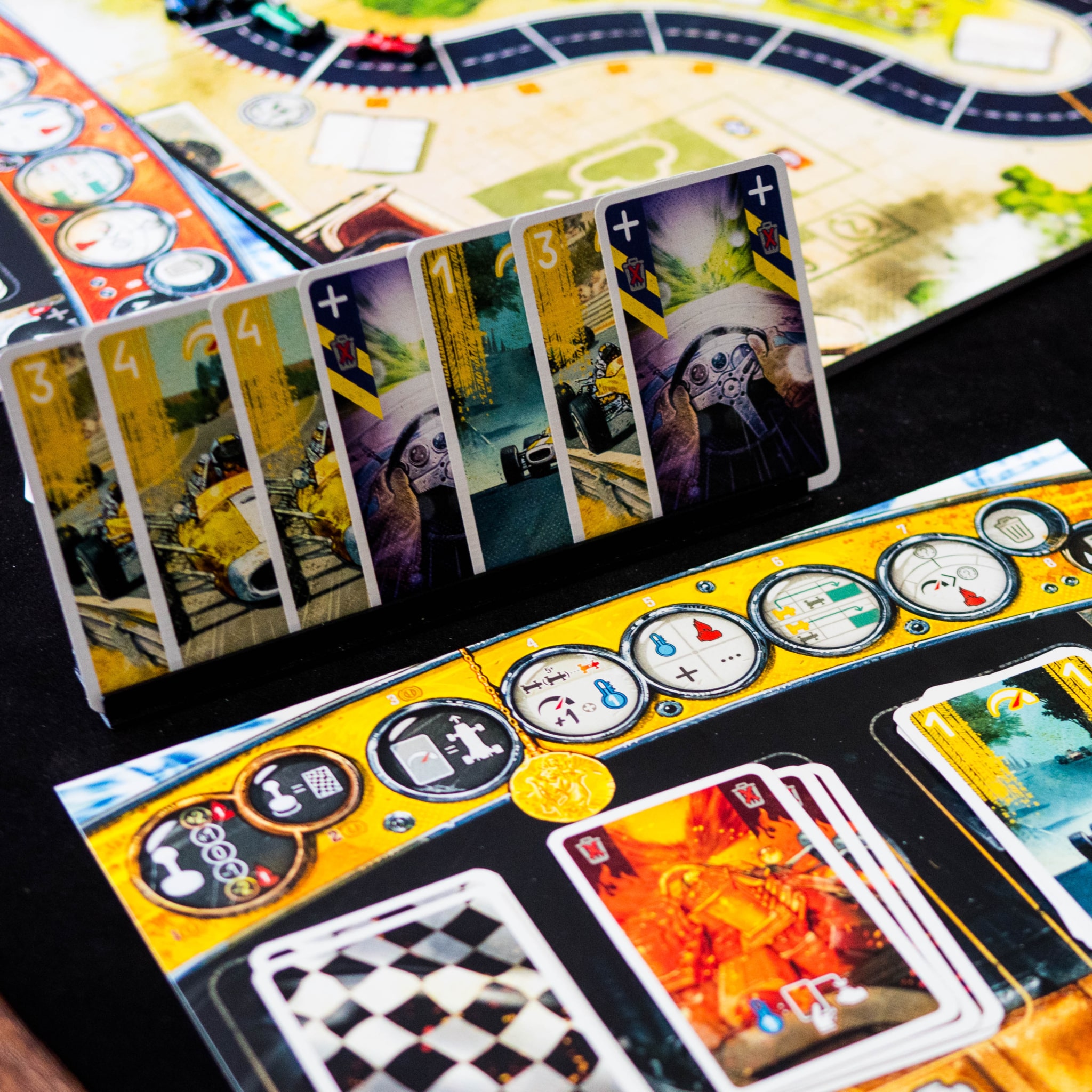
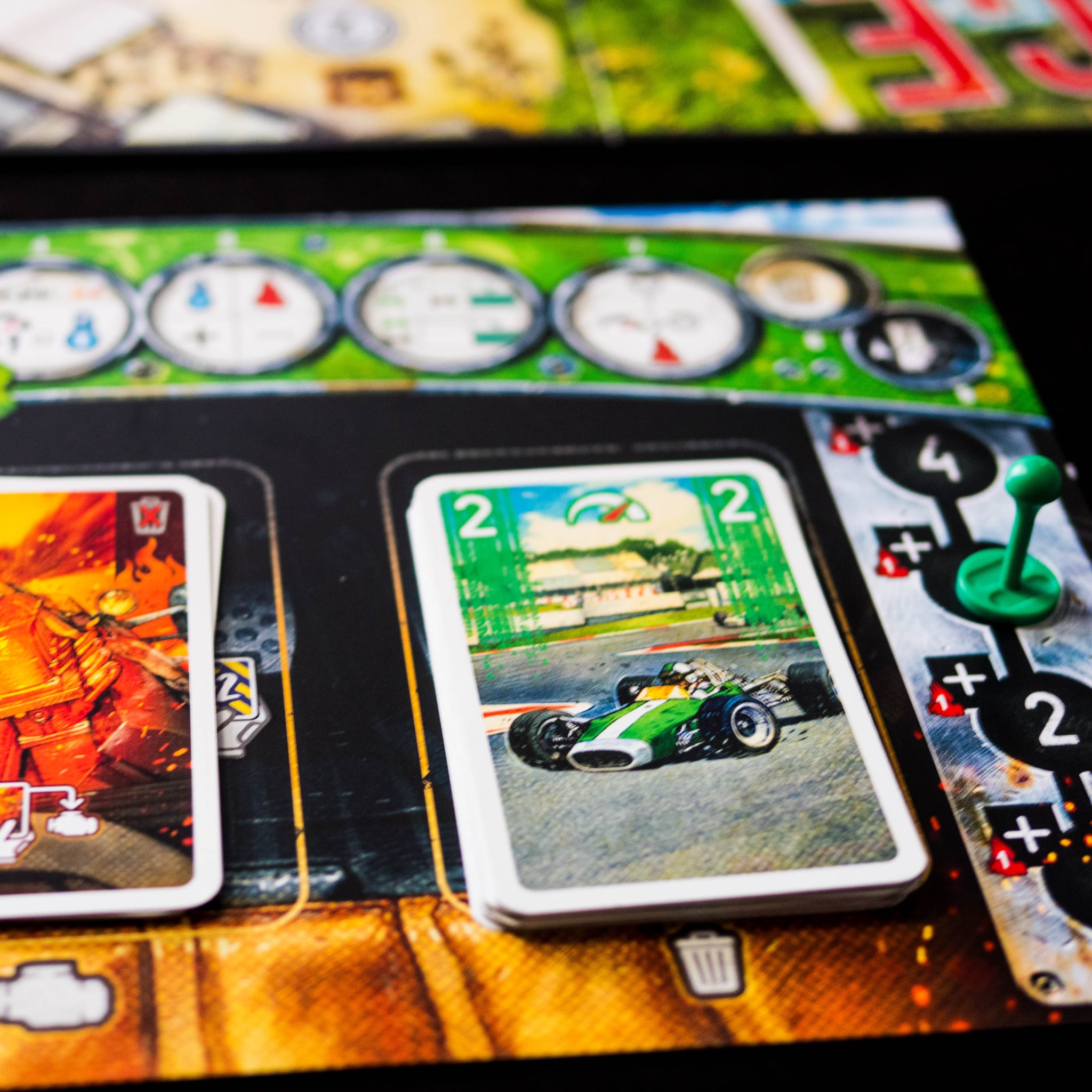
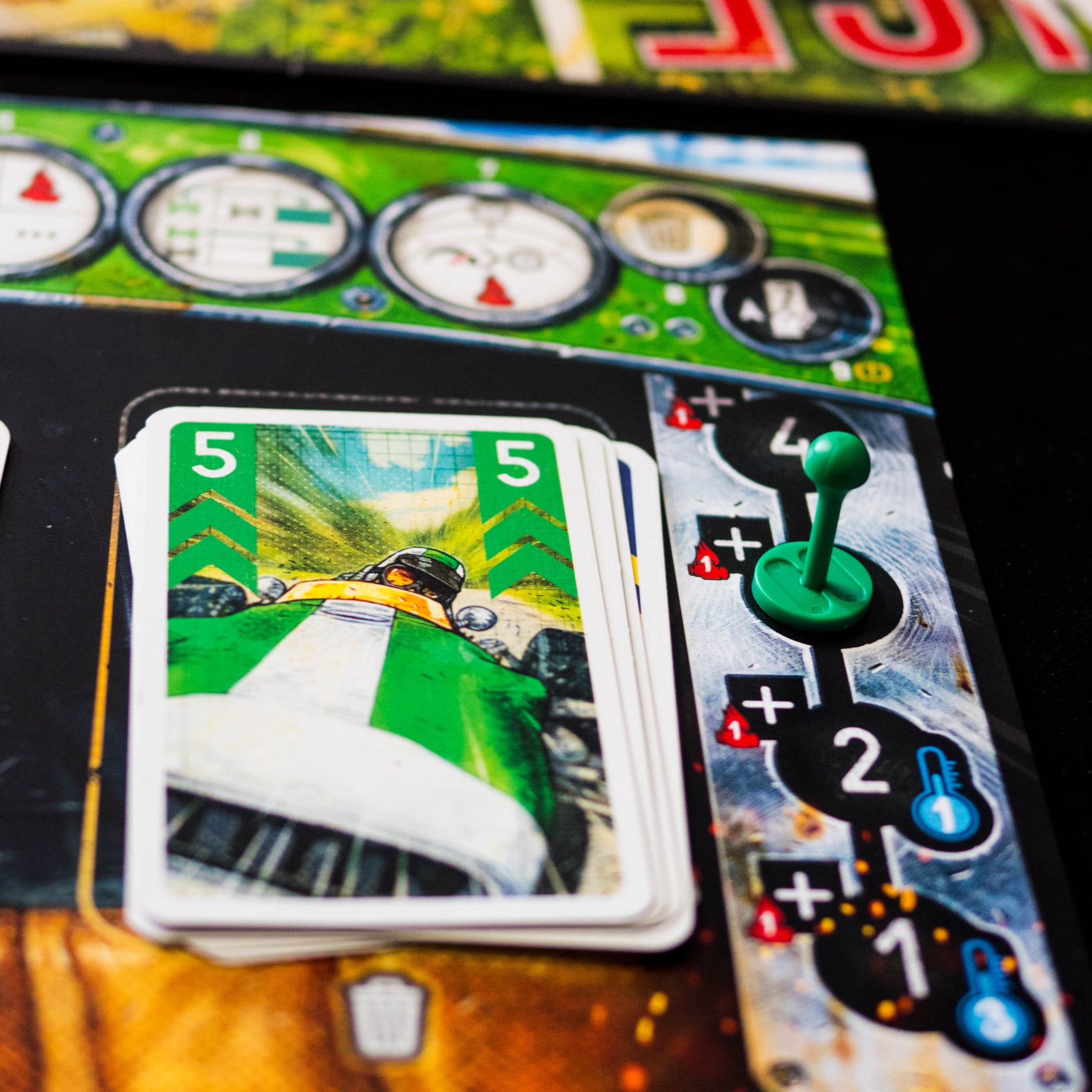
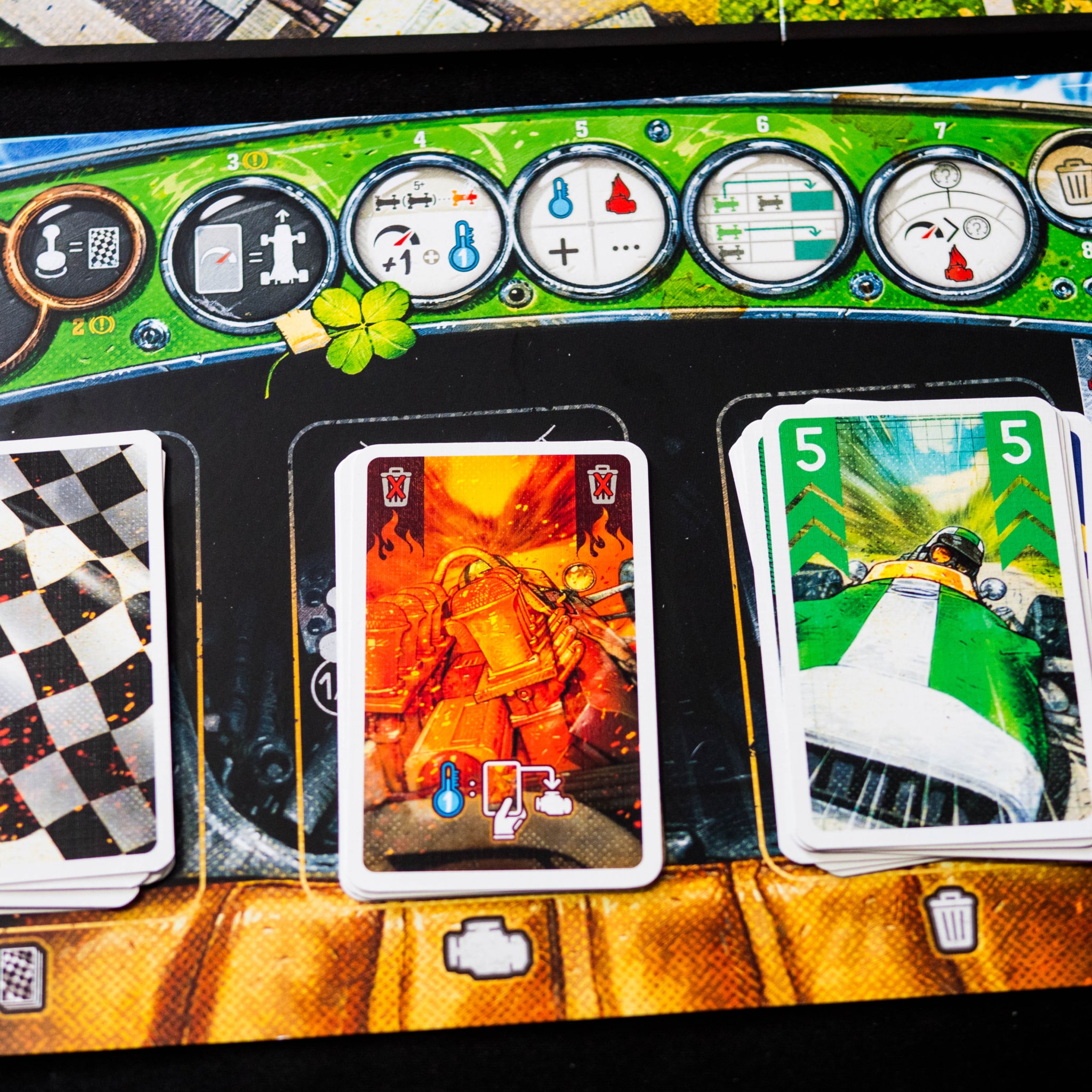
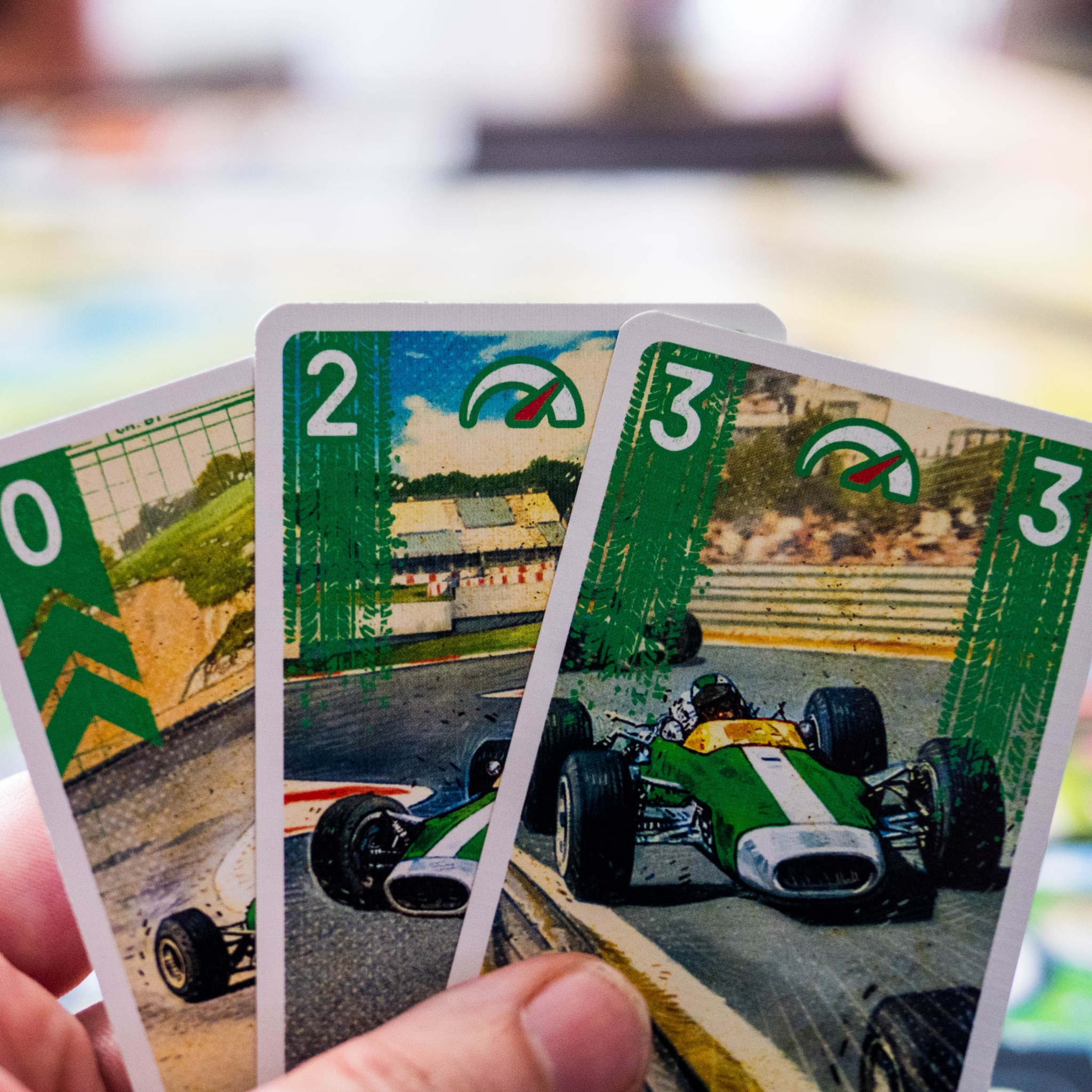
Gear selection: You adjust your gear lever on your dashboard . You can shift up or down one gear for free, or skip two gears by burning one Heat card from your engine . Your gear (from 1 to 4) determines exactly how many Speed cards you need to play from your hand .
-
Playing your cards: You select face down the exact number of cards required by your report .
Phase 2: Revelation and Movement (each in turn, in the order of the track)
-
Reveal & Speed: You reveal your cards . The sum of their values indicates your total speed for this turn . If you played a Stress card , you must turn over the top card of your draw pile until you find a Speed card to determine your unexpected acceleration !
-
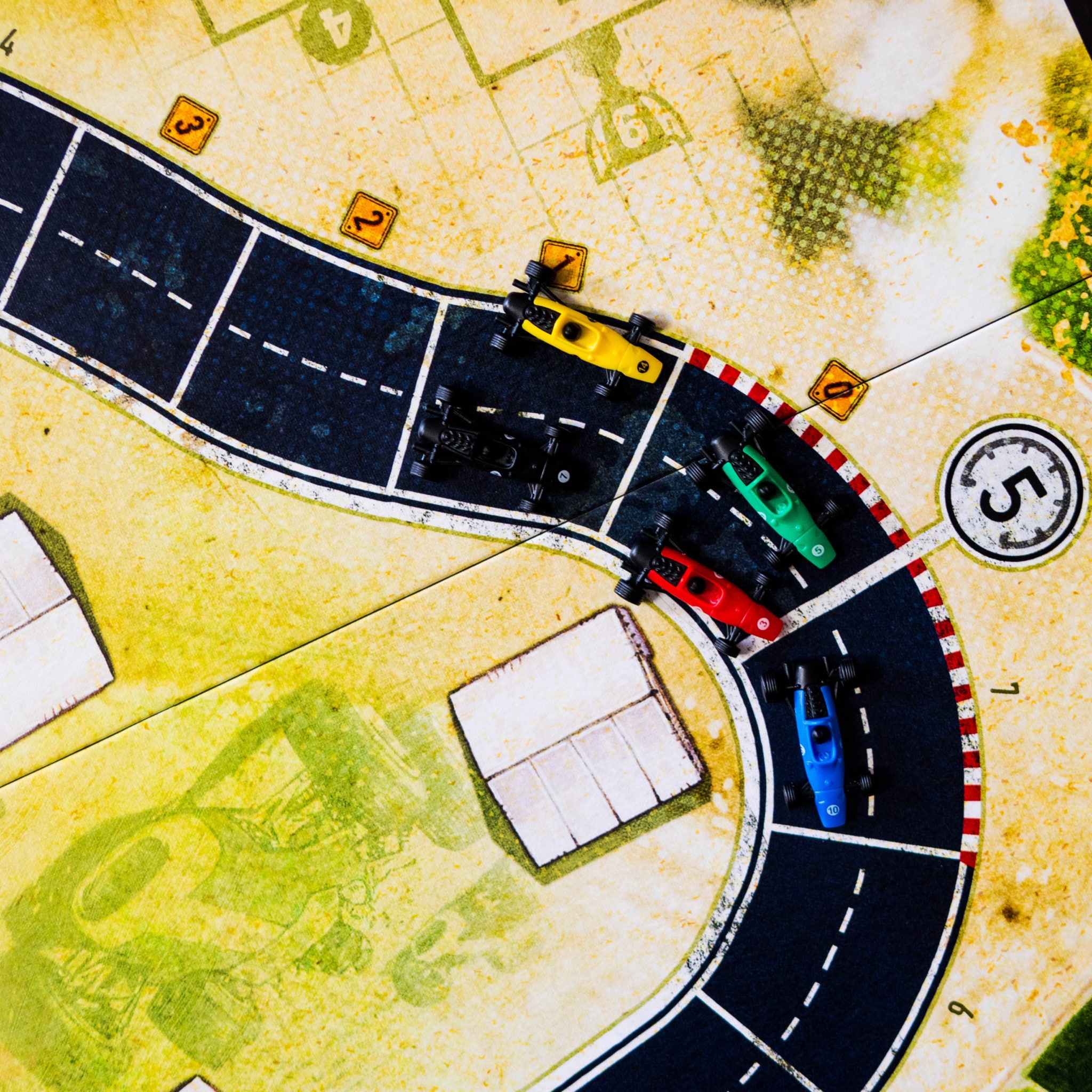
Movement: You move your car forward that many spaces on the track by following the racing line .
-
Adrenaline (Laggards): Cars at the back of the pack receive a speed boost of one point and free cooling to catch up with the group .
-
Reaction (Cooling & Boost): Depending on your report or cards, you can use Cooling to return Heat cards from your hand to your engine . You can also choose to pay 1 Heat to perform a Boost and add an extra Speed card to your movement .
-
Drafting: If you finish your move right next to or behind another car, you can move forward 2 extra spaces for free !
Phase 3: Cornering & Overheating
-
Corner management: If you have crossed the line of a corner this lap, you must compare your total speed to the speed limit indicated on the corner sign .
-
Overheating (Heat): If your speed exceeds the turn limit, you must pay the difference by discarding as many Heat cards as you can from your engine .
-
The Spin-Out: If you don’t have enough Heat cards in your engine to pay for your speeding, it’s an accident ! Your car restarts before the turn in 1st gear, and you collect punitive Stress cards in your hand .
Phase 4: End of round
Discard any unused Speed cards from your hand (Heat and Stress cards cannot be discarded ) and replenish your hand until you have 7 cards . The first player to complete the required number of turns and cross the finish line wins !
Is it good?
After the excellent Flamme Rouge bicycle racing game , the author returns with a car racing game using the same card mechanic with speed values.
The basic rules are, as in Flamme Rouge , accessible, but with a bit more depth and more things to consider to succeed in your race and finish first. You have to anticipate the turns to avoid exceeding the speed limit, but also know when to take risks so you don’t end up with a hand full of Heat cards at the worst possible moment.
The engine management system, using Heat cards and the car’s gear ratios, is very well designed and adds a tactical and opportunistic dimension to the game. It’s up to you to decide when to use Boost or when to accelerate by shifting up. Quickly shifting into higher gears allows you to accelerate, while lower gears help cool your engine. You must therefore constantly balance immediate performance with preparing for the next laps.
The game is also accessible while still allowing the last players to stay in contention thanks to the adrenaline rush. Drafting also lets you take advantage of other cars’ positioning. This adds a certain dynamism to the race and means that a match can remain competitive right up to the finish line.
One drawback is the element of chance involved in the cards. Drawing Stress cards can sometimes ruin a perfectly planned turn. If you want to play with six players, you’ll also need a large table, as the game takes up a lot of space between the game board and the individual dashboards. Finally, you’ll probably need at least one practice race to fully understand the different stages of a lap, including Boost, drafting, overheating, gear ratios, and so on. It’s not necessarily very intuitive during your first game.
But Heat: Pedal to the Metal is an accessible and dynamic racing game where you have to manage your speed, gears, and engine overheating to try and cross the finish line before your opponents. Behind its accessibility lies a particularly interesting gear and hand management mechanic that rewards players who are able to take risks while mastering their Heat.
Heat: Pedal to the Metal Review
Positives
- An accessible and dynamic racing mechanic
- A particularly interesting hand management system
- The Heat and Overheating Card System
- Tactical report management
- A good balance between risk-taking and anticipation
- A race that remains competitive until the finish line
Negatives
- An element of chance linked to the card draw
- Stress cards can sometimes ruin a well-prepared strategy.
- The game takes up a lot of space with 6 players
- A first part necessary to fully understand all the steps
- Some rules and interactions are not necessarily intuitive at first glance