Skip to content Skip to sidebar Skip to footer

Dead Cells The Board Game: dying has never been so addictive

What's this?

Dead Cells: The Rogue-Lite Board Game is the board game adaptation of the famous indie video game developed by Motion Twin. Published by Le Scorpion Masqué and designed by a team of four authors (Antoine Bauza, Corentin Lebrat, Ludovic Maublanc and Théo Rivière), it is a cooperative game for 1 to 4 players, ages 14 and up, with games lasting approximately 45 minutes.

The premise is as simple as it is ruthless: you play as Prisoners trapped in a labyrinthine dungeon, and your ultimate goal is to defeat the King’s Hand. Except you won’t succeed on your first try. Or even your second, probably. And that’s the whole point.

Dead Cells is a rogue-lite game : each attempt (called a “Run”) ends when a member of the group is eliminated, but death is never the end. You return stronger, with new equipment, permanent mutations, and a better understanding of the biomes you must traverse. Progression is therefore twofold: that of your group on the Mutation board (permanent between runs), and that of your understanding of the game.

How do you play?

A game of Dead Cells takes place in successive Runs , each organized into 3 main phases: Biome Exploration, Combat, and Interbiome.

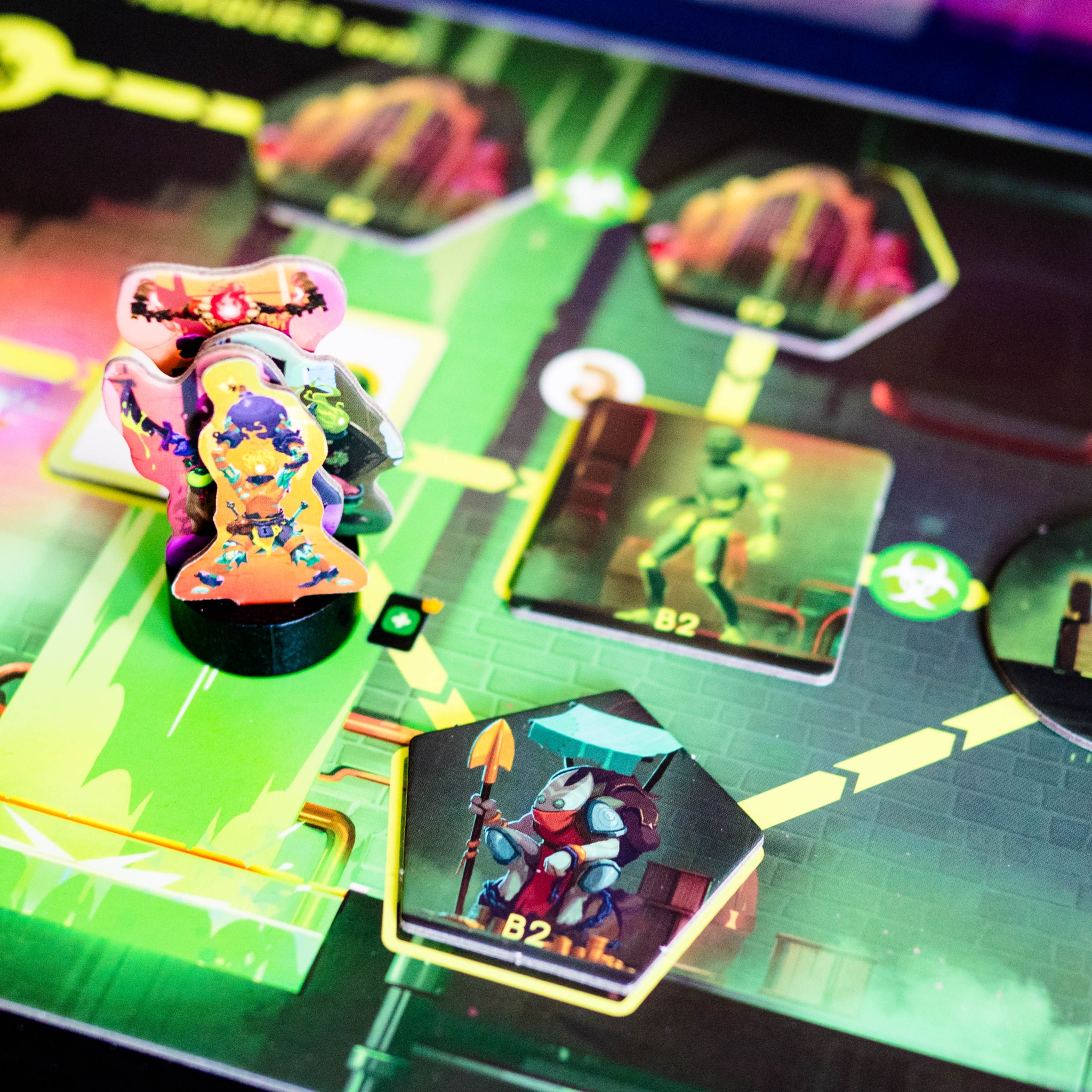
Each round, the group performs 3 steps:

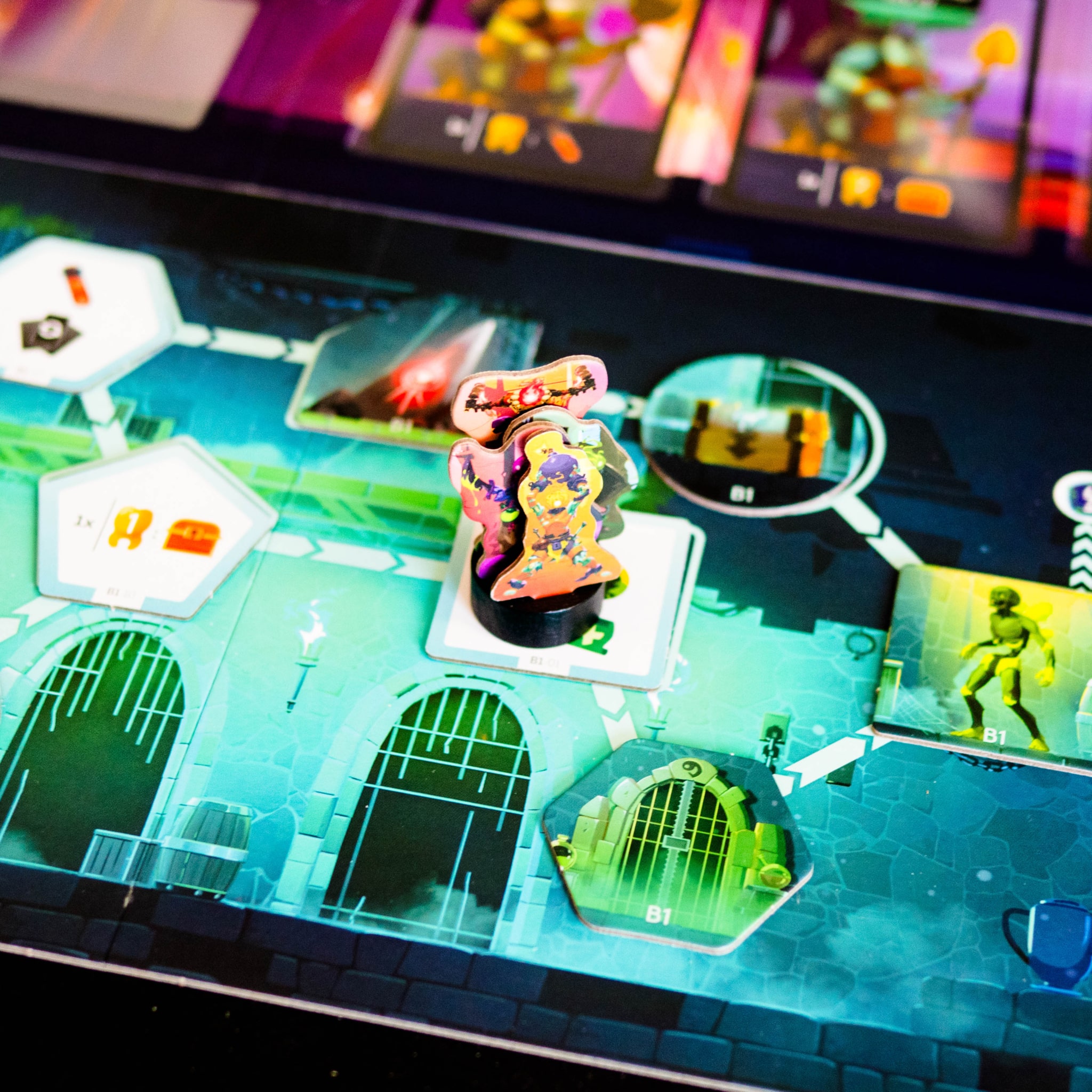
① Movement : The group chooses a space accessible via a corridor, following the directional arrows. Some corridors require a specific Rune (unlocked during the campaign).

② Flip the tile : Each space reveals a tile with an immediate effect:

  • Treasure → reward (Gold teeth, Potions, Scrolls, Cells…)
  • Merchant → purchase possible with Gold Teeth
  • Encounter → triggers a fight
  • Exit Gate → end of the biome if you reach it

Tests may be required in certain corridors: the First Player must discard or reveal a Combat card bearing the correct symbol (Survival/Tactics/Brutality) to succeed.

③ Dead or alive?: If a Prisoner is eliminated, the Run ends immediately. Otherwise, it continues.

Combat: the heart of the game

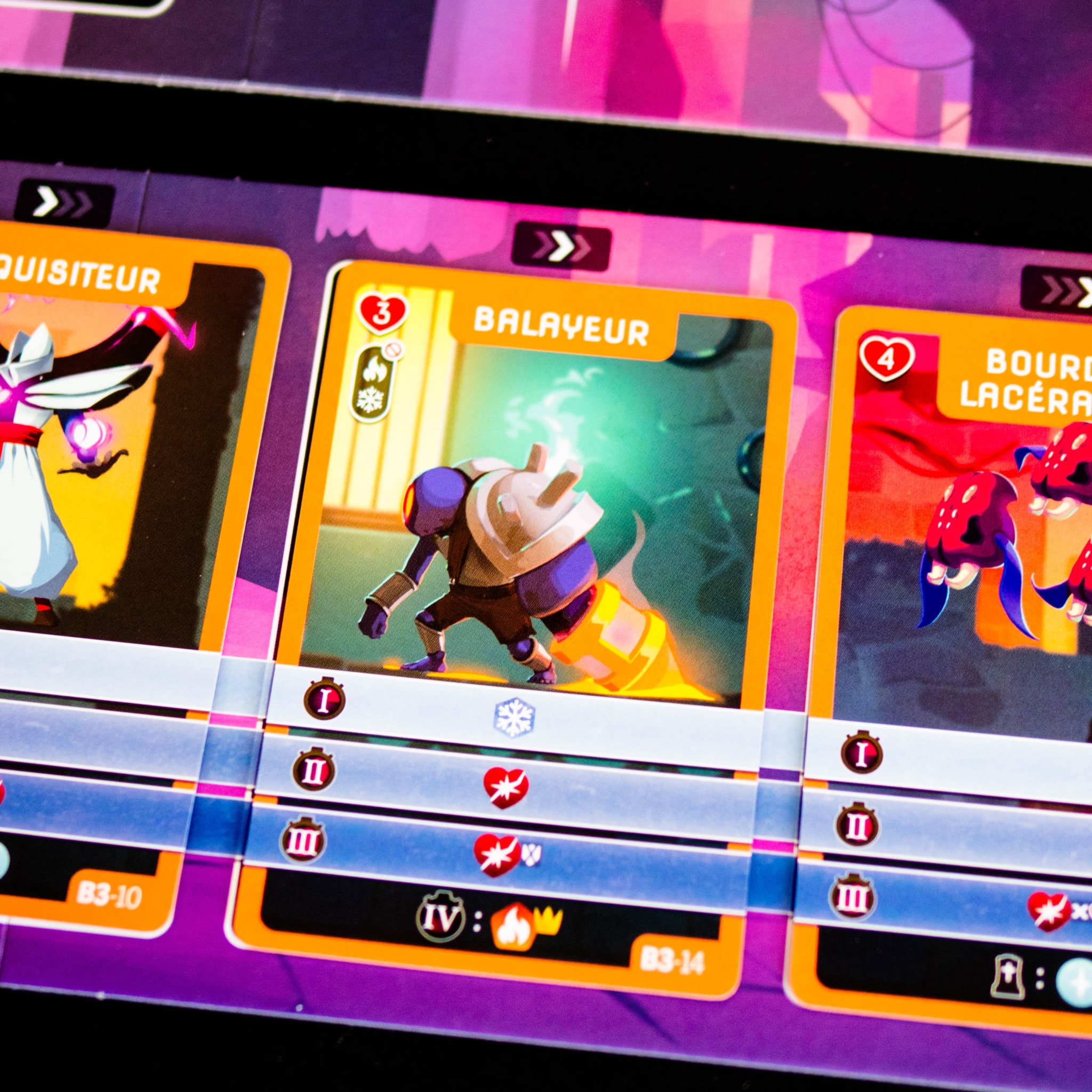
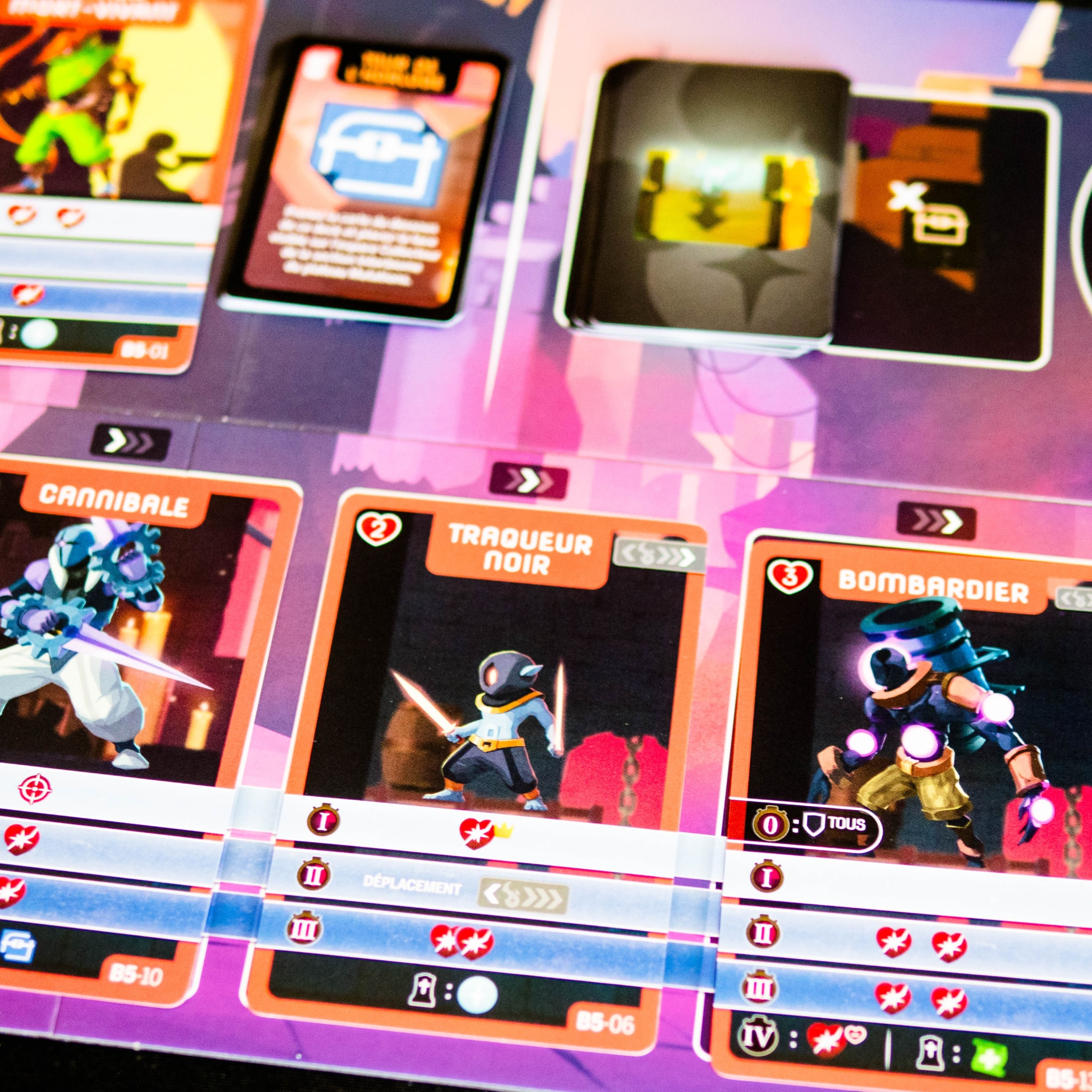
When an Encounter tile is revealed, the Monsters are placed on the Combat board and the fight begins.

Preparation Phase (< 1 minute) : Players briefly discuss their general strategy, without revealing the icons on their cards.

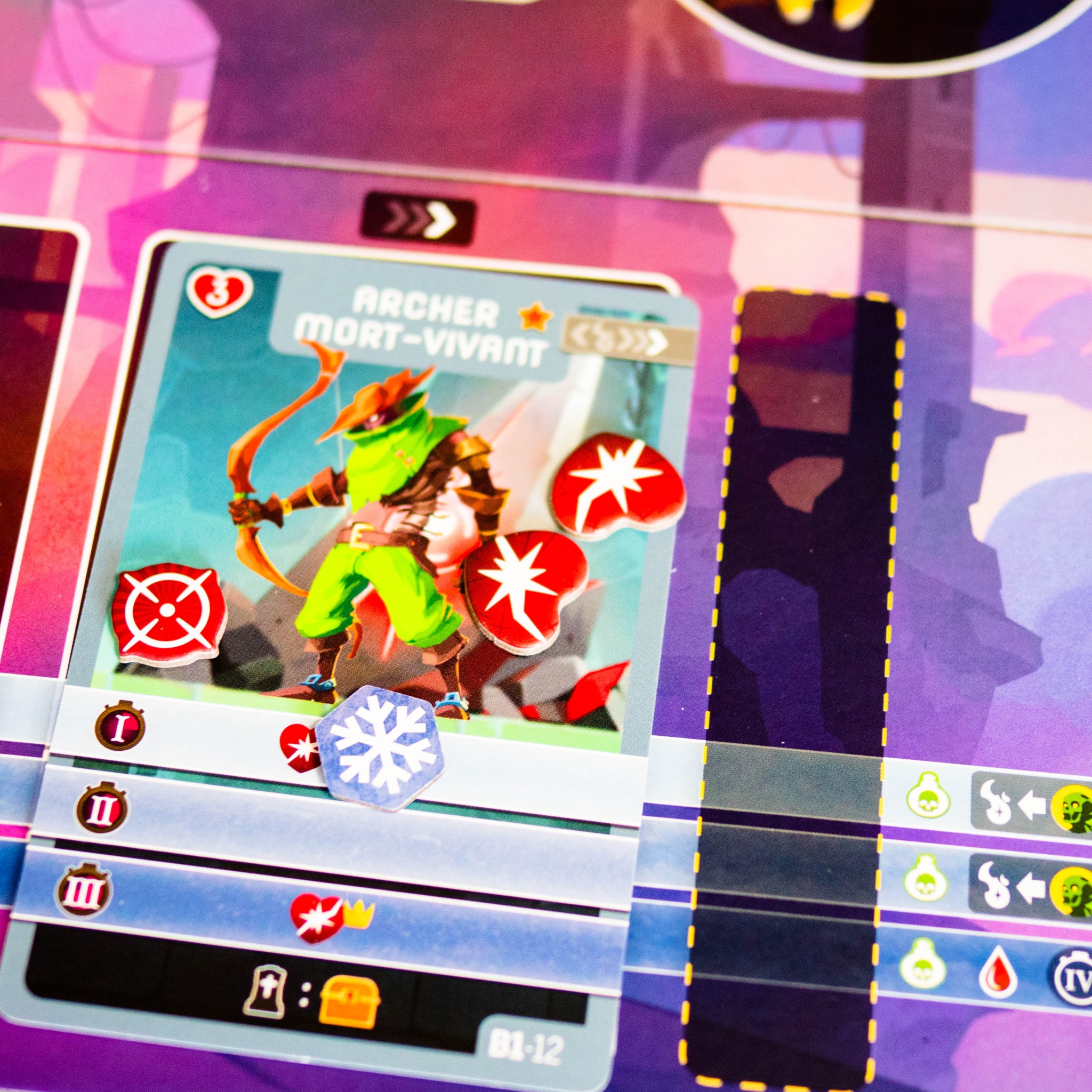
Playing Combat Cards : Exactly 3 Combat cards are played in each Combat round (regardless of group size). Each player chooses a card from their hand, announces a single action and the Round in which it will take place (e.g., “I deal damage in Round II”), then places it face down. All cards are then revealed simultaneously.

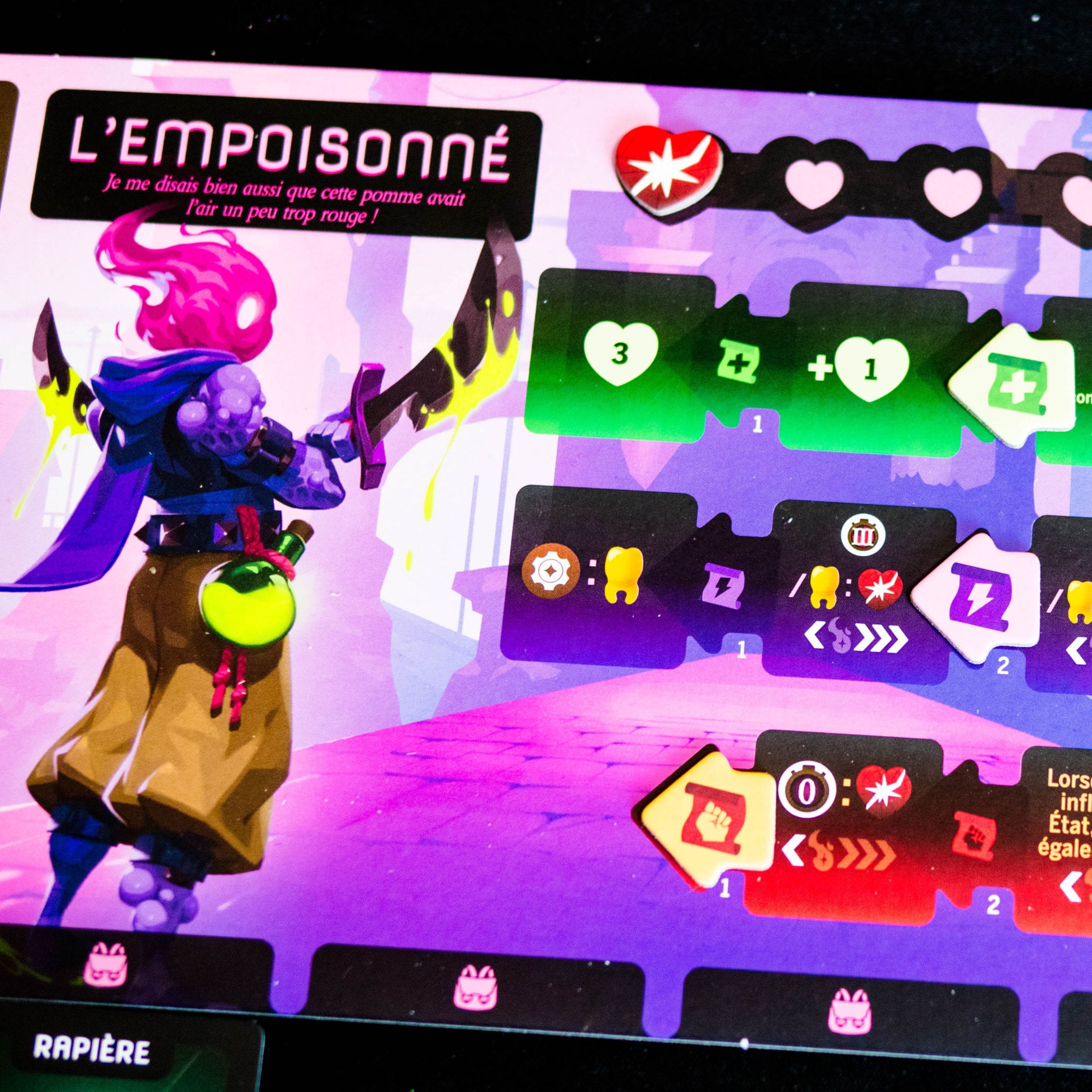
Combat Rounds (I, II, III) : Actions are resolved from left to right on the Combat board. Prisoners and Monsters perform their actions in the following order:

  • Damage → place a Damage token on a Monster or Prisoner
  • Block → place a Shield token to absorb a future attack
  • Ability → activate a special power (Scroll or Equipment track)
  • Plunder → retrieve the loot present in the Group area
  • States → Poisoned, Frozen, Burning, Bloodied, Targeted: each has devastating effects

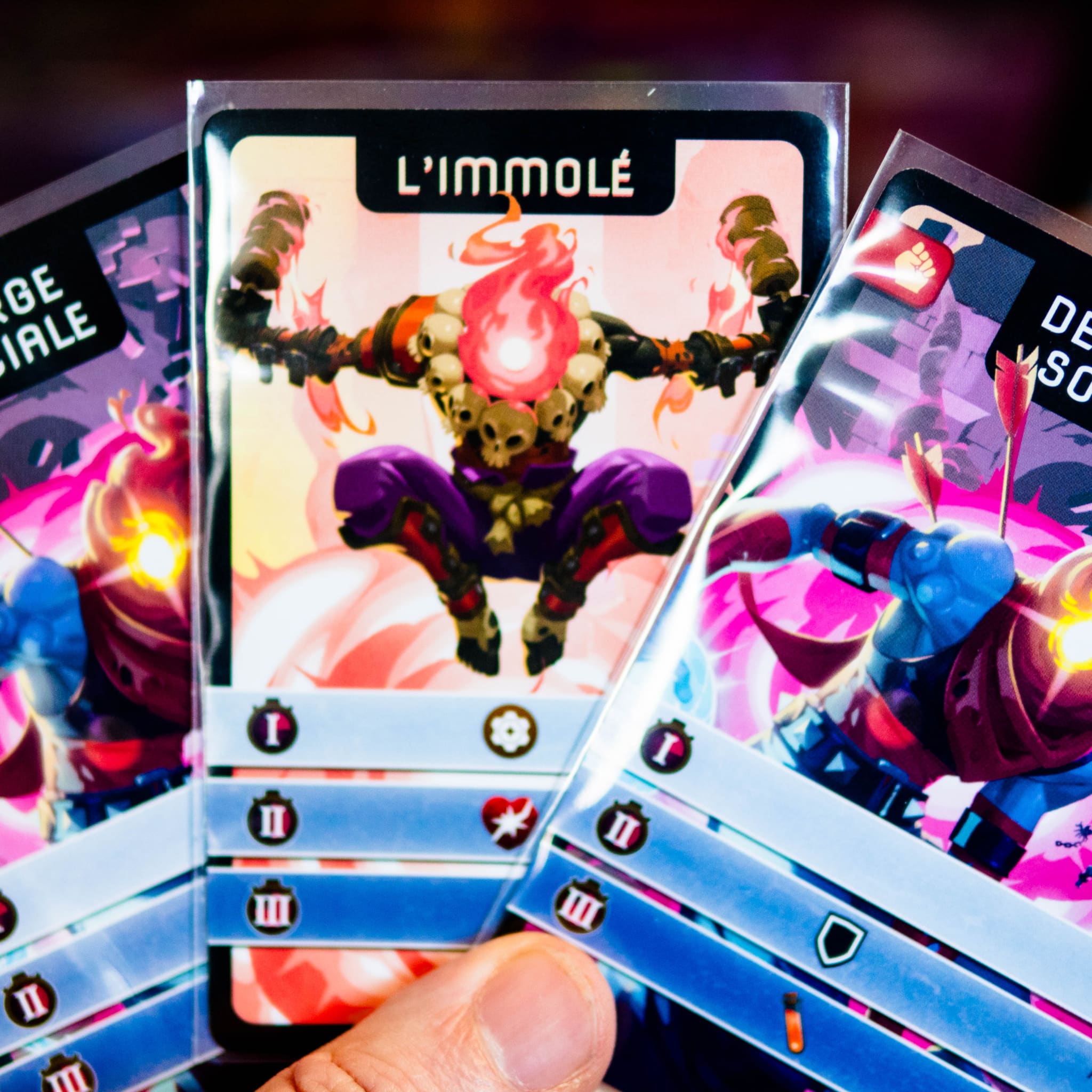
Equipment cards (obtained along the way) enrich the options: some activate at a specific Round instead of an action, others add damage, and still others activate automatically under certain conditions.

End of Combat : The Scrolls, Vials, and Equipment earned are distributed. If a Prisoner dies during the Combat, the Run still ends at the conclusion of the current Combat.

The Interbiome: A Breath Between Two Storms

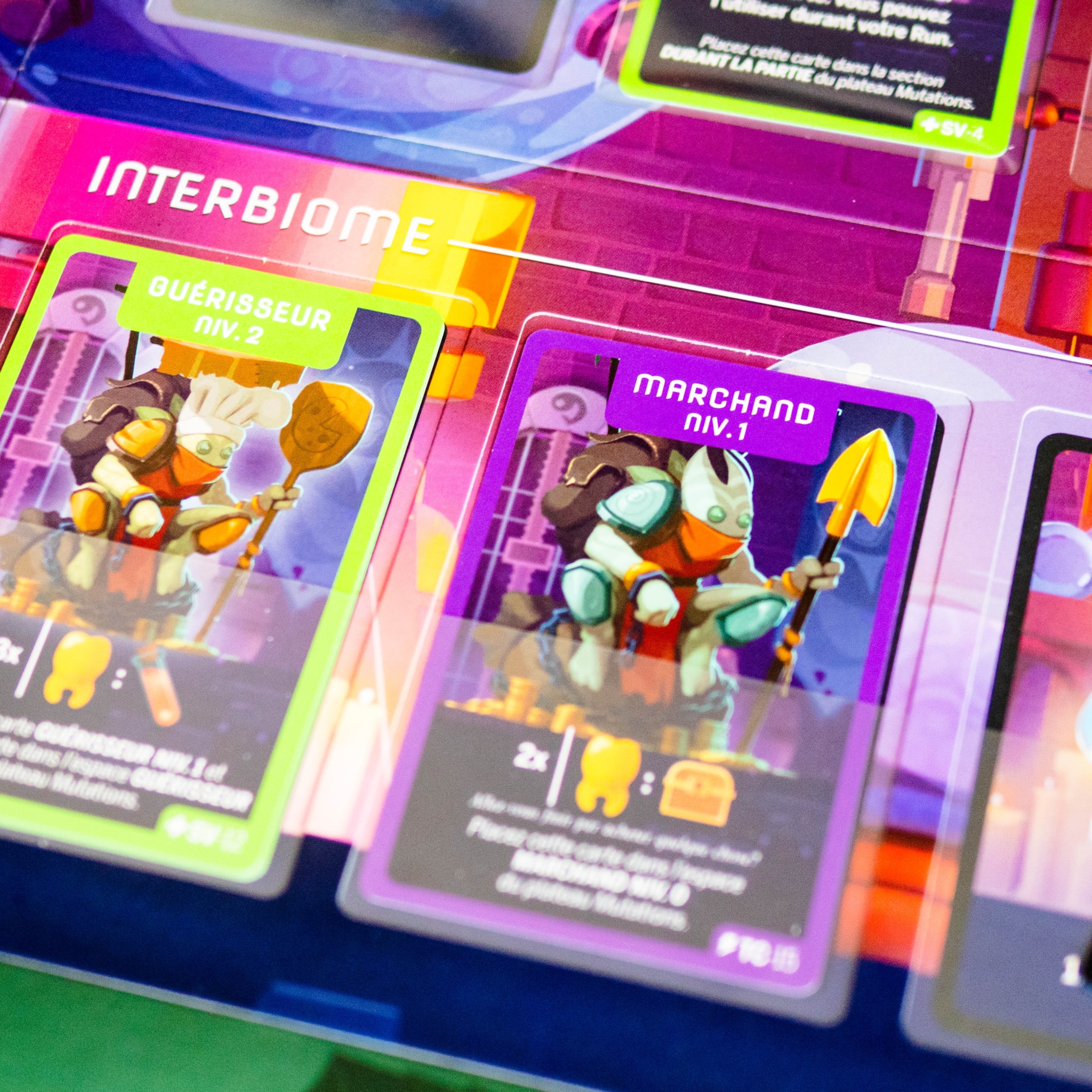
If you reach an Exit, you enter the Interbiome. This is the only moment of respite:

  • Collector → transforms found Blueprints into permanent Equipment
  • Merchant → buys Equipment with Gold Teeth
  • Healer → cures Gold Teeth

Then comes the next Biome, or a Boss Fight if you have crossed two consecutive Biomes.

The Bosses: The Real Challenges

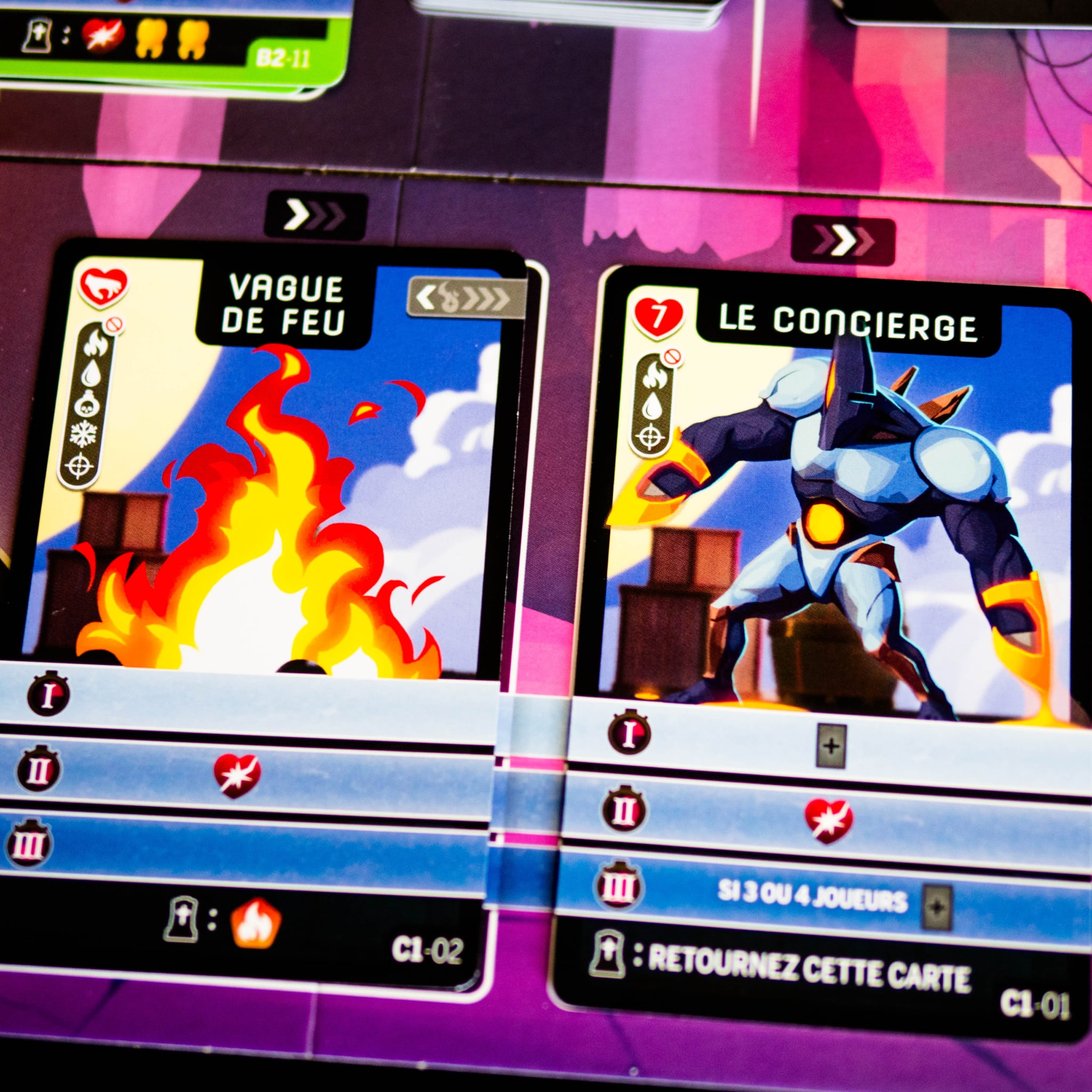
The Bosses (Concierge, Timekeeper, Hand of the King) fight in multiple Rounds and Stages. Each Stage has its own card side with new attacks. One Round = Rounds 0 to IV. In a 4-player game, a different player must pass their turn each round.

End of Run and Continuous Progression

Whether you die or win:

  • Cells → spent at the end of the Run to buy Upgrade cards (Permanent Mutations, Enhanced Combat cards, Skills)
  • Runes → permanently unlocked on the Mutations board, they open new corridors in future runs
  • Schematics → become permanent Equipment in your deck

Death costs you everything (Bag, Equipment in play) but Mutations, Runes and integrated Schematic cards survive . You always leave a little better equipped.

Is it good?

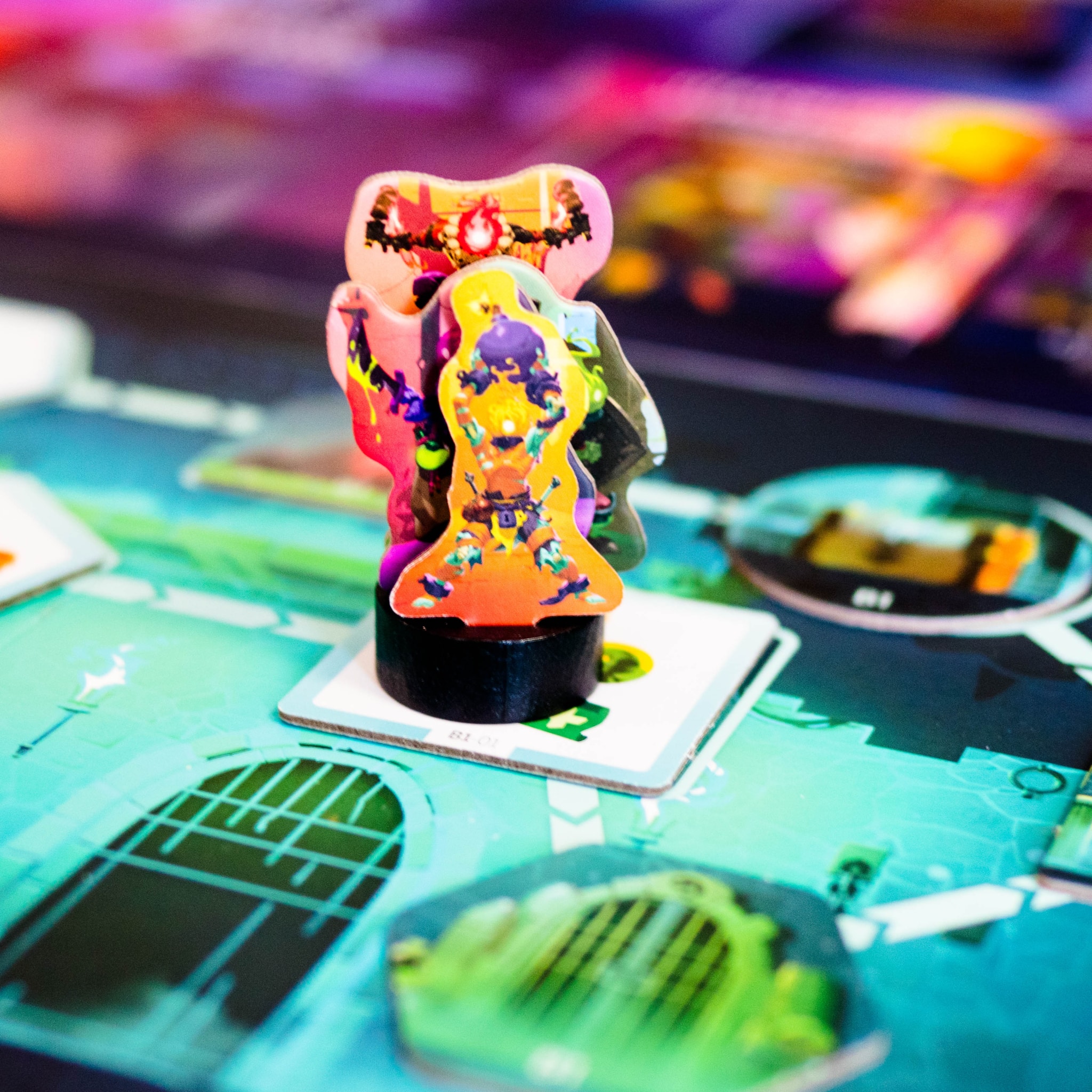
Dead Cells the board game effectively captures the spirit of the video game, featuring the different biomes, enemies, bosses, heroes, and, of course, the rogue-lite mechanics. The core of the rogue-lite genre is there: death is permanent during the run, but each defeat enriches your group for the next.

The combat system is effective. Playing your cards and trying to anticipate what the Monsters do is tense, strategic, and quite fluid. The Status effects (Poison, Freeze, Fire, etc.) add a nice layer of depth. This sense of timing is also present in the team’s decision-making: which card should I play to break that zombie’s shield before it slices up my partner? etc.

The progression system using new Mutation cards gives us a real sense of growing power, but be warned, the game is punishing. You’ll have to restart again and again to get enough Cells to acquire these more powerful cards. But you know what you’re getting into, and the very essence of rogue-lite is this inevitable death that will send you back to square one to attempt a new run, better equipped for the next.

The solo mode works well. The Serenade automaton plays cards from its own deck and activates powers based on your discard pile. It’s well thought out.

Even though the game isn’t complicated to understand, the first few games can be tedious. Ranges, rounds, end-of-round effects, state/shield interactions, what to do at the end of a run, which cards to keep, which to discard, etc. It all takes several games to get the hang of it. Similarly, setup is a bit tedious, and you’ll likely have to repeat it several times to start new runs.

Furthermore, the very concept of a rogue-lite implies a degree of repetitiveness. Having to replay the Prisoner Quarters several times at the beginning might tire some players. But no matter, the pleasure of discovering the Blueprints and the addictive “just one more run and I’ll stop” mechanic will motivate players.

In short, Dead Cells: The Board Game is for players who primarily enjoy the Dead Cells video game and rogue-lites, but also for those who appreciate cooperative games offering demanding and challenging gameplay, and who aren’t afraid to try multiple times to succeed. It’s a demanding cooperative game, dense with rules, but incredibly addictive for anyone who enjoys progressive challenges.

If you enjoy the content and would like to support the site, please purchase your games through our affiliate links. The price remains the same for you, but it allows us to earn a small commission. Thank you for your support!

Dead Cells: The Board Game Review
8.0Good
Dead Cells: The Board Game brilliantly translates the punishing experience of the video game into an engaging tactical and cooperative combat system. Despite a somewhat tedious setup and the inherent repetitiveness of the genre, its addictive mechanic of constant progression through mutations offers a demanding and captivating challenge that makes you want to start a new run after every defeat.

Positives

  • True to the spirit of video games
  • Rogue-lite mechanics well recreated
  • Tense and strategic combat system
  • Ramp-up
  • Well-designed single-player mode
  • The addictive feeling of "just one more run"

Negatives

  • The first few parts were laborious.
  • Setup to be repeated for each run
  • Punishing game: many runs required to progress
  • Repetitiveness inherent in the concept
  • May put off players unfamiliar with rogue-lite games

Leave a Comment

0.0/10

If you enjoy the content and want to support the site, purchase your games through our affiliate links. The price remains the same for you, but we earn a small commission. Thank you for your support!