- Publisher(s) : Indie Boards & Cards
- Designer(s) : Sydney Engelstein, Nick Little (I), Kevin Riley, Dávid Turczi
- Artist(s) : Douglas Duarte, Gong Studios, Nio Mendoza, Simon Pape
- Players : 1–4
- Playing time : 60 Min
- Weight BGG : 3.00
What's this?
Aeon’s End: The Descent is a cooperative deck-building card game for 1 to 4 players , playable in about an hour. This new box is entirely standalone, but its contents can also be combined with other games in the Aeon’s End series.
How do you play?
A completely unpredictable turn order
One of the great features of Aeon’s End is its random turn order .
Instead of simply taking turns, a deck of cards determines who will act next. It could be a player… or the Nemesis.
Phase 1: Casting Spells
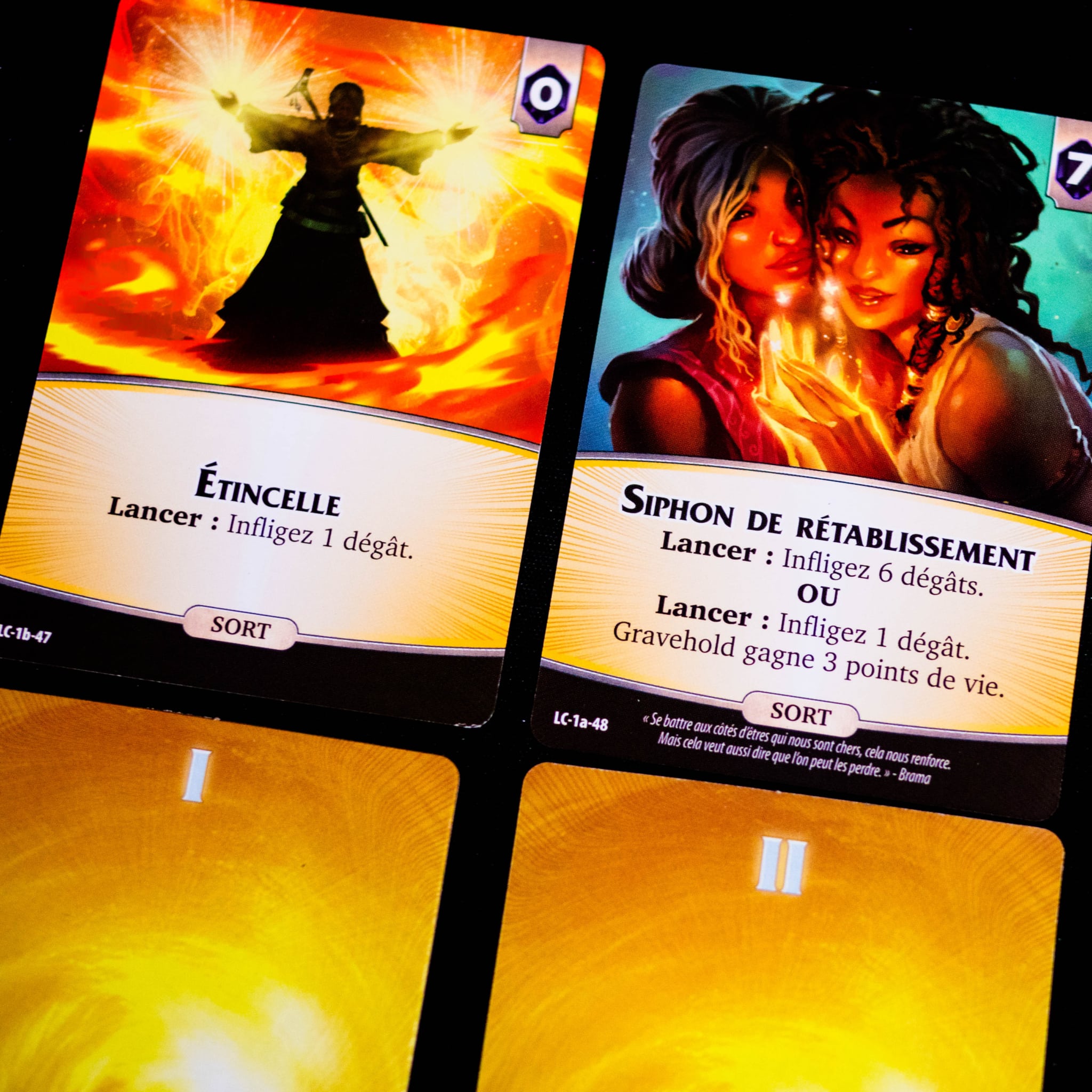
At the start of your turn, you can cast previously prepared spells on your Breaches.
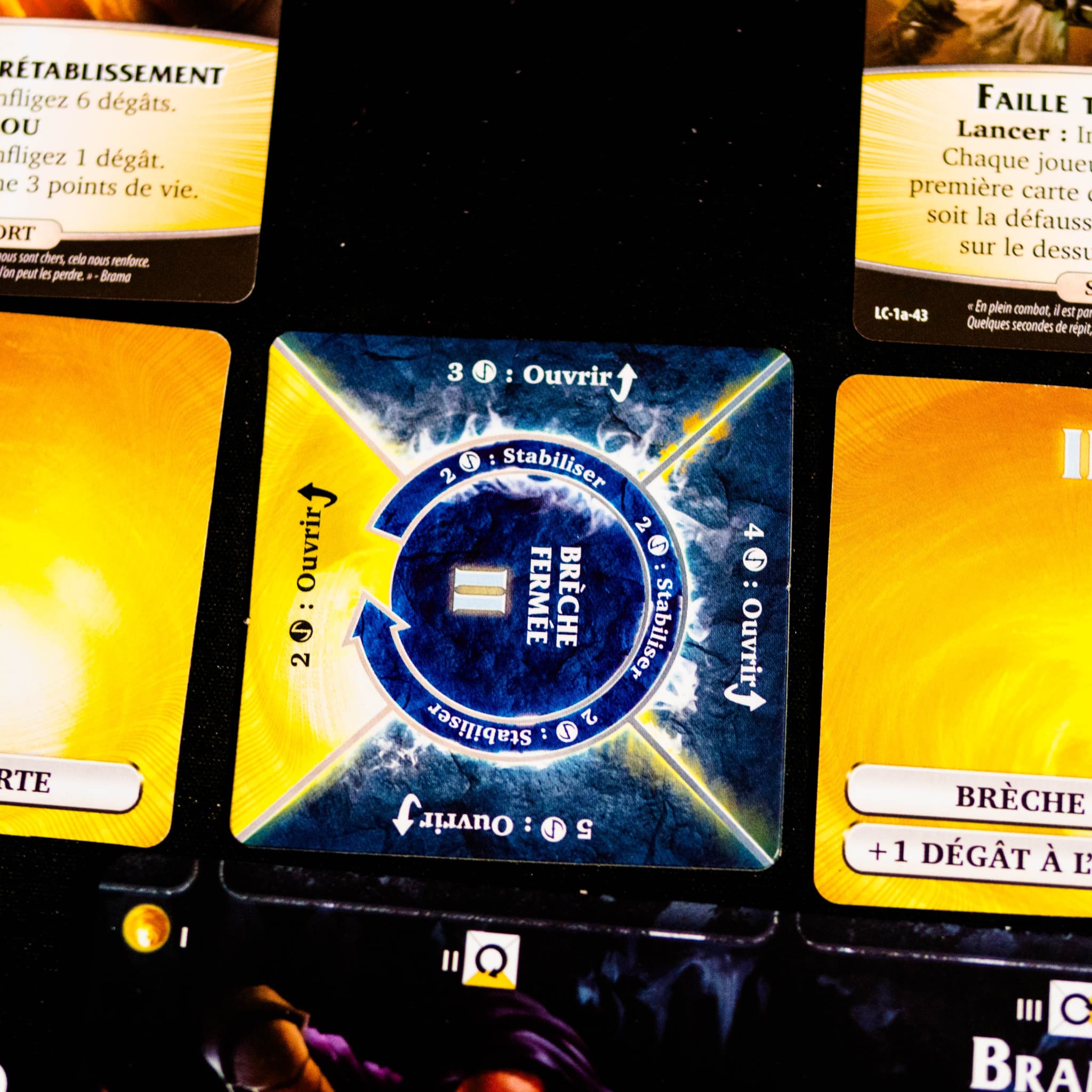
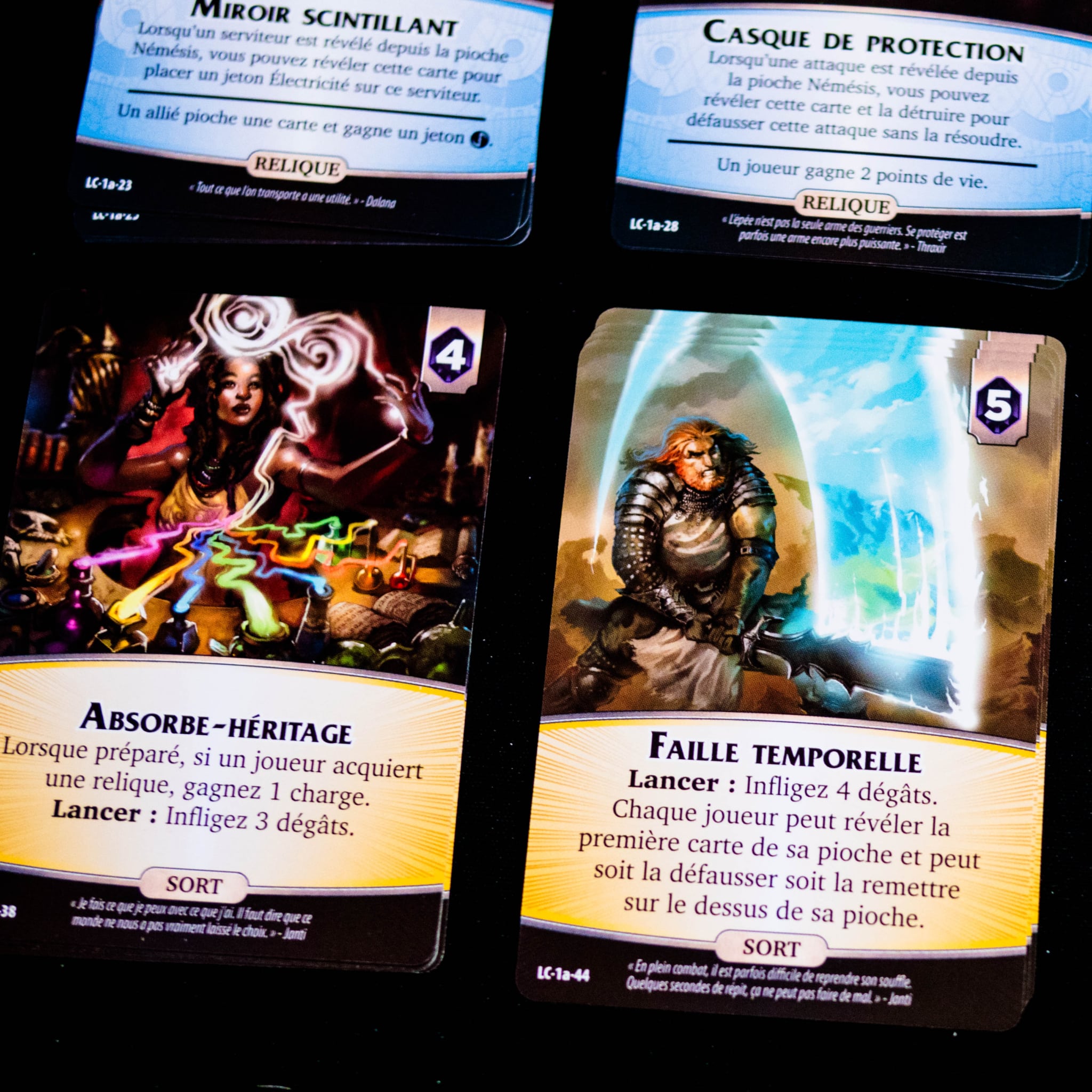
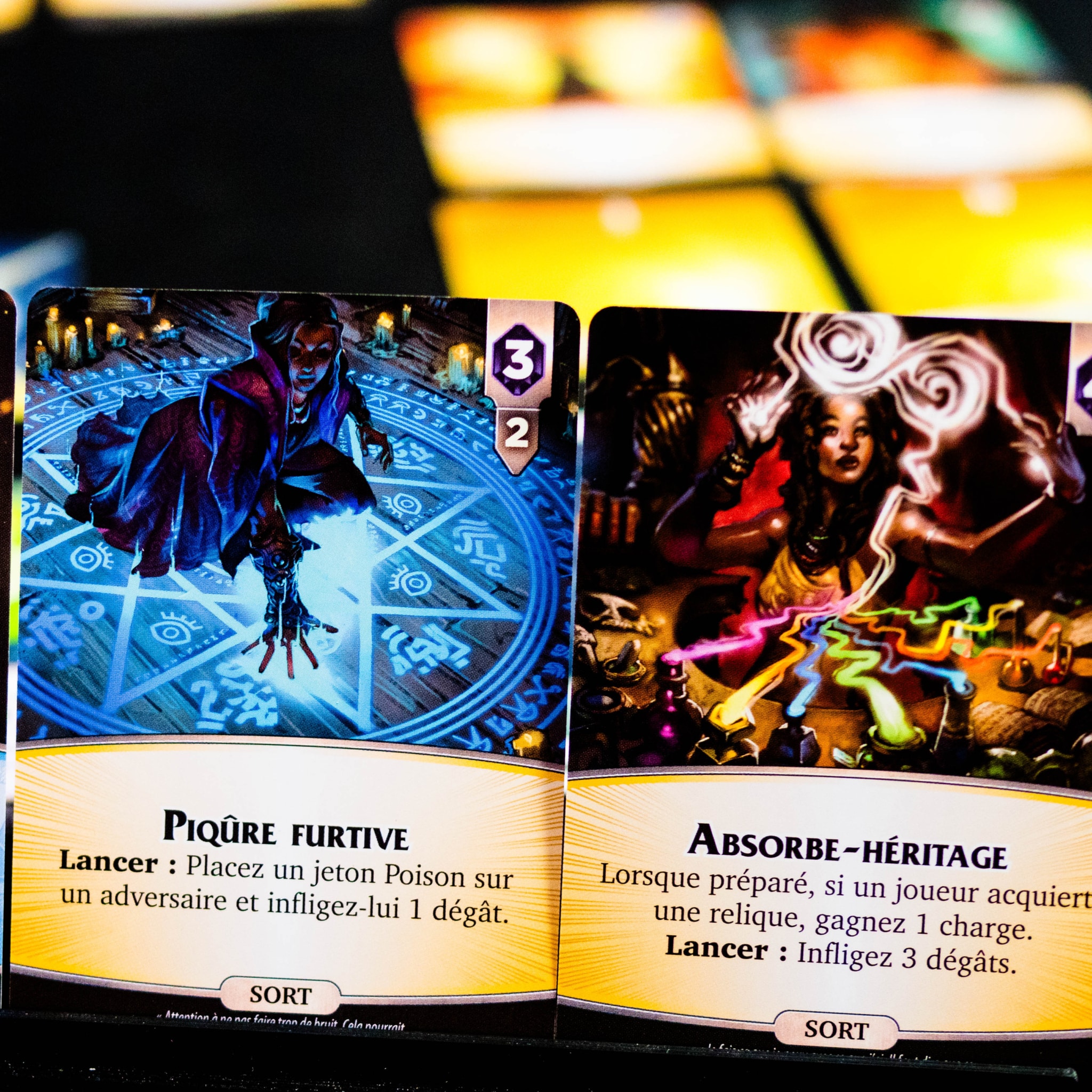
Spells are your primary source of damage and, depending on the card, can also produce various additional effects. The twist is that a spell generally cannot be cast immediately after being acquired. It must first be prepared on a Breach .
Phase 2: Playing your cards right and preparing for the future
After casting your spells, you can perform different actions in the order of your choice.
Playing with gems
Gems are primarily used to produce Ether , the resource used to purchase new cards.
Playing relics
The relics offer various immediate effects.
Acquire new cards
With your Ether, you can buy new cards available in the reserve.
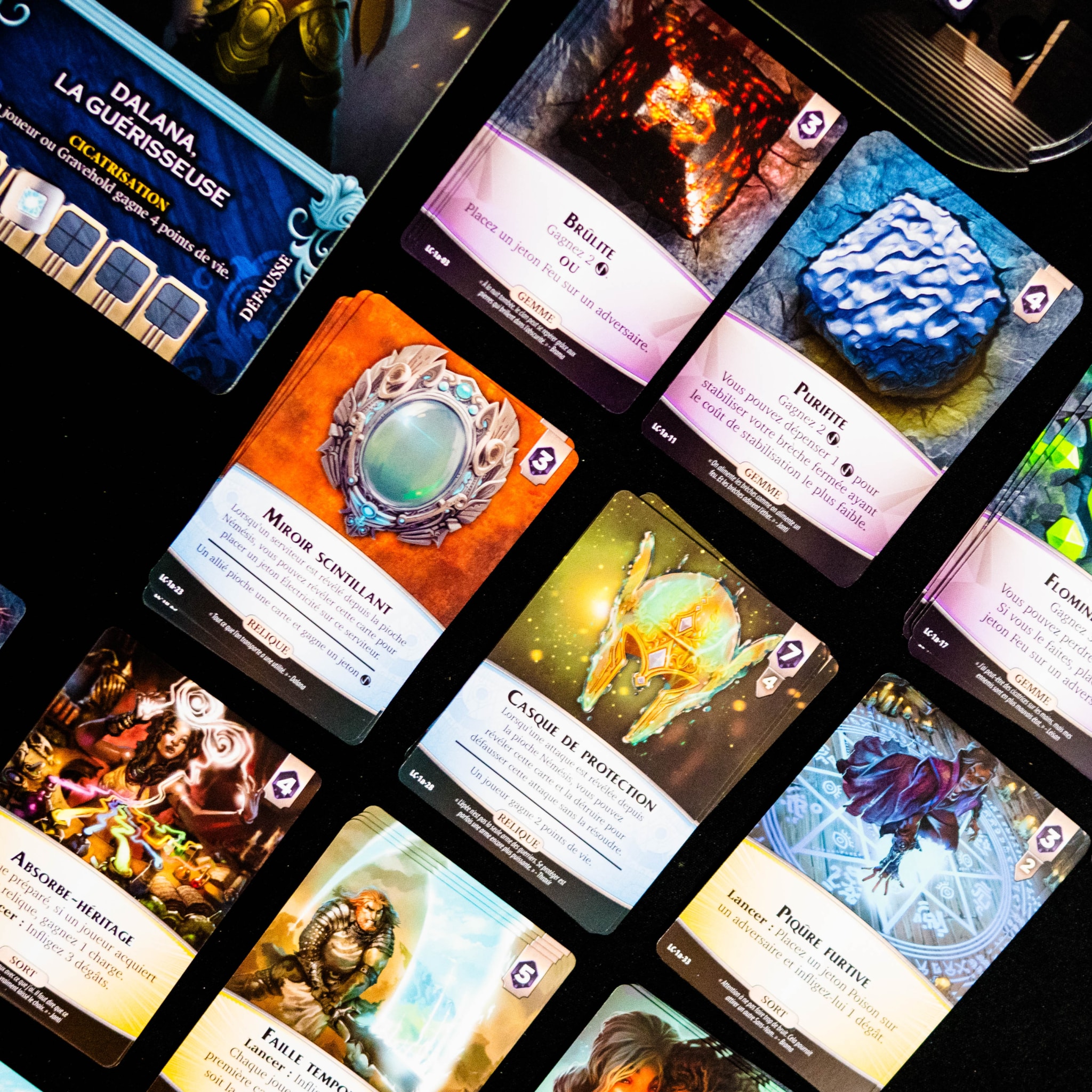
There are three main categories:
- Gems , to generate more resources ;
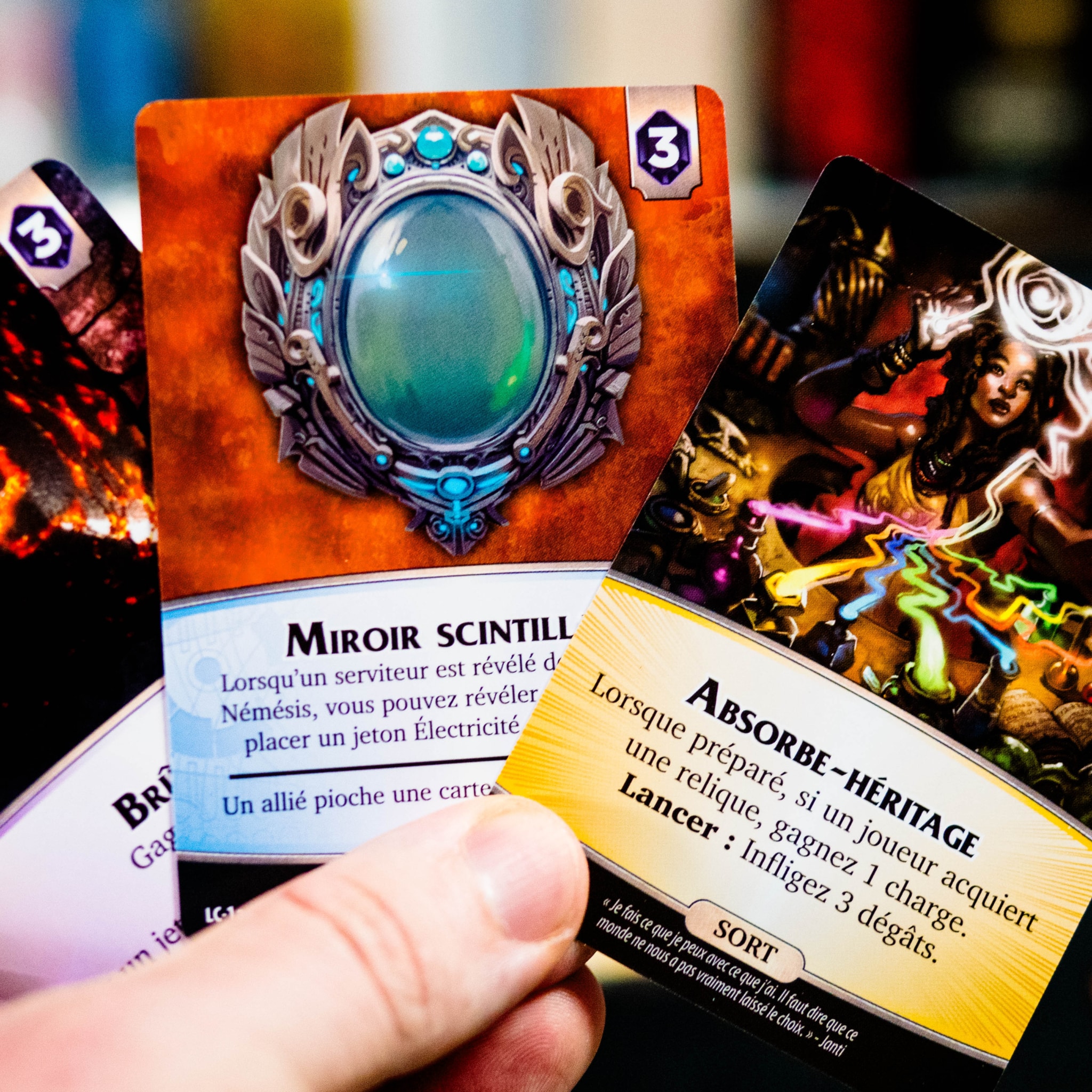
- Relics , to enjoy immediate effects ;
- Spells , to inflict damage and trigger different effects .
Phase 3: Discard and draw
Once your actions are complete, the played cards are placed in your discard pile.
And this is where the system becomes particularly interesting: you choose the order in which you discard them . When your deck is exhausted, you simply flip your discard pile to create your new deck.
The Nemesis tour
When the Nemesis turn order card appears, it’s obviously much less funny.
Nemesis draws a card from her deck and applies its effect.
The attacks
They produce their effect immediately and can inflict damage on players or Gravehold.
The servants
They remain in play and can become an additional threat that will need to be managed before they become uncontrollable.
The powers
They usually trigger after several turns if the players do not find a way to neutralize them.
The new feature: Friends and Enemies
The Beginning introduces the Friends and Enemies module .
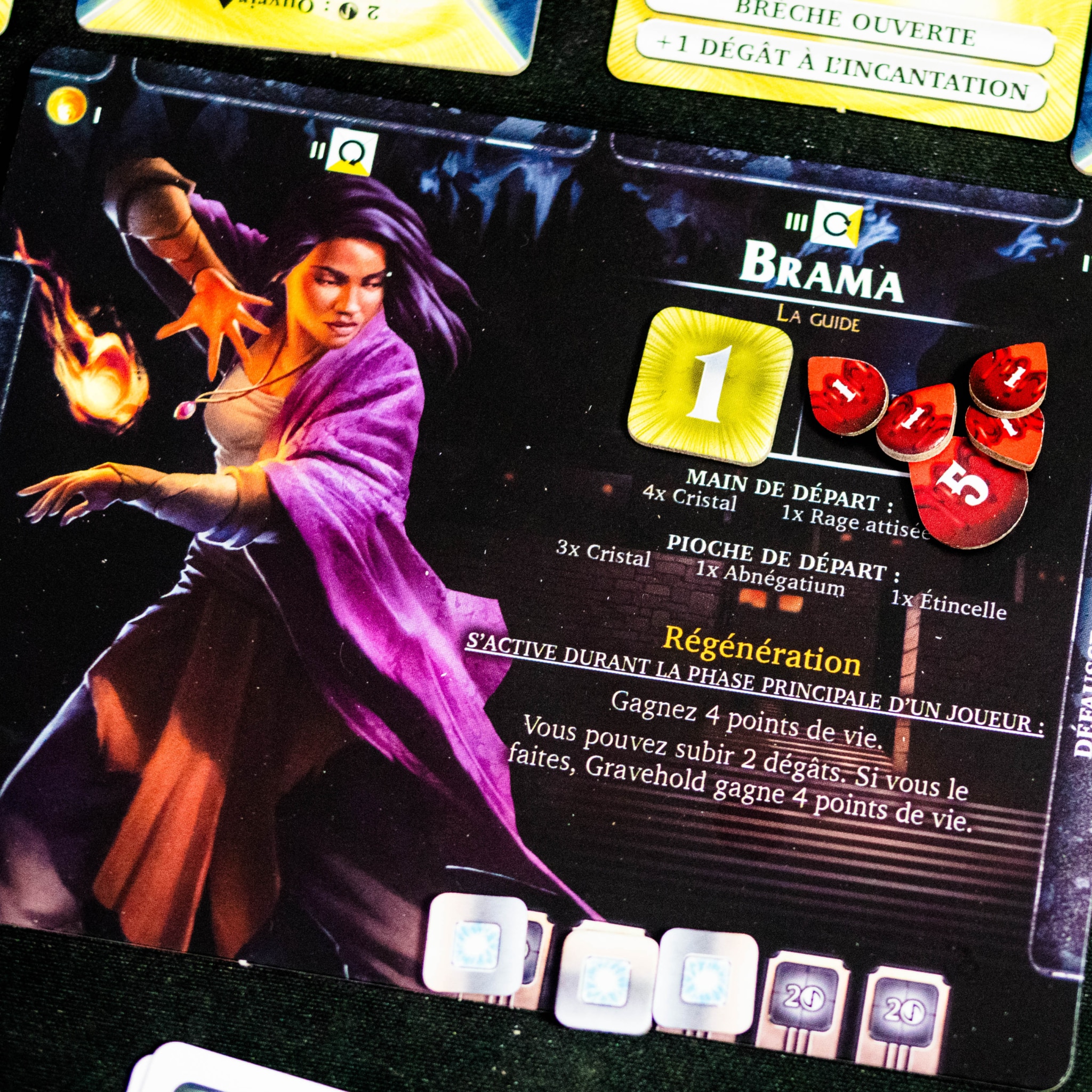
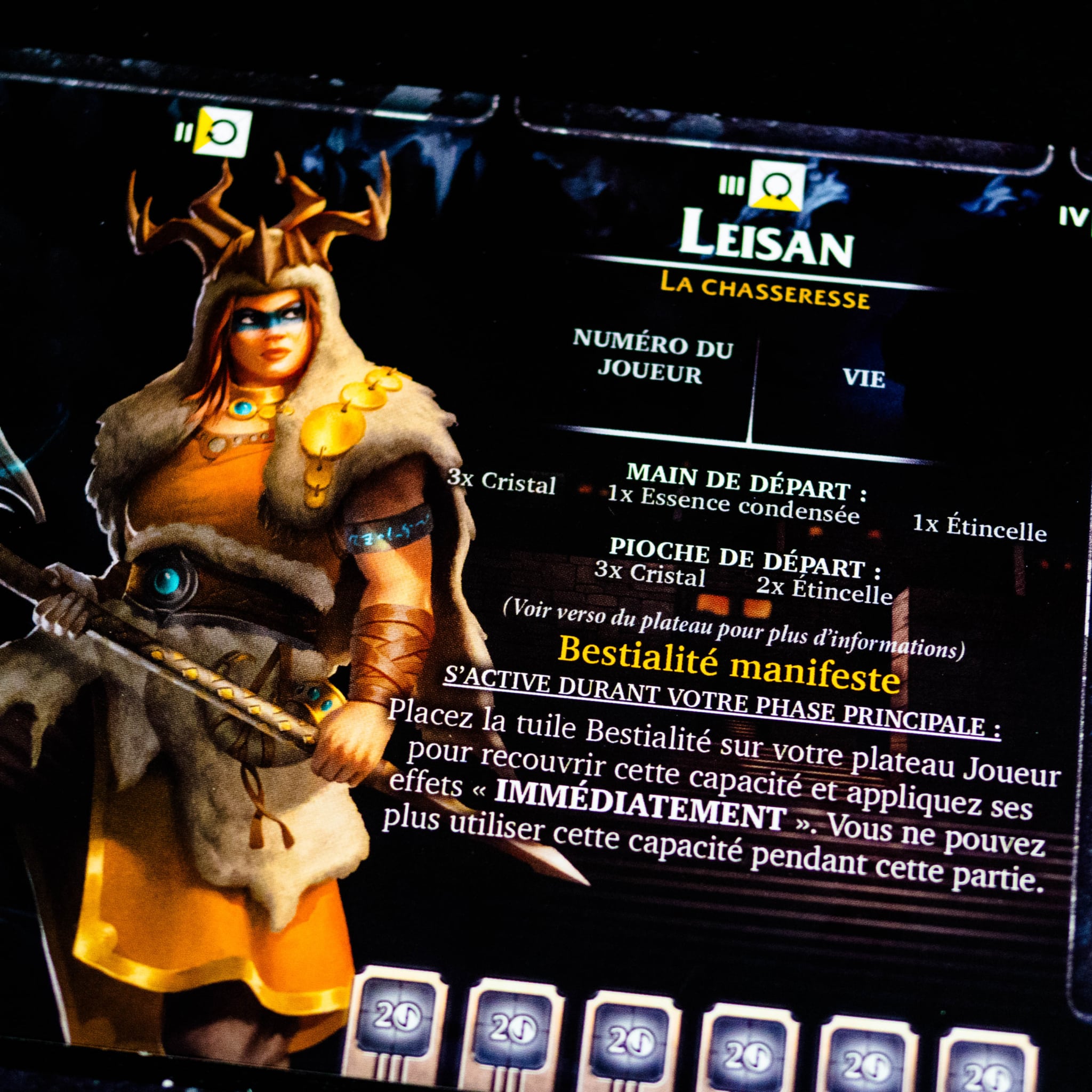
At the start of the game, a Friend and an Enemy can be added to the table, each with their own player board and a small deck of four cards. When a Friend or Enemy card is revealed, the corresponding character activates the card on top of their deck.
End of game
To win, you must defeat Nemesis before:
- Gravehold should not be destroyed;
- or that all the players are exhausted.
Is it good?
With this stand-alone version of Aeon’s End , you won’t feel out of place. The game retains its immediately recognizable identity: deck-building without shuffling the discard pile , random turn order between players and the Nemesis, Breaches, spells and powers, etc.
The system remains as solid and effective as ever, from spell planning and card purchases from gems, relics, and spells, to the ever-tense cooperation against the Nemeses. Aeon’s End: The Descent still works brilliantly as a cooperative game. You must constantly monitor the state of Gravehold, the threats on the table, the cards that will return to other players’ decks, and the team’s potential damage. It’s a true team game: it’s impossible to play in isolation without communicating with others.
As for new features, the Friends and Enemies module introduces new skills and threats based on the revealed cards. This adds new tactical interactions and spices up the management of these secondary allies and enemies.
The game also features a narrative adventure exploring the origins of Gravehold. As you progress, you open new packages and envelopes that gradually expand the available content.
On the downside, Aeon’s End: The Descent could be criticized for remaining fairly conventional in its offerings. If you’re already familiar with Aeon’s End , you’ll immediately feel at home. The Friends and Enemies module does add a small layer of rules and new manipulation possibilities, but nothing particularly complex or revolutionary.
As in previous Aeon’s End games , setting up the market and the various Nemesis packages also takes some time. Finally, the narrative remains fairly basic and will require you to play several games with the same group if you want to gradually discover the contents hidden in the different envelopes.
Aeon’s End: The Descent thus retains the series’ excellent cooperative deck-building system, with its ever-brilliant idea of never shuffling your deck so you can accurately anticipate your future hands. This new standalone box enriches the formula with a narrative adventure, envelopes to open, and the Friends and Foes module , although, overall, the experience remains fairly classic for series veterans.
Aeon's End: The Descent review
Positives
- Deck-building remains as effective as ever
- The shuffle-free discard system
- Tense battles against the Nemeses
- A true cooperation between the players
- Content to be discovered gradually
Negatives
- A formula that remains fairly classic for those familiar with the series
- A more substantial box than previous ones to discover the series
- The narrative style remains light
- The implementation