- Publisher(s) : Lookout Games
- Designer(s) : Günter Burkhardt
- Artist(s) : Ari Oliver, Klemens Franz
- Players : 2–5
- Playing time : 45 Min
- Weight BGG : 1.90
What's this?
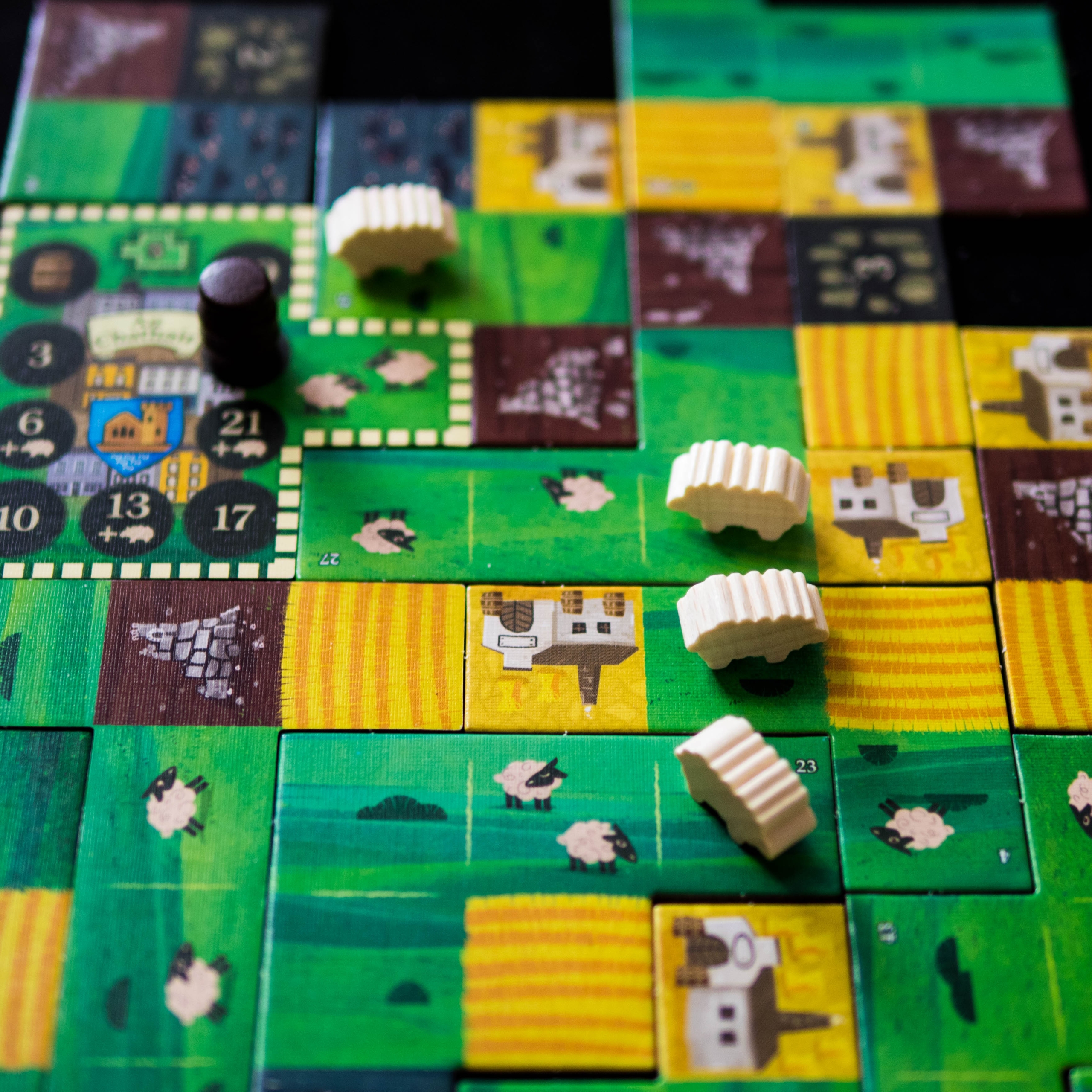
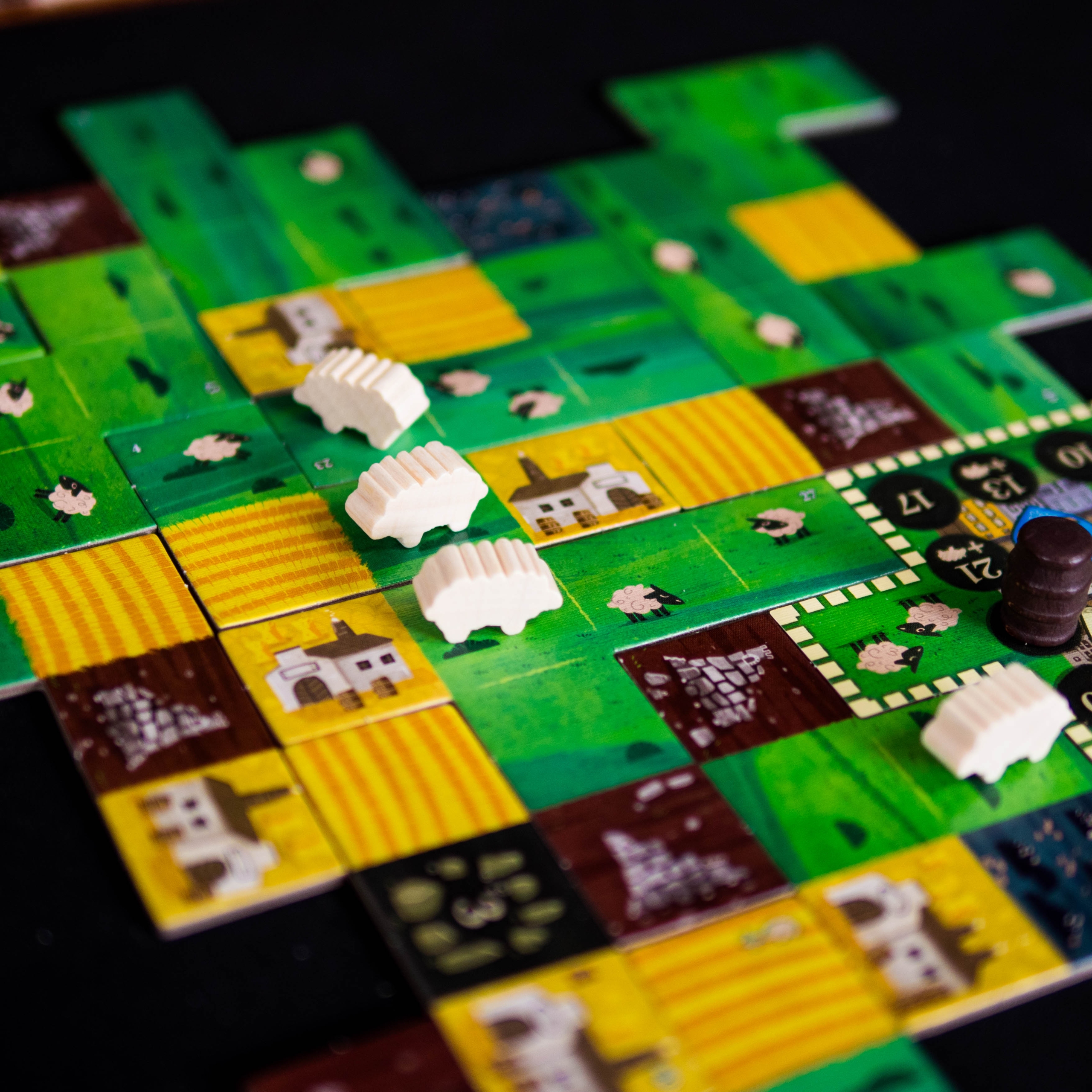
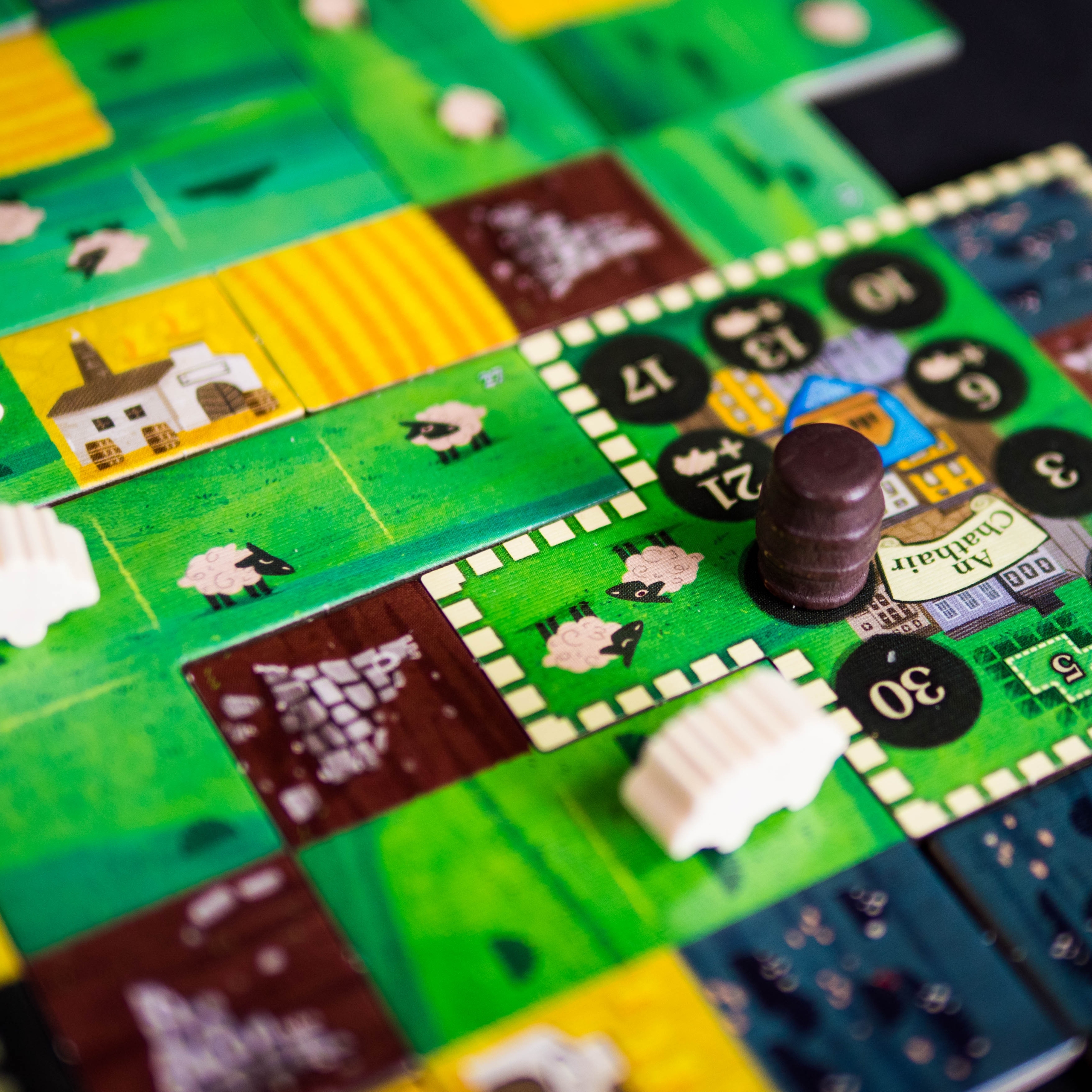
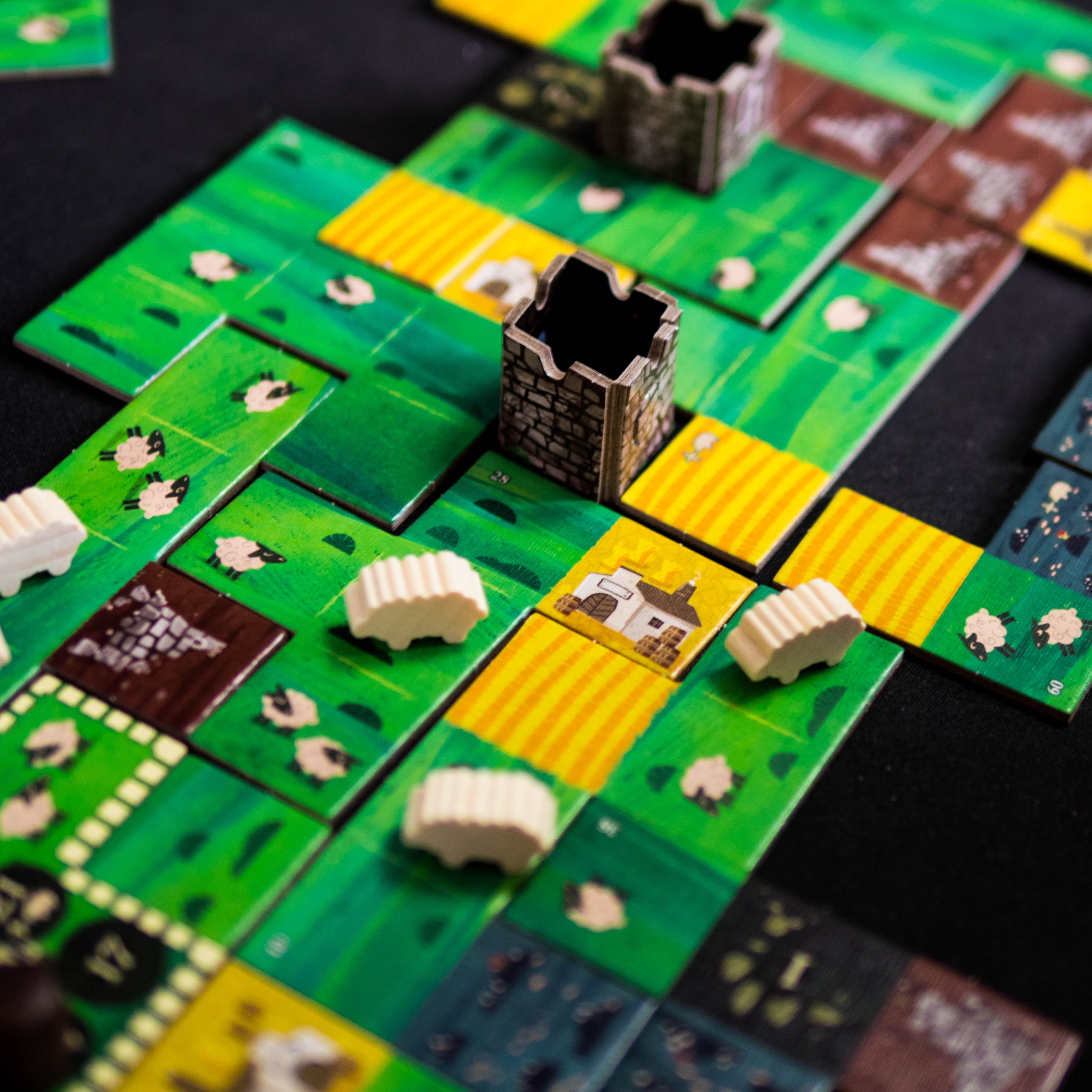
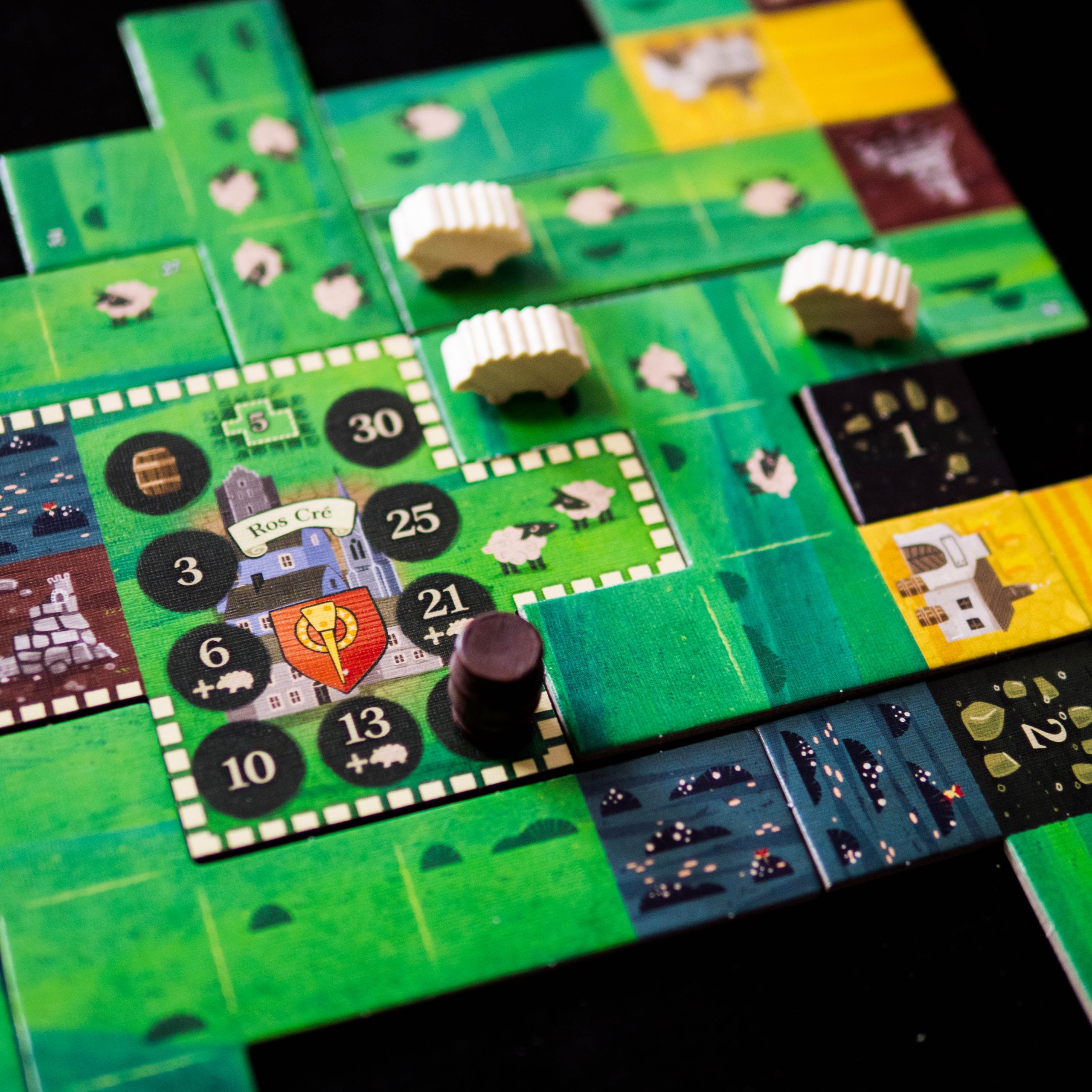
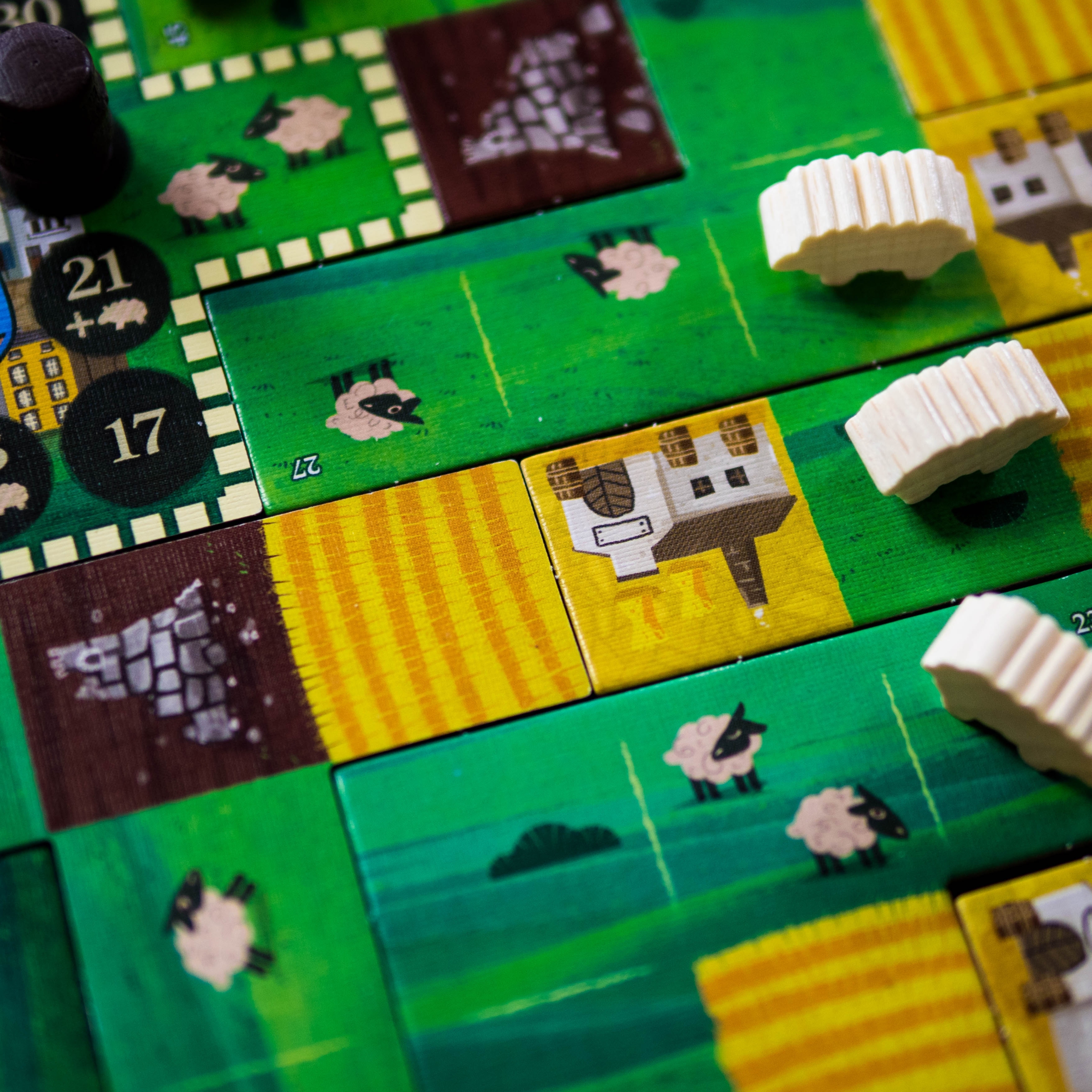
Tipperary is a tile-laying game designed by Günter Burkhardt and published by Lookout Games. Playable by 2 to 5 players, ages 8 and up, for games lasting approximately 45 minutes, it immerses you in the lush Irish countryside. The idea is to develop your territory by combining pastures, grain fields, distilleries, ruins, and stone circles to create the most prosperous estate. Between herd management, whiskey production, and spatial optimization, every choice counts to maximize your victory points.
How do you play?
The game takes place in 10 or 12 rounds depending on the number of players, with three phases each time:
-
Placement phase
-
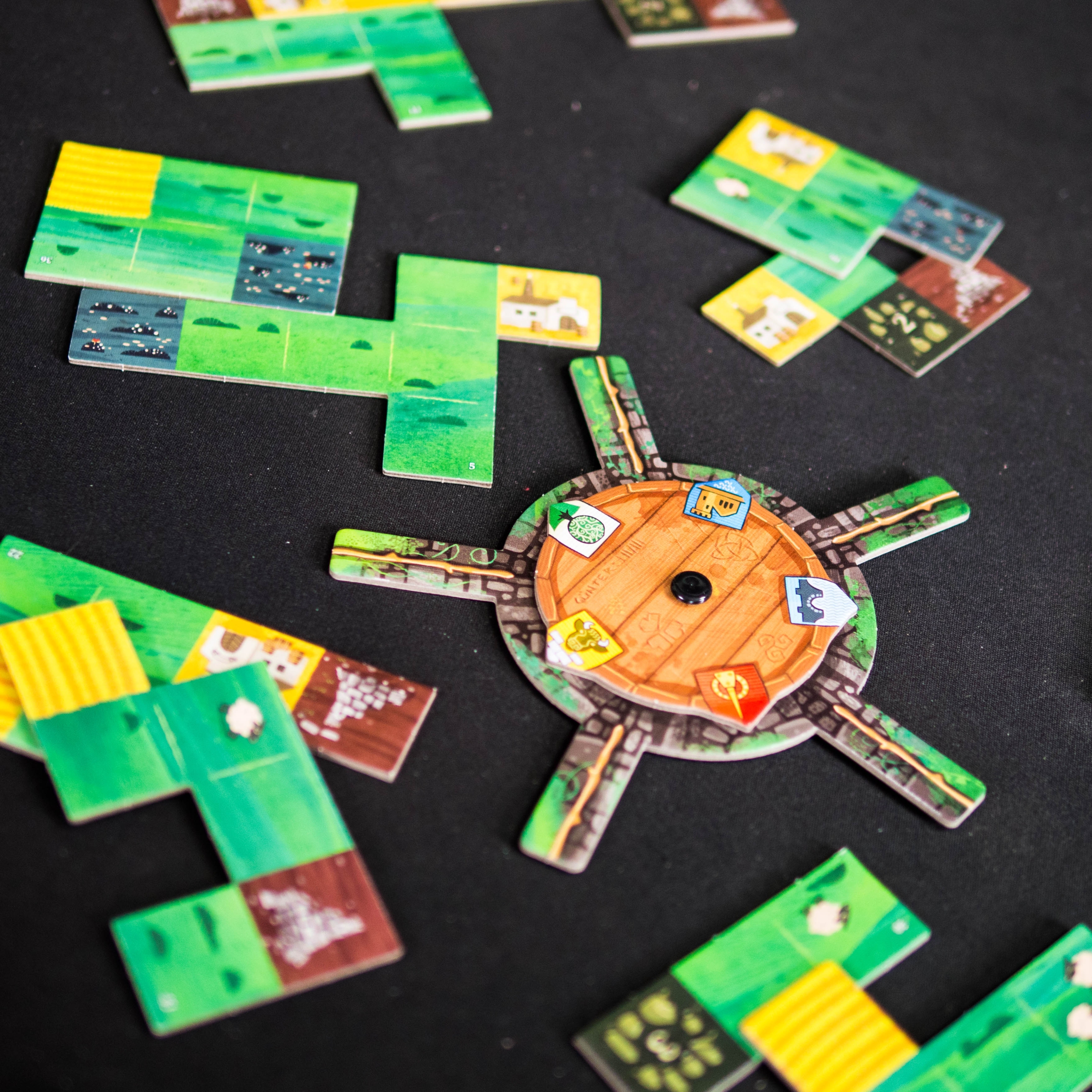
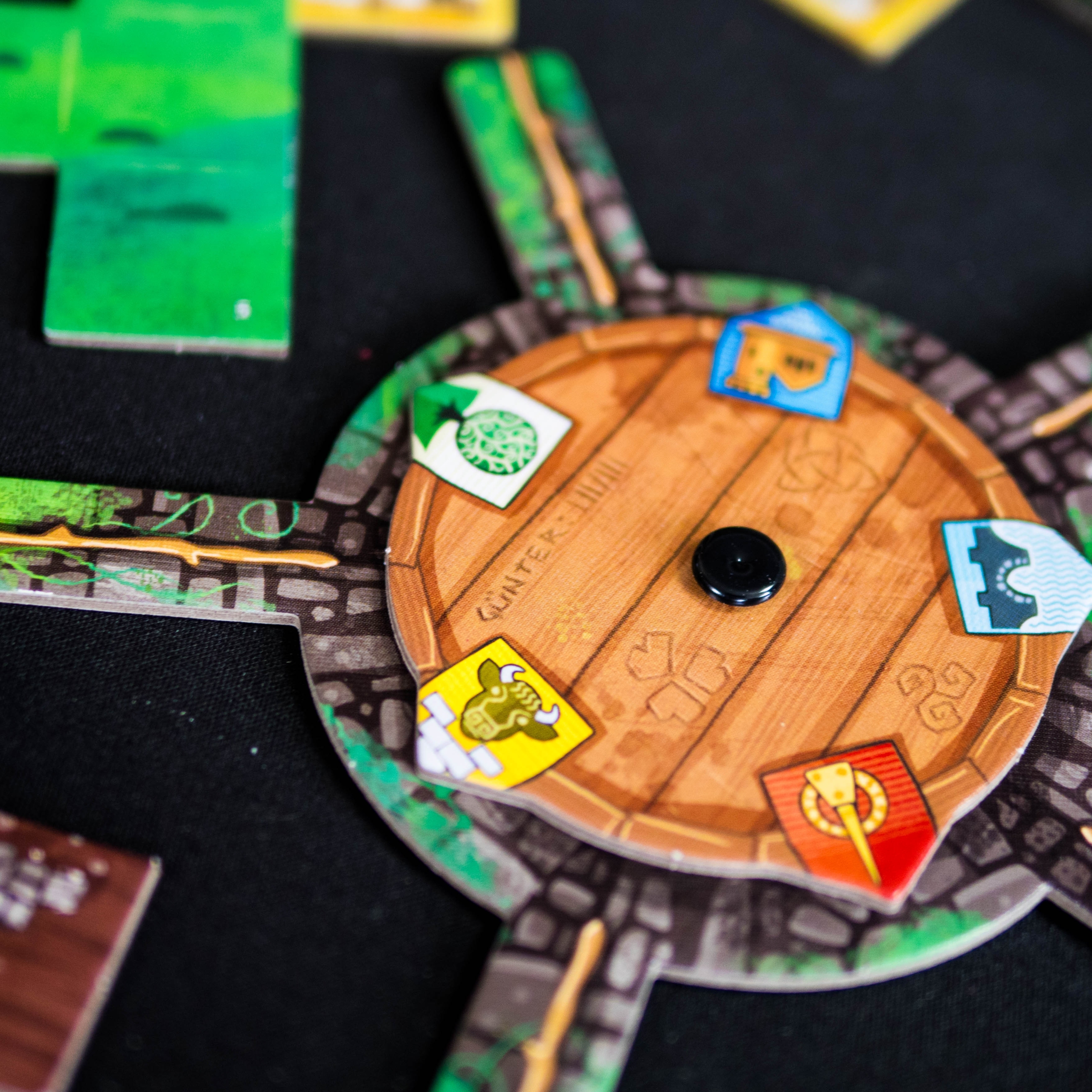
The central wheel is spun, which determines for each player the area of the board from which they can choose two tiles.
-
Each player selects one of the two tiles and adds it to their territory, respecting the placement rules (orthogonally, without covering other tiles, free orientation possible).
-
The tiles feature different landscapes with varying effects:
-
Pastures and sheep : grouping your sheep together forms flocks; the largest one earns a lot of points.
-
Fields and distilleries : placed side by side, they produce whiskey, which progresses on a track giving points and bonus sheep.
-
Ruins : Aligning three ruins in a straight line allows you to gain turns, useful at the end of the game to fill gaps.
-
Bogs : Forming a new protected site grants a bonus token, adding a free tile immediately.
-
Stone circles : directly award victory points.
-
-
-
Sheep phase
-
A check is made to see who has the largest flock of sheep. The player in question wins or keeps the “Largest Flock” marker, which is worth 5 points at the end of the game.
-
-
End of the round
-
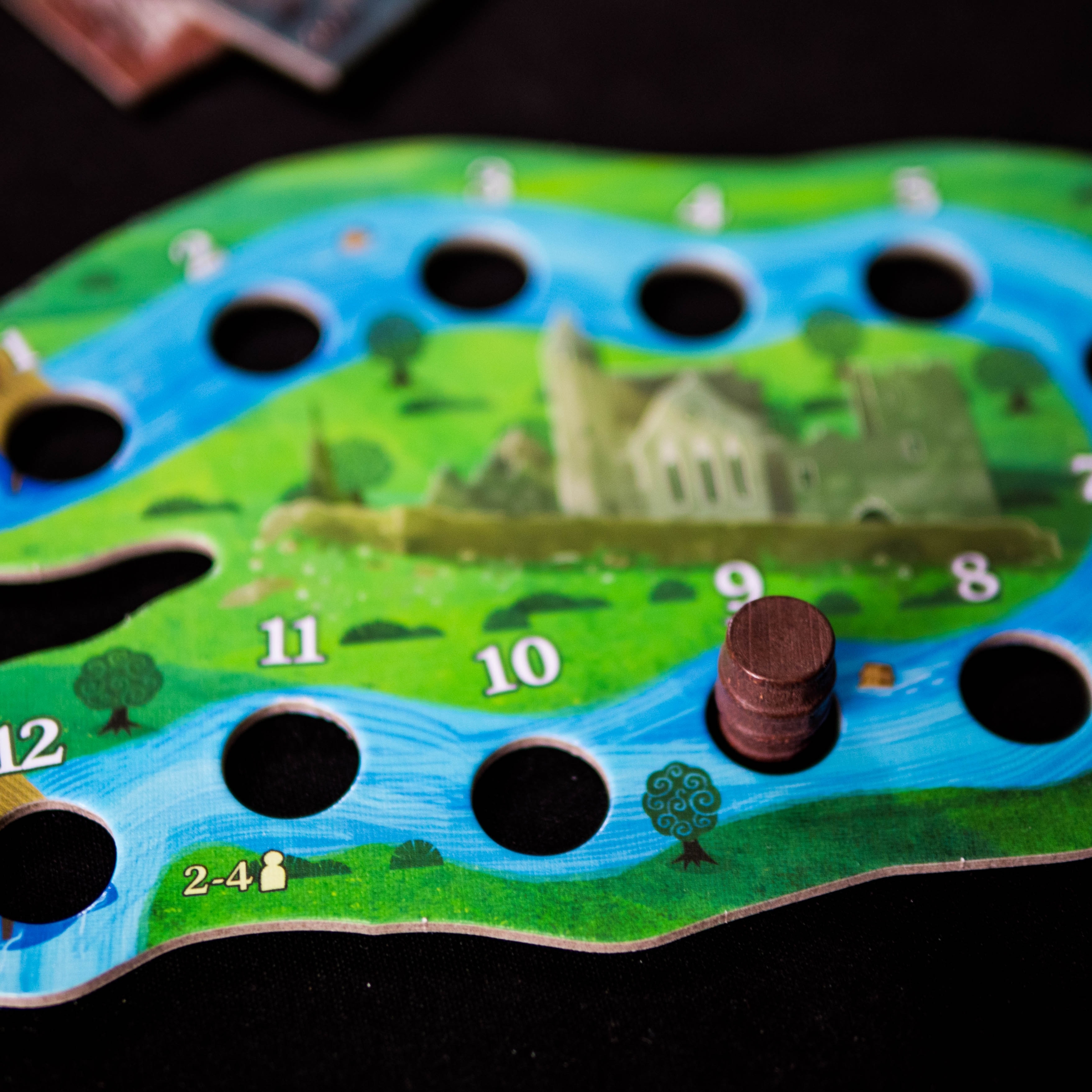
The barrel moves along the river track, marking the passage of time. New tiles are added to the board and play passes to the next player.
-
At the end of the final round, players can place their towers to complete their territory. The final score is based on:
-
the largest continuous rectangular area,
-
the size of the largest herd,
-
complete exploration around the starting city,
-
whiskey production,
-
the points of the stone circles.
The one with the highest score wins.
Is it good?
Tipperary could be considered a very good choice for an introductory tile-laying game, as well as an enjoyable family game.
The placement mechanic is simple and effective, with its selection wheel system adding a fun, random touch. Thanks to this mechanism, everyone plays at the same time, which avoids downtime.
The strategy remains light but offers some clear axes: enlarge your flock of sheep, progress quickly on the whiskey track for your points and bonuses, or optimize your scoring rectangle in order to maximize your victory points at the end of the game.
The rules are simple and easy to explain. The game is suitable for both families and beginners. Games last approximately 30 to 45 minutes, which is ideal for this type of game.
It could be criticized for its limited interaction, as Tipperary is more of a side-by-side solitaire game, and its relatively light strategy. Furthermore, it remains fairly standard in the tile-laying genre, without any real innovation.
Despite this, Tipperary remains a thoroughly enjoyable family game that succeeds in its aim: an accessible, clever game with a touch of strategy, perfect for quick games with family or friends, for a relaxing moment.
Tipperary Review
Positives
- Simple and quick rules to explain
- Short games (30–45 minutes)
- Accessible to families and beginners
- Original wheel system that provides dynamism and simultaneity
Negatives
- Limited player interaction
- Fairly light strategy
- Remains fairly classic in the style of laying tiles
- Few real innovations
