- Publisher(s) : Grail Games
- Designer(s) : Tomáš Holek
- Artist(s) : Barbora Srp Žižková
- Players : 2–4
- Playing time : 90–120 Min
- Weight BGG : 3.08
What's this?
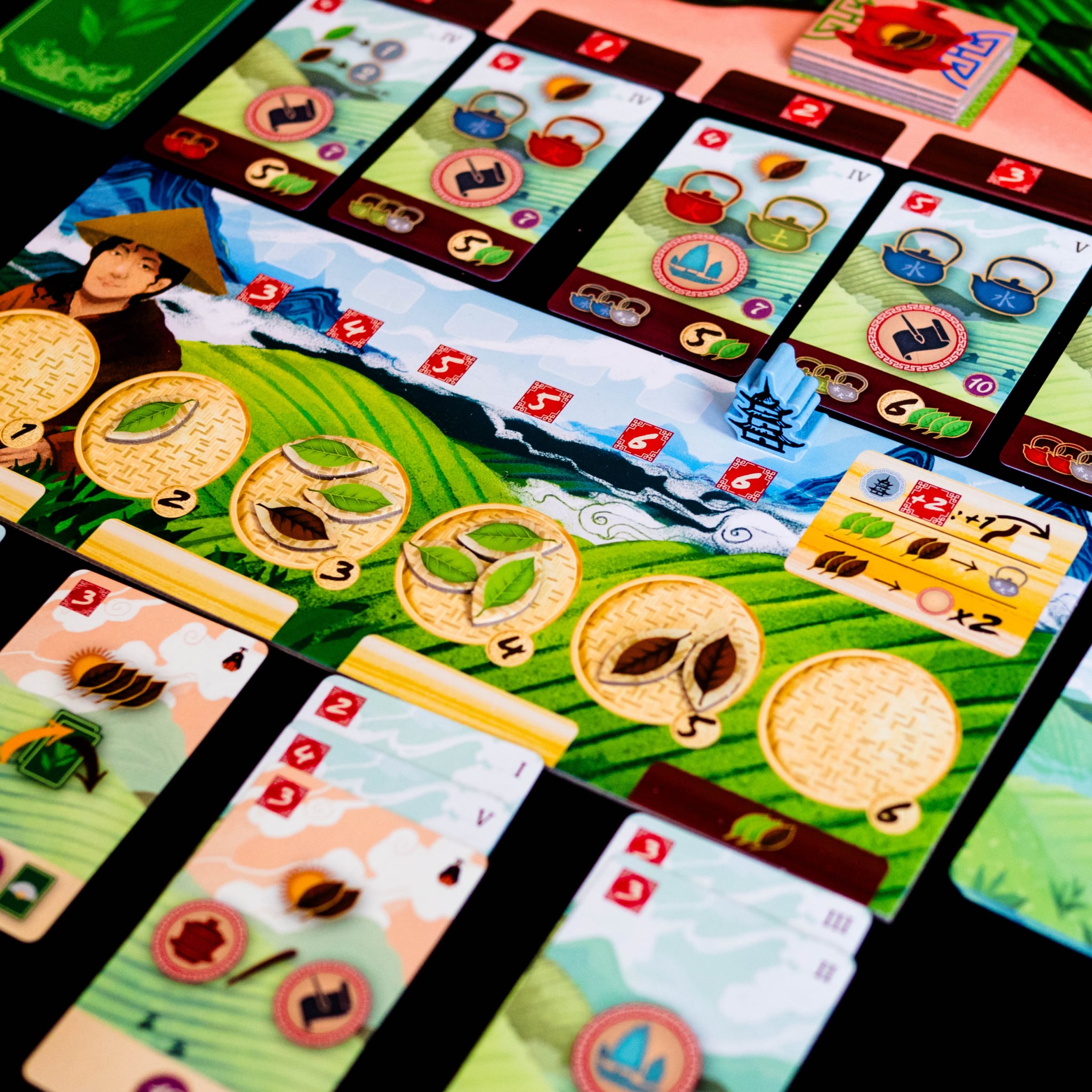
Tea Garden is a strategy and resource management game in which you play as one of the first tea growers in the Yunnan region of China. Your goal is to develop your network of plantations, produce quality tea, meet the demands of trade caravans, and gain the favor of the Emperor in order to become the most prestigious tea master.
How do you play?
Players take turns performing their actions . During a round, a player can take up to 4 turns . The first 3 turns are free, but playing a 4th turn requires paying for tea leaves .
Each turn, you can play one or more cards from your hand to determine the strength of your main action . Your turn consists of:
-
A main action (mandatory): Determined by the cumulative power of your played cards .
-
A secondary (optional) action: Triggered by the symbol on the top card of your game pile .
-
Free shares
Possible Main Actions:
-
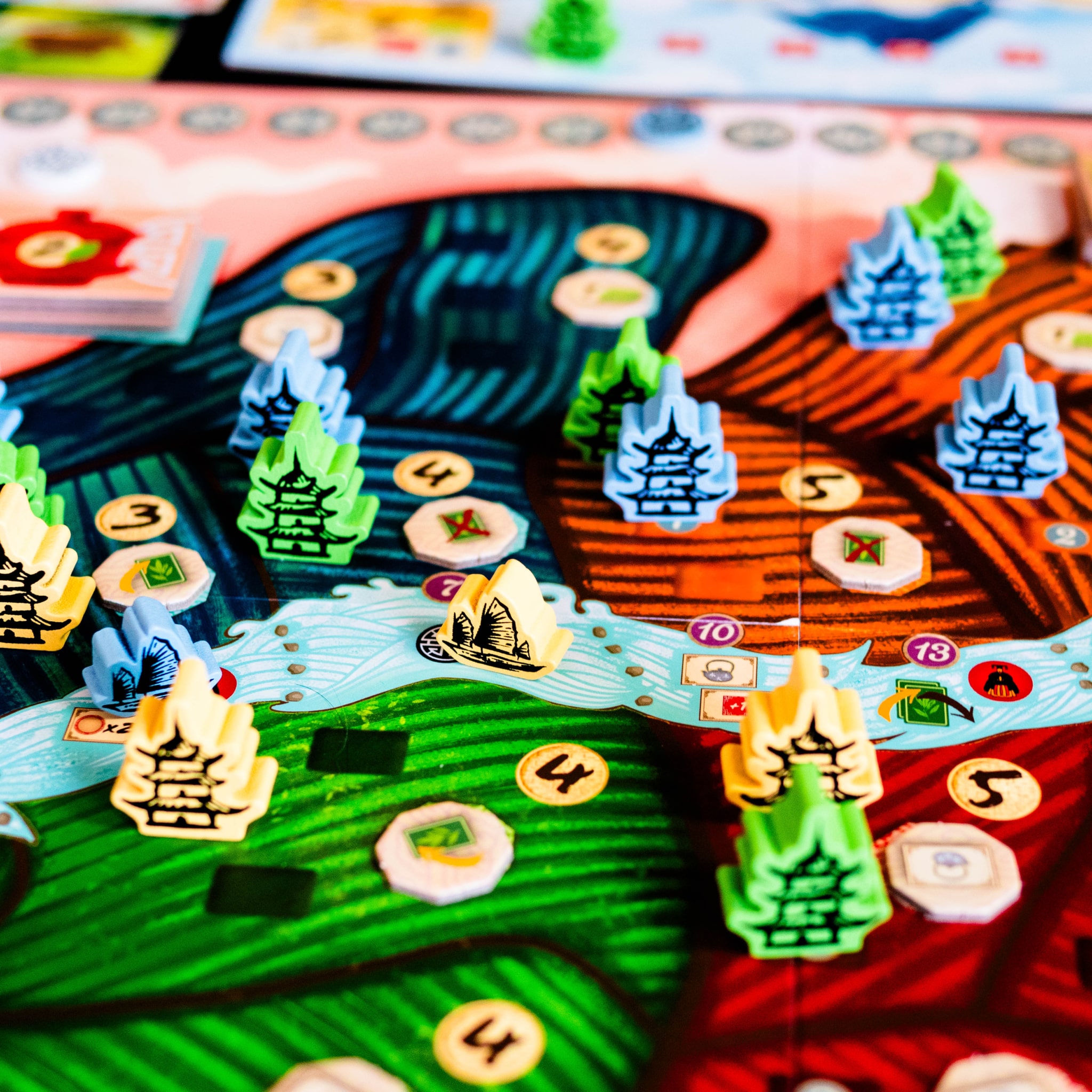
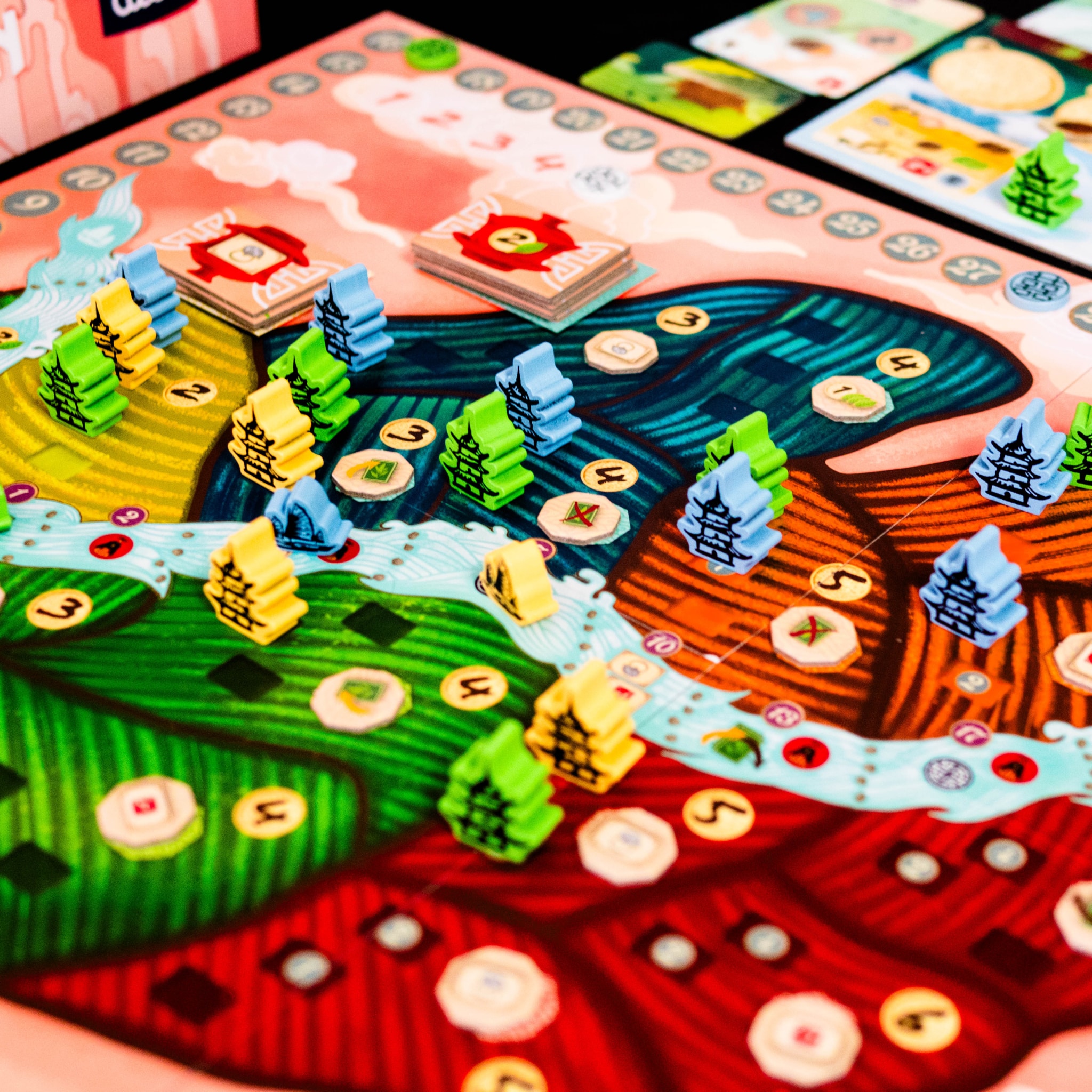
A) Build a Tea Garden: Place a pagoda in an area adjacent to your current plantations.
-
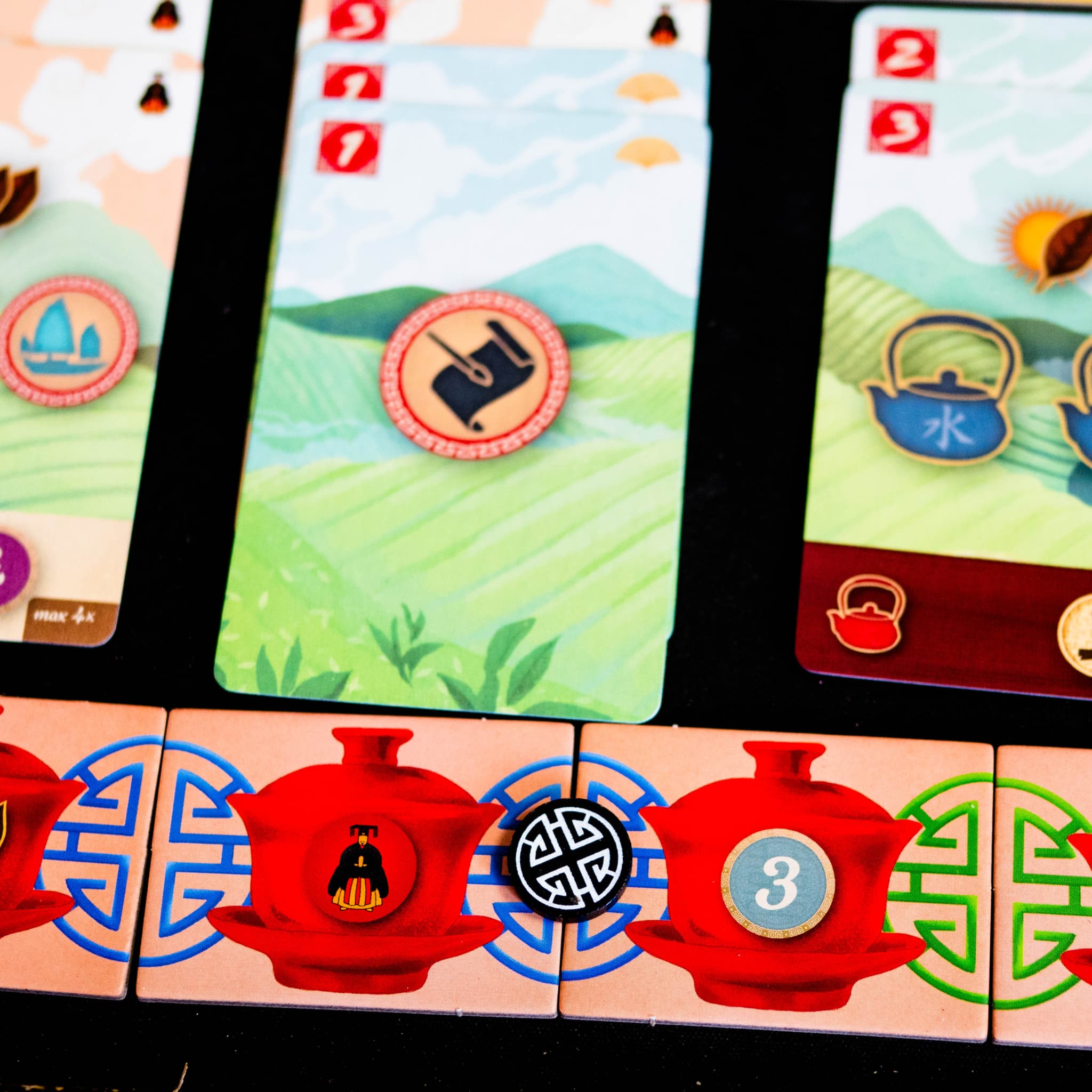
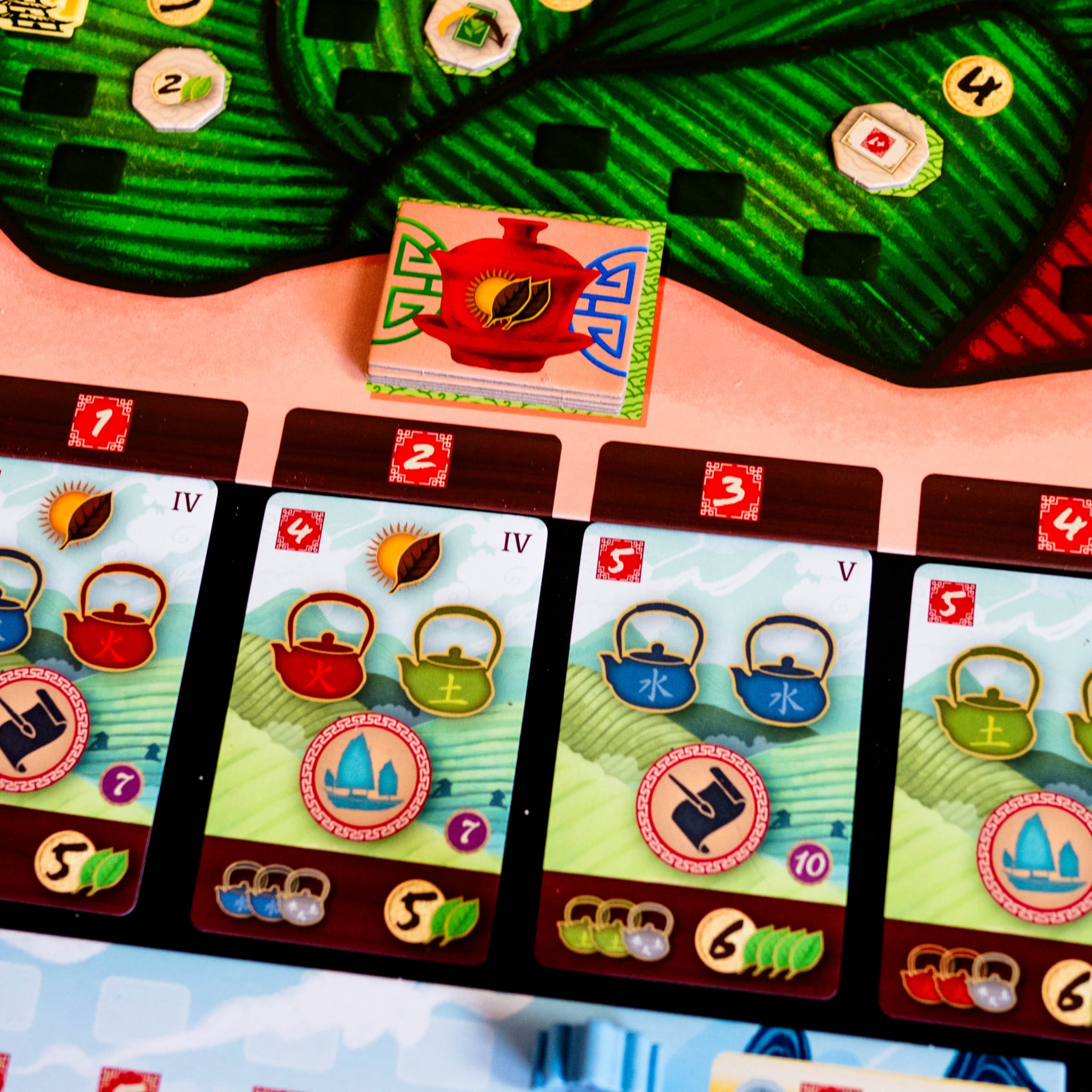
B) Buy an Action card: Strengthen your deck by purchasing new cards from the central track . The cost depends on the card’s position and the teapot symbols available to you .
-
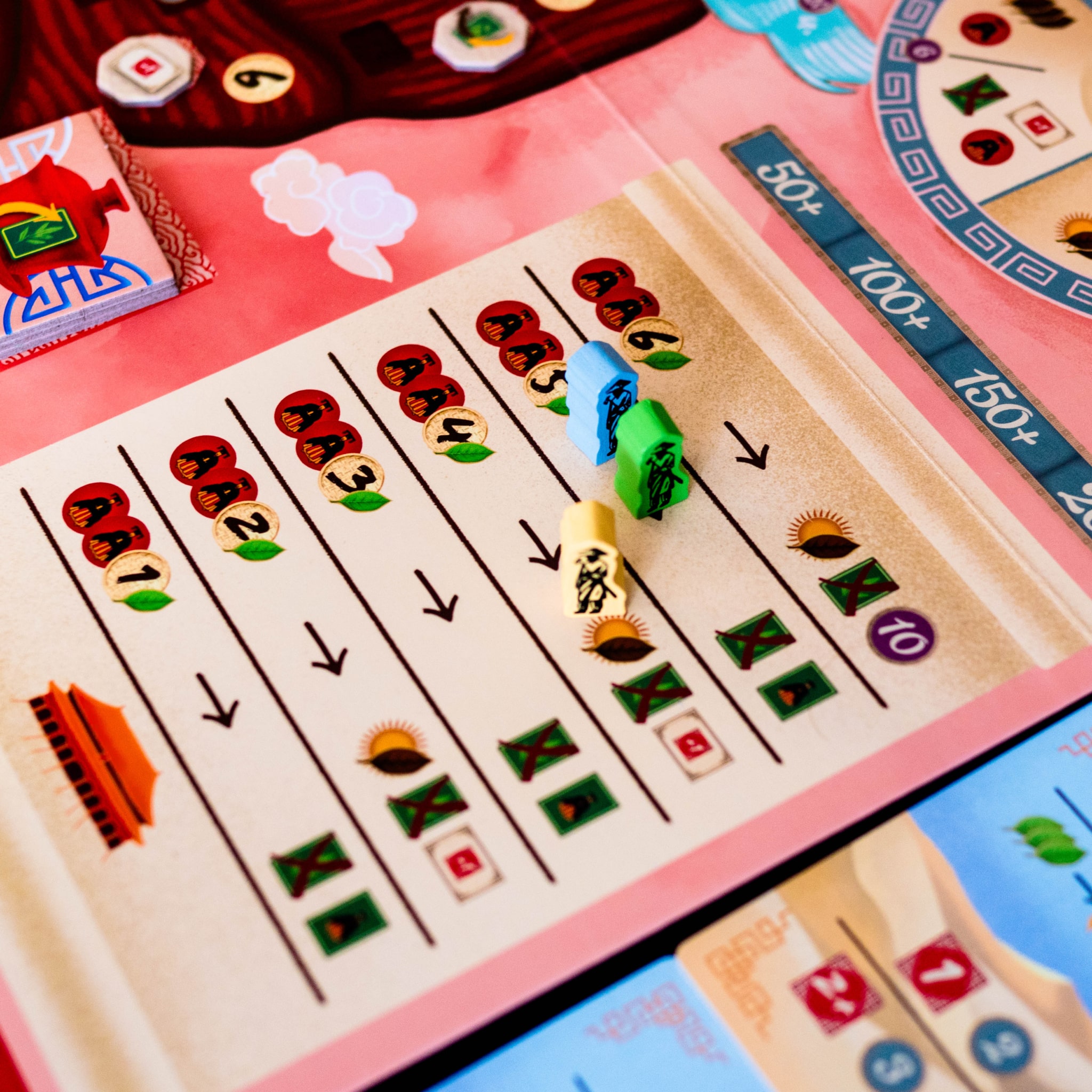
C) Selling tea to Caravans: Fulfill the trading requirements of a caravan.
-
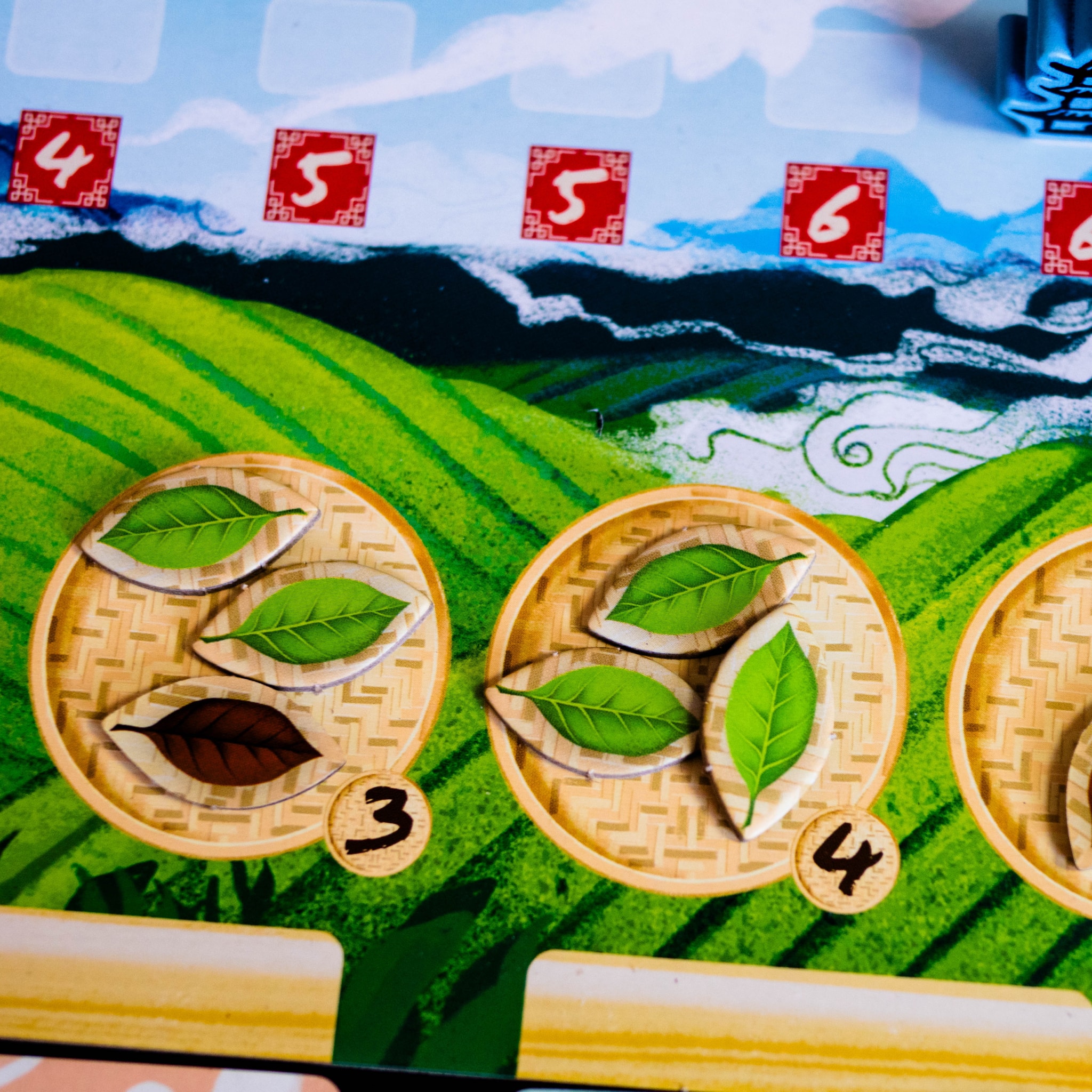
D) Fermentation: Turn your tea leaves from the green (fresh) side to the brown (fermented) side .
-
E) Extraordinary Harvest: Harvest one fresh leaf of equivalent quality to the region of each of your tea gardens for each power point played .
Possible Secondary Actions:
-
River Navigation: Advance your boat on the river to unlock immediate bonuses and end-game points .
-
Cup Production: Collect cup tiles from provinces where you own gardens to create color combinations .
-
University Studies: Progress in the different sectors of the University .
2. End of Game
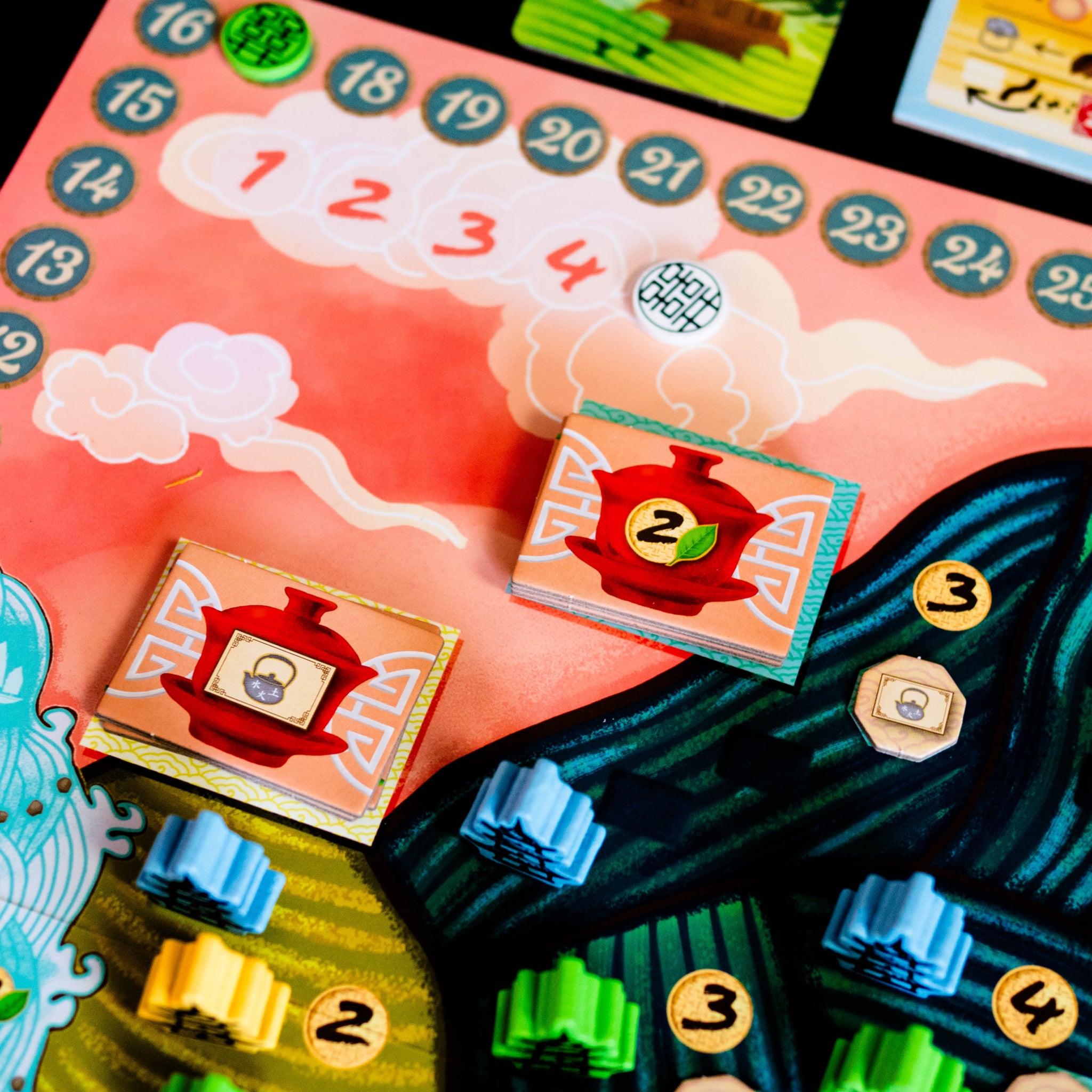
At the end of the 5 rounds, the points accumulated via the caravans, the connected cups, the navigation and the Emperor’s tracks are calculated to crown the grand winner .
Is it good?
Tea Garden is a Eurogame that will appeal to fans of development-based games. You’ll feel a real sense of progression as you gradually improve your deck. The cards are the very essence of the game: they allow you to perform increasingly powerful actions, while the visible icons dictate your secondary actions. They aren’t just used to buy more cards, but define the raw power of all your interactions on the board.
It’s a planning game where you’ll need to manage your resources and actions to maximize your combos. The ability to combine a main action, a secondary action, and free actions in a single turn offers a particularly satisfying combo feel once you’ve mastered the mechanics.
The fermentation system is also an excellent idea. Its dual aging cycle (fresh tea that deteriorates if not used, while fermented tea improves with age) adds a nice tactical depth.
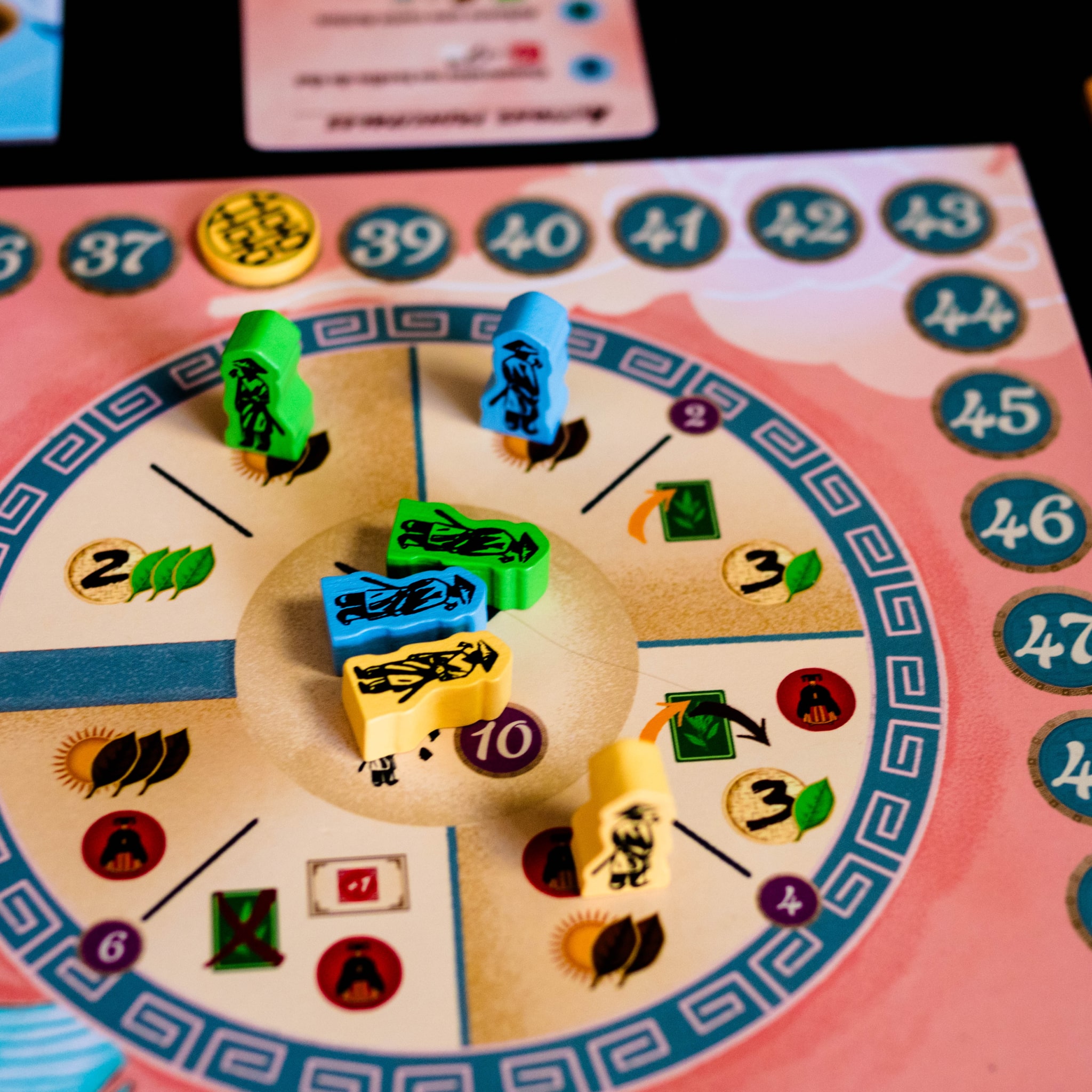
While some mechanics remain fairly classic but effective, such as tea production or the construction of tea houses on the main board, others unfortunately prove to be less thematic and less engaging, such as the collection of cup tokens, selling to caravans or the progression of workers on the university wheel.
You’ll likely need a few games to familiarize yourself with the iconography, which is actually quite well-designed, as well as the interconnected mechanics and the different ways to score. However, the game isn’t overly complex, and players accustomed to the expert format will quickly find their footing without any trouble.
Ultimately, Tea Garden will undoubtedly appeal to fans of deckbuilding , engine-based, and management games. Without revolutionizing the genre, it cleverly combines several modern mechanics into a coherent, fluid, and highly strategic whole.
Tea Garden Review
Positives
- Excellent power increase for the game engine
- Central and very satisfying deck building
- Effective combinations of primary, secondary, and free actions
- Original fermentation system
Negatives
- Some of the mechanics (cups, caravans, university) lack immersion.
- May cause some analysis paralysis in the most calculating players
- Does not bring a true revolution to the genre