A game of Seasons takes place in two main phases: the prelude, during which players build their future map engine, and then the tournament, which spans three years and forms the heart of the game.
1. The prelude: selecting your nine power cards
Each player receives nine power cards and must choose one simultaneously with the other participants. The remaining cards are then passed to the player on their left.
Players then take the cards from their neighbor to the right, select a new one, and pass the rest on. This process continues until each player has selected nine cards.
Once the selection is complete, each player divides their nine cards into three groups of three:
- First year: the first three cards constitute the starting hand.
- Second year: the next three cards join the hand at the beginning of the second year.
- Third year: the last three cards are collected at the beginning of the final year.
2. The tournament: three years to become Archmage
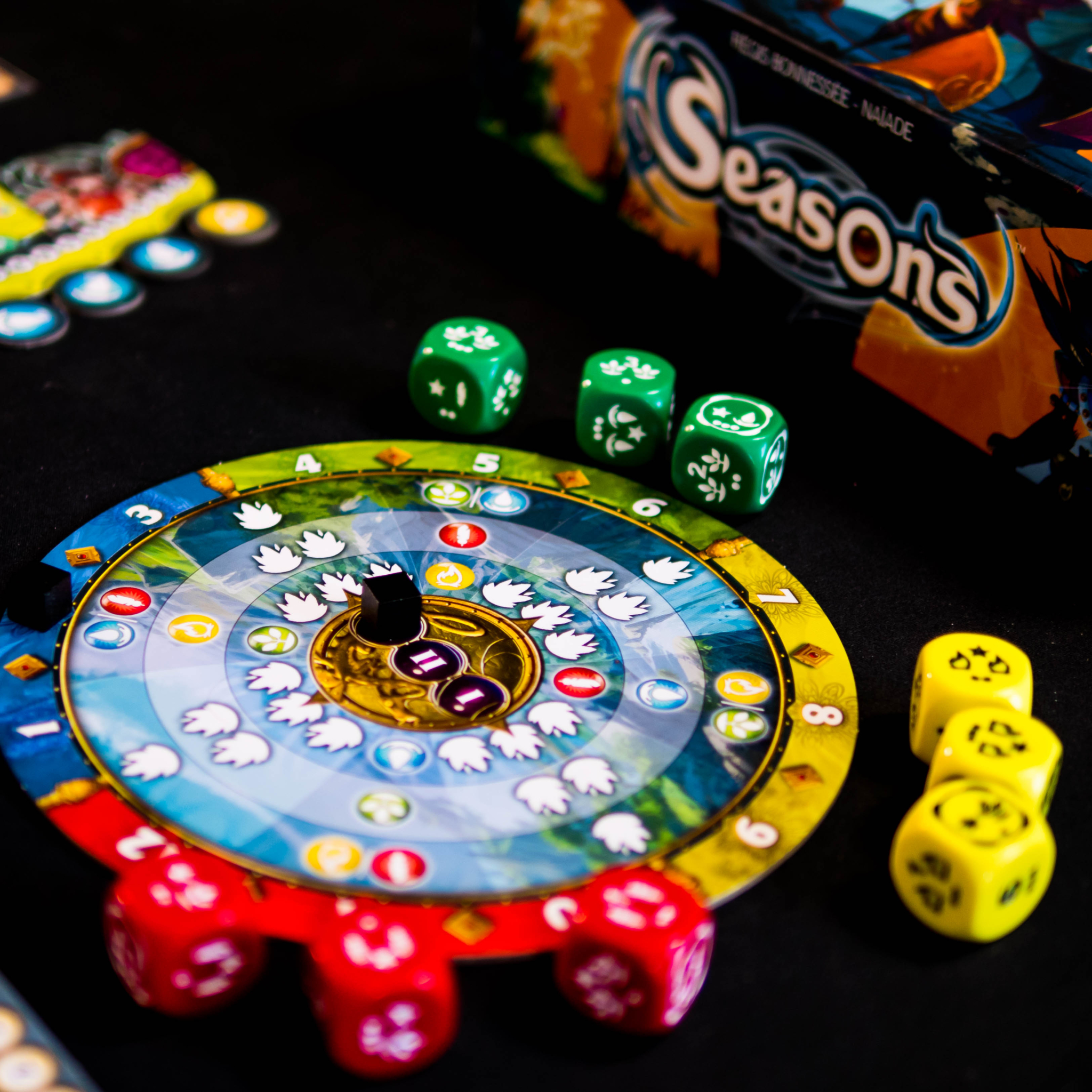
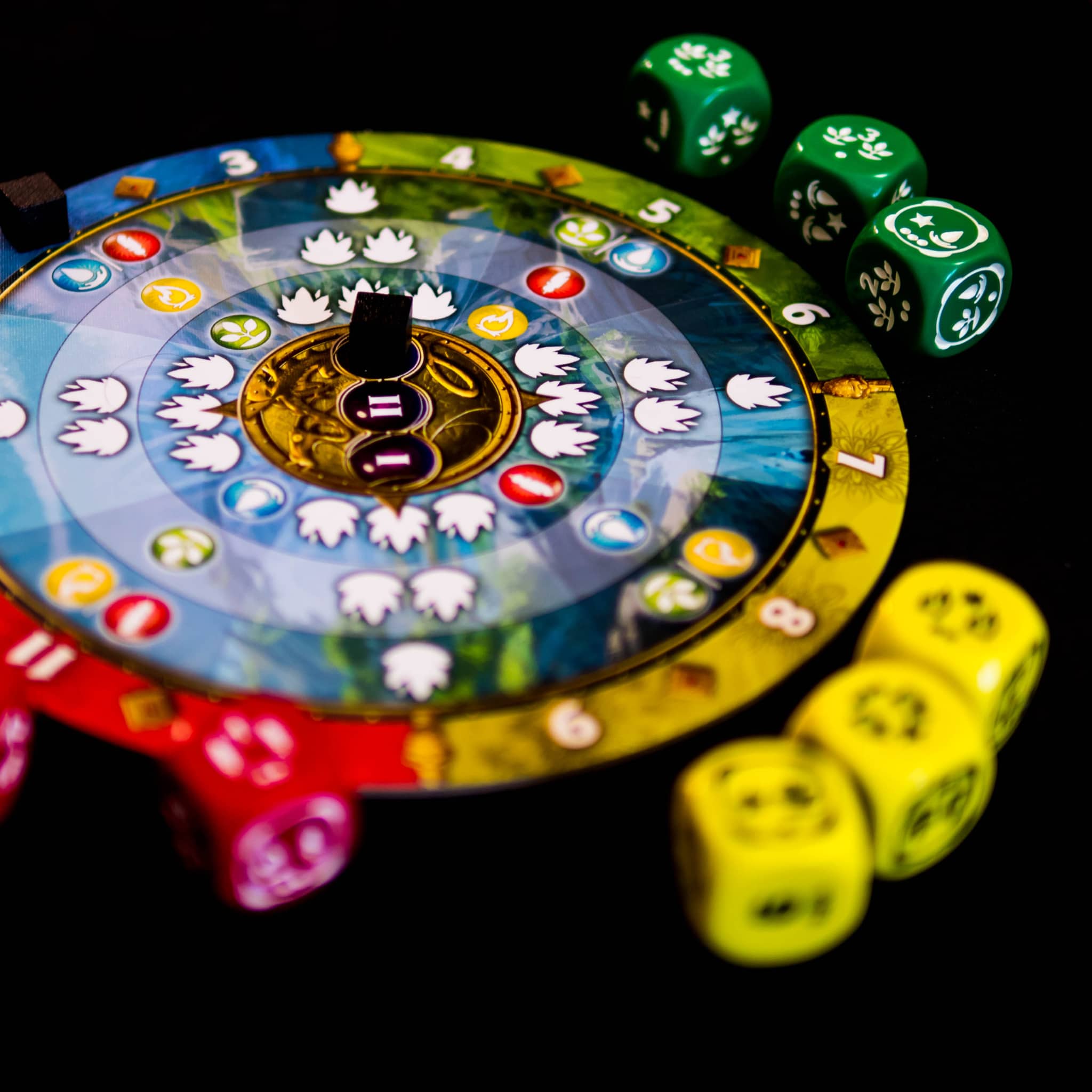
The tournament constitutes the second phase of the game. It takes place over three years, each consisting of four seasons: winter, spring, summer and autumn.
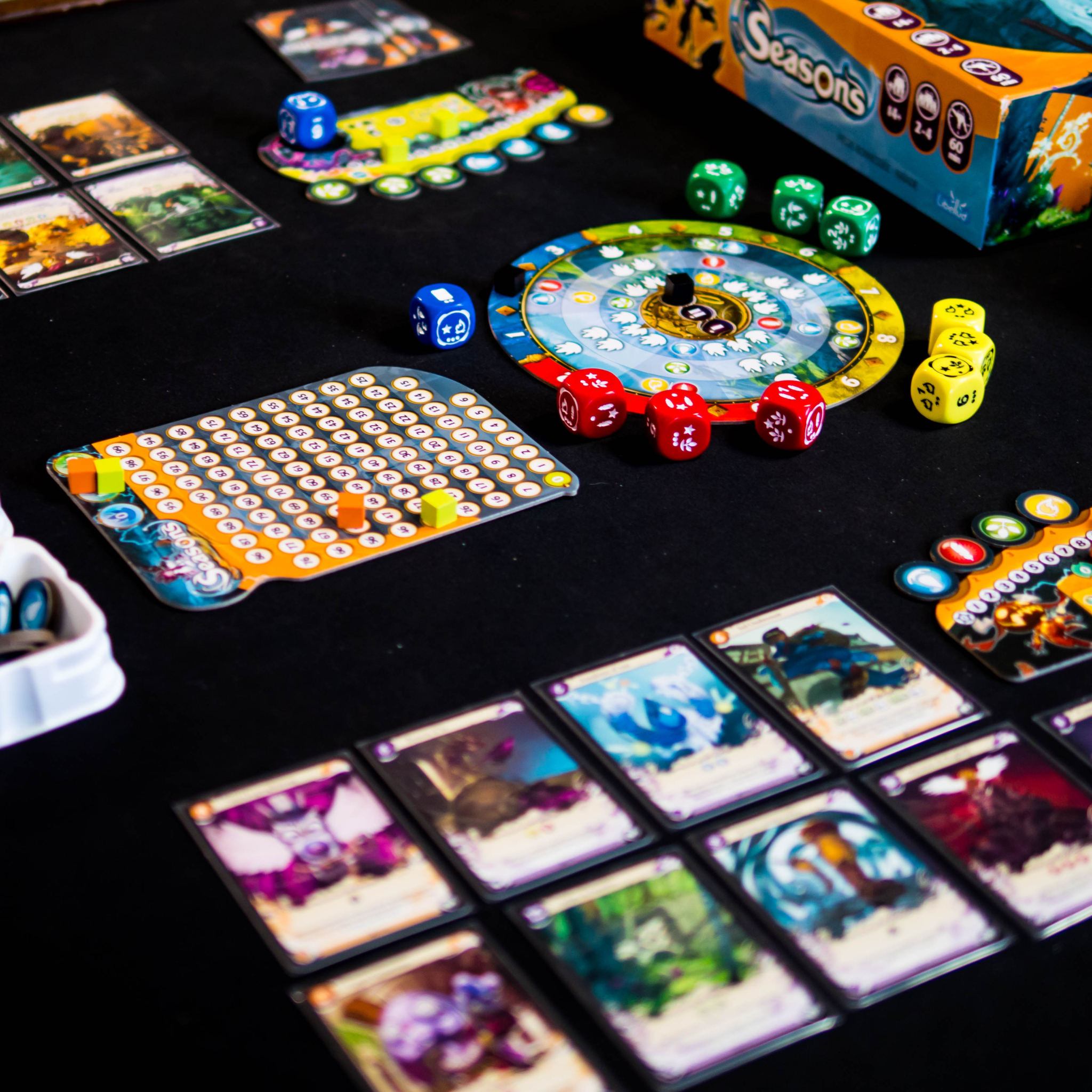
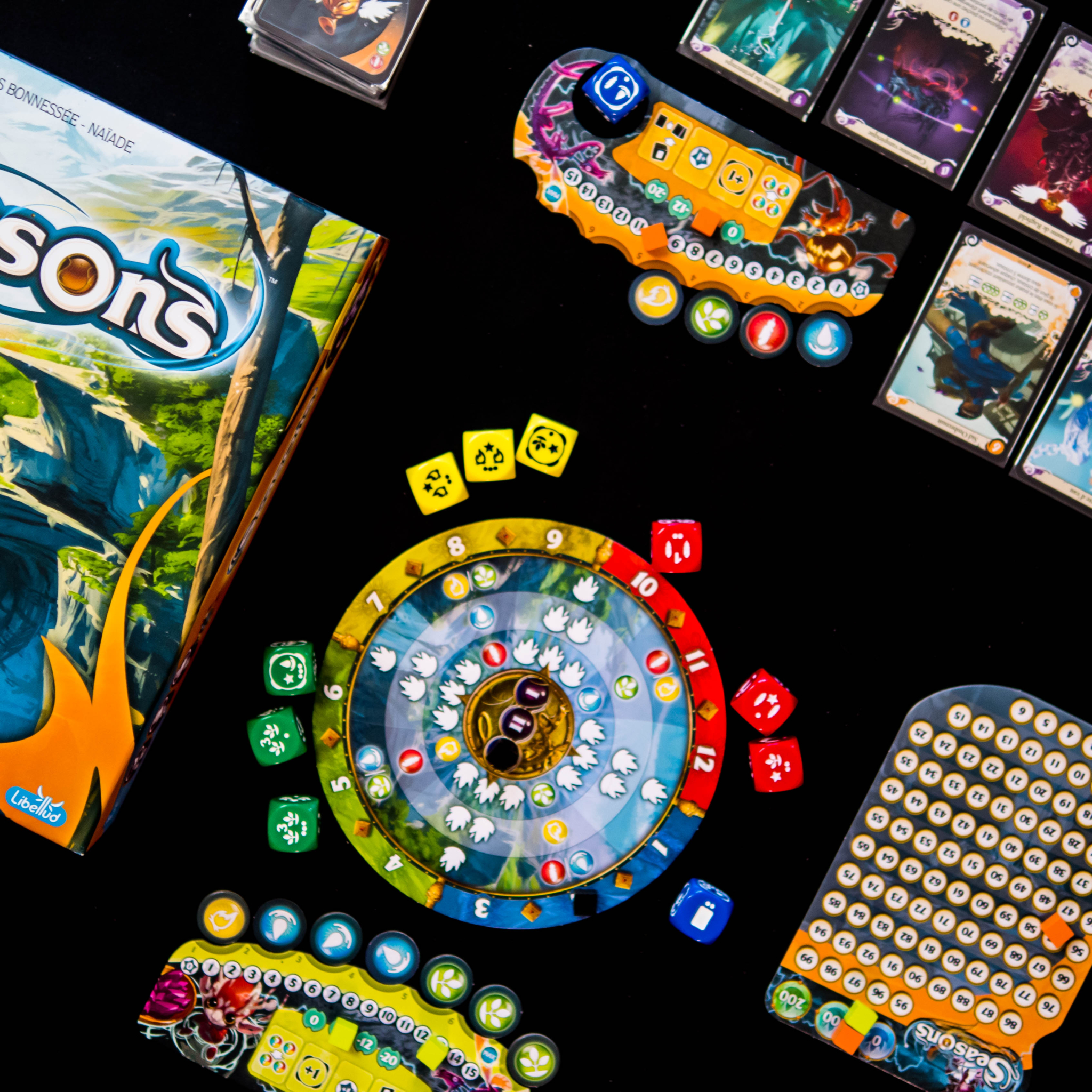
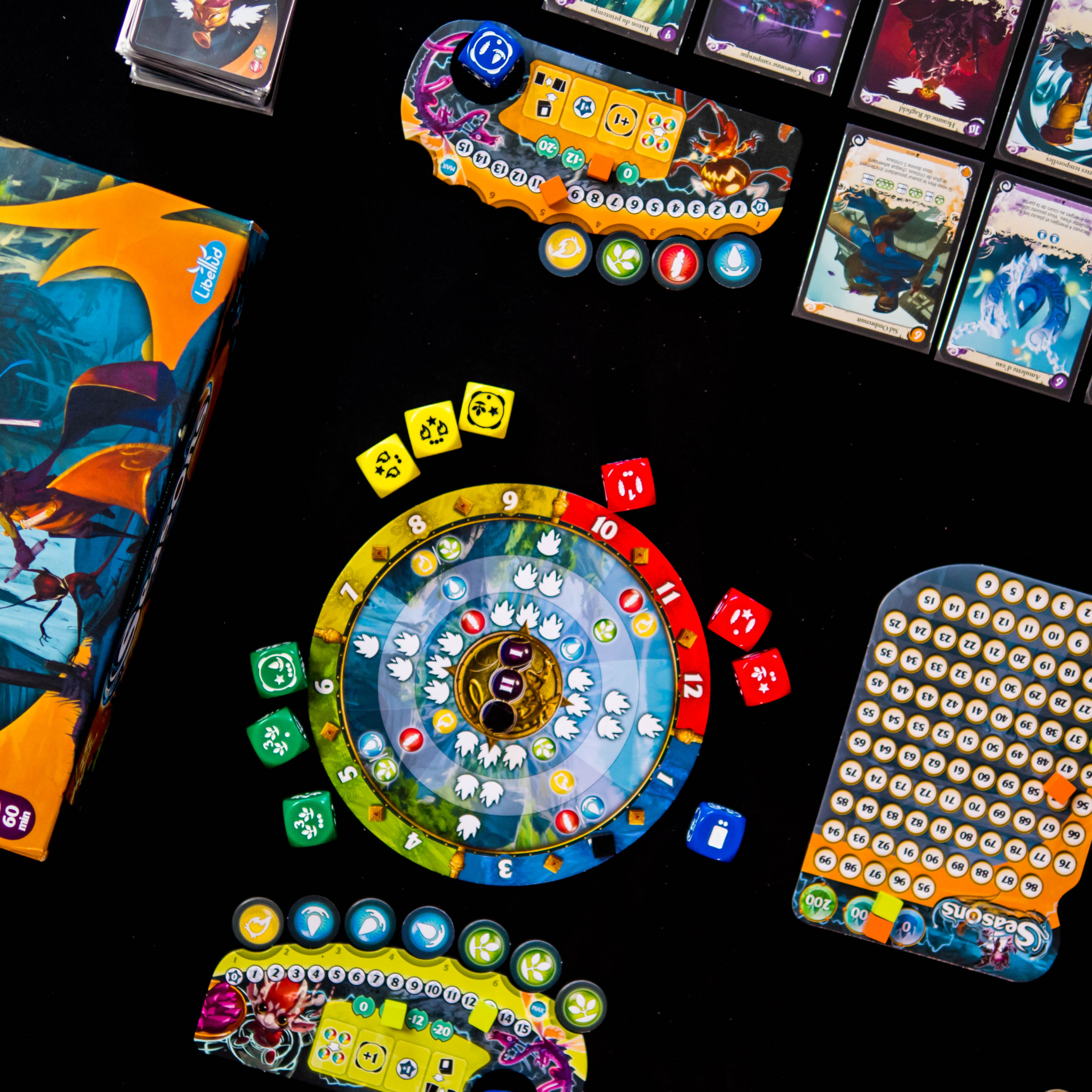
Each season has its own dice, recognizable by their color:
- Blue for winter.
- Green for spring.
- Yellow for summer.
- Red for autumn.
At the start of each round, the dice corresponding to the current season are rolled. Players will then select the ones that will allow them to perform the most advantageous actions.
3. Choosing your season die
The dice are rolled by the first player, then each player takes turns choosing one. There is always one extra die compared to the number of participants.
This choice is particularly important since each side offers different possibilities:
- Recovering energies: obtaining one or more energies of air, water, fire or earth.
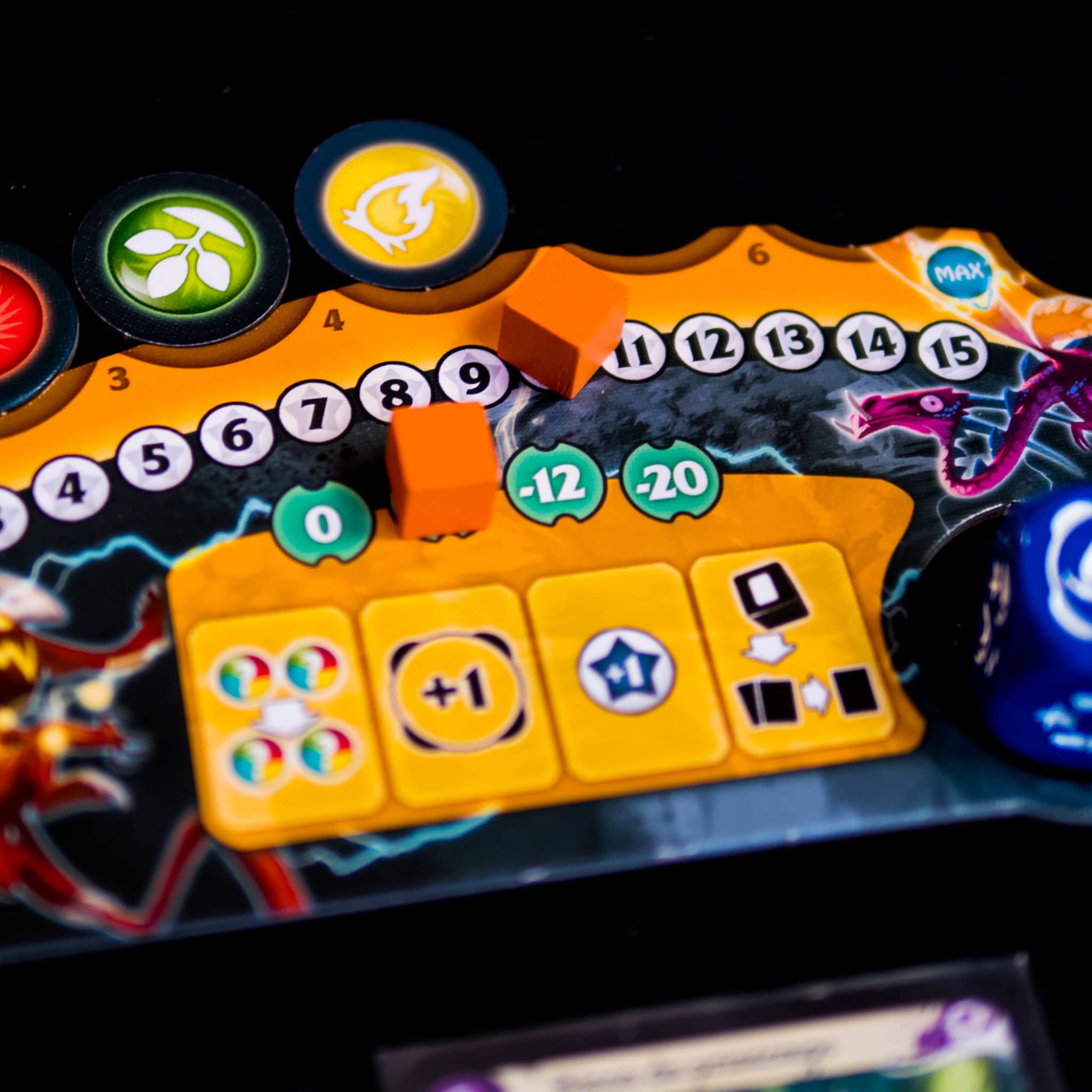
- Earn crystals: advance directly on the crystal track.
- Increase your summoning gauge: increase the number of power cards you can have in play.
- Draw a card: retrieve a new power card, which can be kept or discarded.
- To crystallize one’s energies: to transform the energies in one’s reserve into crystals.
4. Manage your energy and crystallize your resources
Energy is one of the central resources of Seasons. There are four types: air, water, fire, and earth.
They are primarily used to summon and activate power cards. Their availability varies depending on the season, requiring players to adapt their choices throughout the game.
It is also possible to transform one’s energies into crystals through the action of crystallization.
5. Summon power cards and develop your engine
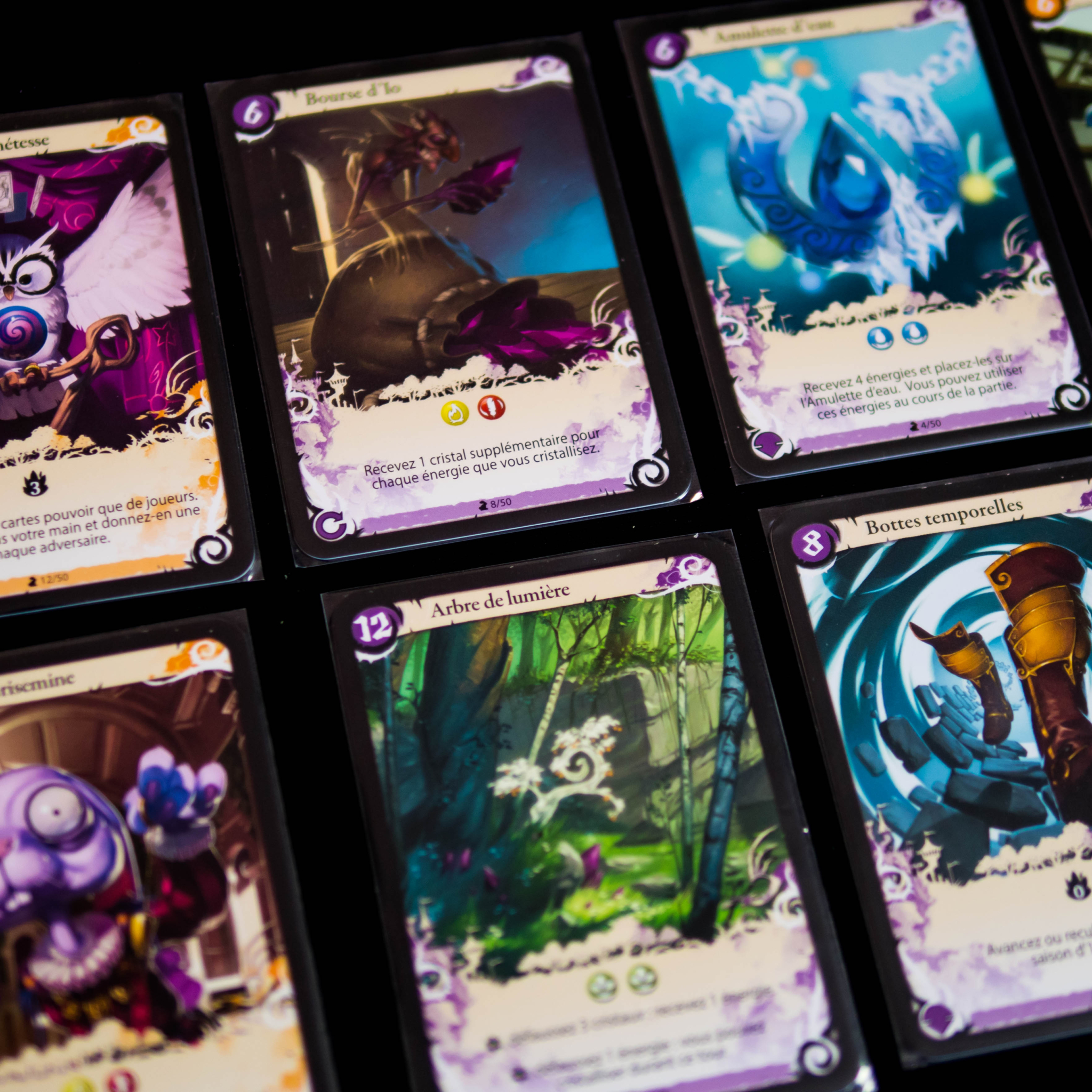
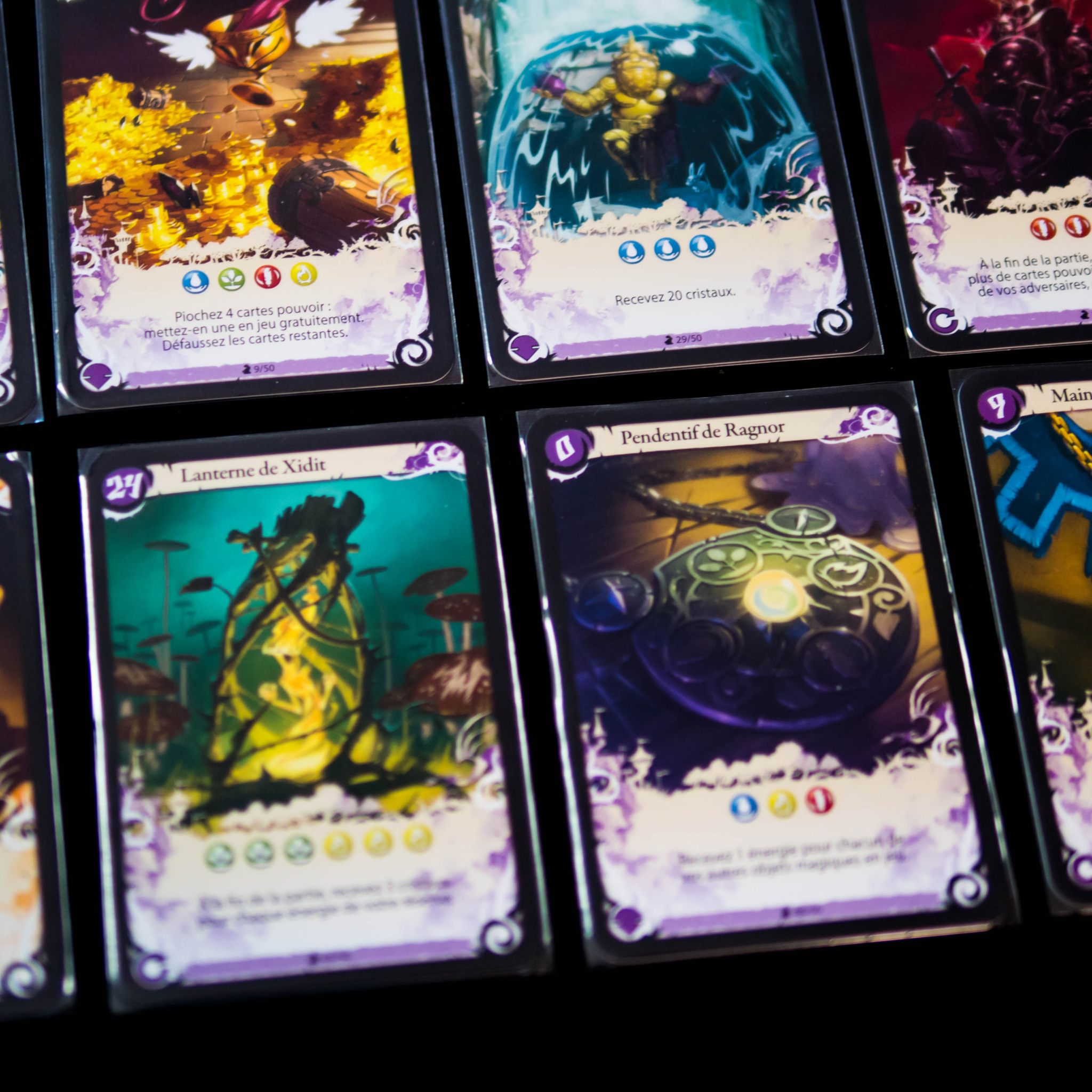
Power cards are at the heart of Seasons. They allow you to develop different strategies thanks to their effects and the prestige points they award at the end of the game.
Two main categories can be distinguished:
- Magical objects: their effects only benefit their owner.
- Familiars: their effects can affect several players and directly influence the course of the game.
To summon a card, you must pay its cost in energy and/or crystals, but also have a sufficiently high summoning gauge.
Once in play, the cards can offer three types of effects:
- Enter-the-play effects: These trigger immediately when the card is summoned.
- Permanent effects: they remain active as long as the card is in play.
- Activation effects: These can be triggered during your turn, provided you pay their possible activation cost.
6. Endgame: Who will become Archmage?
The game ends when the third year is over.
Each player then calculates their prestige score by adding:
- The crystals accumulated on the crystal trail.
- The prestige points indicated on his power cards are in play.
Next, you need to remove:
- 5 points for each power card still present in his hand.
- Any potential penalties related to the bonuses used.
The remaining energy points do not score any points.
The player with the most prestige points wins the tournament and becomes the new Archmage of the Kingdom of Xidit!