


A game takes place over 3 Eras , each composed of 3 phases:
Phase 1: The Flood (Akhet) – Only in Eras II and III
Receive Food based on the position of your Boats on the Nile, and Heka ( magic) based on the position of your Orb on the Obelisk. Renew Trade Contracts, etc.
Phase 2: The Sowing (Peret) – The Strategic Core
This is the main phase of action.
In turn, each player chooses one of the following 3 options , each usable a maximum of 3 times per Era :
① Visiting a House of Life
- You choose an Apprentice from your player board and their associated Action Tablet
- The Apprentice is placed in a House of Life (on the Sun side) — if other Apprentices are already there, they pay 1/3/5 Food according to the number
- We execute the actions of the Tablet
- The discarded Tablet is placed face down on the board.
② Specializing in a House of Life
- You move your Apprentice from the Sun side to the Moon side (same encumbrance cost)
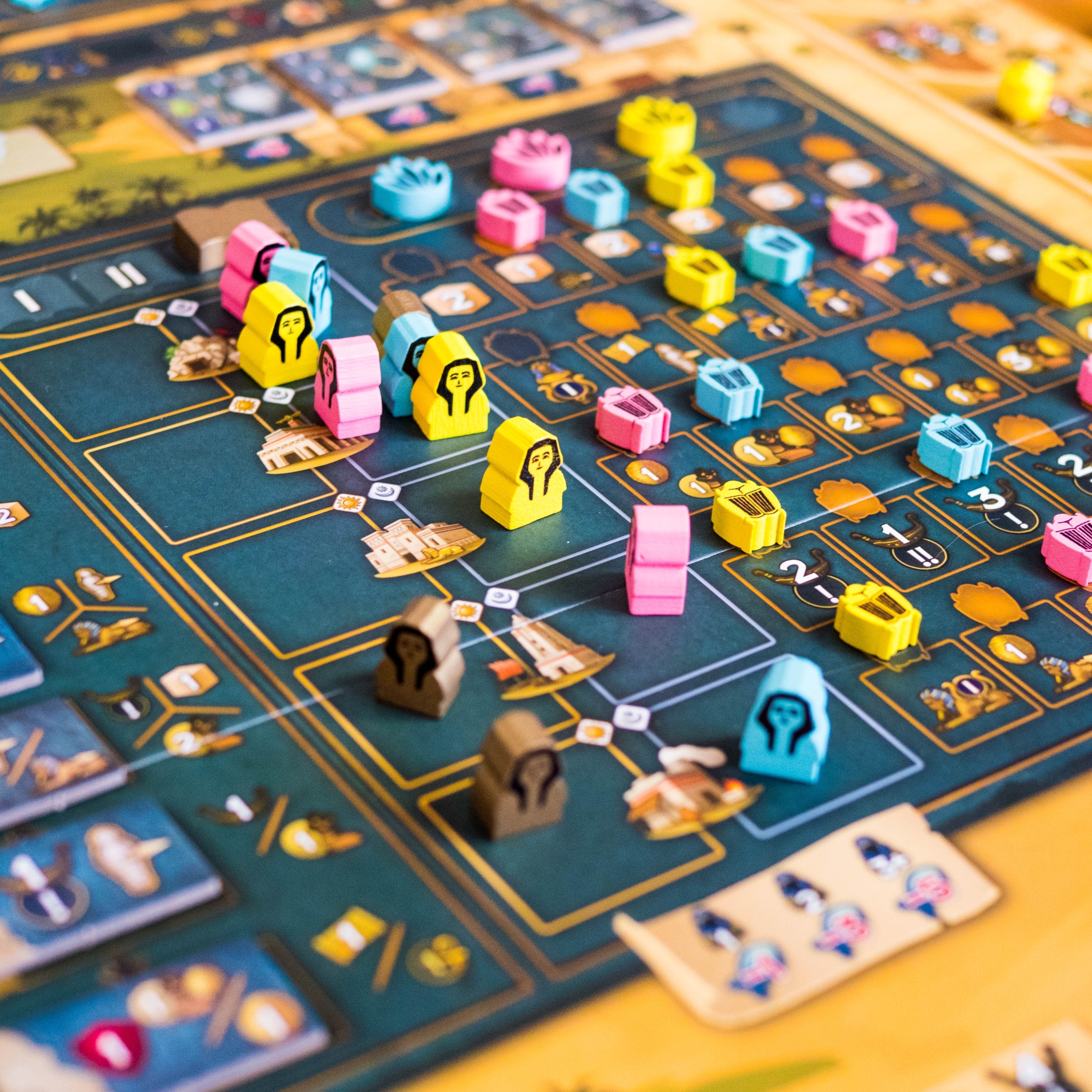
- We move our Scarab one space forward on the corresponding Specialization Track
- The action of the new space (or a previous space) is executed.
③ Obtain an Action Tablet
- We choose one of the 5 Tablets available on the tray
- We pay for/receive the indicated food
- If the hieroglyph on the Tablet corresponds to the next space on its Counter, you advance and receive an immediate bonus.
- The action to the right of the chosen Tablet is executed (or any action below it).
Phase 3: The Harvest (Shemu) – The scoring
At the end of each Era, we reap what we have sown.
The scoring is done in the following order:
- Roll up the Papyrus → advance the Pen on the Duat (1 step per Papyrus + 1 per completed Drawing)
- The Duat → if Heart and Feather did not cross paths: -1 PP per space of distance / if they did cross paths: +1 PP per space
- Commercial Contracts → return the completed Contracts and score according to their value
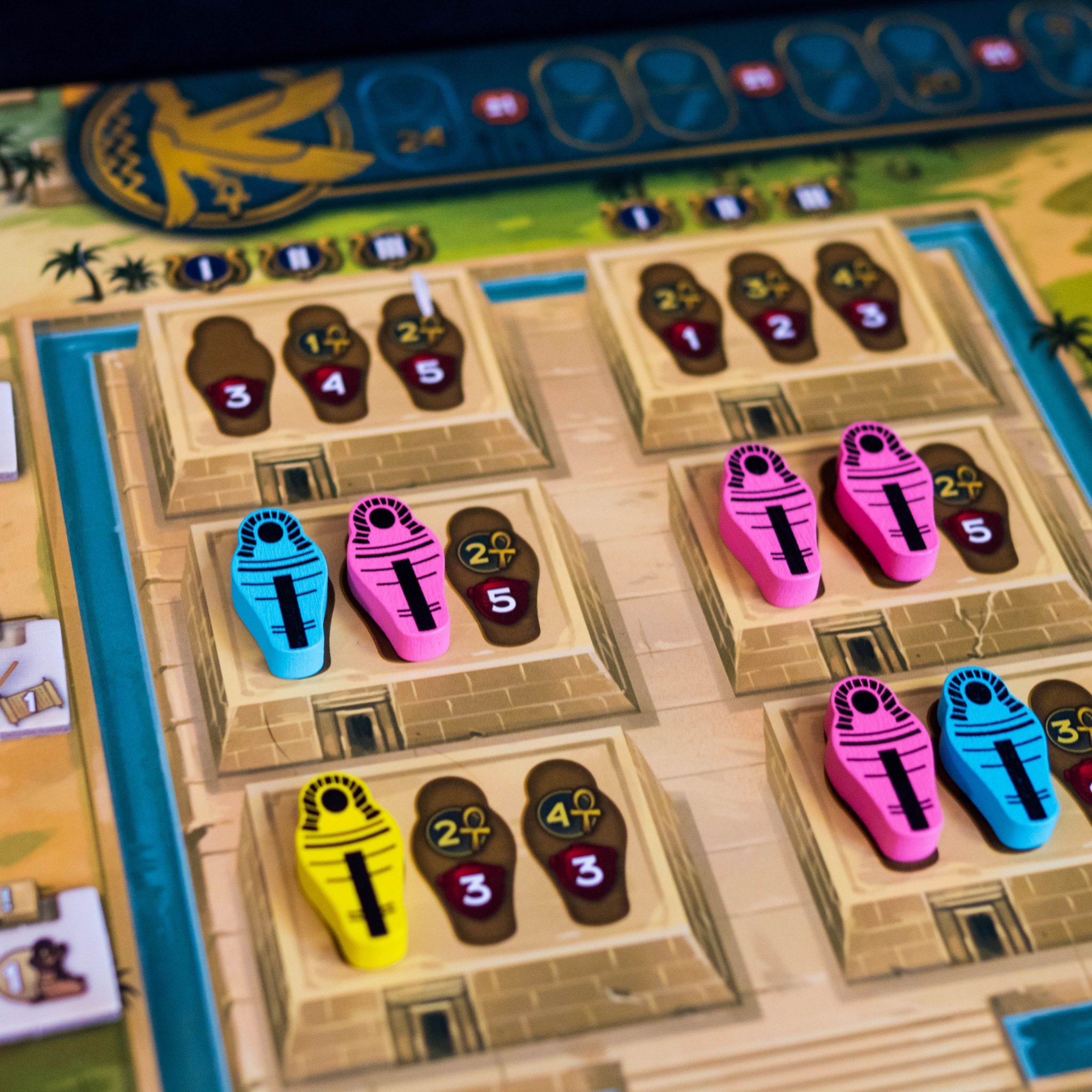
- The Necropolis → score each Sarcophagus placed (PP = sum of the 2 perpendicular Mastaba Tiles)
- The Obelisk → PP depending on the Orb’s position
- The Pyramids → PP according to the position on the Great Pyramid Track + PP of Khufu Permits placed on the Queens’ Pyramids (multiplication of Permit × quantity of the element indicated on the Tile)
The major events of the game
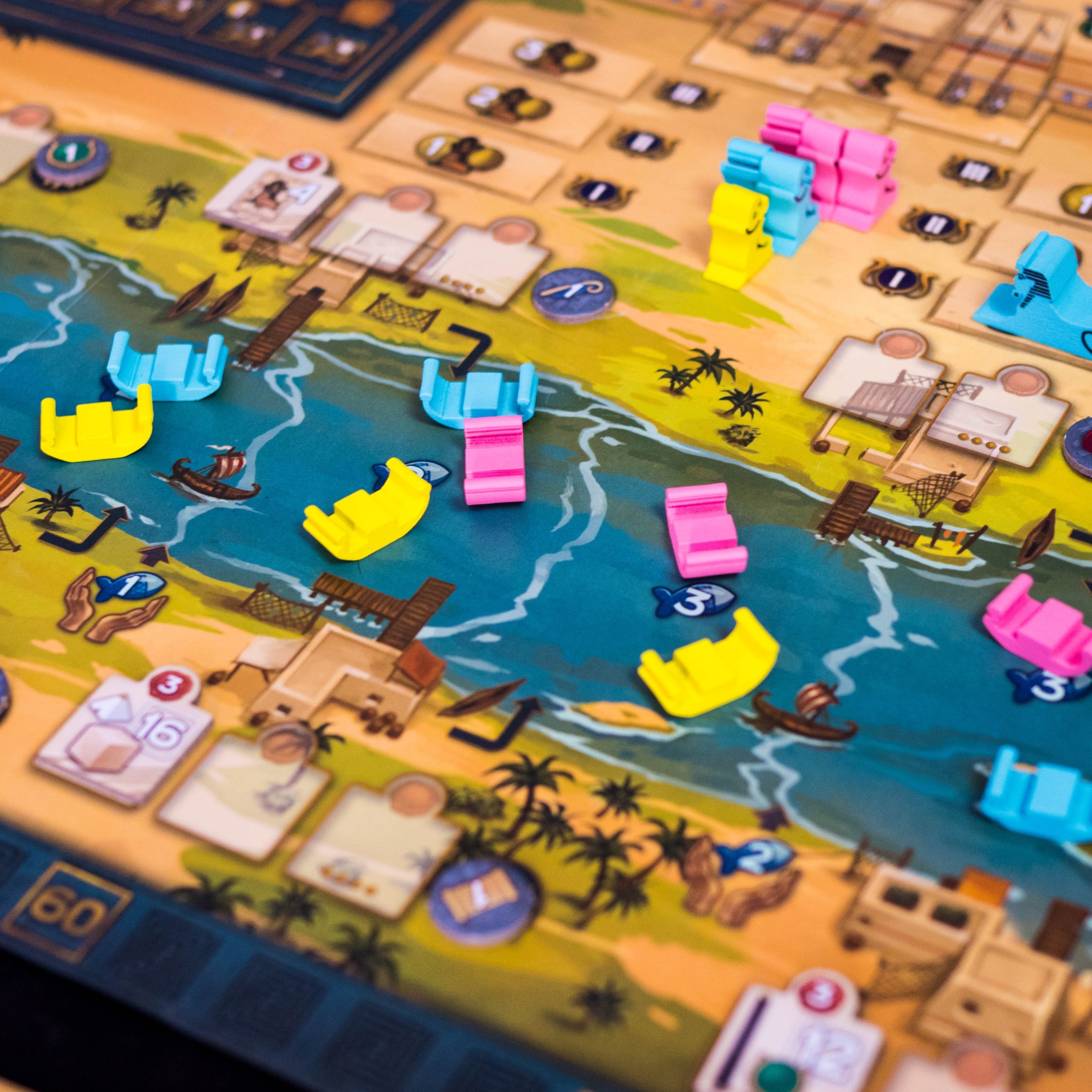
The game revolves around 6 thematic axes , each linked to a House of Life and its Specialization Track:
| Axis | Main actions |
|---|---|
 The Pyramids The Pyramids |
Transporting Limestone, Obtaining Khufu’s Favor/Permission, Building Levels |
 The Necropolis The Necropolis |
Embalming (turning over a mummy), Funeral Rite (placing a sarcophagus in a mastaba) |
 The Temple & the Obelisk The Temple & the Obelisk |
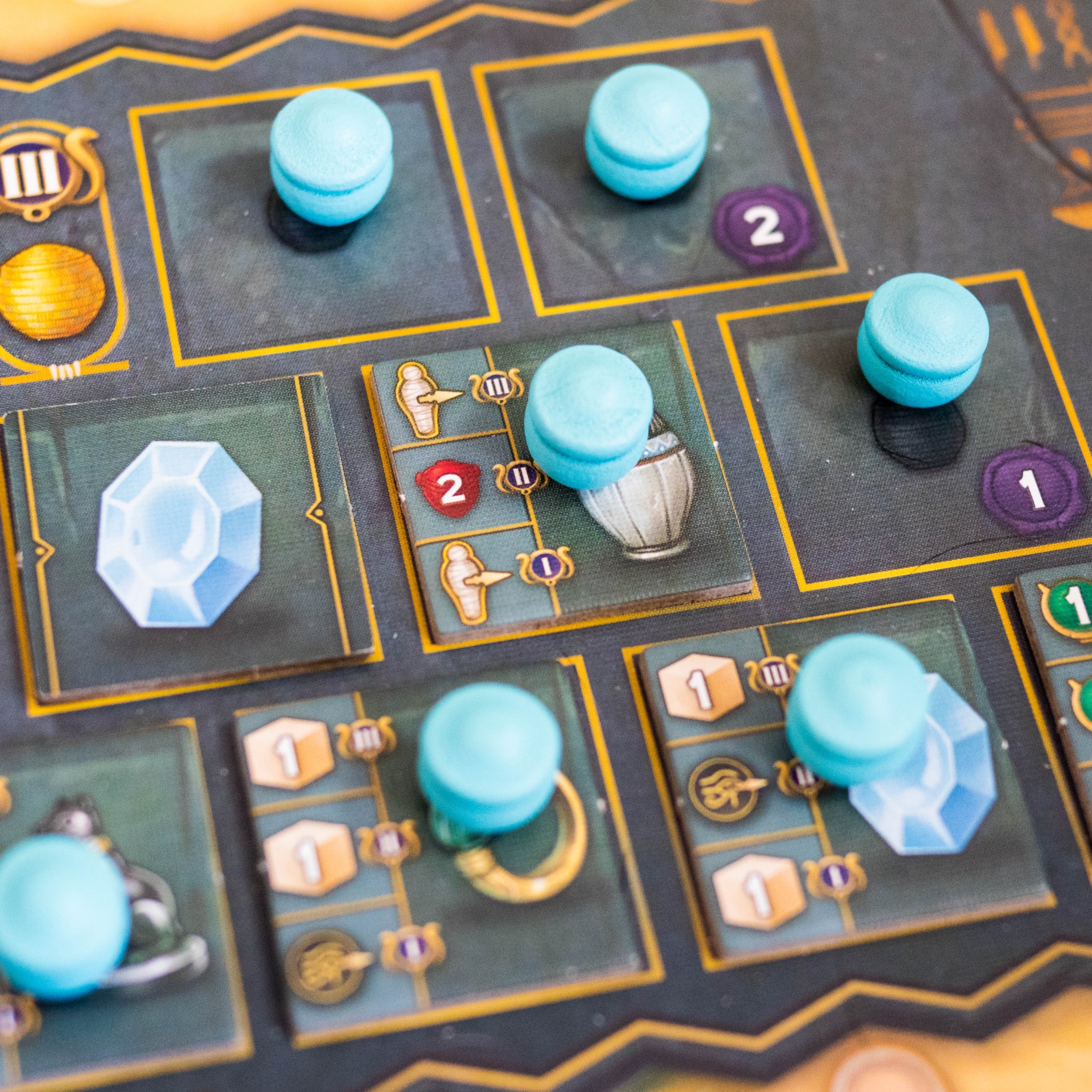
Obtain a Crafting Skill, Advance the Priestesses, Make an Offering, Raise the Orb |
 The Nile The Nile |
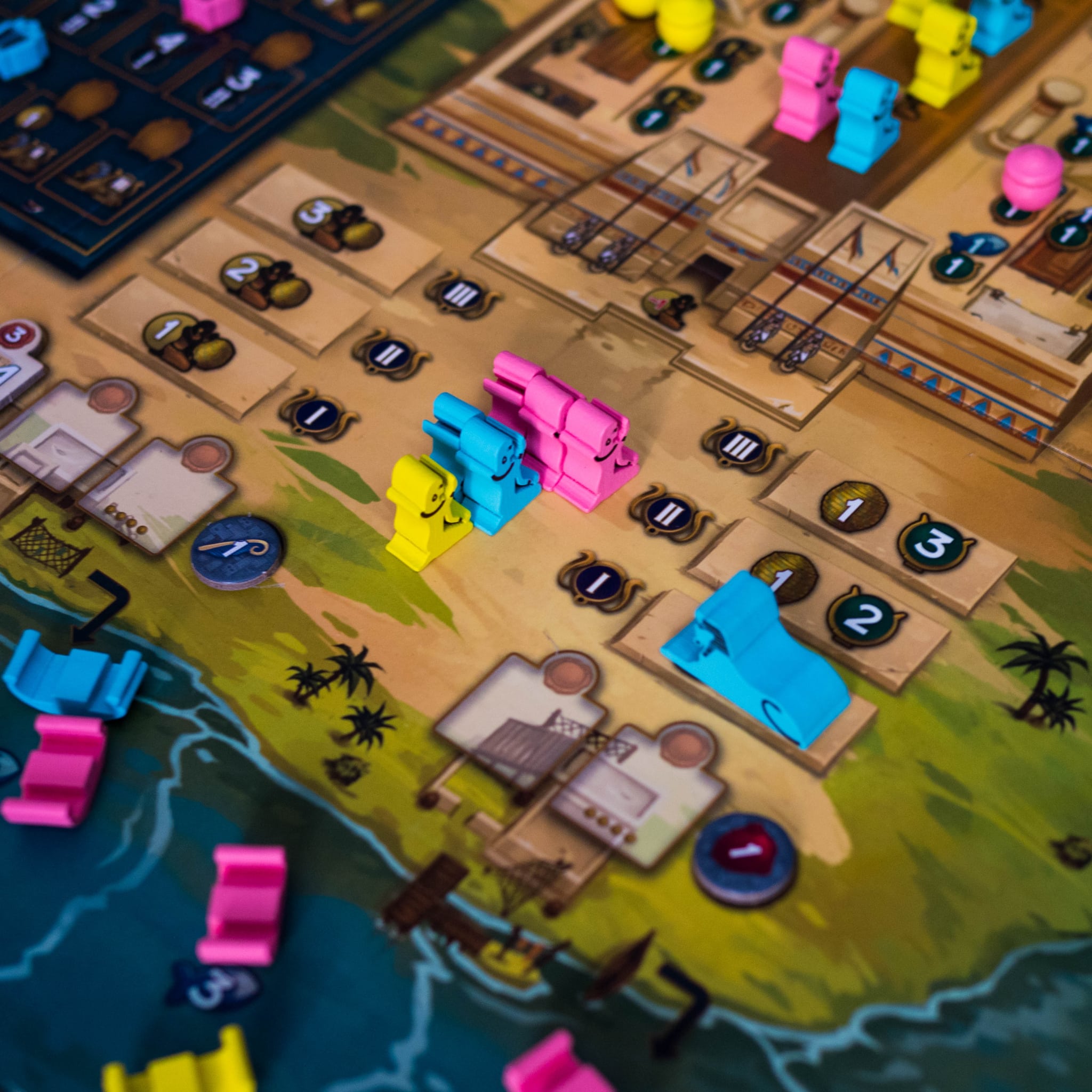
Move Boats Forward, Activate Boats (collect Food or Contracts in town) |
 The Sphinxes The Sphinxes |
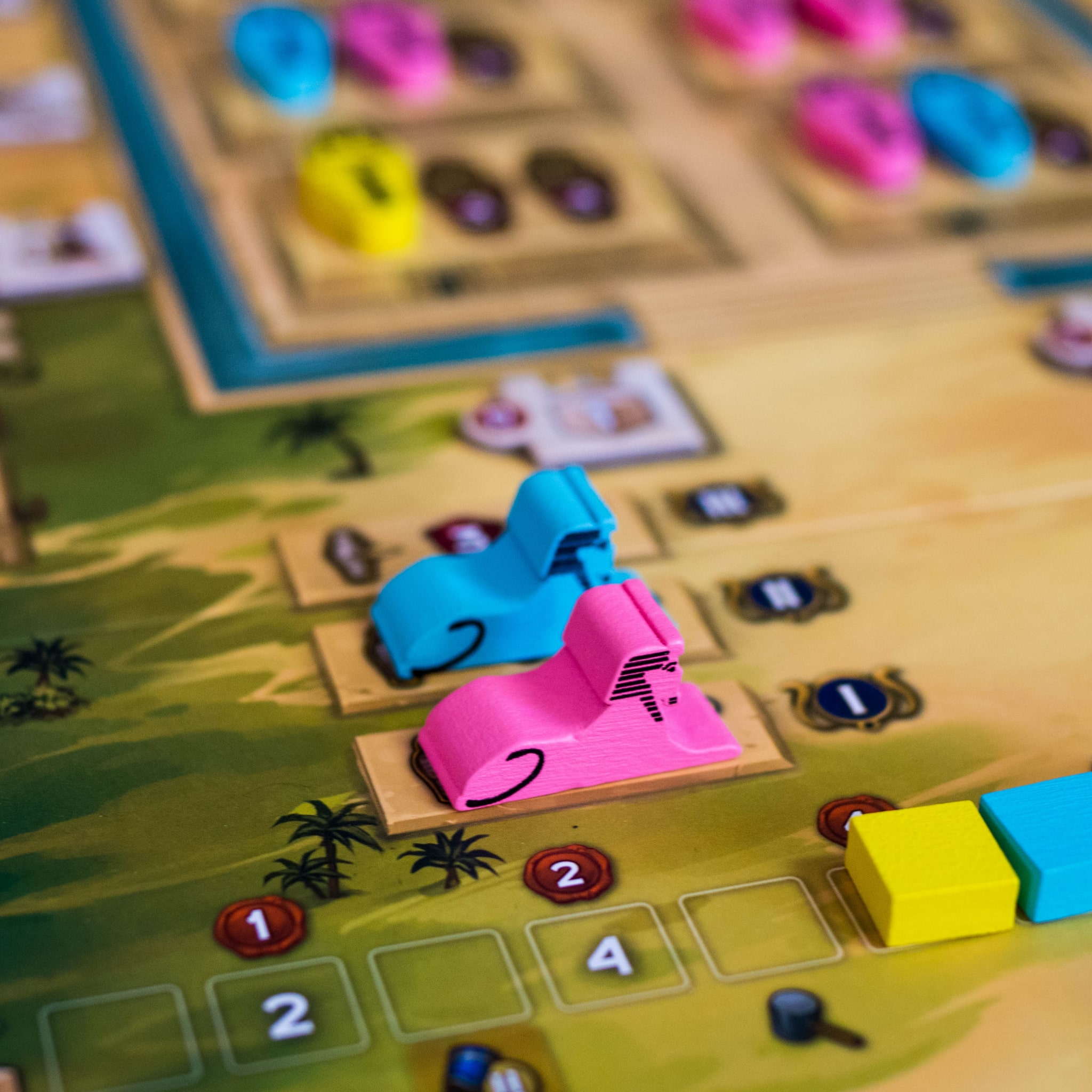
To sculpt a Sphinx, to erect a Sphinx on a pedestal |
 General General |
Obtain Papyrus, manage Heka and Food |
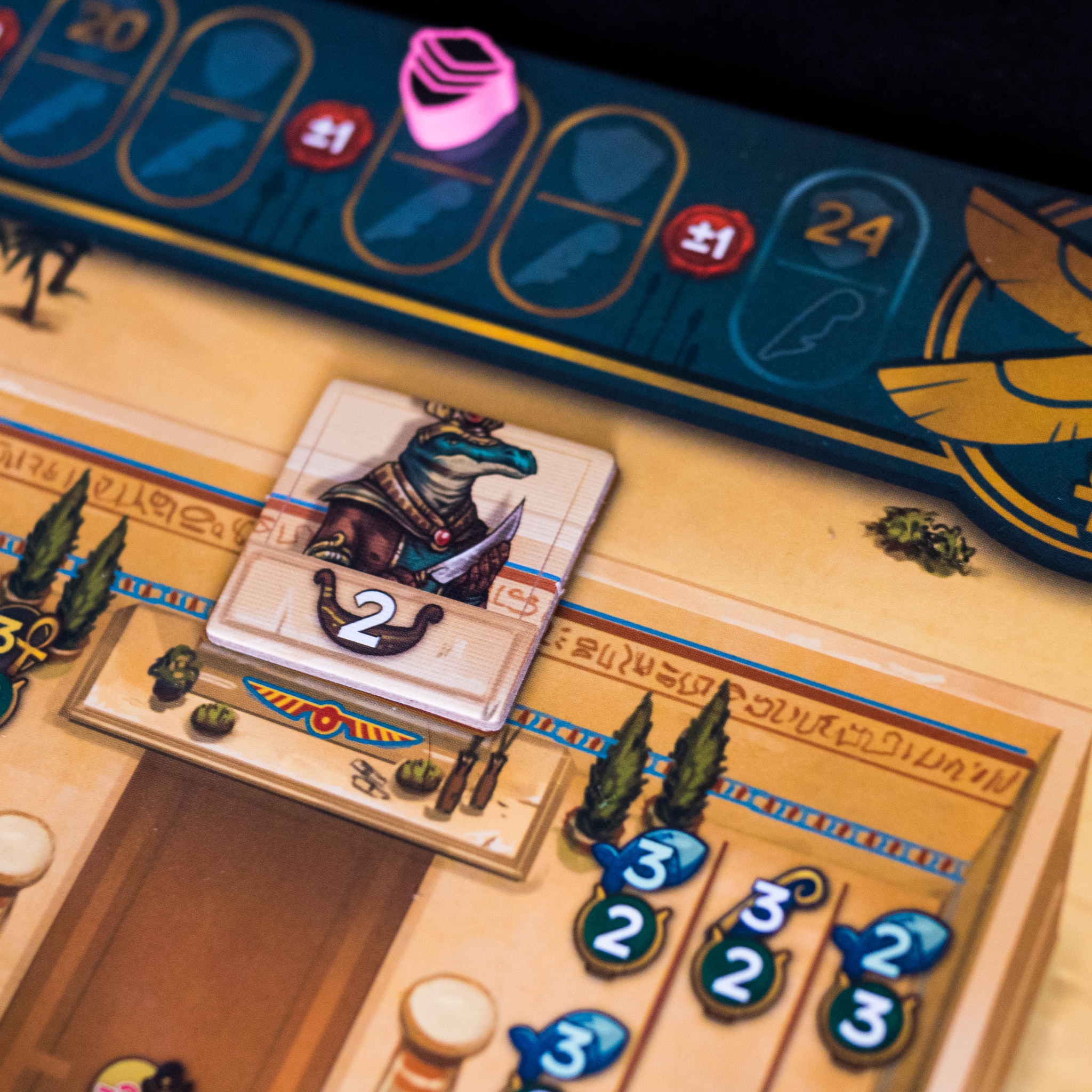
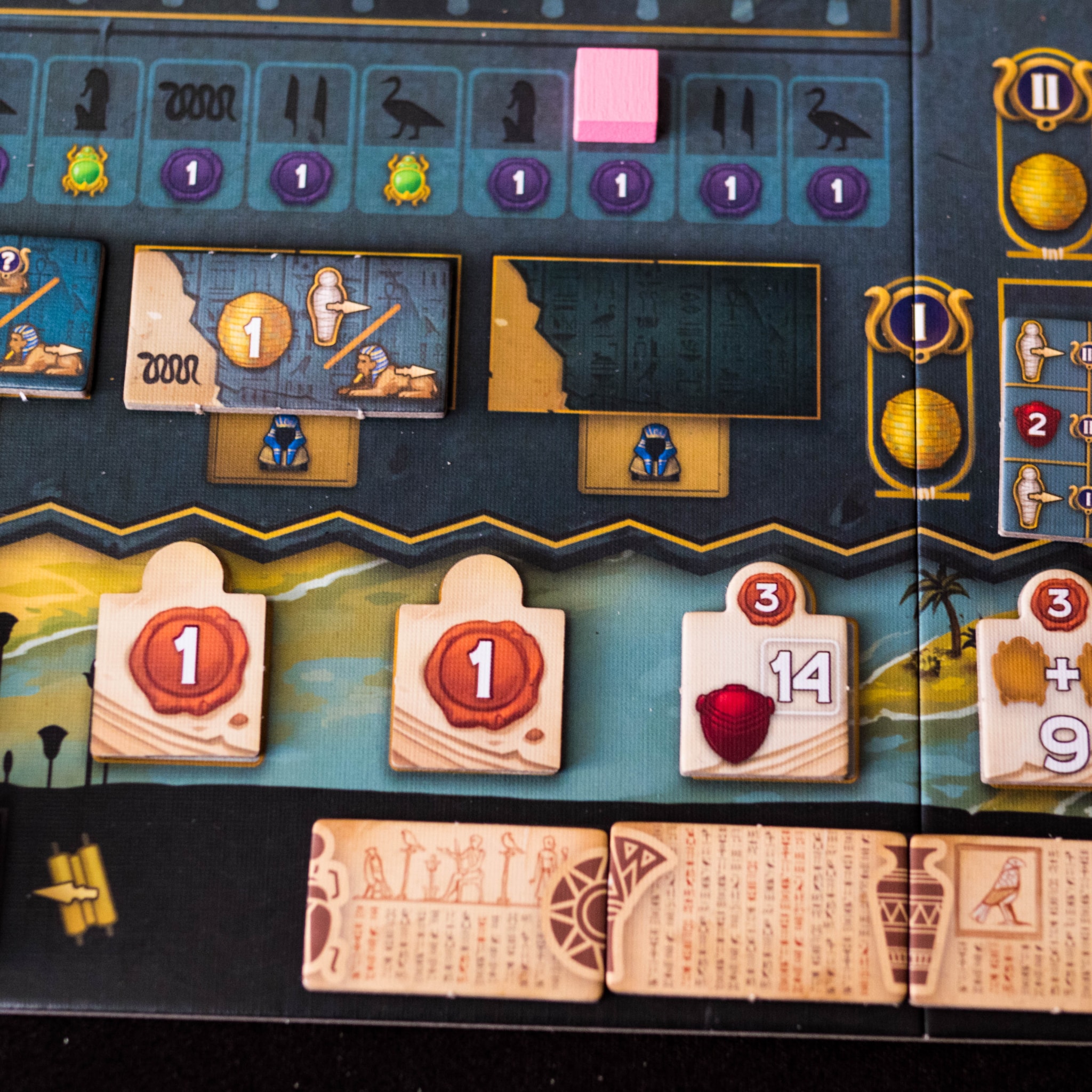
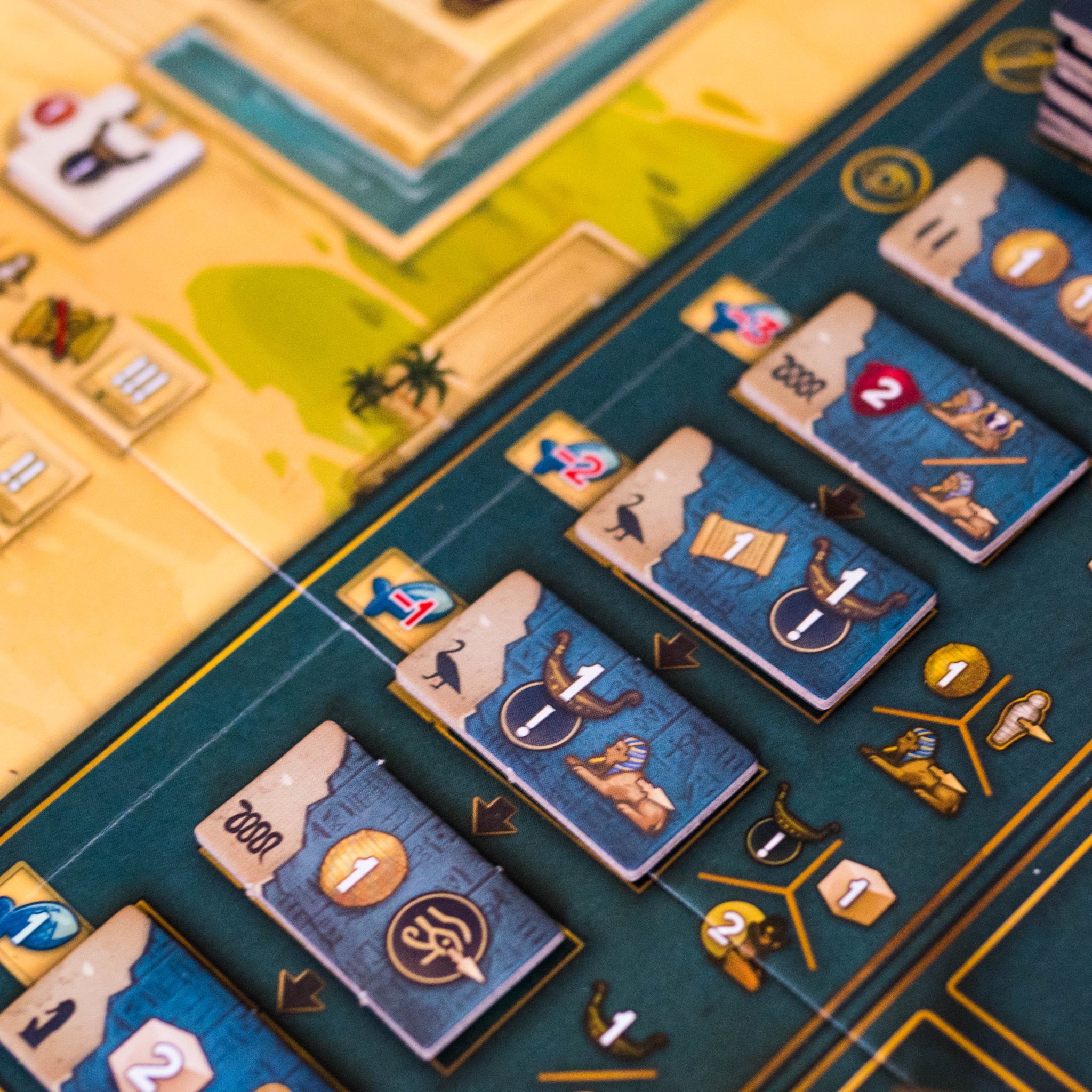


Men-Nefer Review
8.5Very Good
Men-Nefer is a heavyweight Eurogame for experienced players that shines thanks to its interconnectedness and mechanics with Ancient Egypt. Although demanding and featuring a visually busy board, it stands out as an essential resource management game thanks to the depth of its choices and the variety of its scoring systems.
Positives
- Theme/mechanics consistency
- Six interconnected game axes
- The Specialization tracks offer a real sense of progression.
- The Duat Gauge
- Very good replayability
- The Action Tablets system is elegant and well thought out
- A nice variety of scoring systems
- A quality edition
Negatives
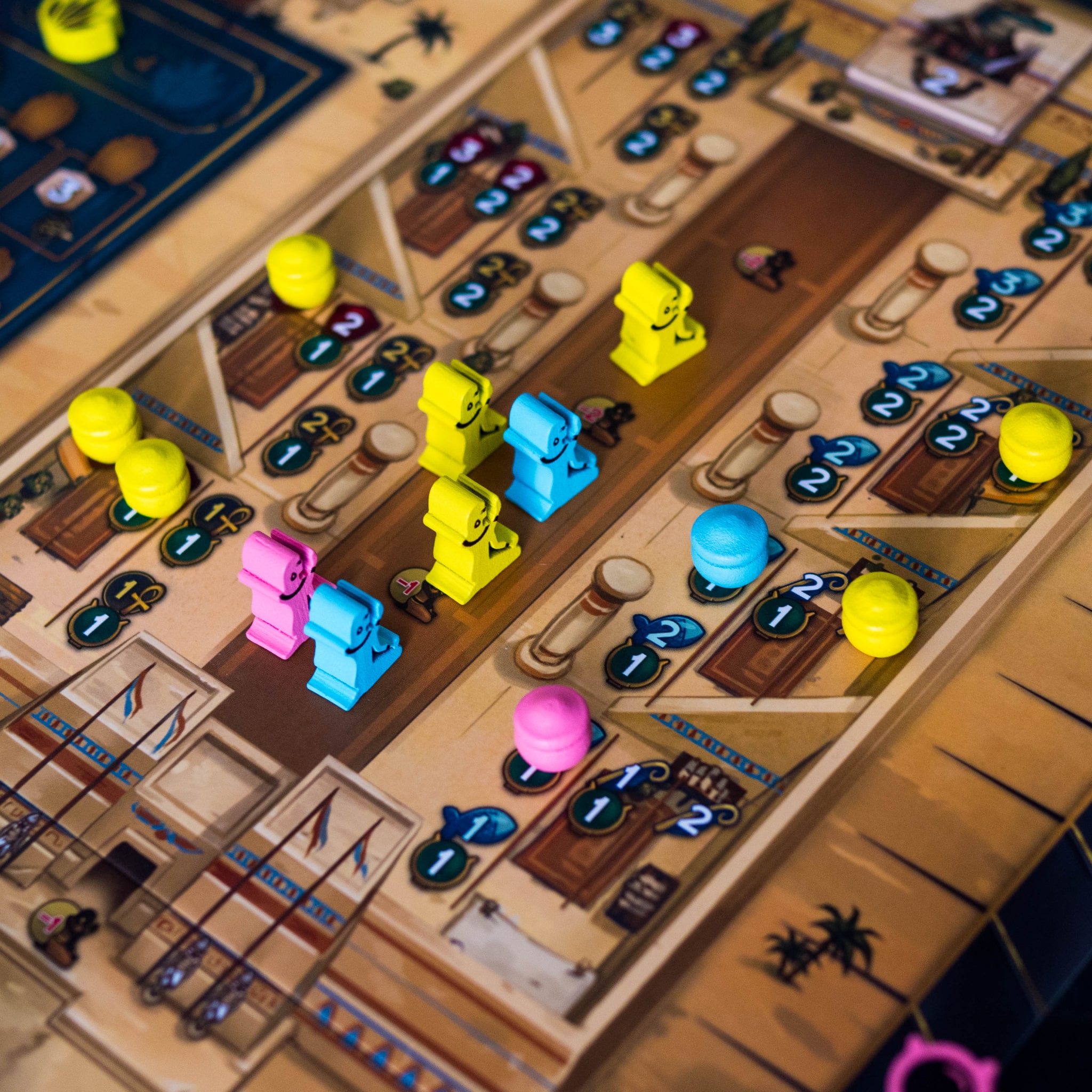
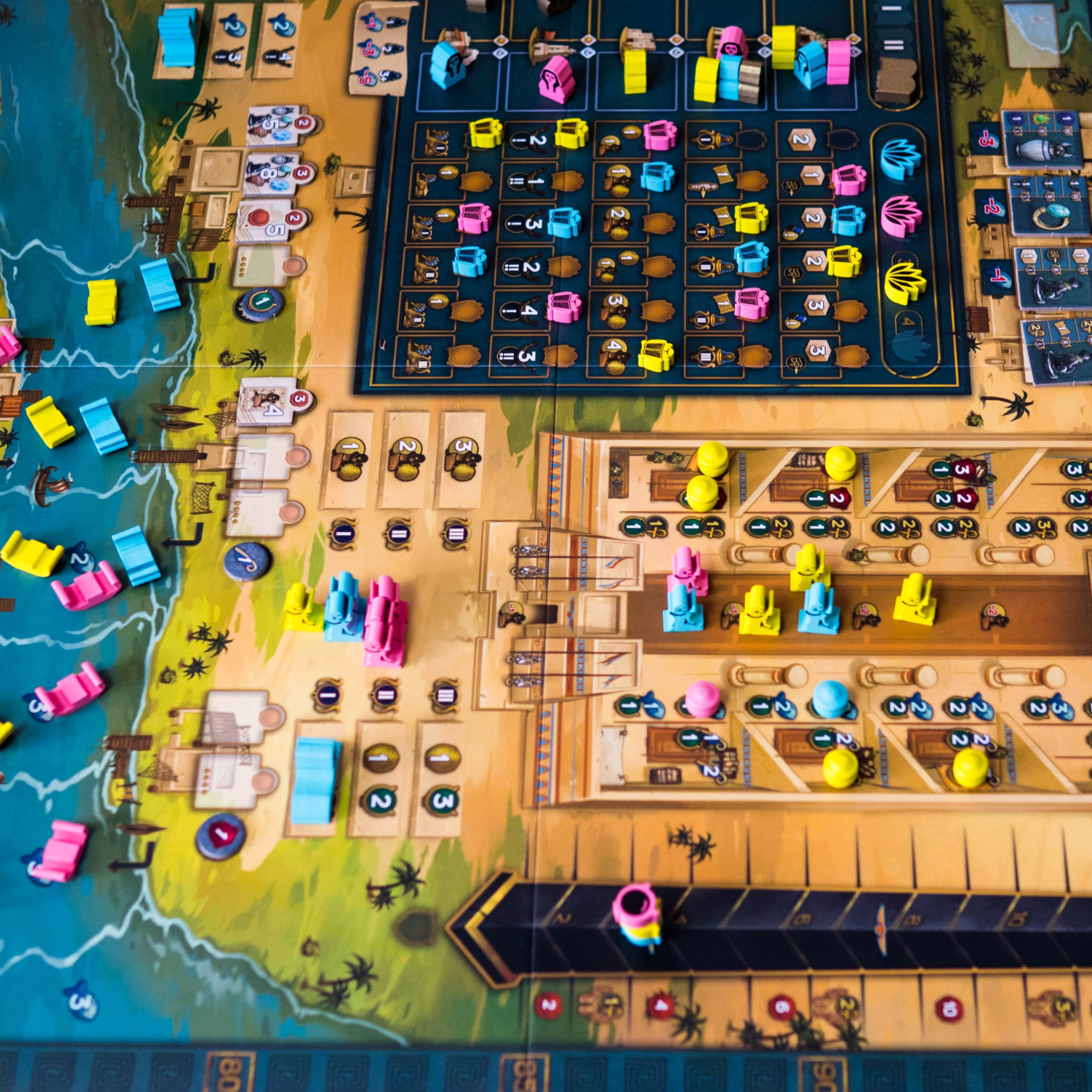
- Visually very busy set
- Precise but sometimes tiny iconography
- A few extra layers of rules that aren't essential
- A slight lack of pure originality
- A fairly permissive game


