- Publisher(s): Grail Games, Matagot
- Designer(s) : Helge Ostertag, Anselm Ostertag
- Artist(s) : Mihajlo Dimitrievski
- Players : 2–4
- Playing time : 80–100 Min
- Weight BGG : 3.15
What's this?
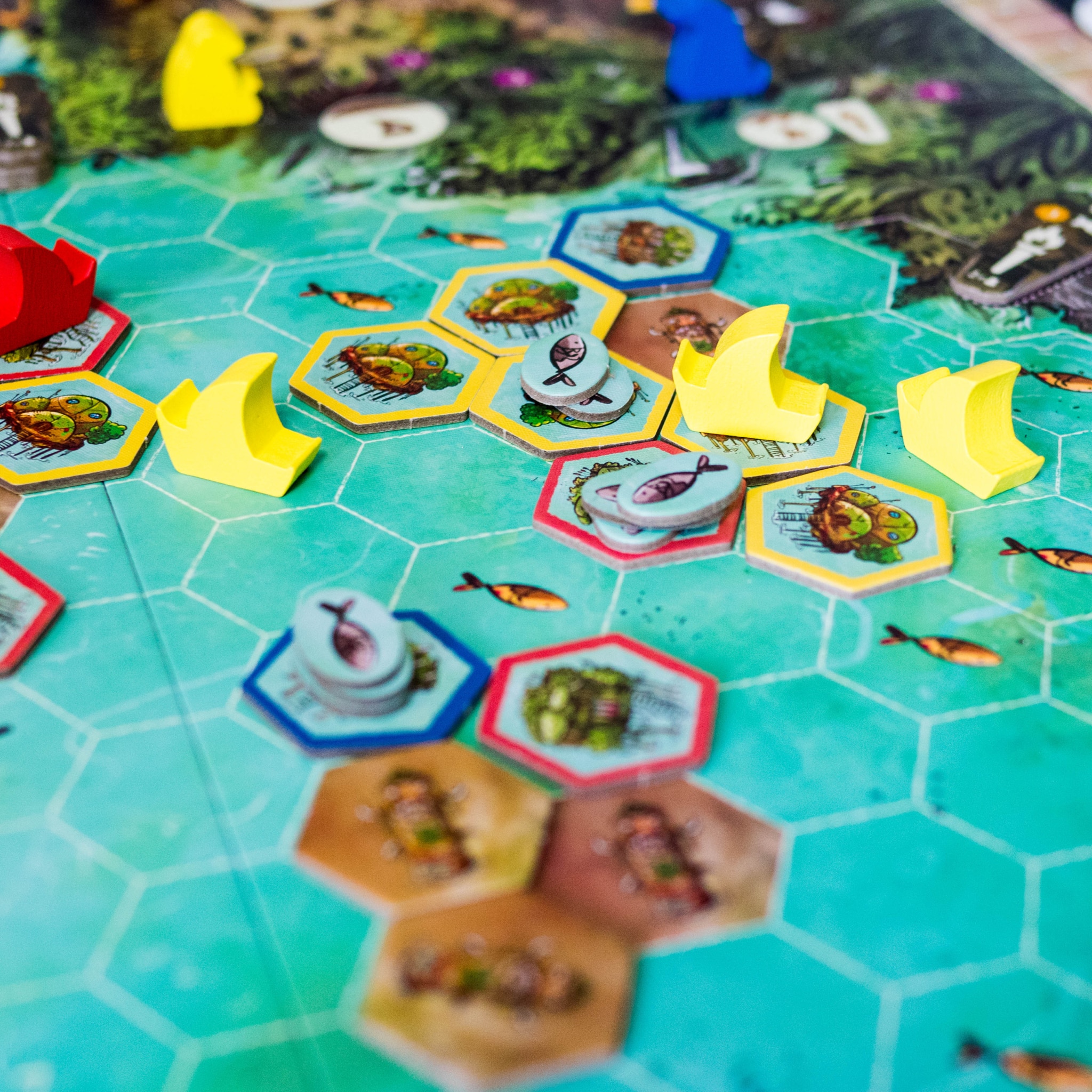
Feya’s Swamp is a resource management, territory development, and majority game for 2 to 4 players, created by Helge and Anselm Ostertag. Over four rounds, players take on the roles of one of the clans settled in the mysterious Feya swamp. Their objective: to build settlements, develop their river network, trade with other clans, and gain the favor of the ancestral spirits.
How do you play?
A game consists of 4 rounds , themselves divided into 3 phases .
1. Revenue Phase
At the start of each round, each player receives the resources indicated on their personal board as well as any bonuses from their guide.
2. Game phase
Players take turns according to the initiative order determined by their guide.
In turn, a player chooses one of the following three options:
Perform a maritime action
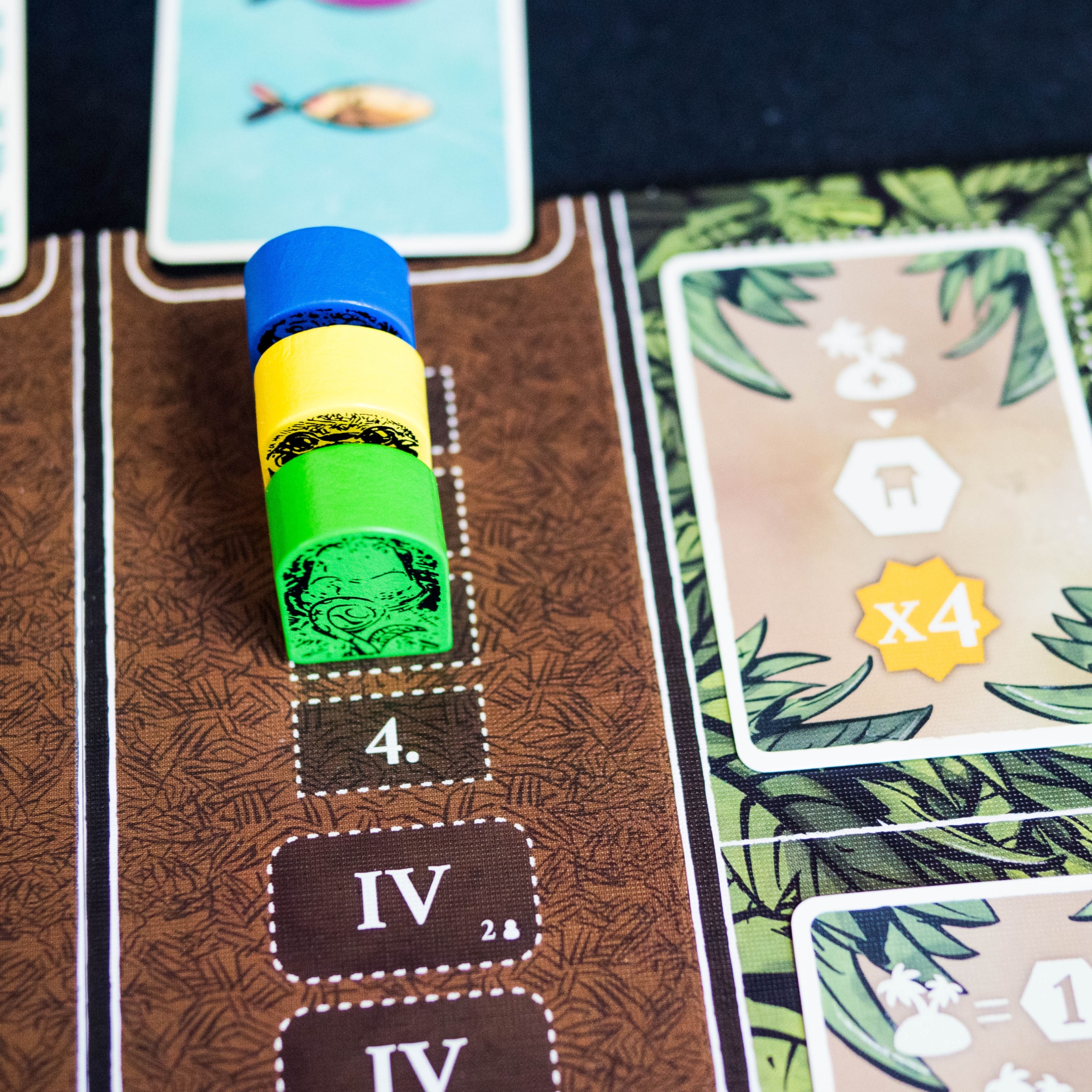
To do this, he places a worker on a maritime action location.
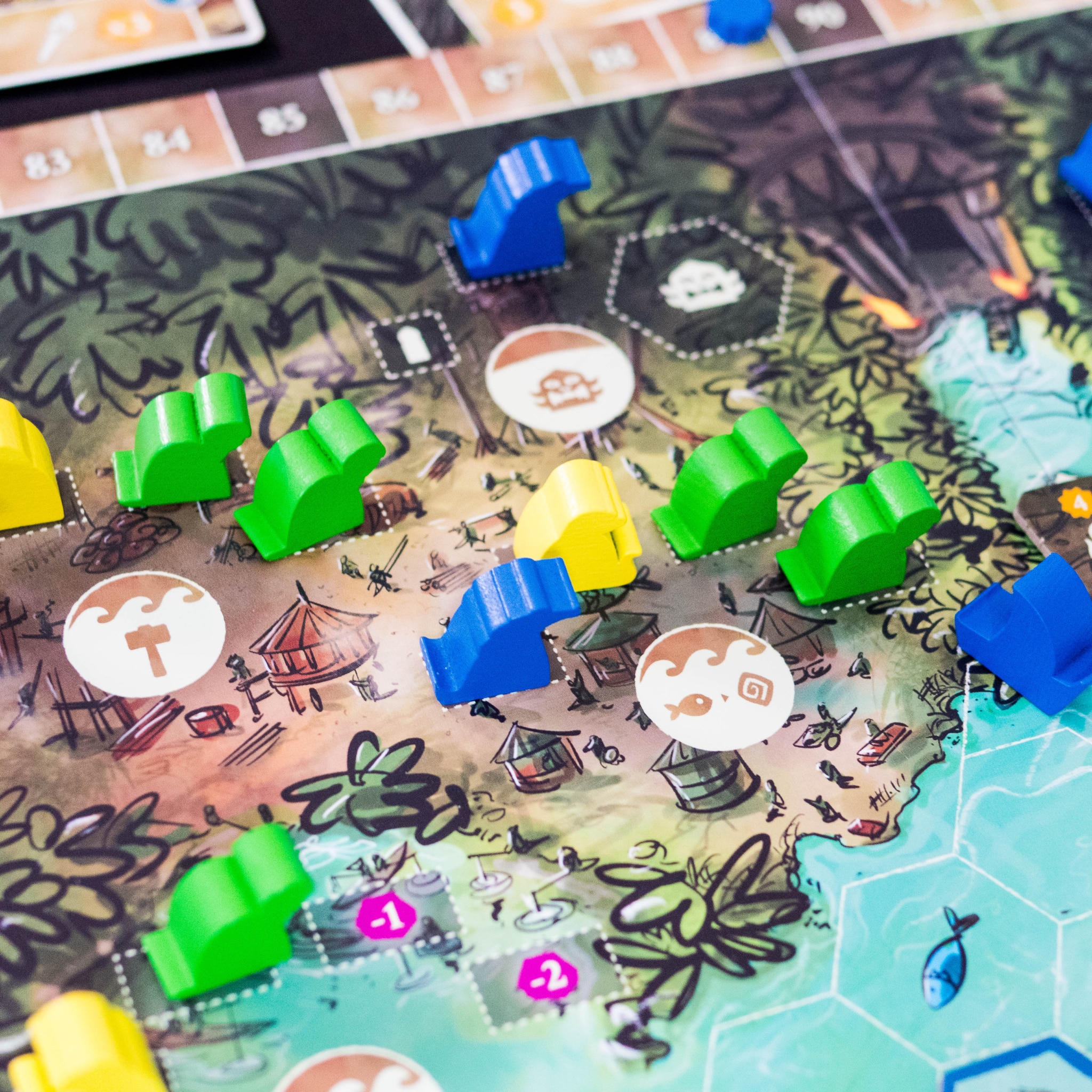
All of its available vessels can then move a number of spaces corresponding to their navigation capacity before performing the chosen action.
Sin
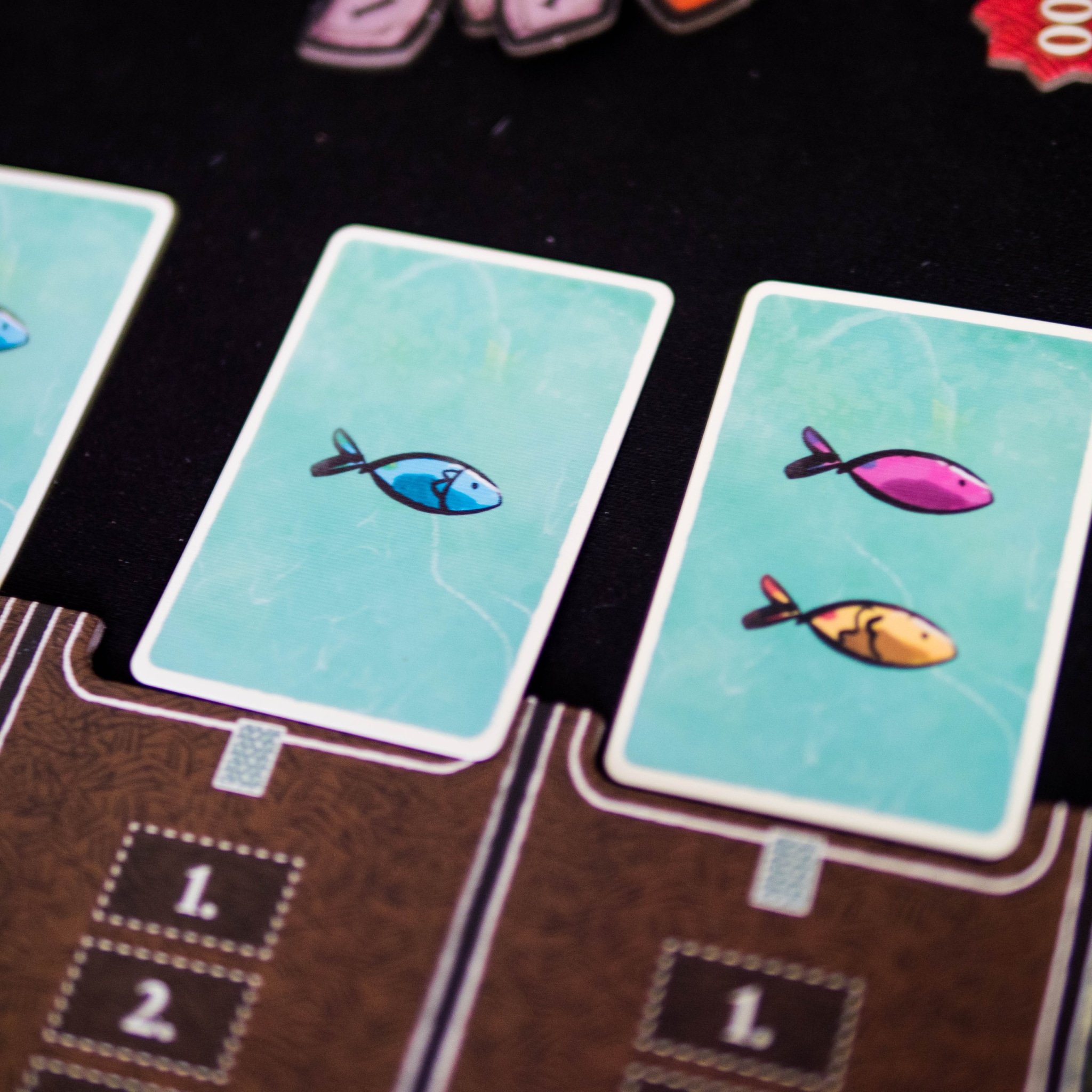
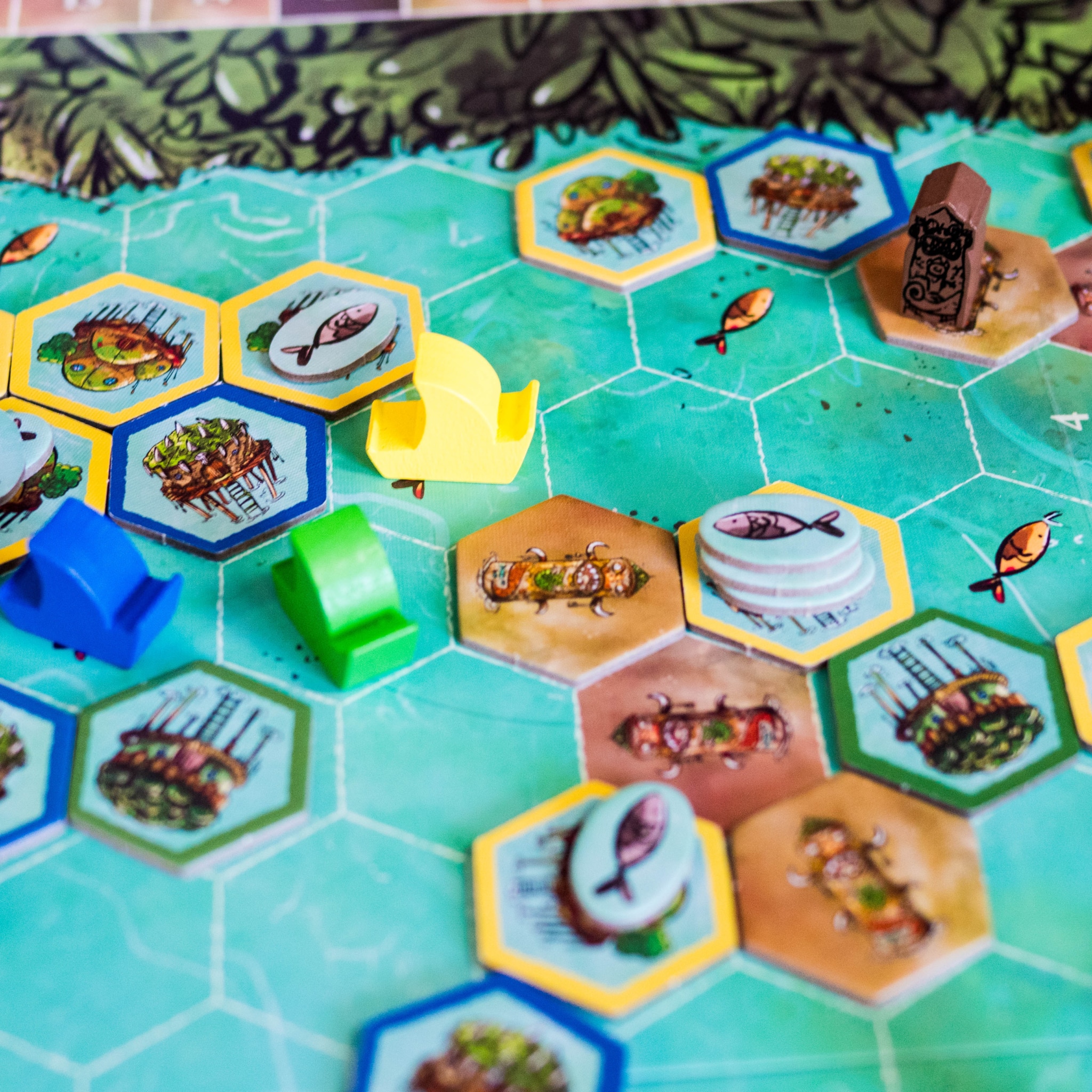
The boats move to areas containing seasonal fish. Each boat brings back a number of fish depending on your fishing ability.
Build a colony
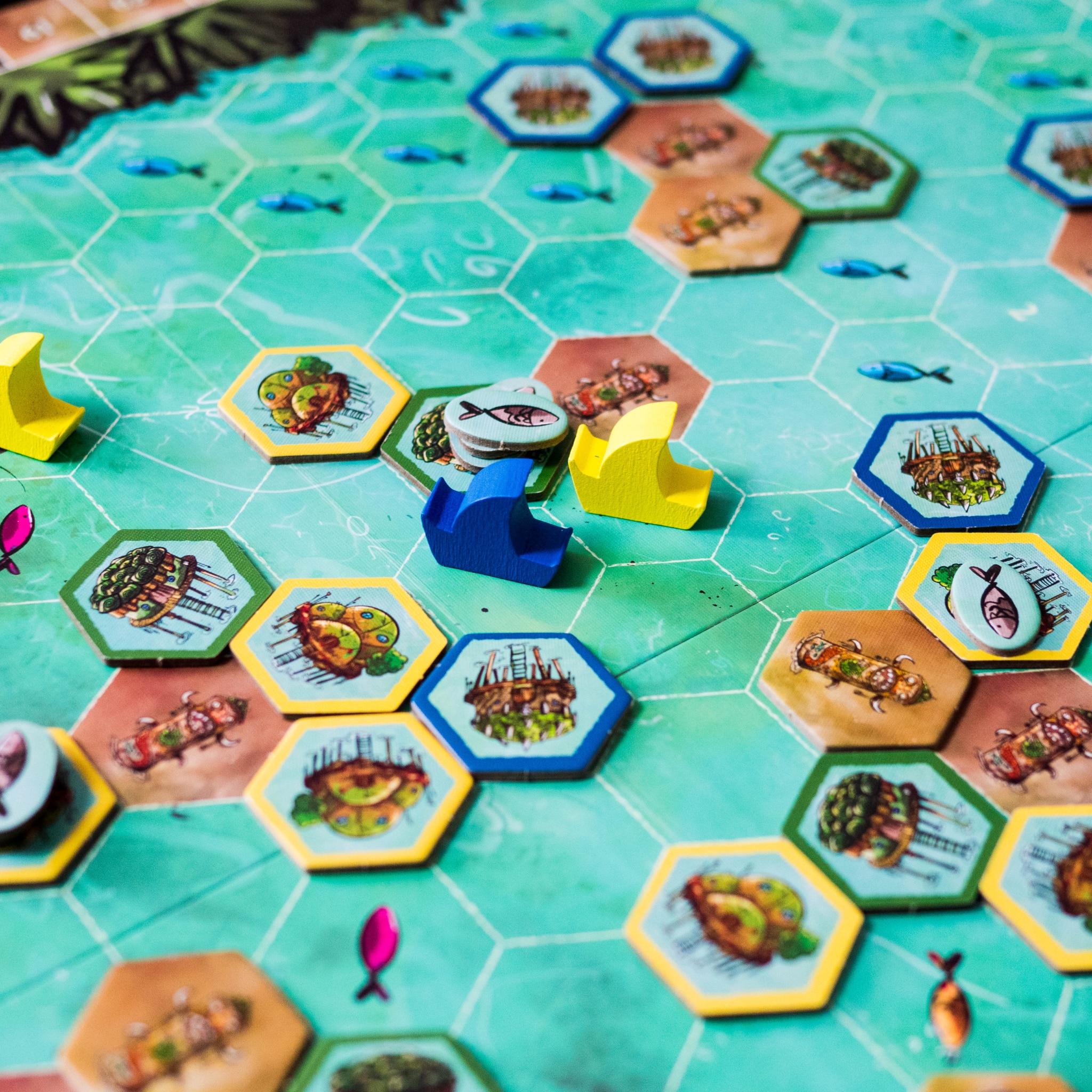
The ships reach a buildable area. He then places a new settlement tile from his personal board and often unlocks new bonuses.
Trade
The ships dock near colonies. The player places fish on the neighboring colonies:
- on opposing colonies to gain gold;
- on its own colonies in order to prepare for future festivals.
Navigate
This action simply allows you to move your boats. It’s also the way to explore the temples located at the edges of the board and obtain their rewards.
Perform a land action
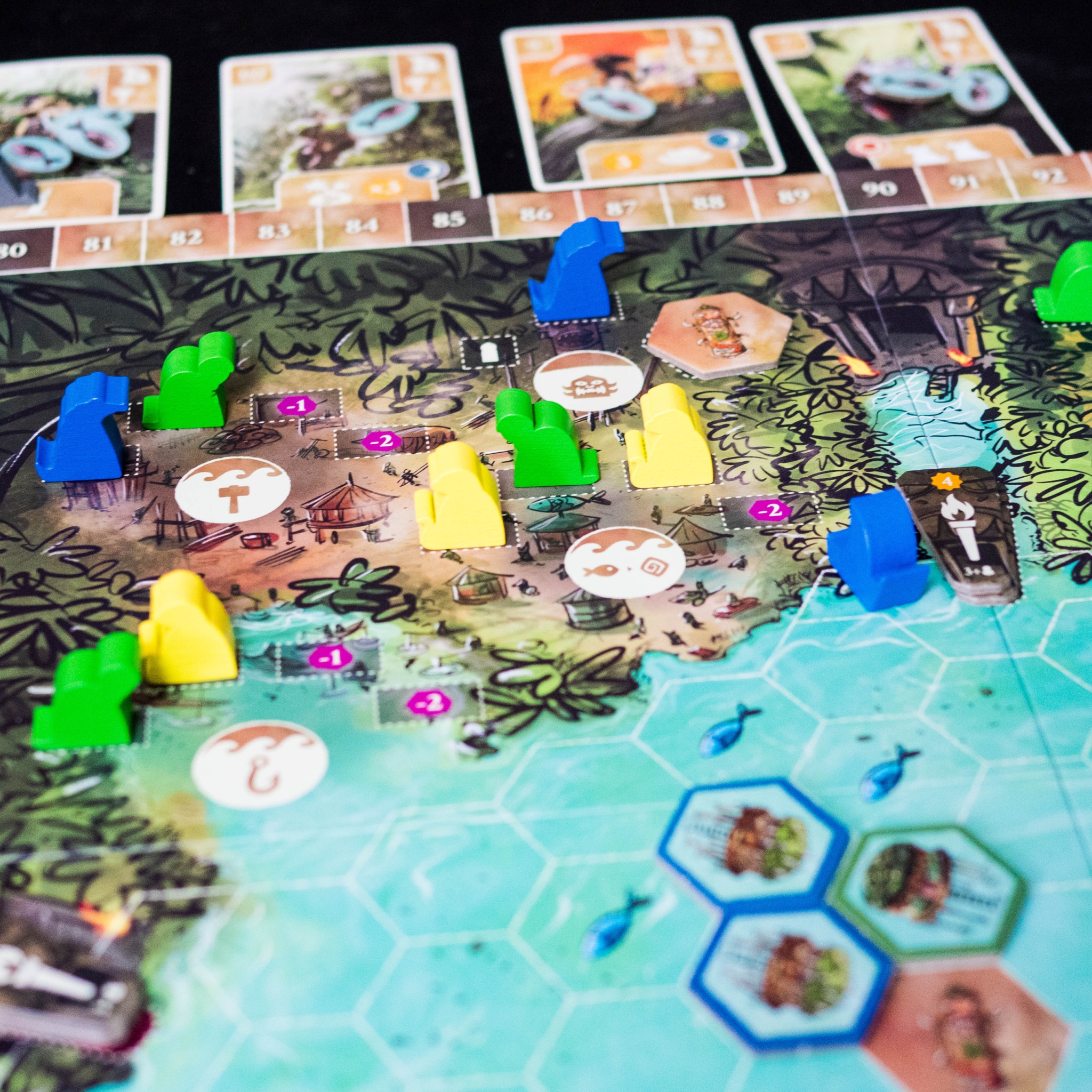
The player places a worker on a land location.
Improve your navigation
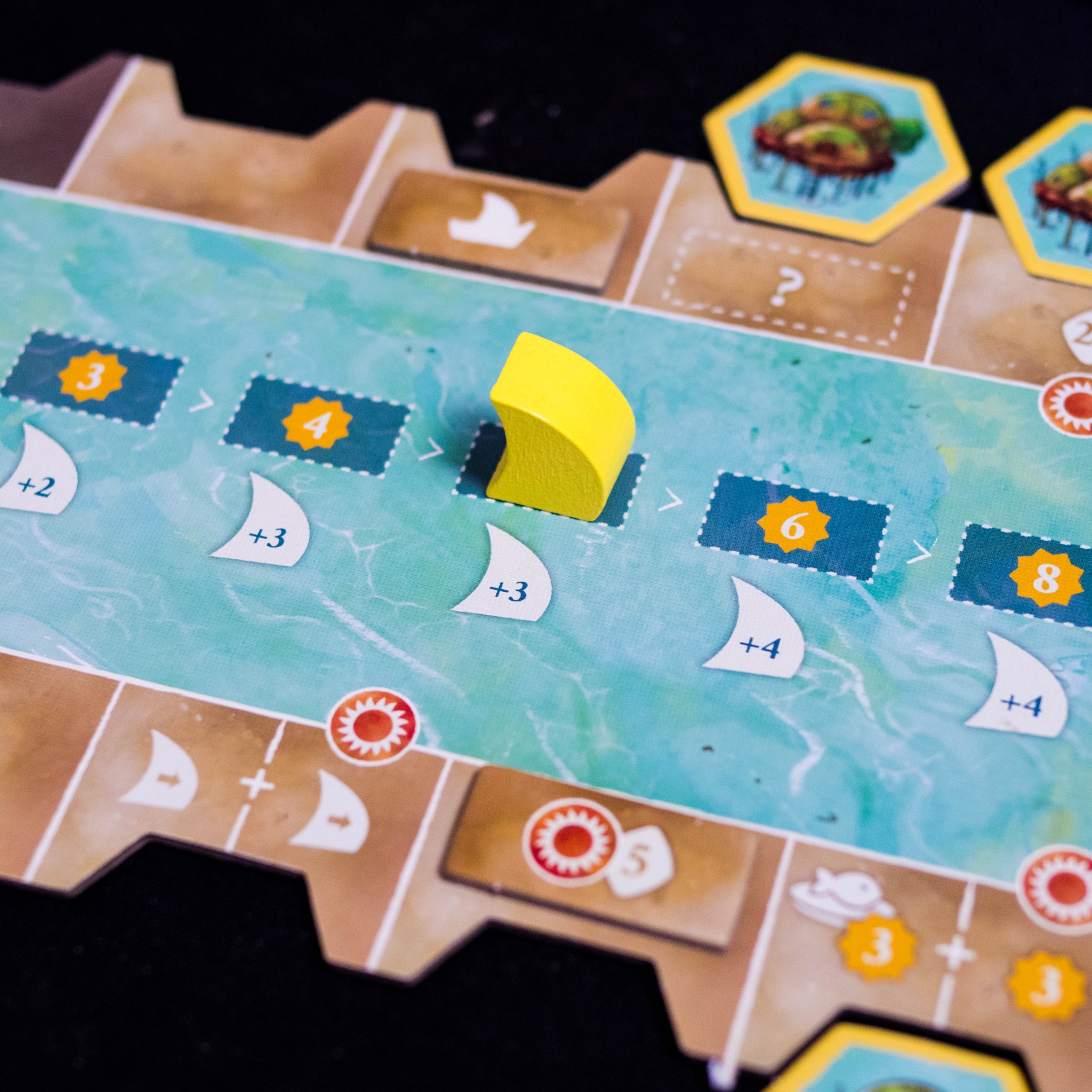
The navigation marker progresses along the corresponding track.
Organize a celebration
The player chooses an island. Each colony containing fish scores points. Finally, all the fish on the island are removed.
Add a spirit
The player places a new Spirit tile on the board.
Pass
When a player decides to pass:
- He receives a round bonus.
- He may benefit from the power of his guide.
- He puts his guide back into the joint offer.
- He chooses a new one for the next round.
3. Maintenance Phase
The players retrieve their workers, the fish season card changes, and the turn order is reorganized.
End of game
After the 4th round, we move on to the grand final countdown .
Is it good?
Feya’s Swamp is a great find for fans of expert games with more interaction and greater accessibility than what we have come to expect from the authors of Terra Mystica or Project Gaia .
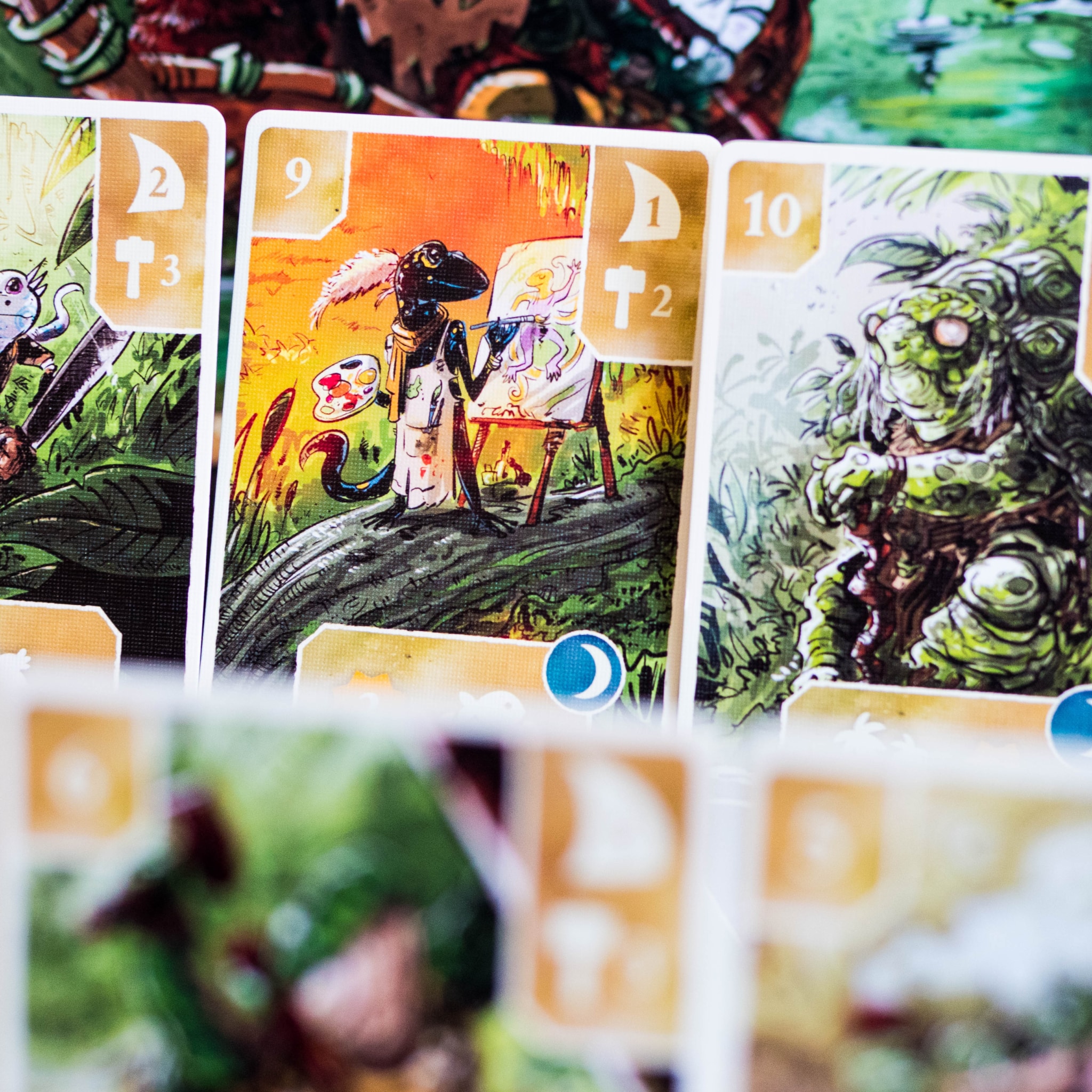
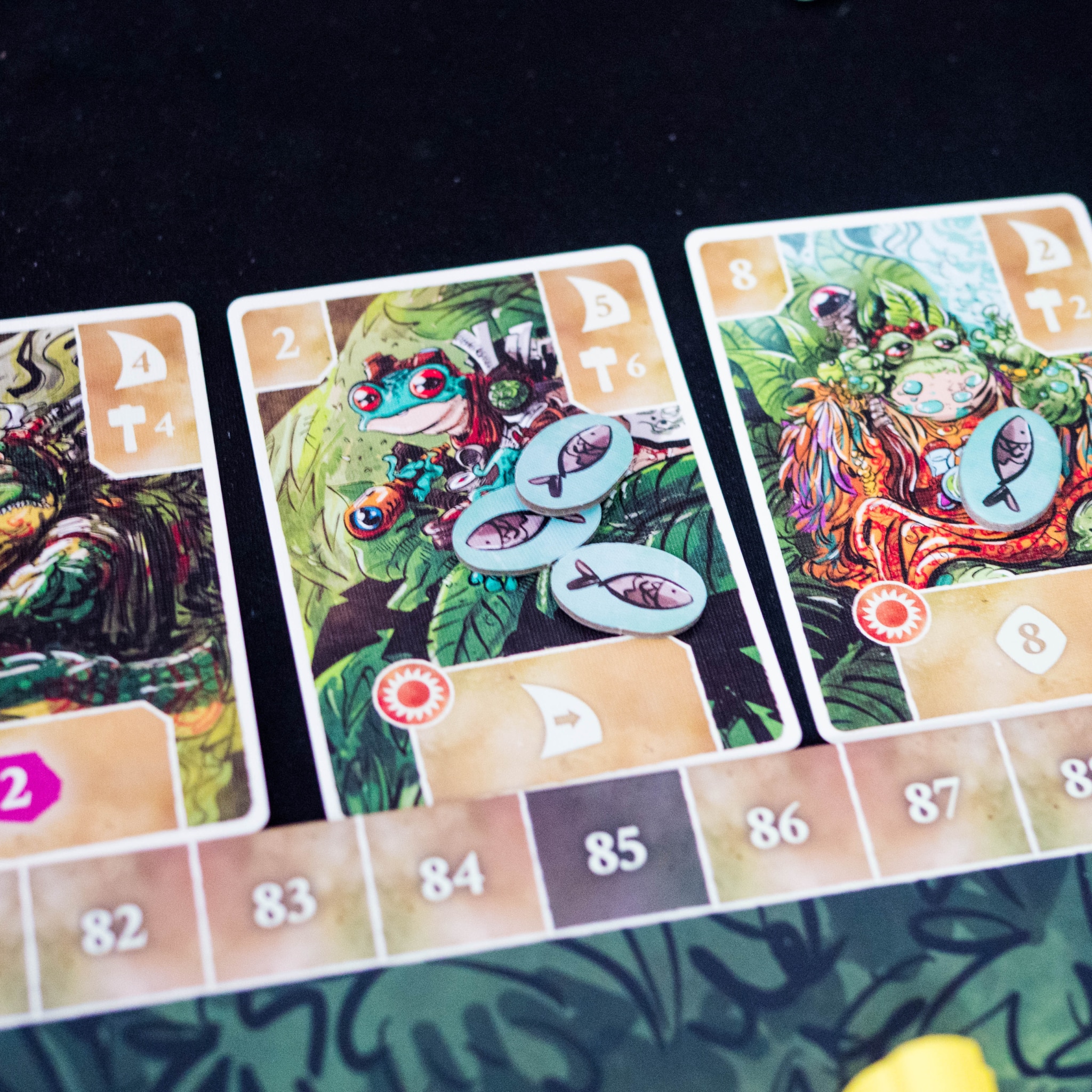
Mechanically, the game strikes an interesting balance between strategic depth and accessibility. The Guide system works particularly well: your Guide will define a large part of your strategy for the current round thanks to its naval reach, colony construction cost, and special power. The timing of your turn is also crucial, as it allows you to collect both a round bonus tile and the Guide that will shape your next turn. This system generates interesting choices right from the start of each round.
Interaction is ever-present. The trade system constantly forces you to weigh immediate gain against long-term vision. You seek to sell your fish to other players to amass gold and finance the expansion of your colonies, but in return, you also prepare victory points for them when a player triggers a “Celebrate” action on the island in question.
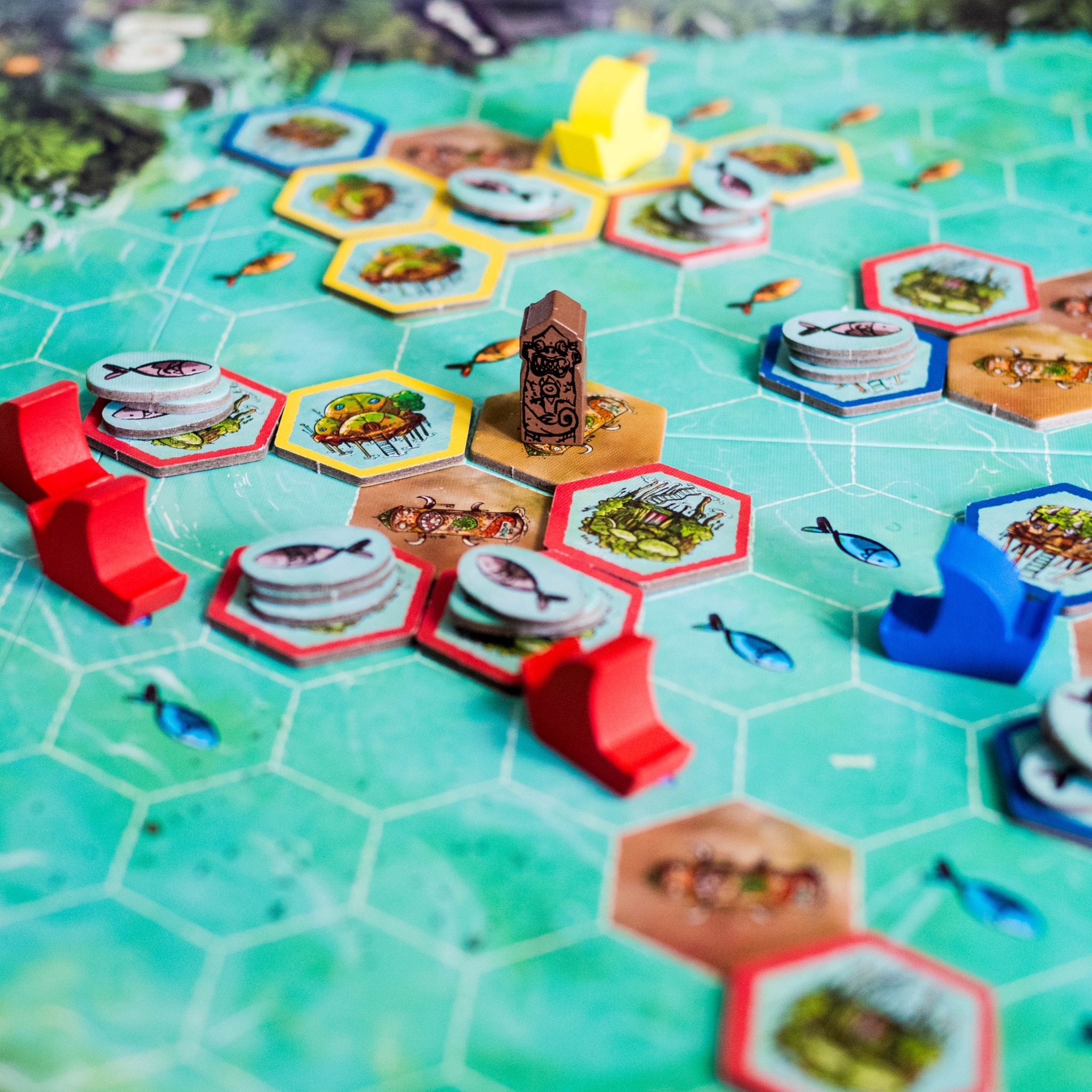
This interaction is also reflected in the game board. The swamp’s geography is constantly evolving: each new settlement reduces the available space, while Spirit tiles modify the cost of islands and influence future building locations. Added to this is the competition for action spaces, which become increasingly expensive as players wait. And let’s not forget the race to achieve objectives, which constantly pushes us to monitor our opponents’ strategies in order to grab the best rewards before they do.
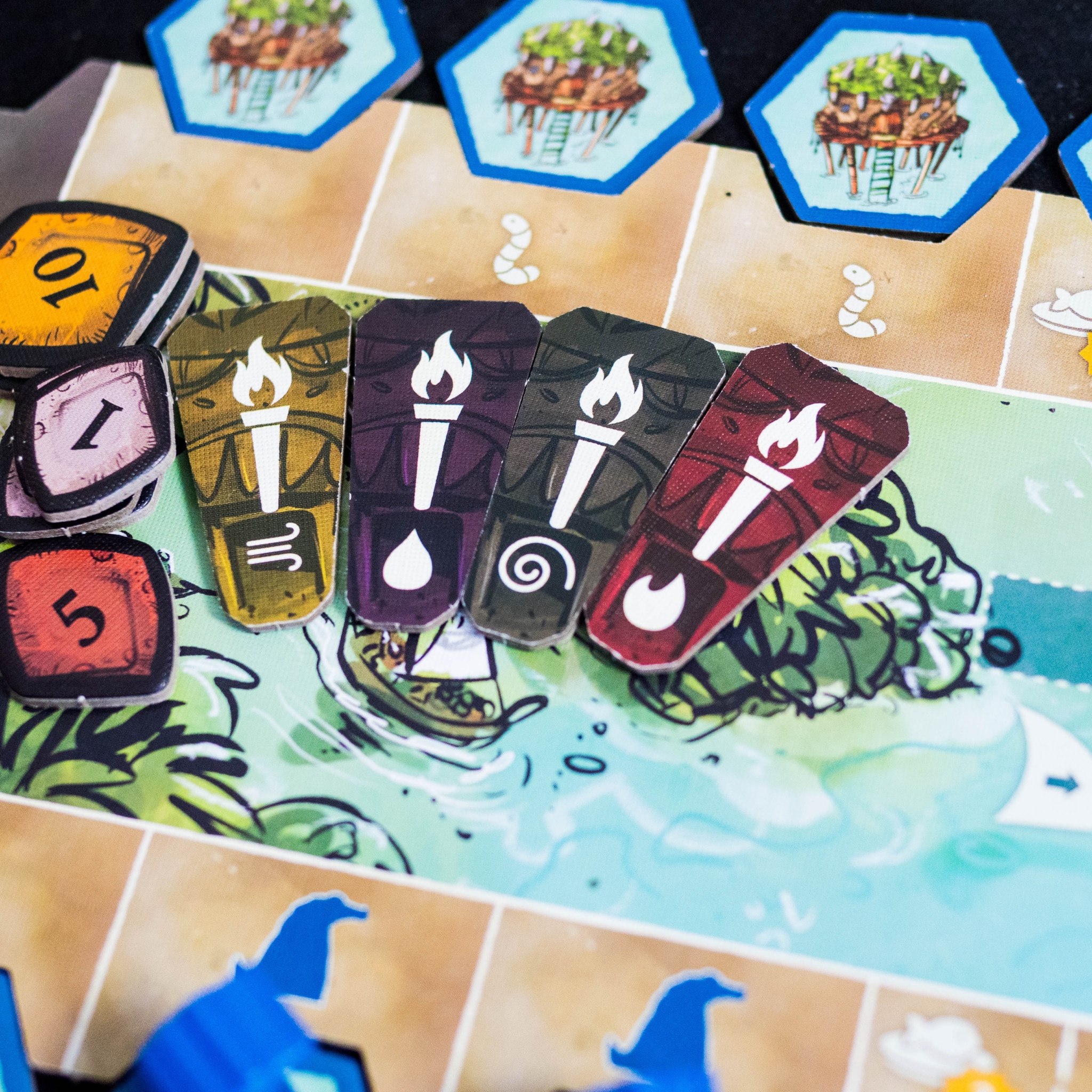
On the downside, the numerous possibilities offered by naval actions, especially when multiple ships are involved, can lead to a bit of analysis paralysis for some players. A few rules also require several games to fully master, particularly the Objective cards and the final scoring cards, some of whose pictograms aren’t always very intuitive. Finally, the trade system and certain victory point calculations require a short adjustment period before becoming completely natural.
Regarding the factions, despite a slight asymmetry, we would have preferred more pronounced differences between them, similar to what Project Gaia offered . This remains consistent, however, with the designers’ intention to make the game more accessible. The theme, while well integrated into the mechanics, can also feel a bit tacked on at times. Certain actions, such as improving navigation, collecting temple rewards, or adding a Spirit tile, sometimes lack depth and don’t necessarily provide a particularly original experience.
Despite these minor reservations, Feya’s Swamp remains a solid, intelligent, and highly interactive worker placement and territory development game. In a gaming landscape where direct or indirect interaction sometimes tends to fade in favor of solitary optimization, it’s refreshing to find a game that forces us to constantly keep an eye on our opponents. Its high replayability, driven by the Guides, objectives, board configurations, and other players’ choices, guarantees games that are fresh and full of decision-making opportunities.
Feya's Swamp Review
Positives
- Excellent interaction between players
- Very clever guide system
- A successful blend of worker placement and boat movement
- Commerce and celebrations create interesting dilemmas.
- Game board that constantly evolves throughout the game
Negatives
- Trading and scoring systems are not very intuitive in the early games.
- The asymmetry between peoples is quite slight.
- Some actions lack flavor or a sense of novelty.
- The cycle (fishing > selling > colonies) can become repetitive.