

- Publisher : Super Meeple
- Designer(s) : Mandela Fernandez-Grandon, Fabio Lopiano
- Artist(s) : Ian O'Toole
- Players : 1-4
- Playing time : 60–90 Min
- Weight BGG : 3.26
What's this?
Ayar is a strategic management game for 1 to 4 players, designed by Fabio Lopiano and Mandela Fernández-Grandon . Immersed in the heart of the Inca civilization, each player embodies a secondary clan that helps the eight Ayar brothers and sisters (the first Incas) on their mythical journey towards the founding of the empire in Cusco .
How do you play?
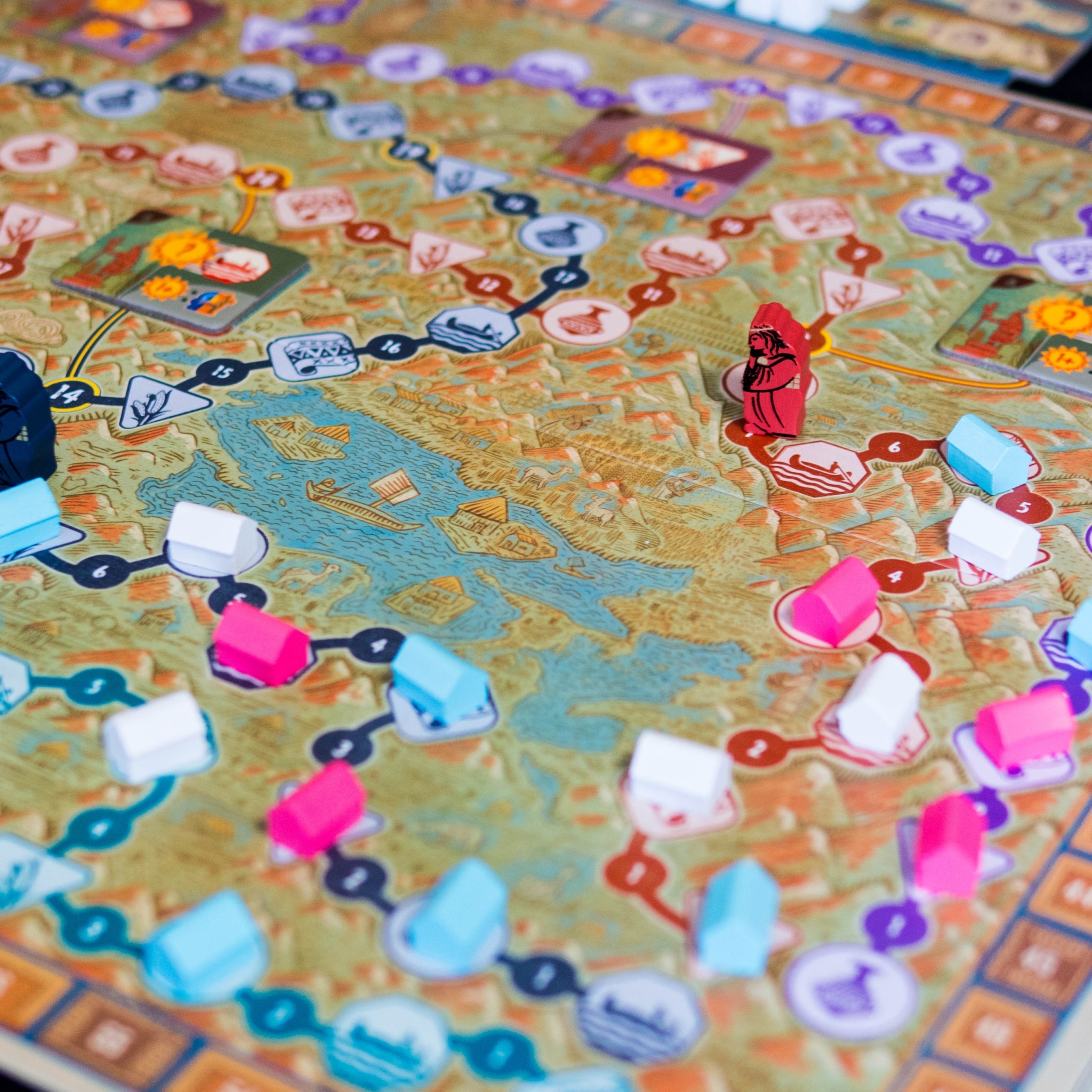
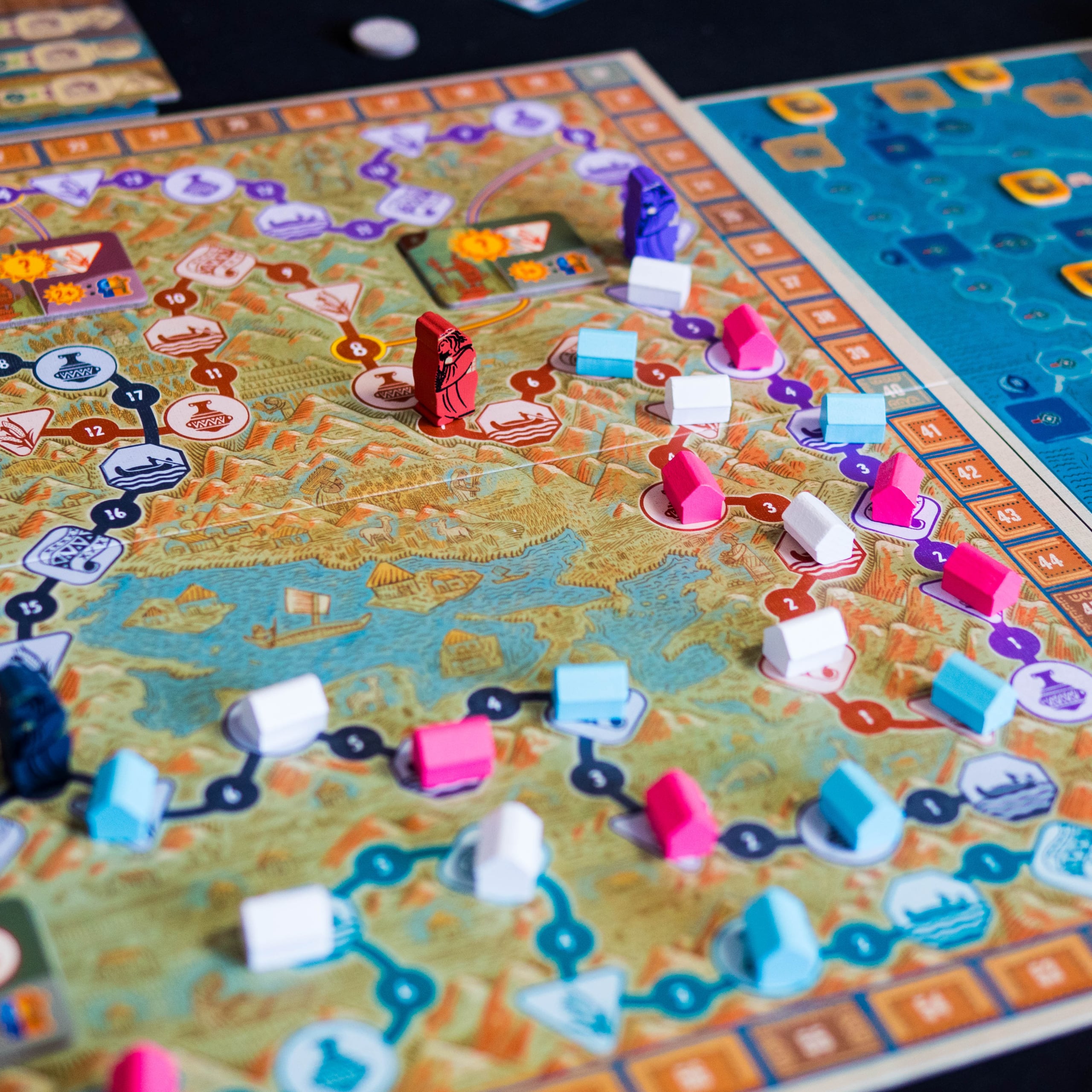
The game takes place over 4 rounds , representing the journey from Tiwanaku to Cusco . Each round is divided into two main phases.
1. The Day Phase (Actions)
Players take turns completing 5 key steps until their step markers are exhausted :
-
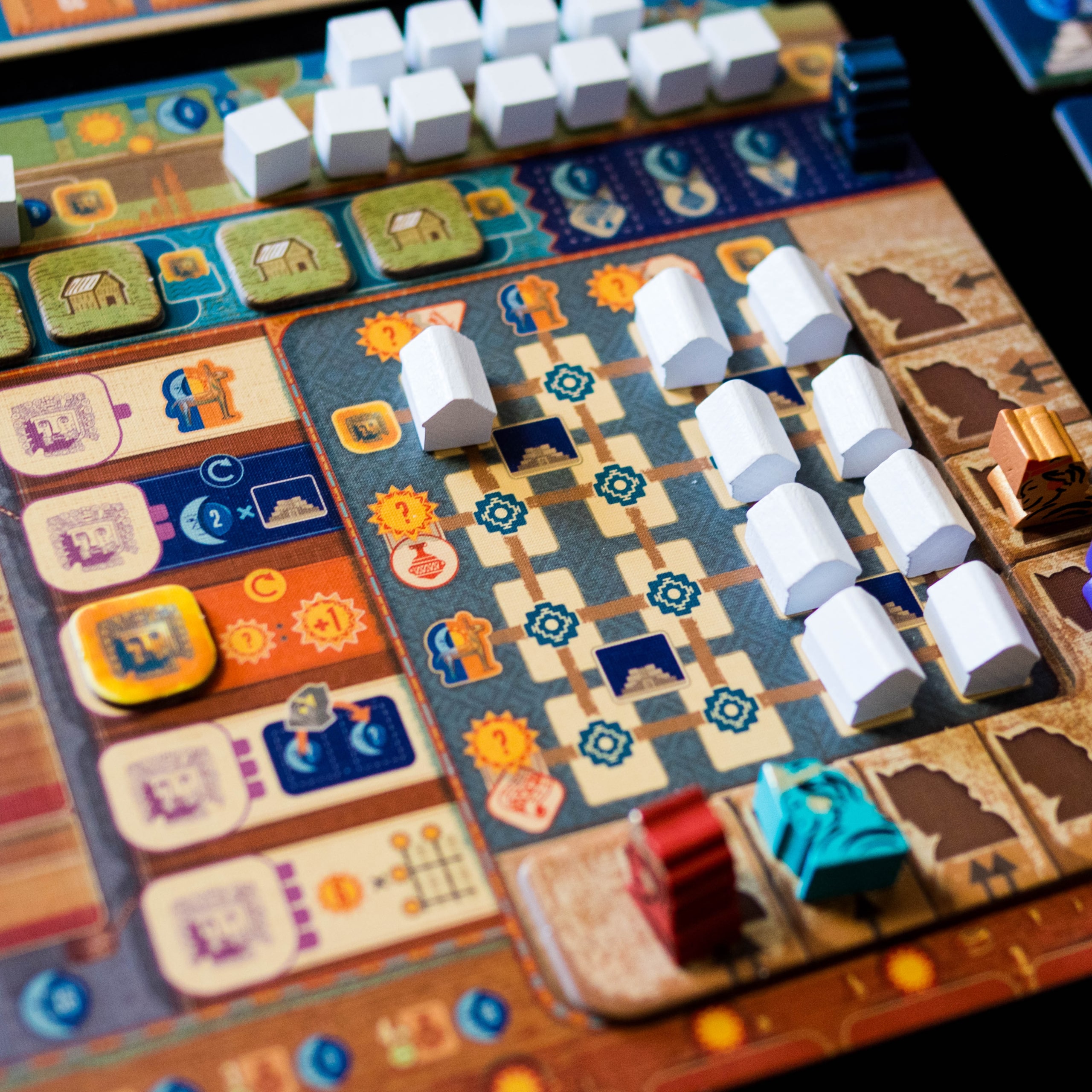
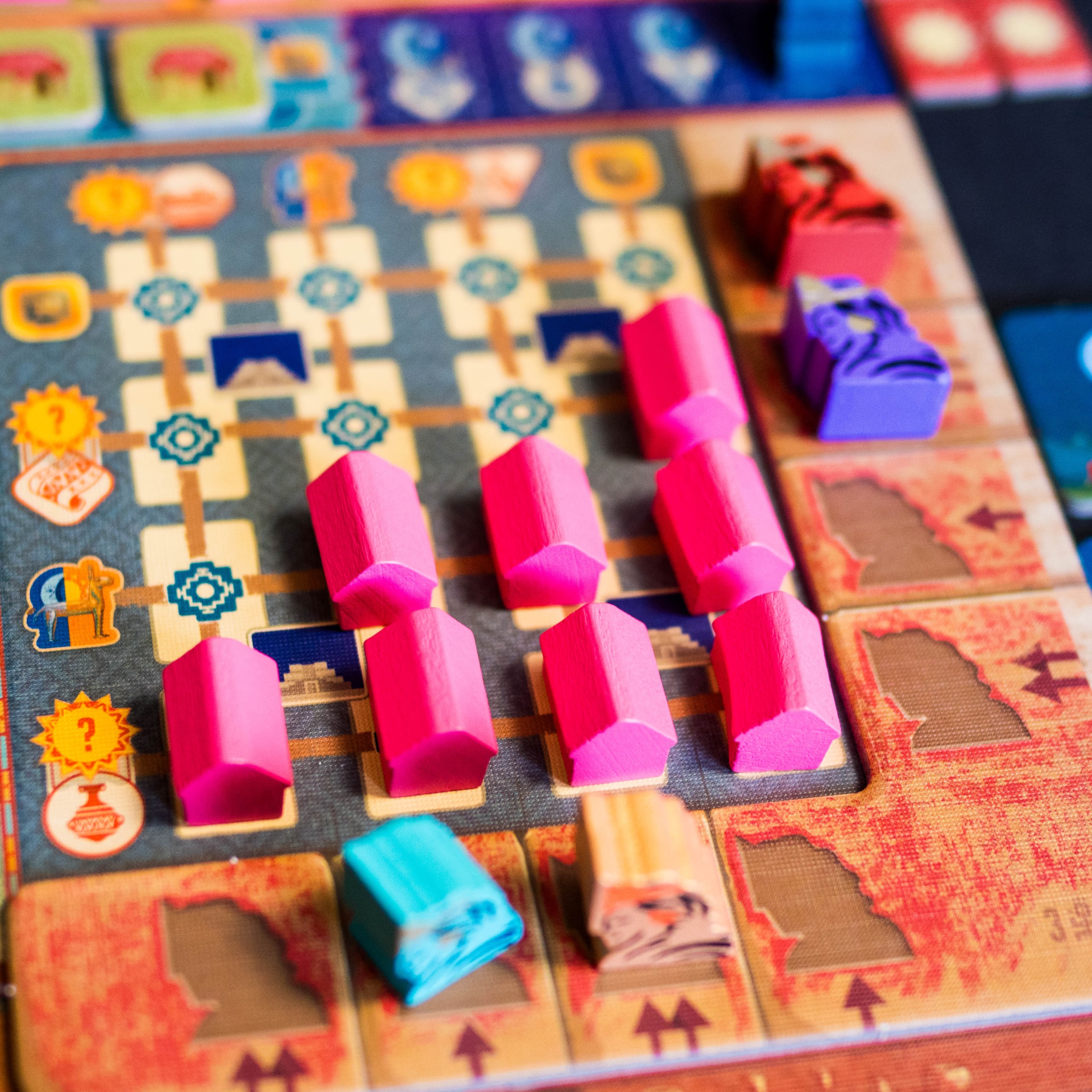
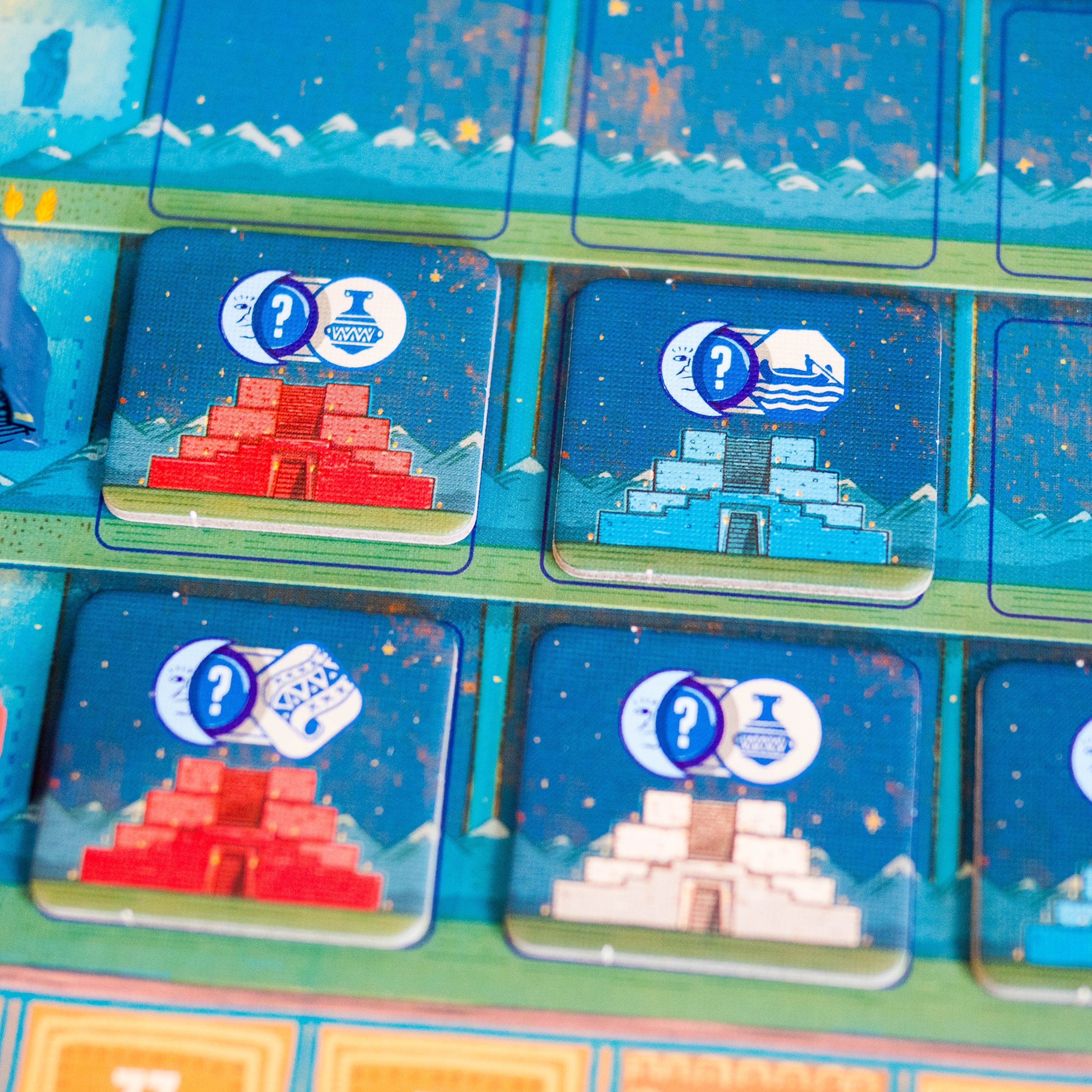
Placing a step marker: Choose a color (which will determine which Ayar will move) and place it on your personal Tambos grid .
-
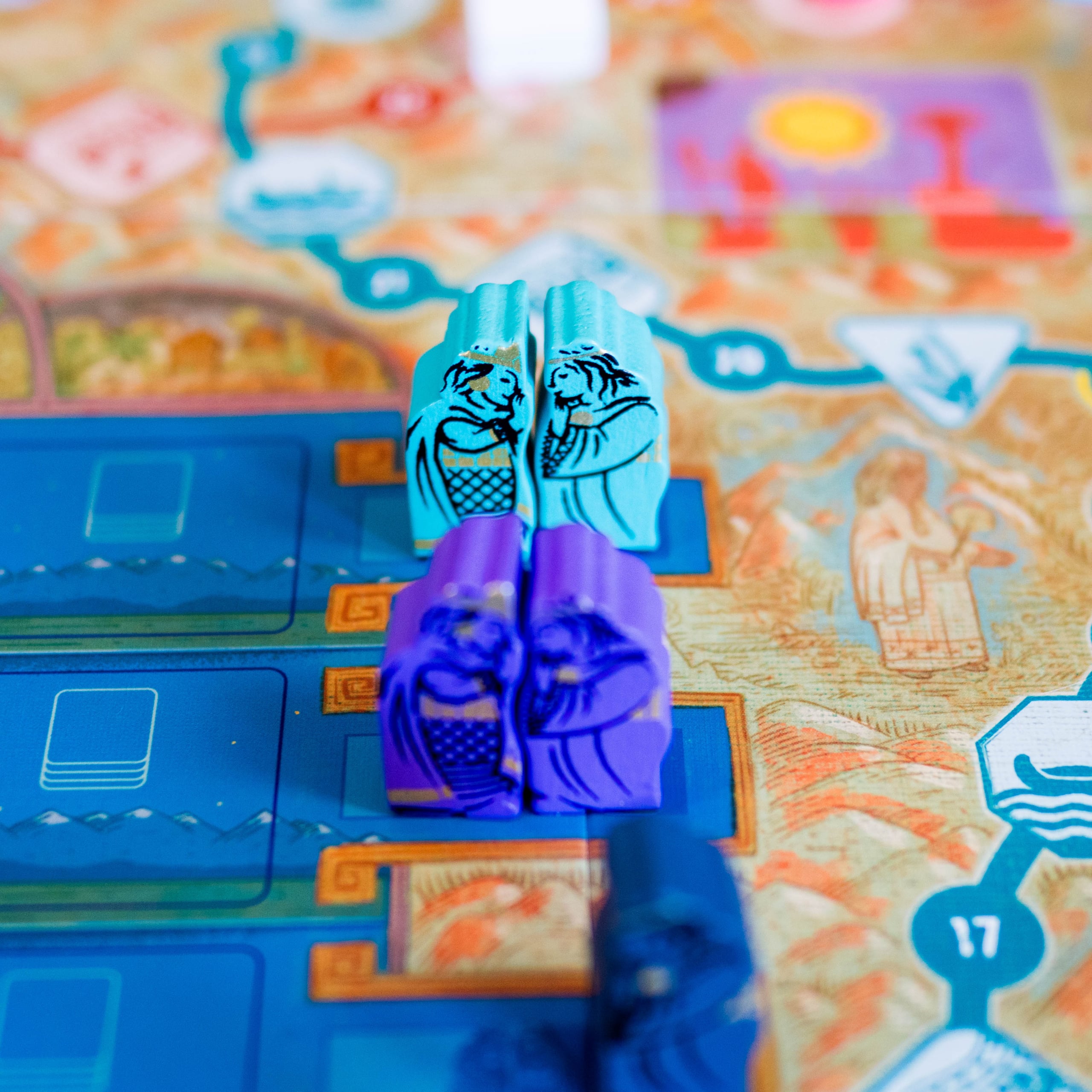
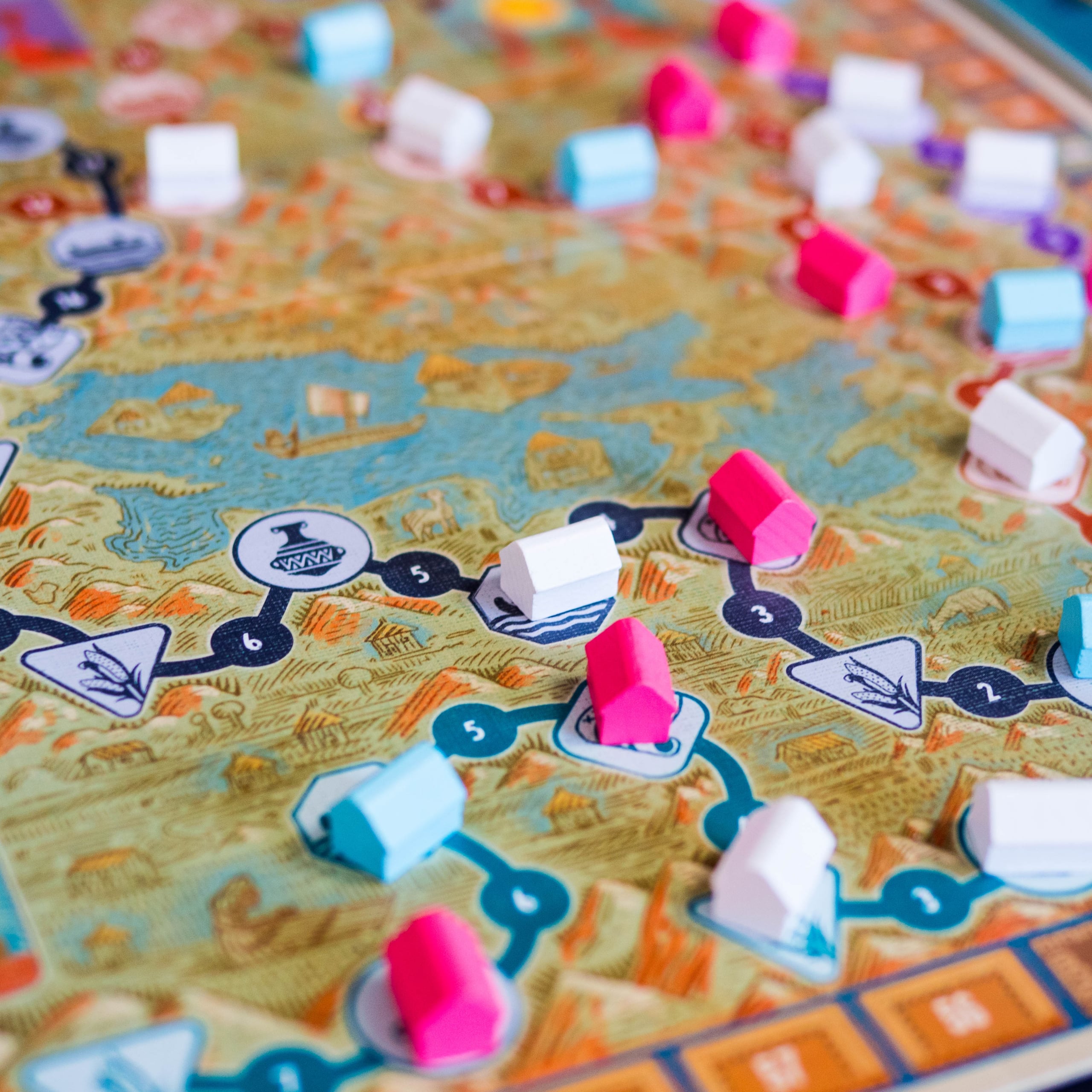
Moving the Ayar: The Ayar of the chosen color is moved forward on the main board .
-
Placing a Tambo: Take a Tambo piece from your grid and place it on a free space behind the Ayar that has just moved .
-
Perform the activity: Carry out the action corresponding to the Tambo ‘s location . The power of the action depends on the number of empty squares in the row/column of your personal grid .
-
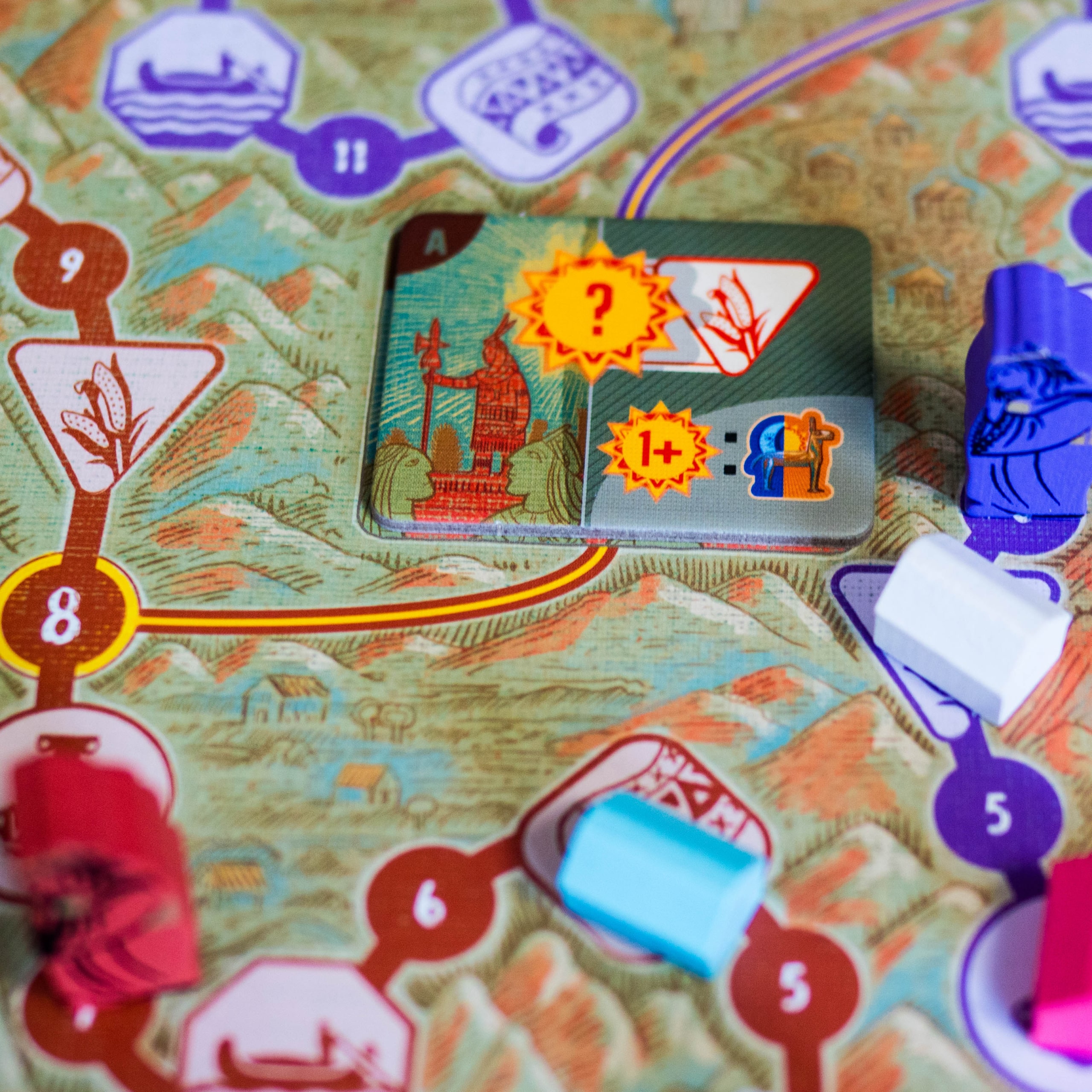
Checks: We check if personal bonuses are unlocked or if the Ayar has activated a festival (Raymi) that increases your solar devotion .
The 4 main activities:
-
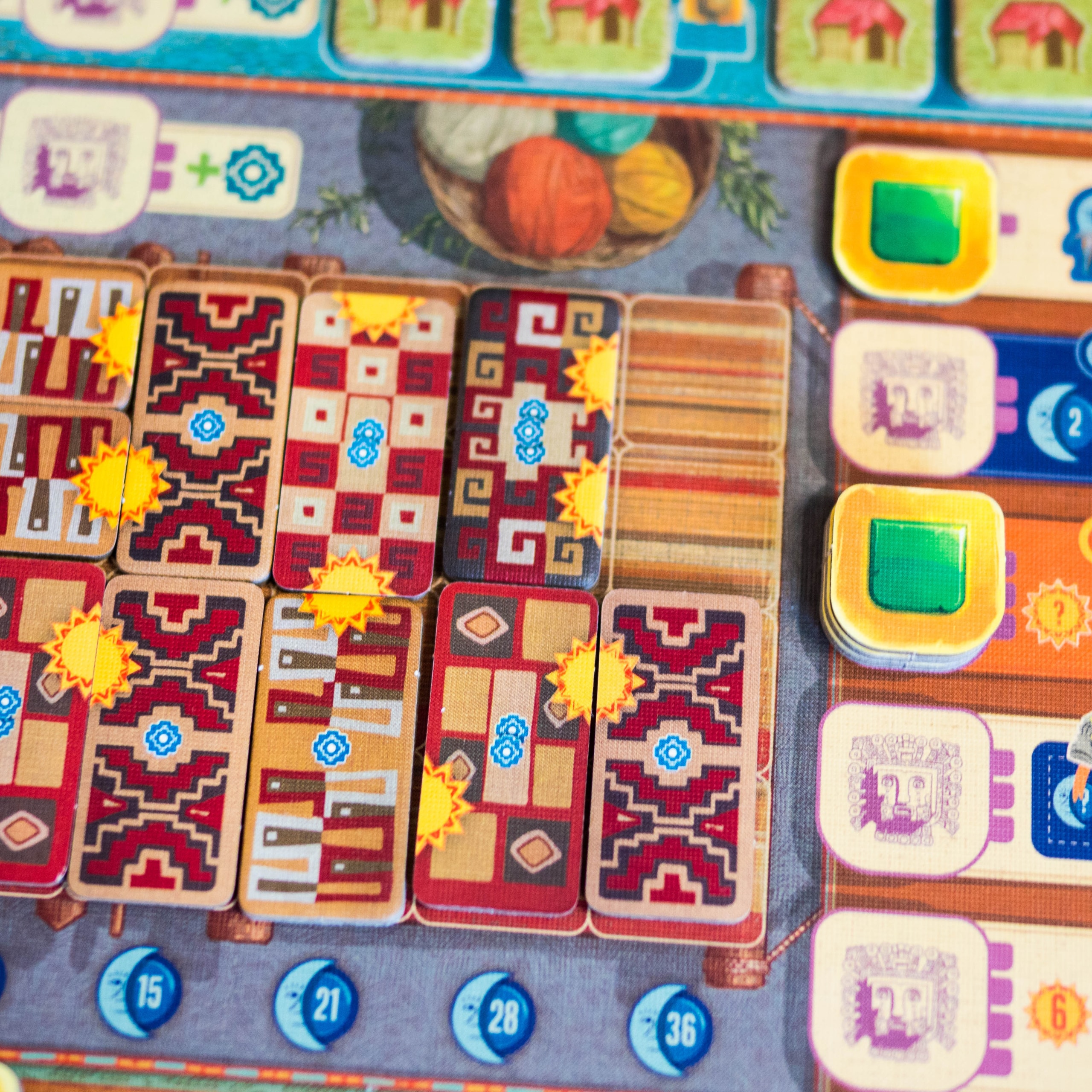
Weaving: Place textile dominoes to complete columns (Moon points) and suns (Sun points) .
-
Pottery: Collecting colored jars to make series .
-
Agriculture (Terraces): Plant corn to reveal icons on your board .
-
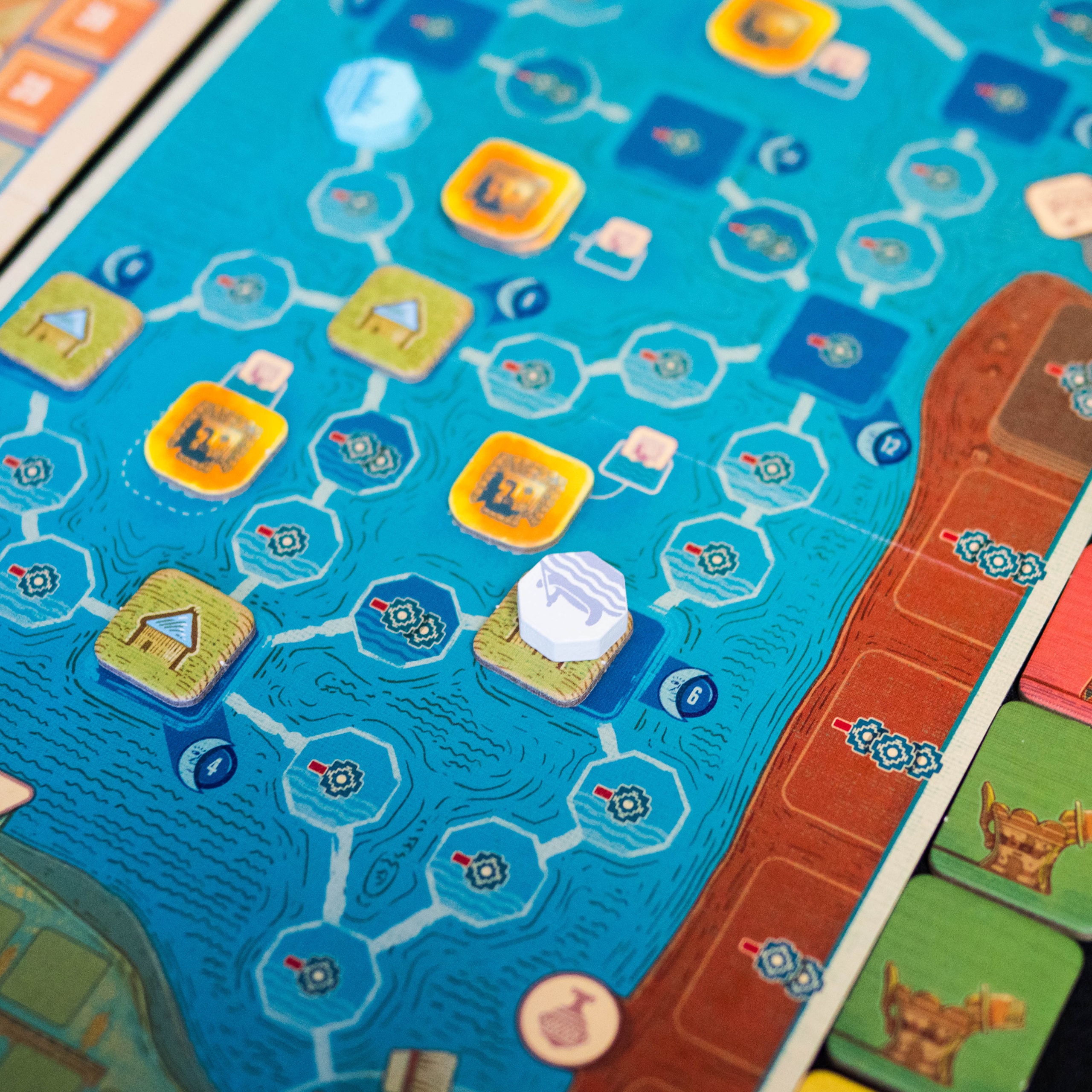
Reeds: Navigating Lake Titicaca to build floating islands .
2. The Night Phase (Scoring)
Once everyone has acted, the sun sets:
-
Ayar’s Retirement: The least advanced Ayar on the board “retires”. This is a key moment because it determines which type of temple will score .
-
Moon Scoring: We score points for temples associated with the retired Ayar and for a specific activity of our choice on our board .
-
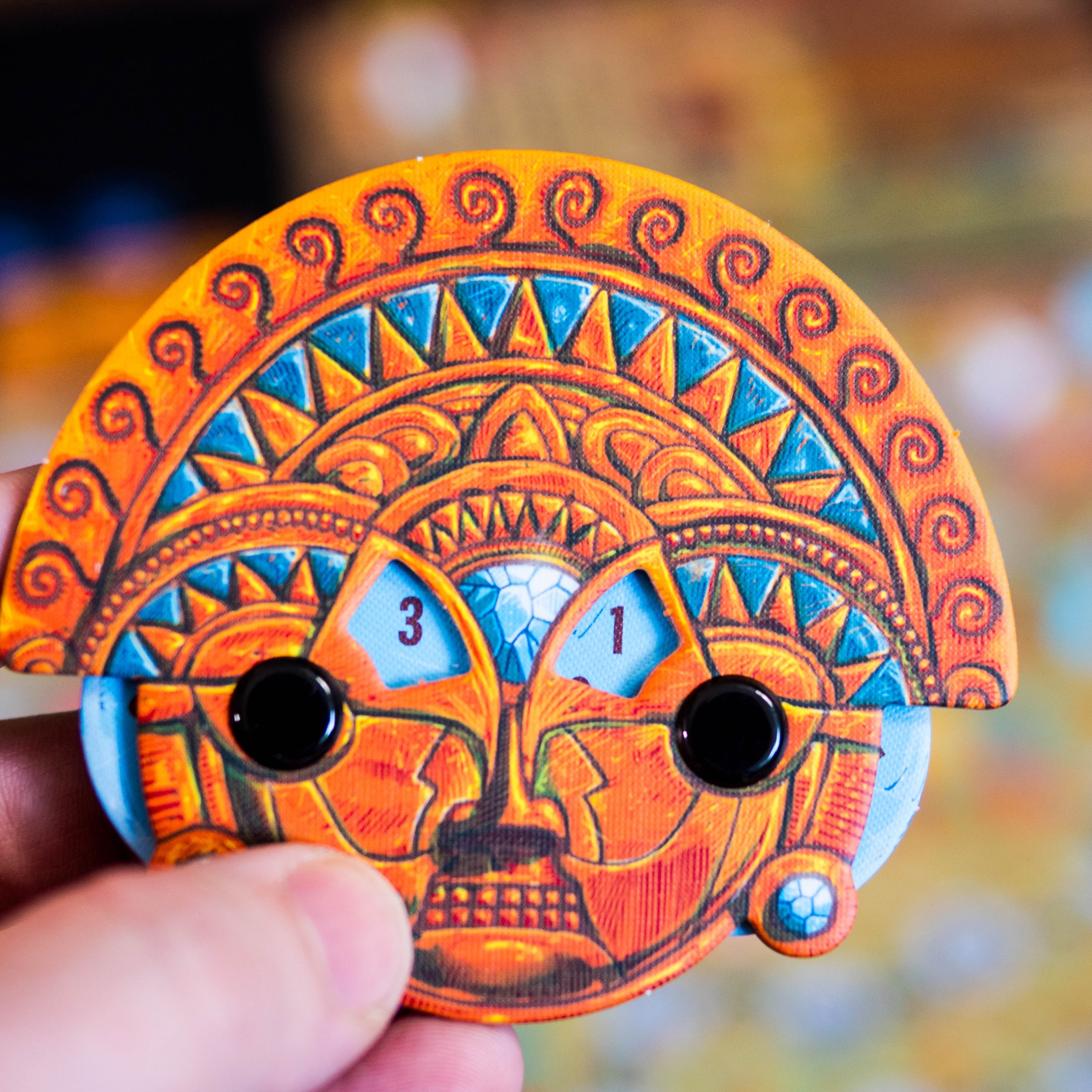
Dawn (Sun Scoring): All players score Sun points according to their current level on the Inti dial . Note: the dial does not reset; points are cumulative.
Is it good?
Ayar: Children of the Sun features particularly ingenious mechanics, starting with its double scoring system: at the end of the game, only your lower score between the Sun and the Moon will be counted. This constraint imposes a constant indirect interaction; since all players move the same pawns (the Ayar) on the main board, you must constantly monitor your opponents’ intentions to anticipate which color will be retired or which Raymi tile will be activated.
The game relies on precise timing. It’s about choosing the right moment to trigger your Sun or Moon scores, while also placing your temples on the correct colors at the right time. Another key feature: the Sun counter doesn’t reset between rounds, a truly interesting mechanic that adds extra depth to the planning.
The game demands crucial choices to optimize its two scoring tracks without ever neglecting one in favor of the other. Movement mechanics are central to the gameplay: to advance an Ayar of a specific color, you must remove a Tambo token from your personal board. This action unlocks bonuses, including valuable Sun points. Therefore, while the number of actions decreases as the rounds progress, their power increases as your board empties: the more your grid is cleared, the more powerful you become.
Aesthetically, Ian O’Toole’s Inca-themed art direction is magnificent. The components are of high quality, although double-layered player boards would have been appreciated for added comfort.
While Ayar offers a refreshing experience, its action mechanics (collecting items or progressing along tracks) could be considered rather conventional. Furthermore, the variability from one game to the next relies primarily on the Raymi tiles, and the game loses some of its tension in a two-player configuration.
However, these minor drawbacks do not detract from the game’s overall quality. Ayar is an excellent surprise: a game of constant choices offering significant strategic depth and interaction that can disrupt your plans at any moment. A true balancing act that I highly recommend to fans of expert-level games.
Ayar: Children of the Sun review
Positives
- The double scoring system
- Strong indirect interaction
- The cumulative Sun counter
- The rise to power
- The art direction
Negatives
- Relative variability
- Two-person configuration
- Player boards
