- Publisher : Sylex
- Designer(s) : Takeo Yamada
- Artist(s) : Rocinante Urabe
- Players : 1–4
- Playing time : 60 - 120 Min
- Weight BGG : 3.28
What's this?
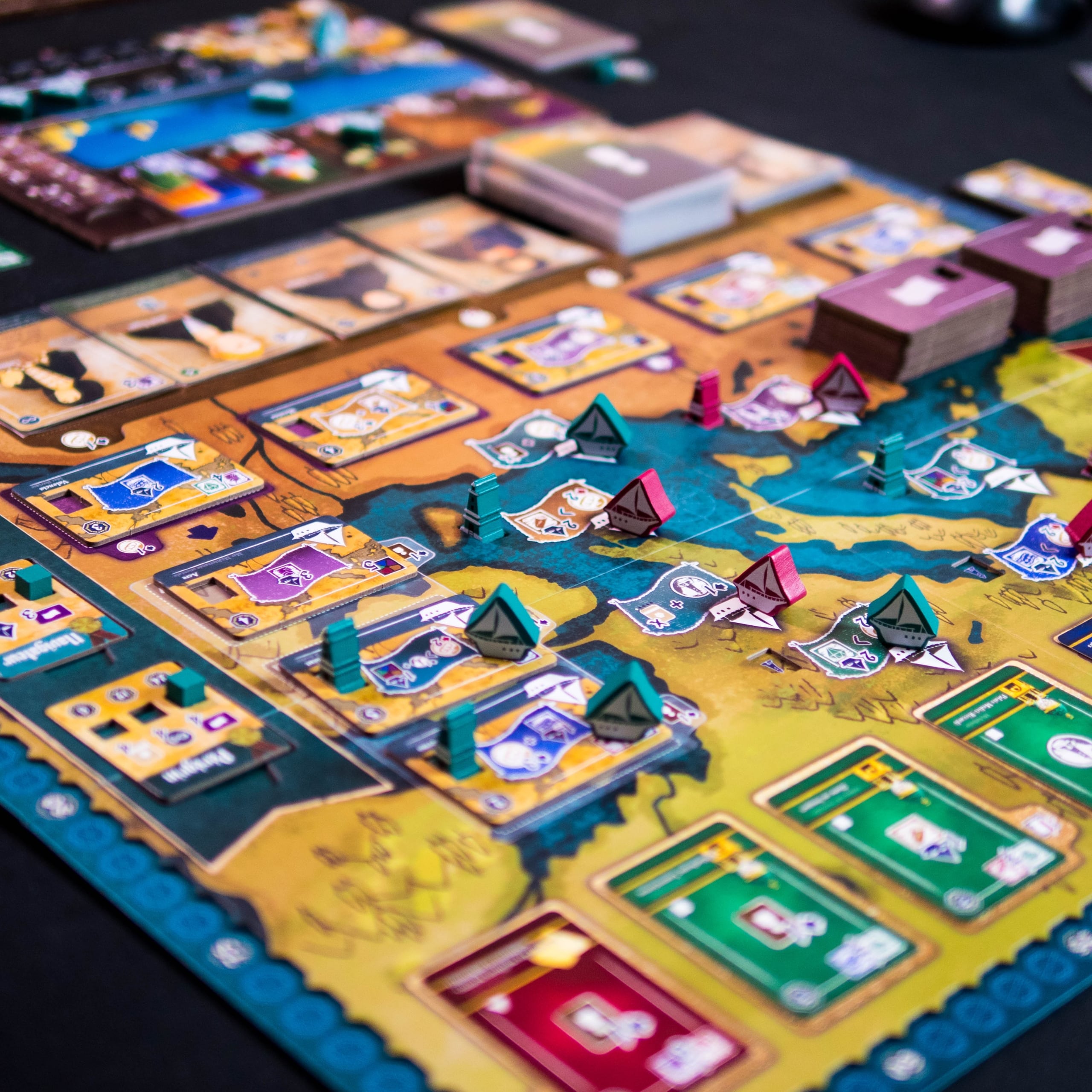
Amalfi Renaissance is a management and optimization game in which players take on the roles of merchant families seeking to develop their fleet, explore new trade routes, and accumulate prestige and influence.
How do you play?
The game takes place over four periods (or rounds) , each ending when all players have decided to pass.
1. The Central Mechanics: Ships = Workers + Resources
The unique feature of Amalfi: Renaissance lies in the dual function of your Ship tokens .
-
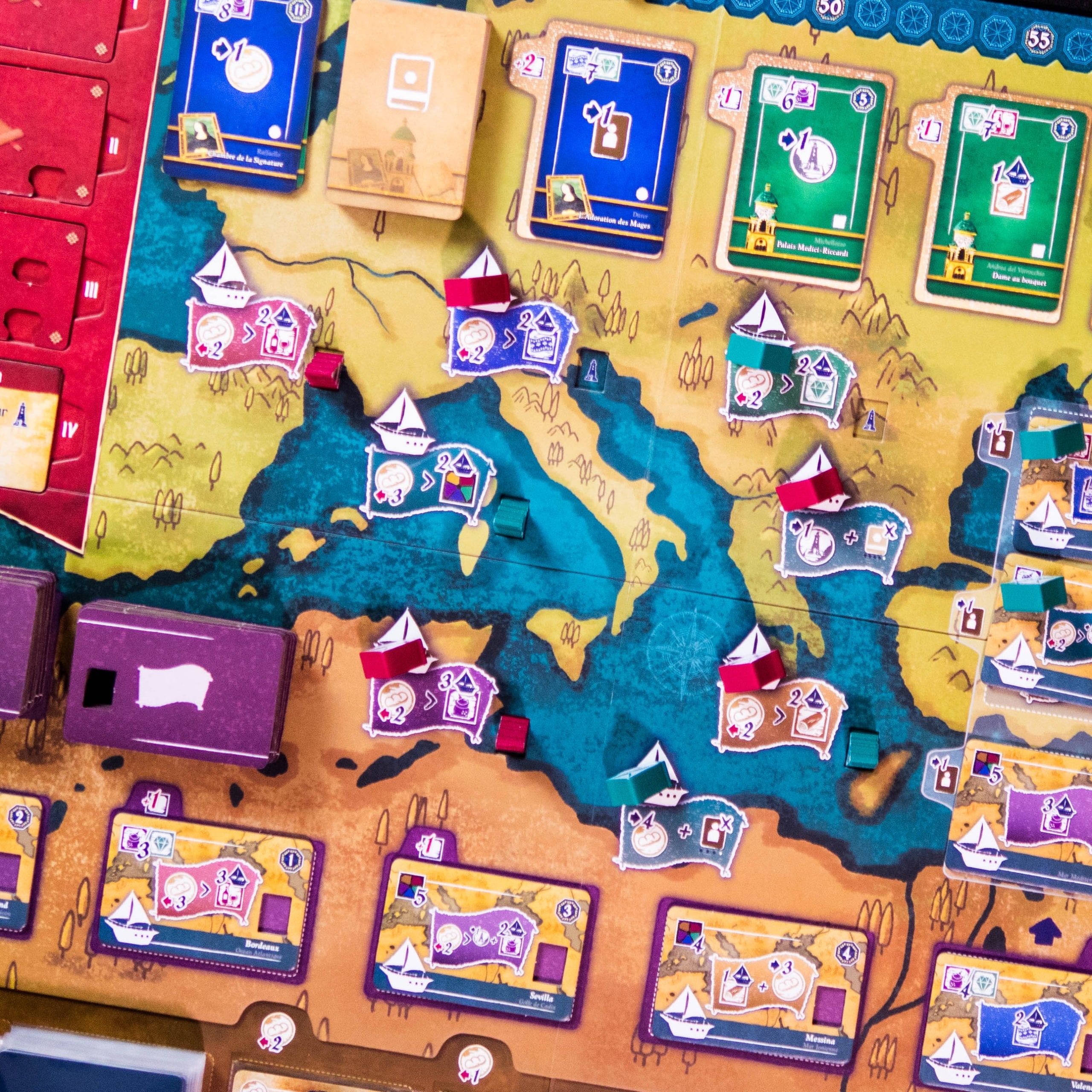
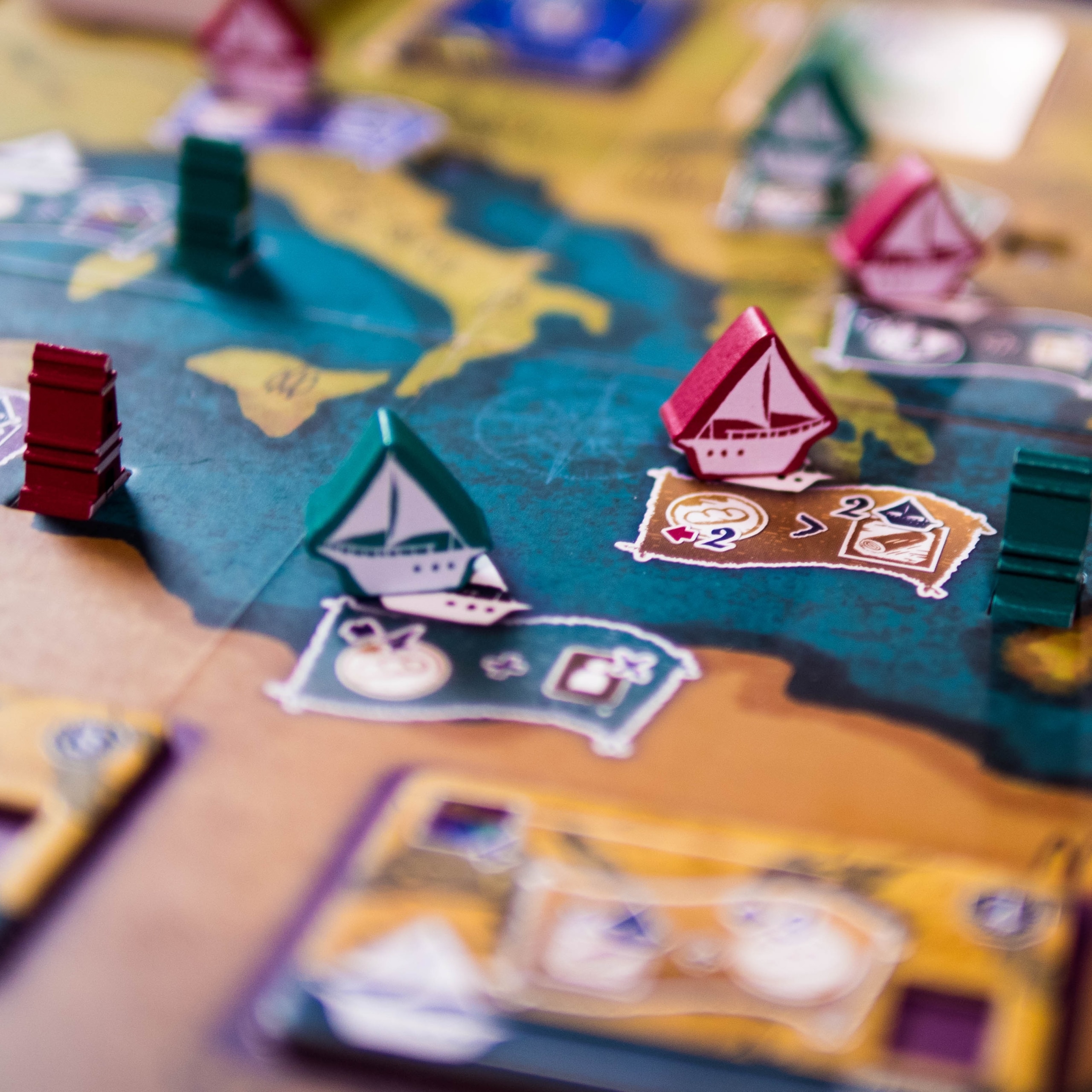
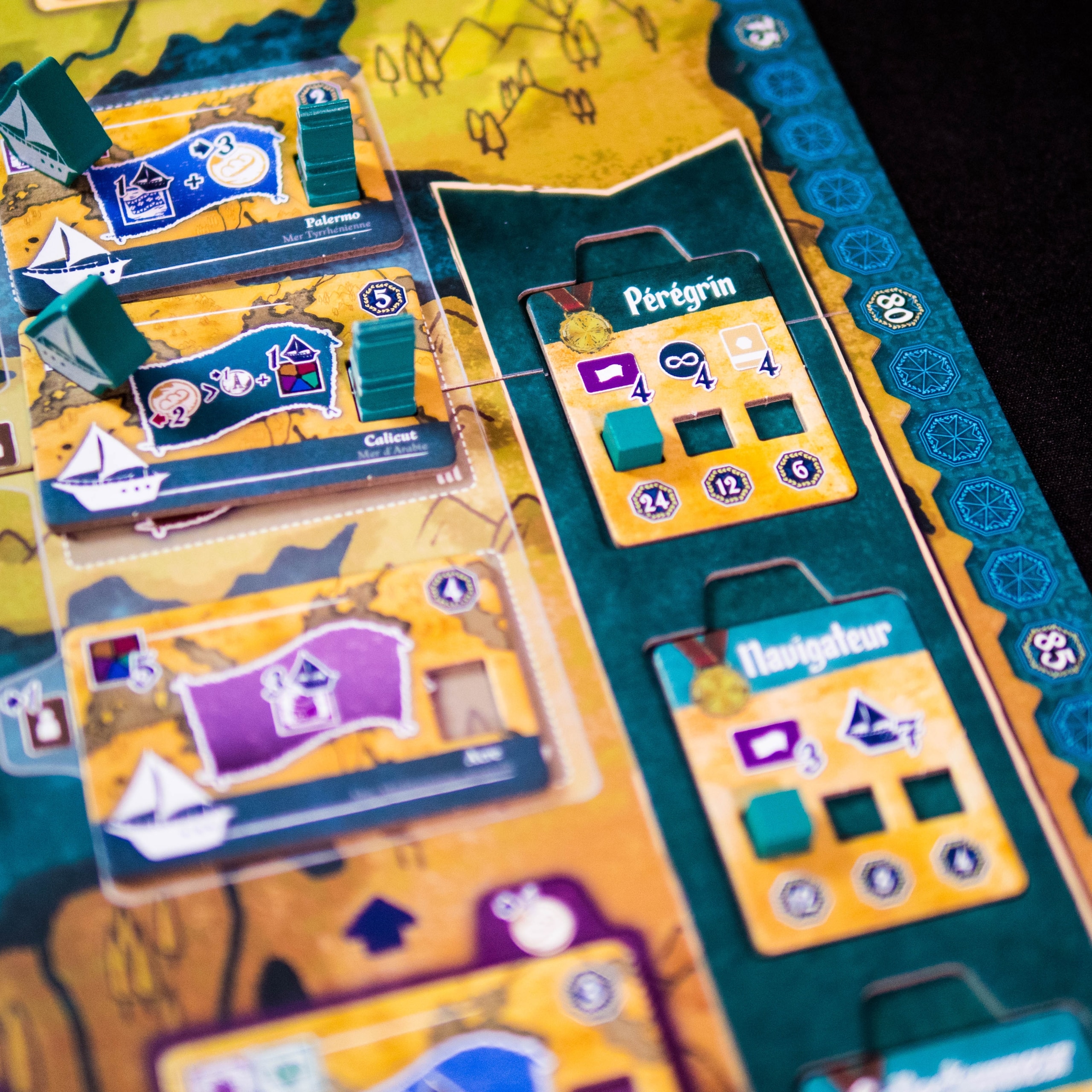
As a Worker (Placement): To perform an action on the central board or your personal board, you must place one or more of your ships at the chosen destination. These ships then represent your sailors who have gone on a mission.
-
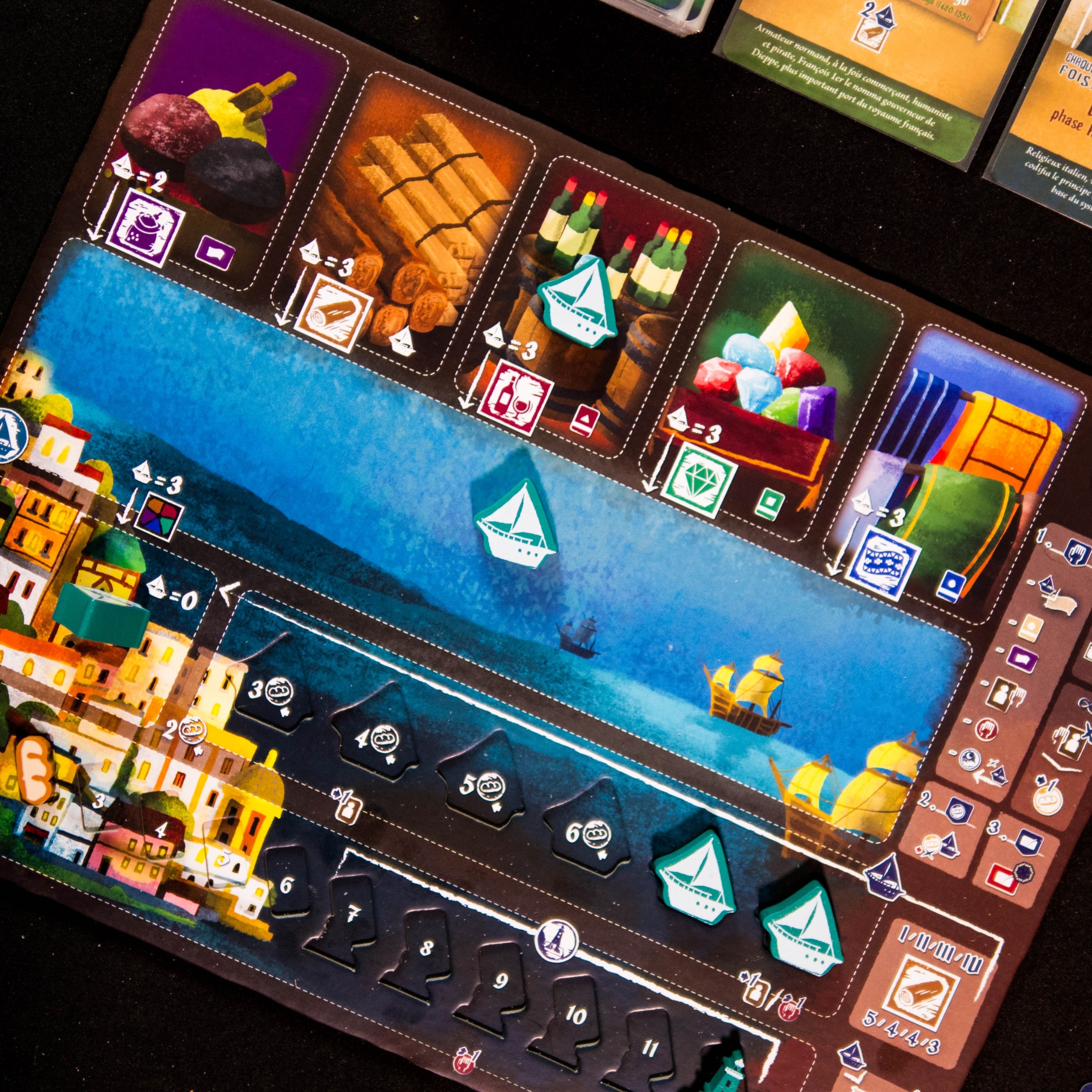
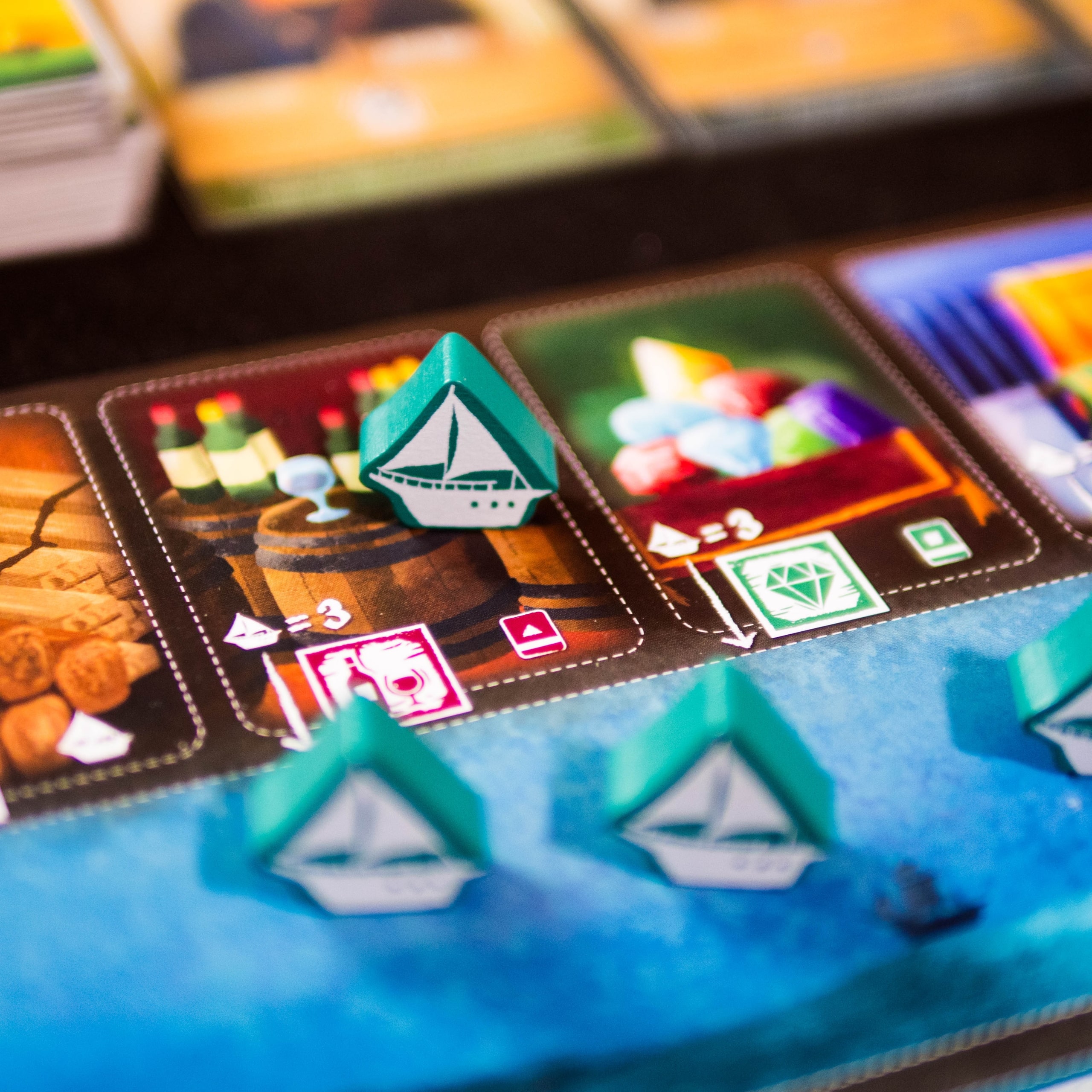
As a Resource (Retrieval): Once a ship is placed, to retrieve it and make it available for other actions, you must perform a specific Acquisition action ( described below). By retrieving your ships, you place them in the hold of your personal board where they are transformed into resources (Clothes, Spices, Wood, etc.), essential for other actions.
2. The Course of an Action
In turn, you choose and perform a single action from the available destinations:
Expedition: Travel to distant locations to immediately score Victory Points (VP) or obtain bonuses.
Acquisition: Retrieve your previously placed ships. This is the most important action.
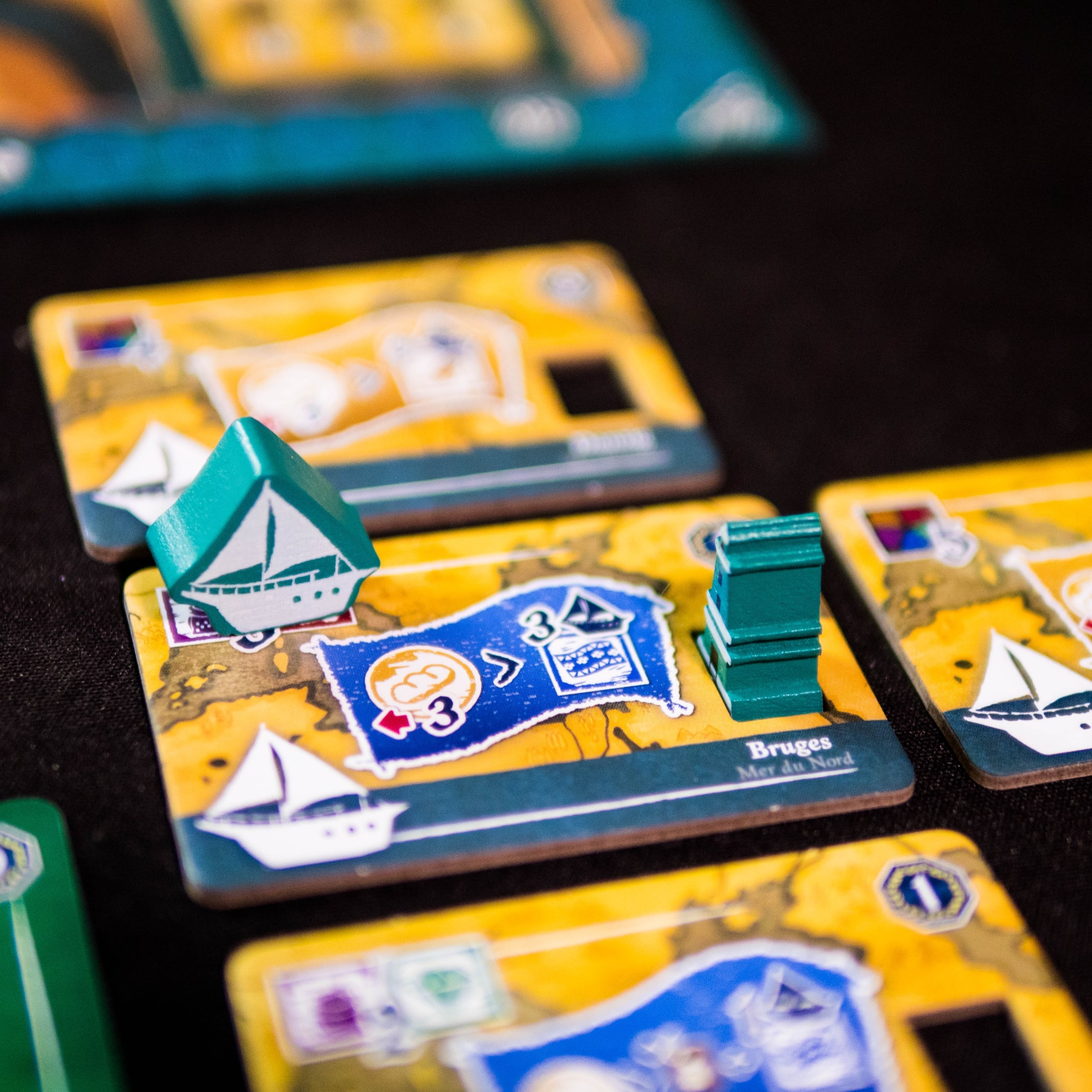
Construction: Build Trading Posts in trading cities to gain a permanent bonus (additional resources, cost reduction, etc.) and score victory points.
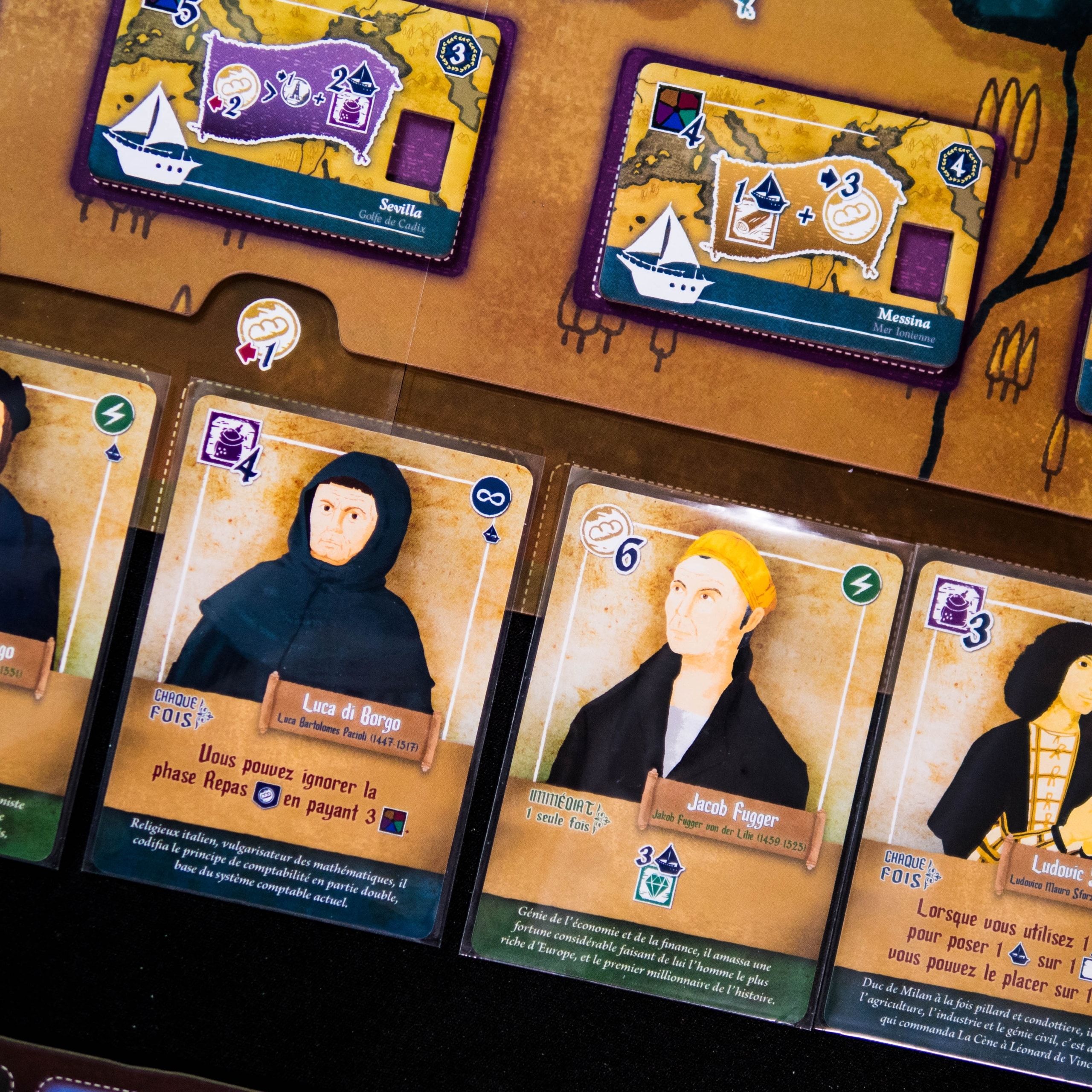
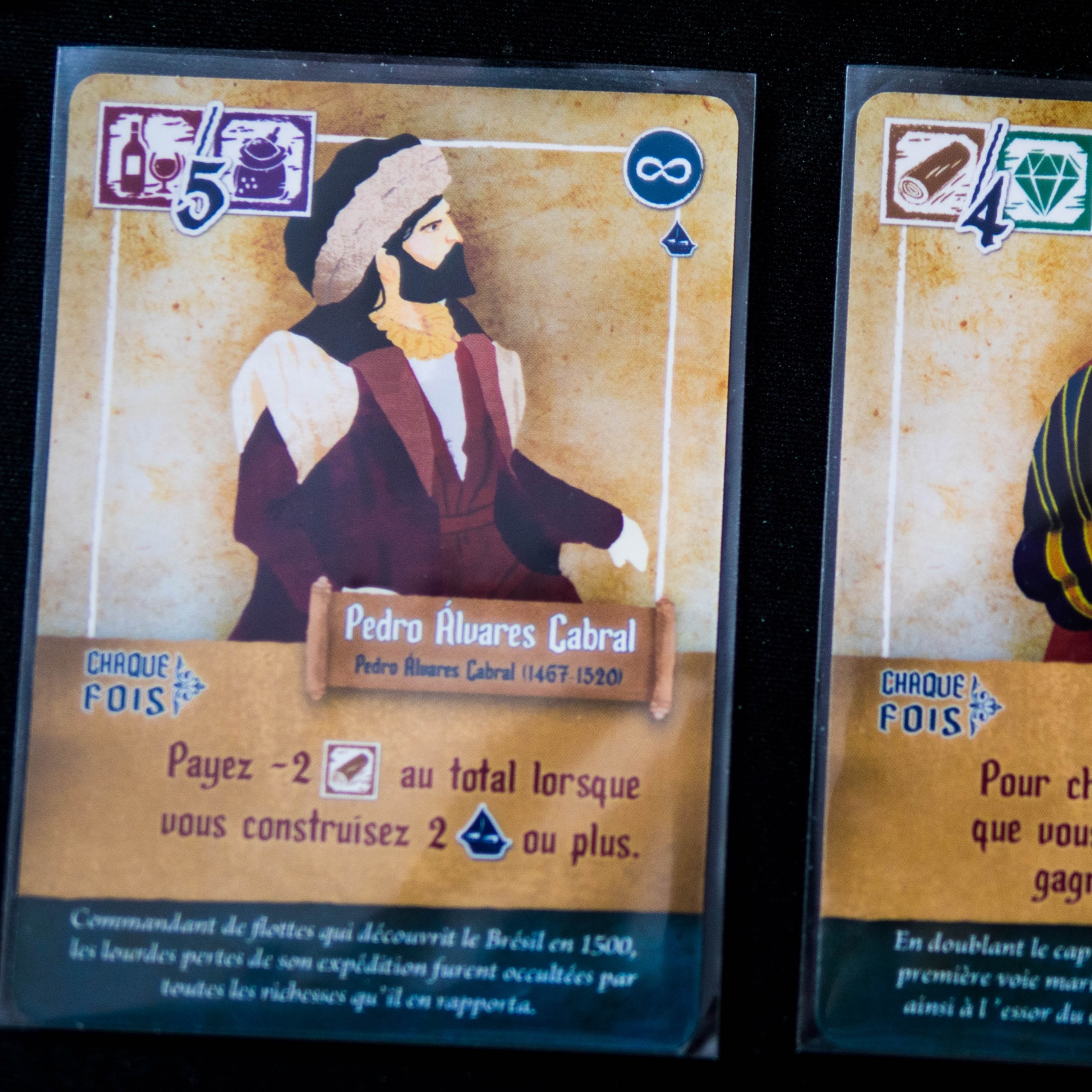
Tip: Recruit historical figures (cards) from the river of “Council” cards on the central board.
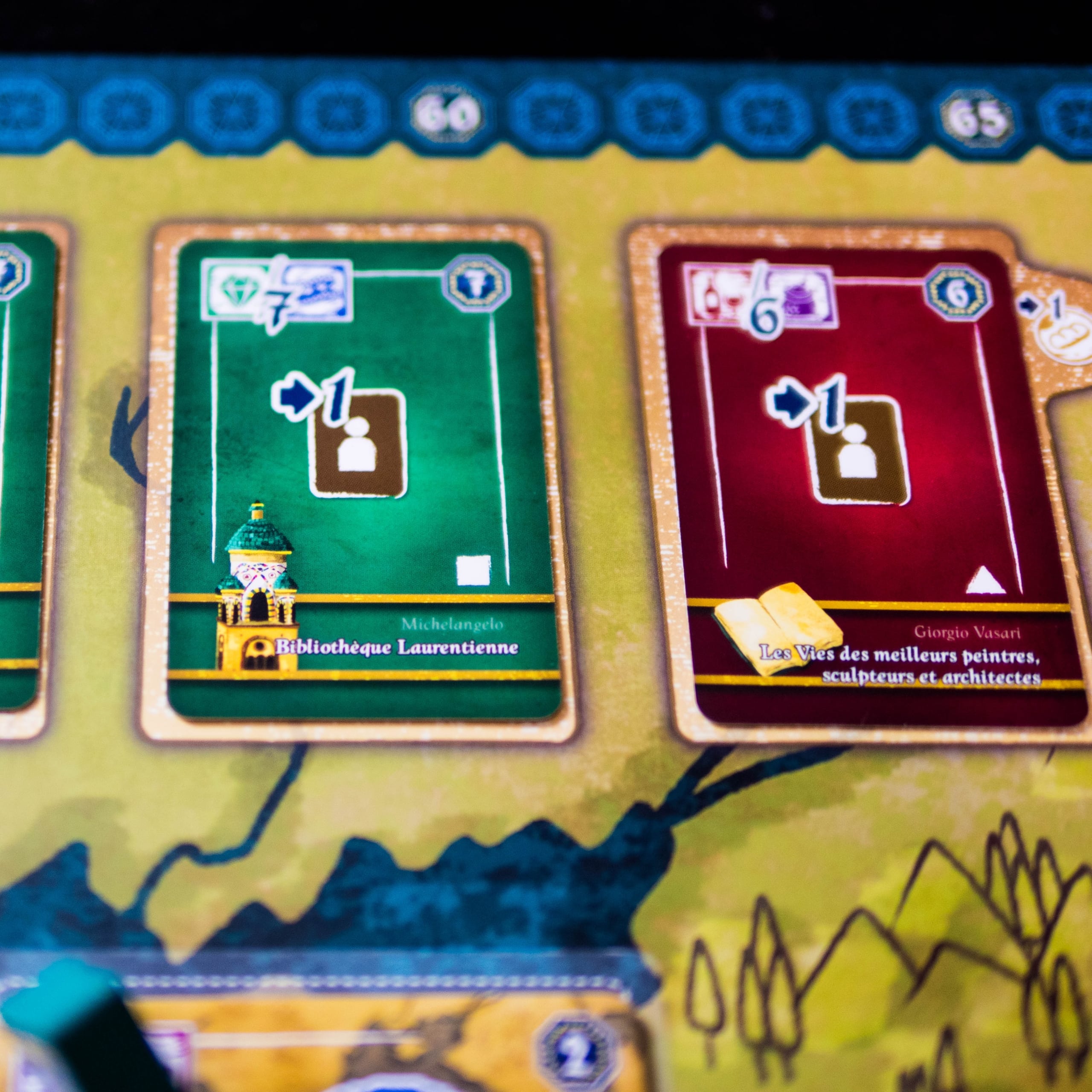
Workshop: Acquire Workshop cards (production/artwork cards).
Obtaining Bread: Bread is the basic currency for many actions. You must regularly travel to destinations to acquire it.
3. The Race for Objectives
Titles (Race Objectives): These are permanent objectives.
Decrees (End-of-Period Scoring) : These cards introduce scoring objectives that vary from game to game.
4. End of Period and End of Game
After the fourth period , the game stops.
Is it good?
Yes, Amalfi: Renaissance is a very good game for fans of management and worker placement. Its system of ships as units of action and resources is both original and presents constant dilemmas.
This mechanic creates a constant dilemma : the more you use your ships to perform actions (worker placement), the more resources you collect in your holds, but the fewer ships you have available for future actions. And vice versa. Each turn, you spend these ships to perform actions, and every decision becomes a strategic investment with significant consequences. The elegance of this mechanic, uncommon in games of this caliber, is a real treat for players.
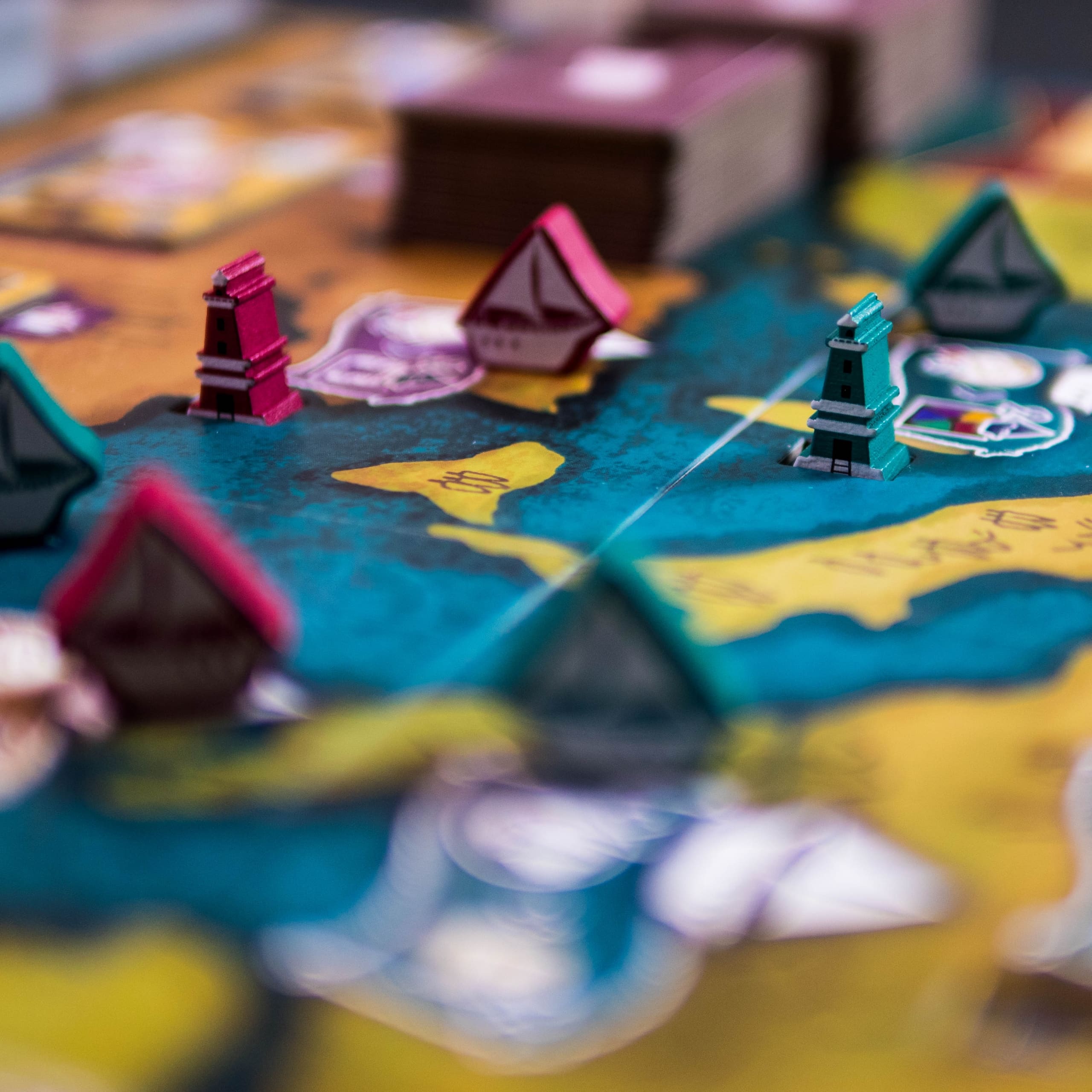
You will need to constantly juggle worker placement , tight resource management , optimization to acquire new cards, lighthouse construction, and the race to achieve objectives.
Each card added to your board opens up new possibilities : it allows you to generate goods, improve your strategy with permanent powers, or obtain victory points at the end of the game.
Although the rules are accessible and straightforward , the game offers remarkable strategic depth . It requires careful thought to optimize your actions, as you won’t have many opportunities throughout the entire game.
This high level of complexity can, however, lead to some drawbacks: games can be long, and analysis paralysis is a risk for some players. These players might find the game particularly tense and brain-teasing due to the extremely tight resource management. In addition, as is often the case with complex games, there is a significant amount of iconography to learn and an interaction between players that may seem subtle , although it does exist through the pursuit of objectives.
In summary, Amalfi: Renaissance is an elegant expert worker placement and management game that stands out for the originality of its mechanics where your ships serve as both action tokens and valuable resources.
Amalfi: Renaissance Review
Positives
- Sublime editing material
- Highly original ship management mechanics
- Strong sense of progress and engine development
- Good replayability
- Accessible rules
Negatives
- The learning curve is a bit steep.
- Little direct interaction between players
- Risk of analysis paralysis