- Publisher : Pixie Games
- Designer(s) : Jeffrey CCH
- Artist(s) : Roxy Dai, Samuel Horowitz, Hanna Kuik
- Players : 1–4
- Playing time : 45–60 Min
- Weight BGG : 2.88
What's this?
Age of Galaxy is a space strategy and empire-building game in which you lead a galactic alliance seeking to dominate the galaxy. In just five rounds, you must explore new systems, colonize planets, develop technologies, recruit factions, and build a civilization capable of surpassing your rivals.
How do you play?
1. The Production Phase
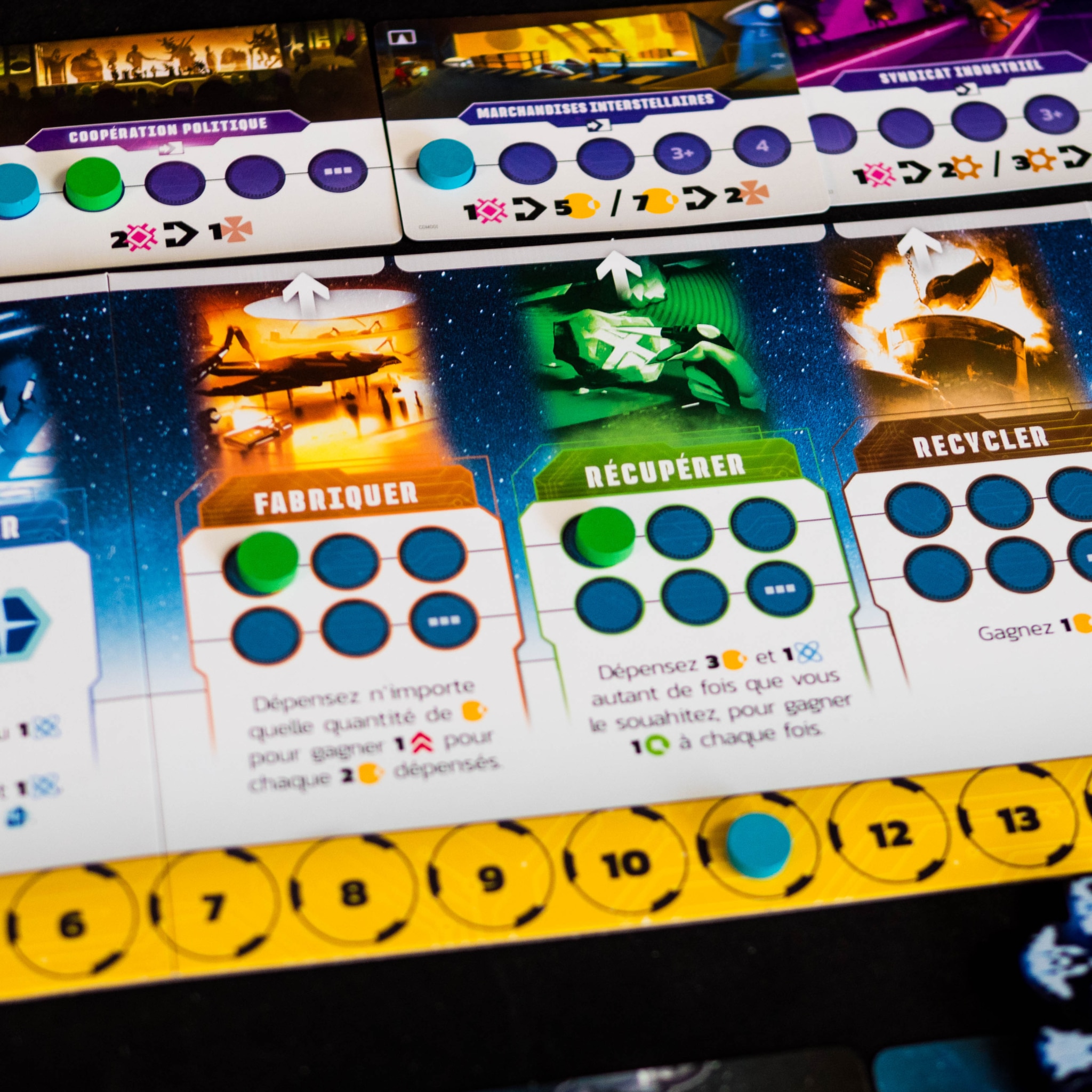
All players simultaneously retrieve 3 action discs from their reserve . This is also when you generate your credits and resources based on your current productivity level and the specific effects of your Faction cards in play .
2. The Action Phase
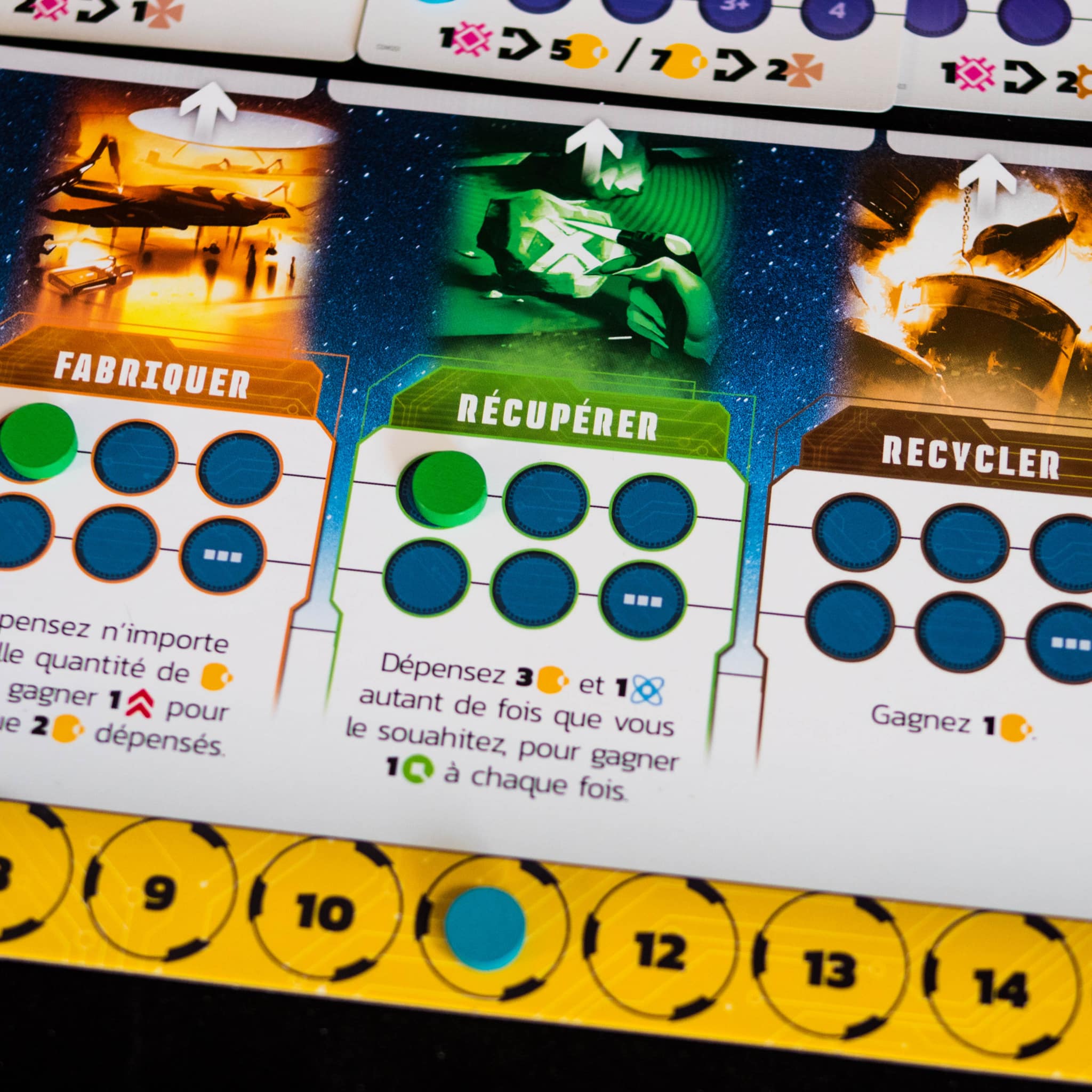
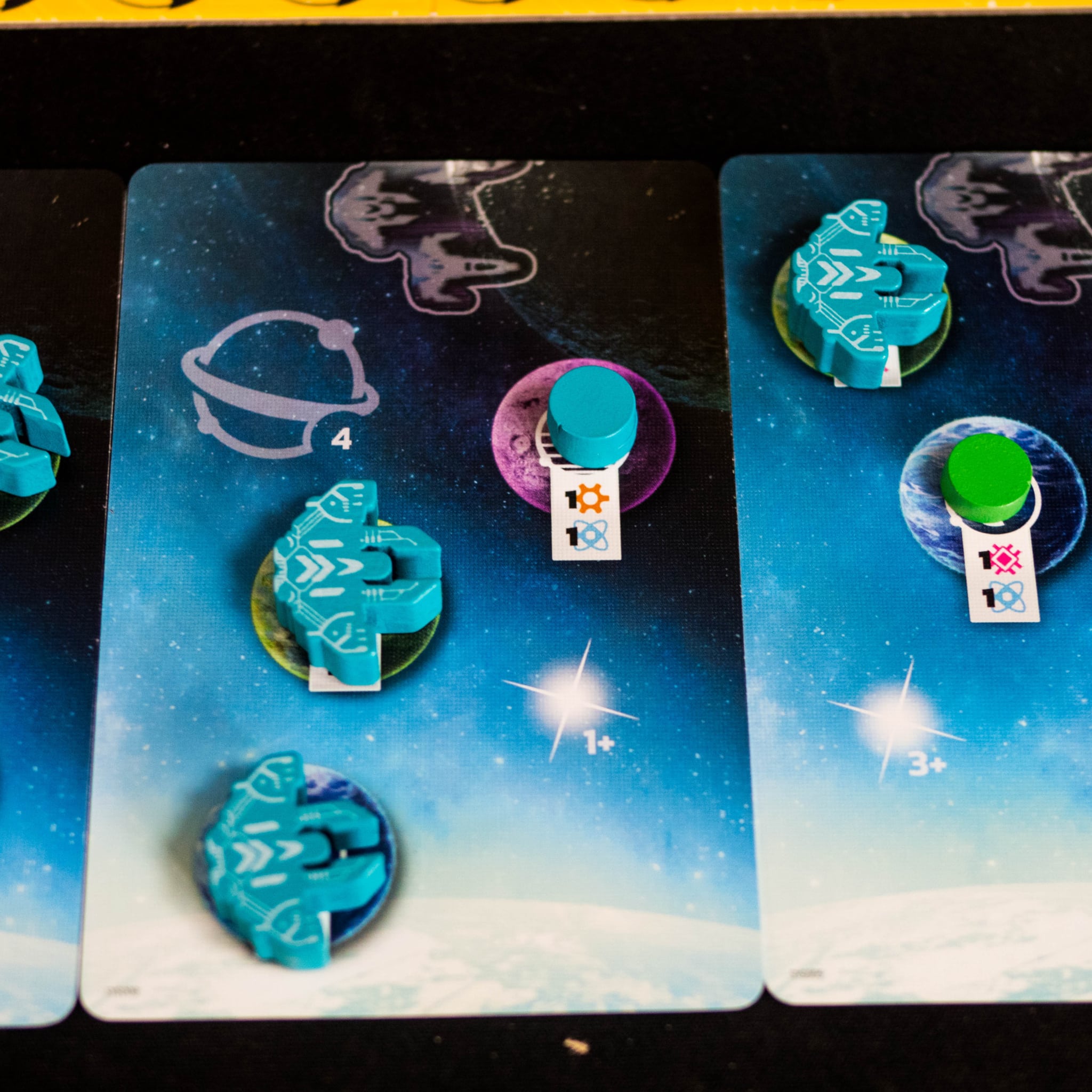
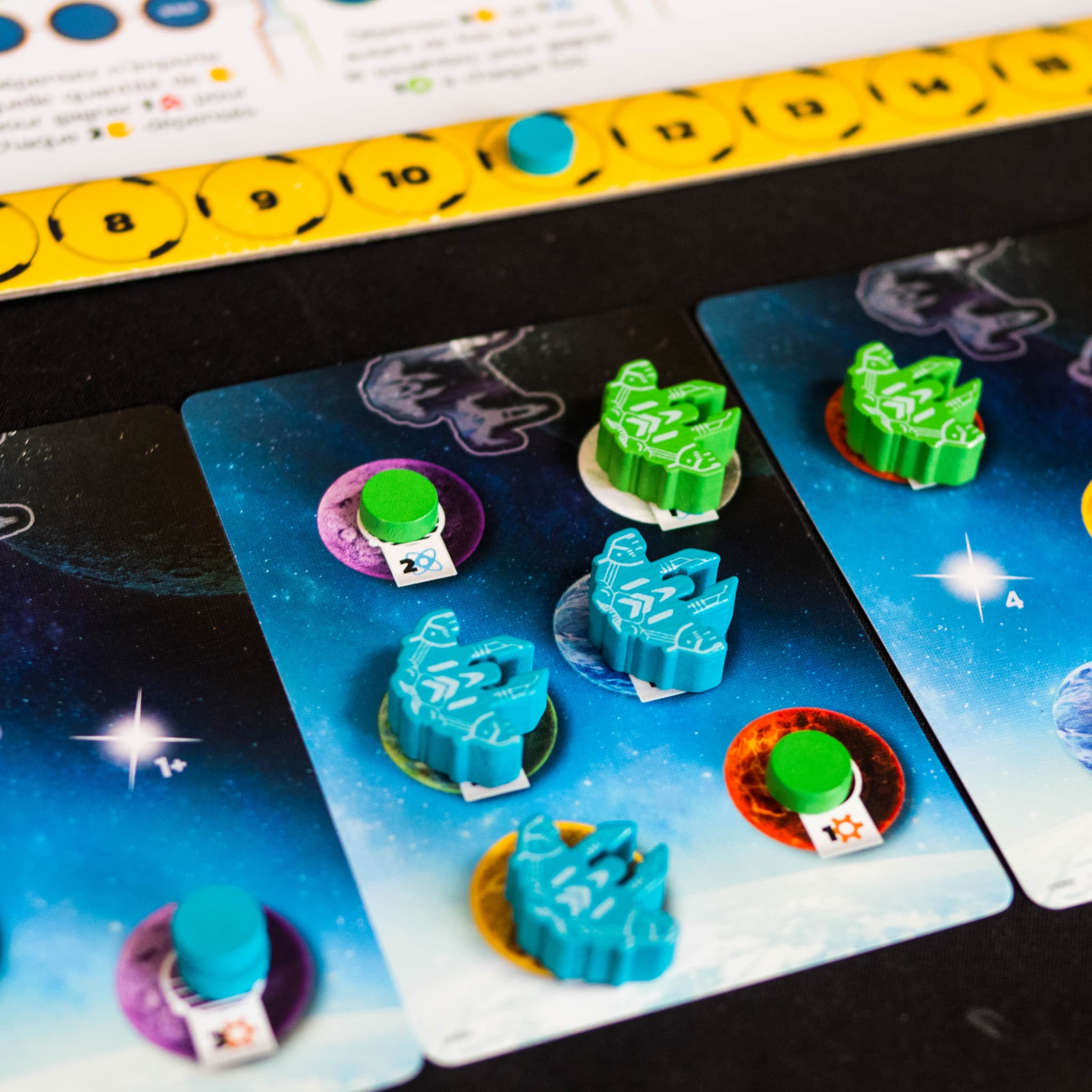
Explore: Send one of your cruisers to reveal a face-down exploration token to gather valuable resources .
Colonize: You colonize compatible planets.
Develop: A colony can be transformed into a developed world.
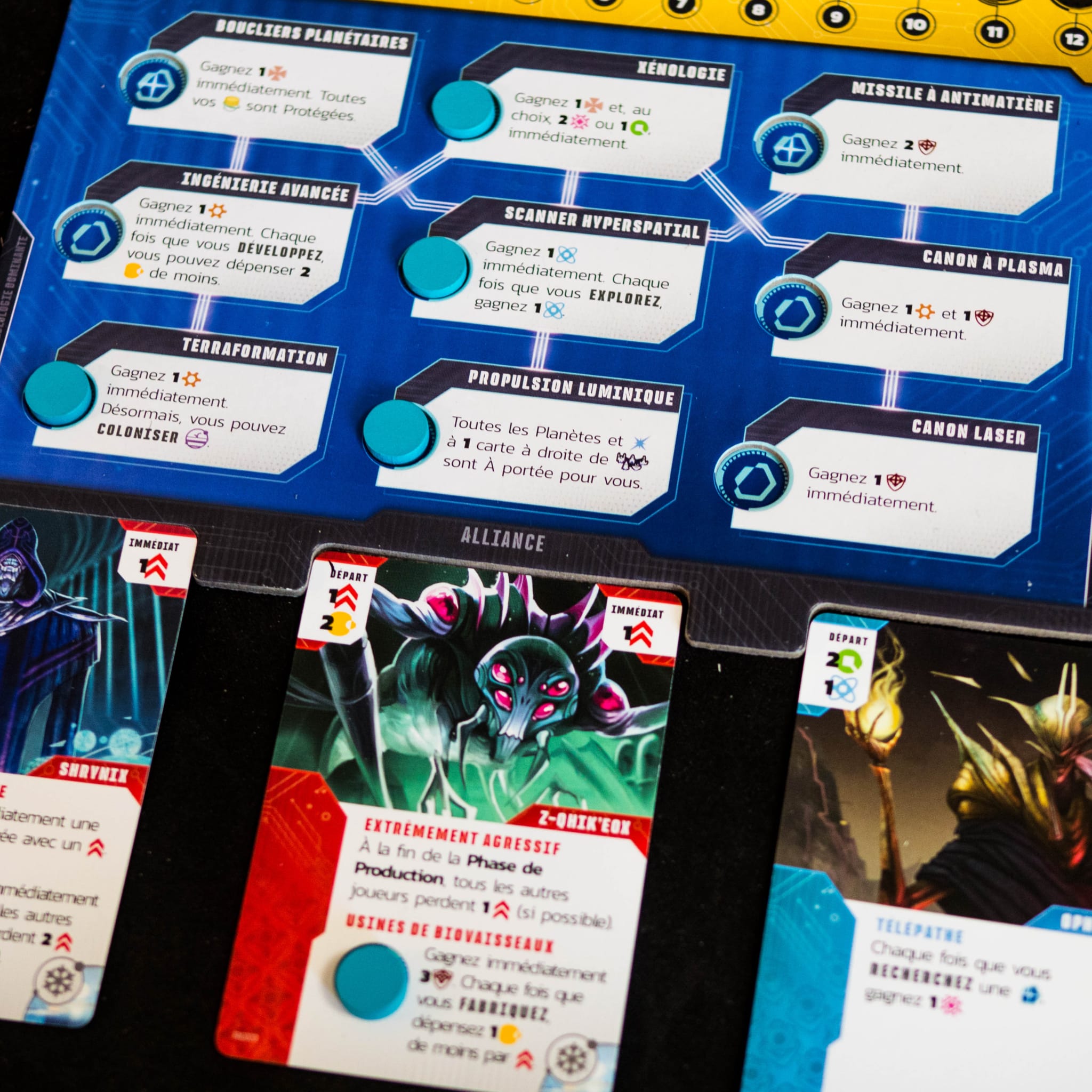
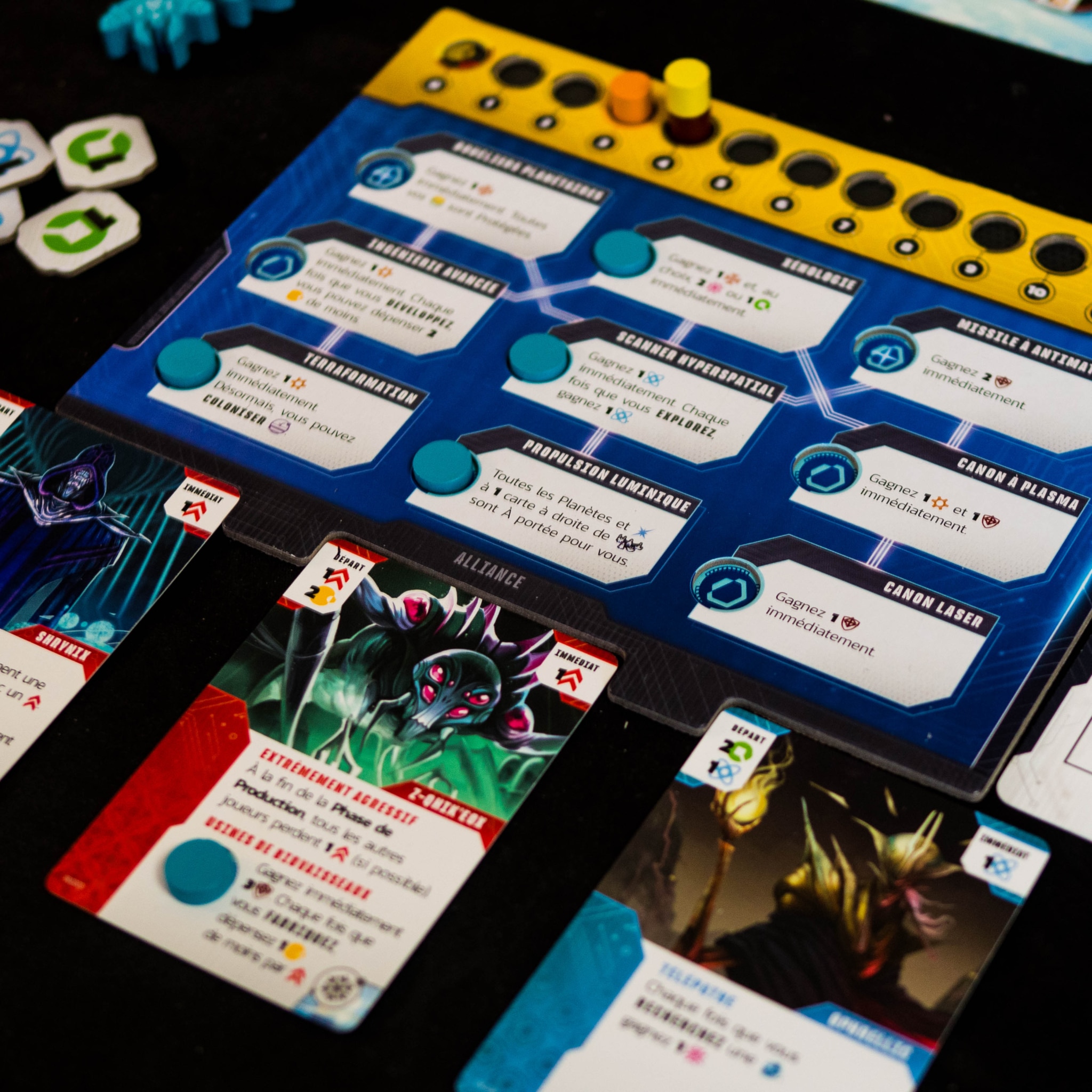
Search: You unlock new technologies.
Produce cruisers: Credits are used to build fleets that will be useful for both exploration and the military phase.
Collect relics: For victory points at the end of the game
Appointing representatives: By spending influence, you immediately gain prestige, an important source of victory points.
During his turn, it is also possible to:
- to play a Faction card;
- to use free shares.
3. War Phase
From the second round onwards, players compare their fleets.
The player with the greatest military power becomes the warlord and receives rewards. They can even conquer an insufficiently defended enemy planet.
4. Galactic Phase
A sort of maintenance phase.
End of game
After the 5th round, we move on to counting the points .
Is it good?
Age of Galaxy aims to be a civilization development game inspired by 4X games, but condensed into a much more accessible format thanks to its five well-paced rounds.
In just five turns, you explore new systems, colonize planets, develop your empire, research new technologies, and even participate in military battles. The game succeeds rather well in capturing the thrills of a 4X game in a relatively short playing time.
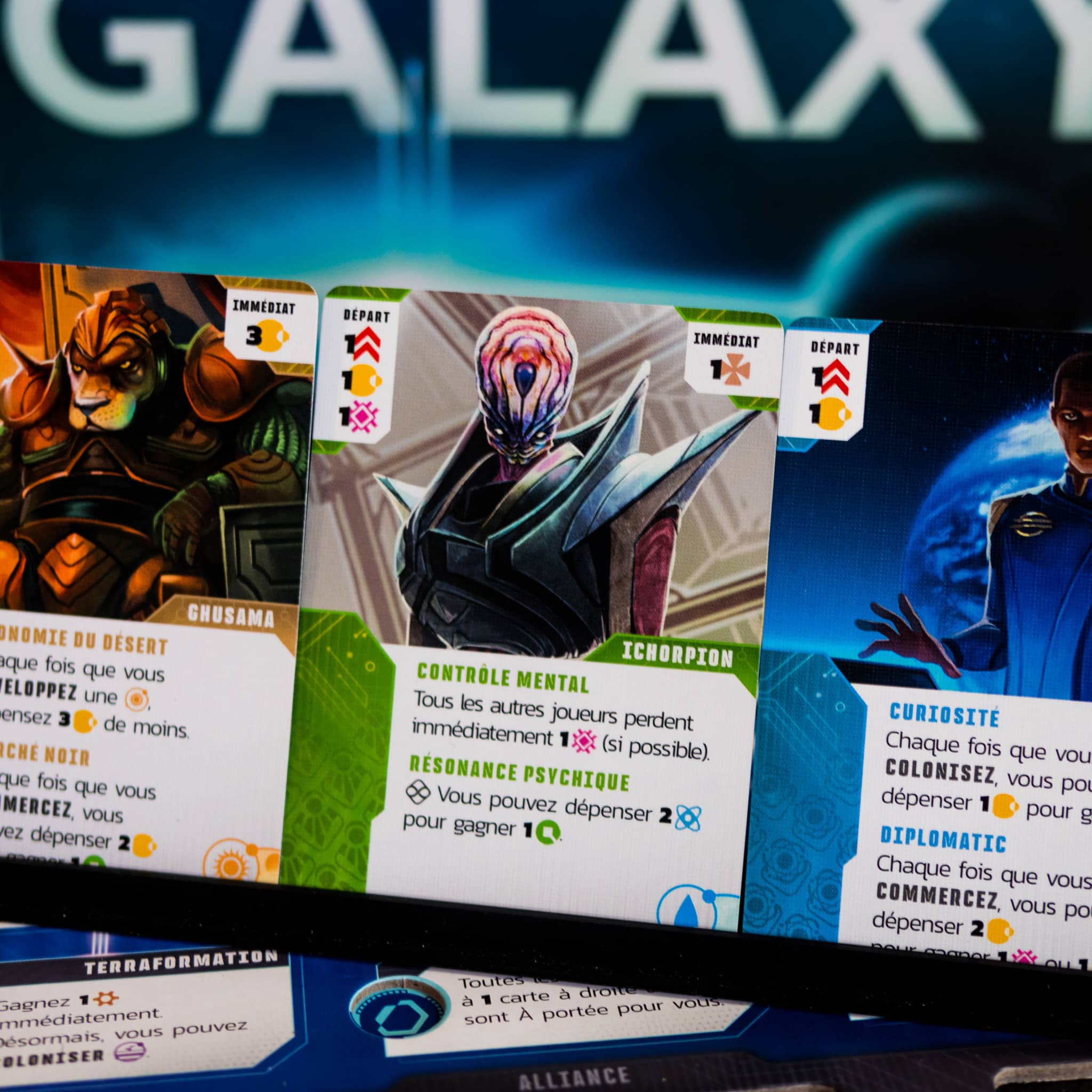
The true heart of the game lies in the Faction cards. You’ll only have seven for the entire game, but each can be used in multiple ways depending on your needs. You can only integrate a maximum of three Factions into your Alliance to benefit from their permanent abilities and define your primary ideology. The other cards can serve as immediate bonuses, adaptations for colonizing certain biomes, or temporary reinforcements. This versatility creates genuine dilemmas and effectively keeps games fresh.
Obviously, since this is a much more condensed version of a true 4X civilization game, you shouldn’t expect the strategic depth and rich mechanics of the genre’s giants. Actions remain relatively simple and accessible. However, Age of Galaxy offers an excellent optimization puzzle. You count every credit, plan your actions several turns in advance, and every resource spent must be made profitable.
Interaction occurs primarily during the war phase, where each player compares their military strength. This confrontation creates a welcome tension, especially since it regularly punishes players who have neglected their space defenses. While not particularly aggressive, the game nonetheless requires players to keep a close eye on their opponents’ development.
Ultimately, Age of Galaxy offers a rich and enjoyable experience, driven by diverse strategies. Fans of grand 4X civilization games will likely criticize it for lacking depth and complexity compared to genre classics. However, those seeking a true condensed 4X experience in a fast-paced format will find it a particularly successful offering.
Age of Galaxy review
Positives
- 4X experience in a compact format
- Optimization puzzle
- Interesting technology tree
- Excellent replayability thanks to the numerous Faction cards
- Game duration
Negatives
- Limited strategic depth compared to true 4X games
- Actions that are sometimes repetitive from one game to another
- Learning curve required
- Limited interaction outside of war phases