- Publisher(s) : Super meeple
- Designer(s) : Vangelis Bagiartakis, Varnavas Timotheou
- Artist(s) : Gong Studios, Angga Satriohadi, Miłosz Wojtasik
- Players : 2–4
- Playing time : 120–180 Min
- Weight BGG : 3.74
What's this?
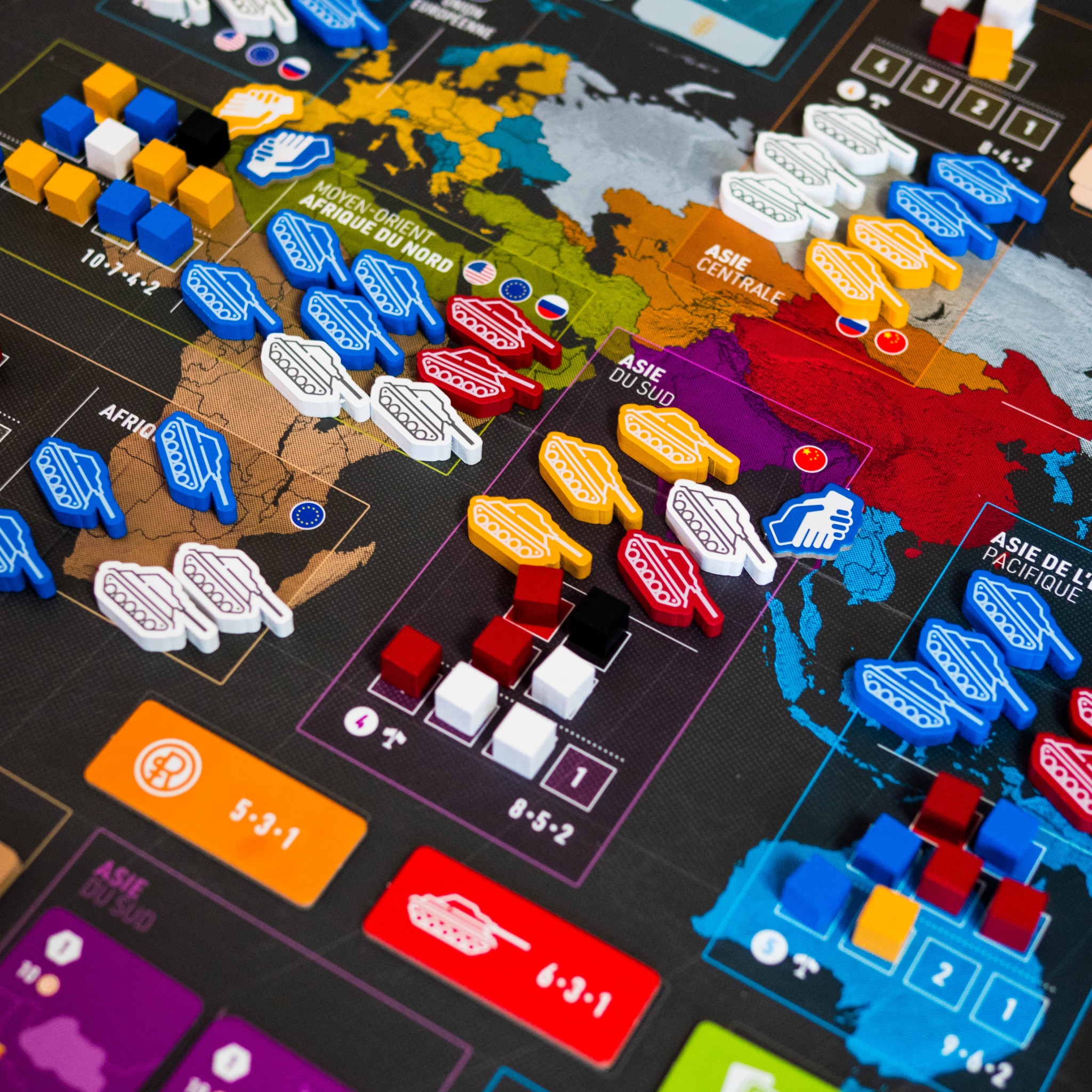
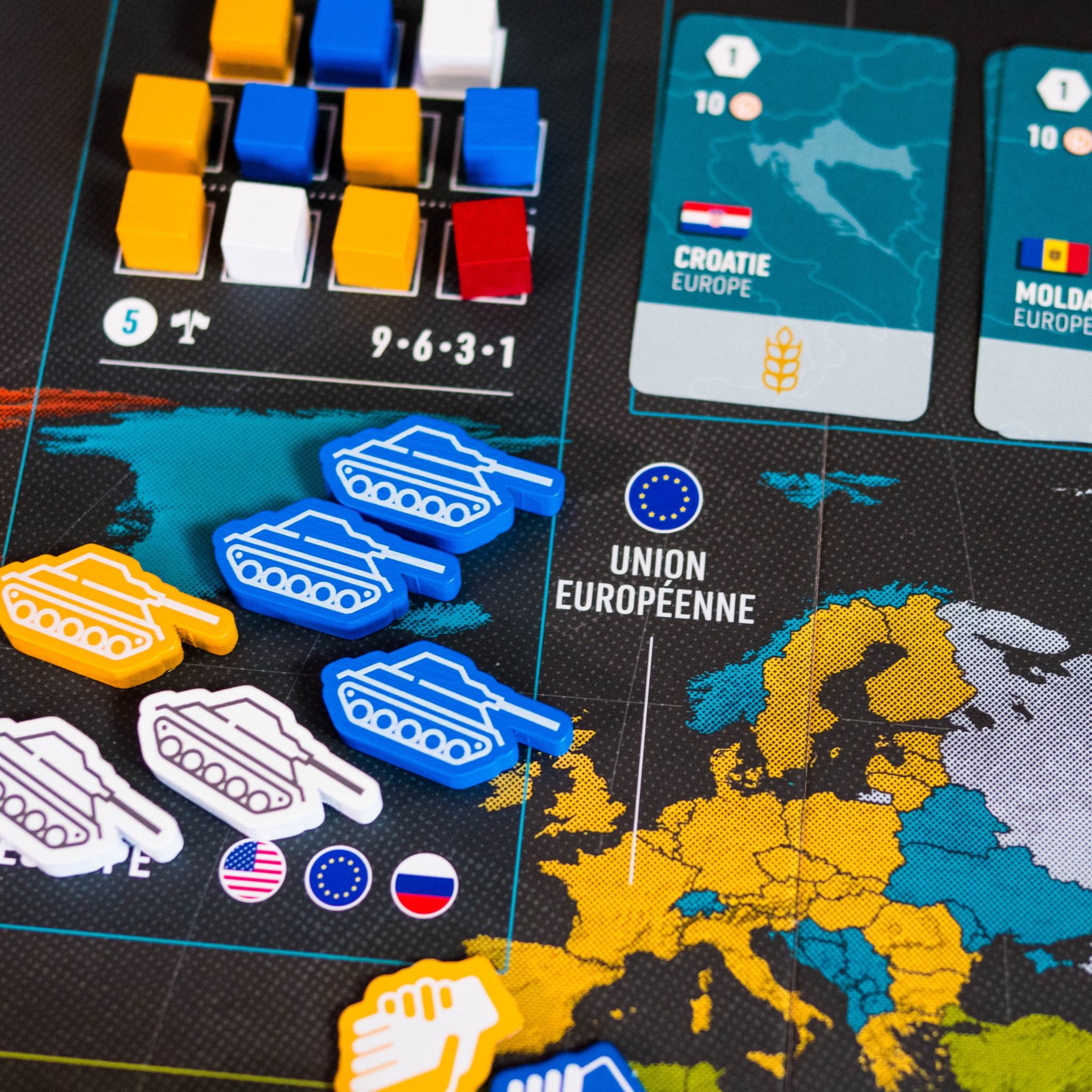
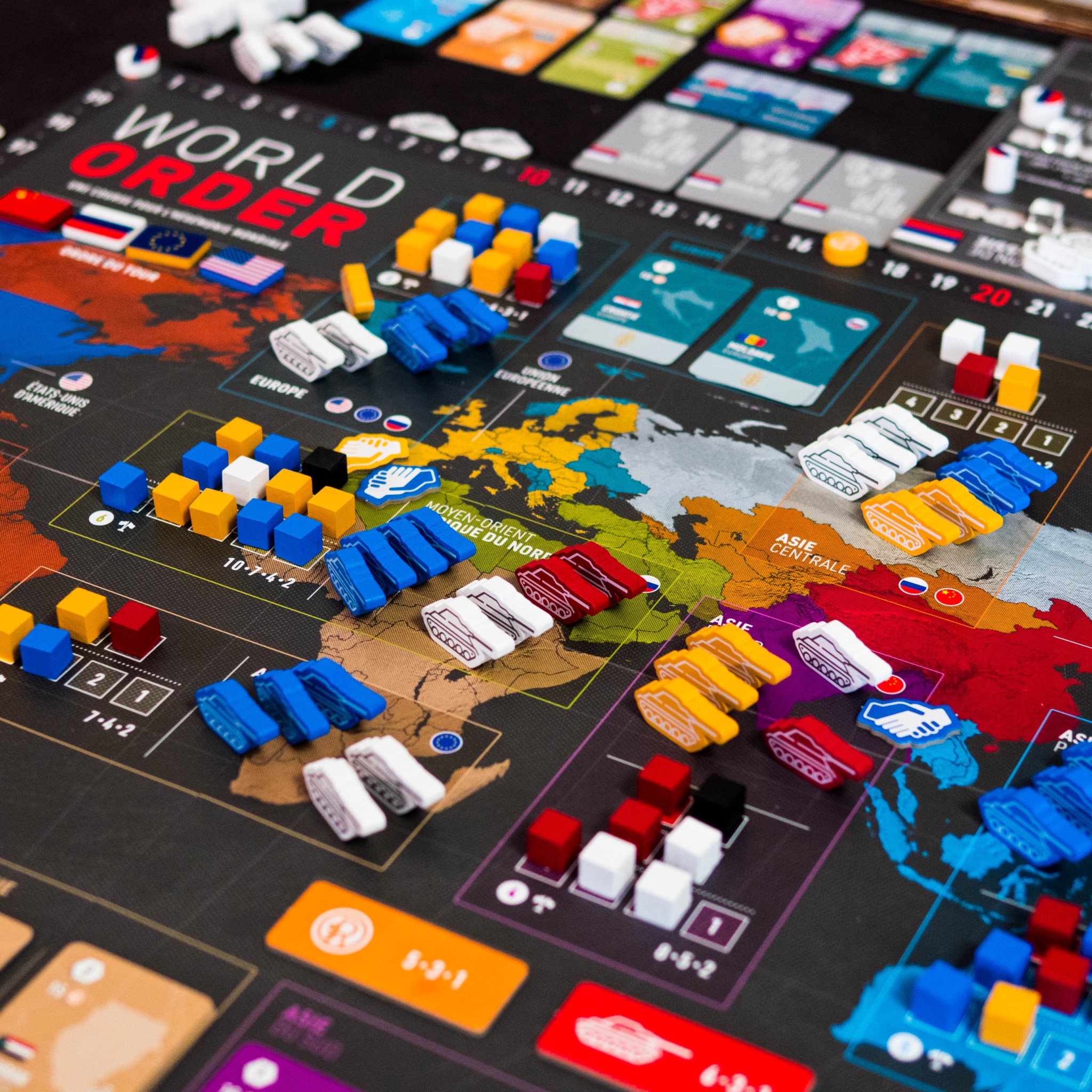
World Order is a geopolitical strategy game for 2 to 4 players in which each player embodies one of the major world powers of the early 2010s: the United States , China , Russia or the European Union
How do you play?
The game is played in 6 rounds , each divided into 3 phases.
1. Preparation Phase (ignored in round 1)
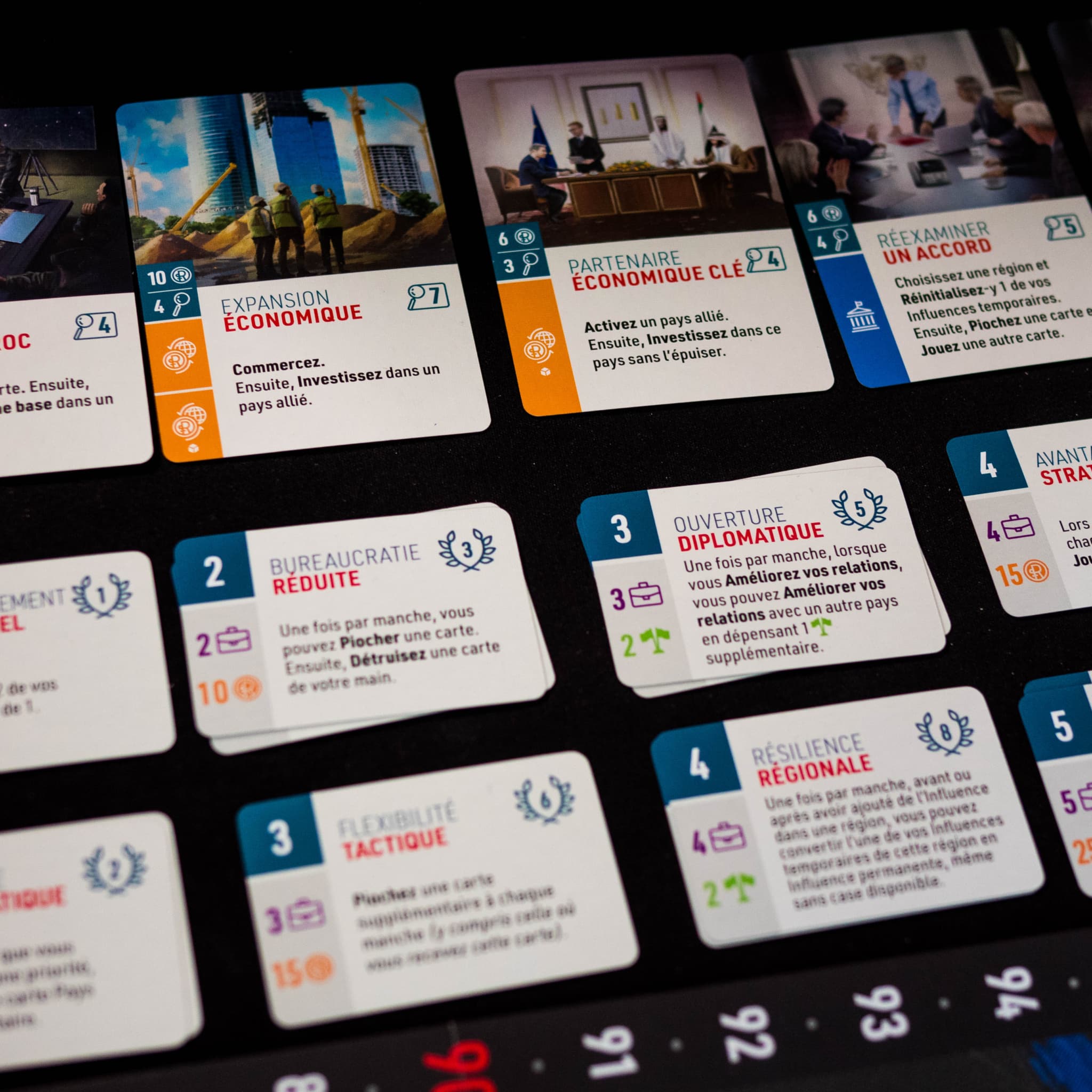
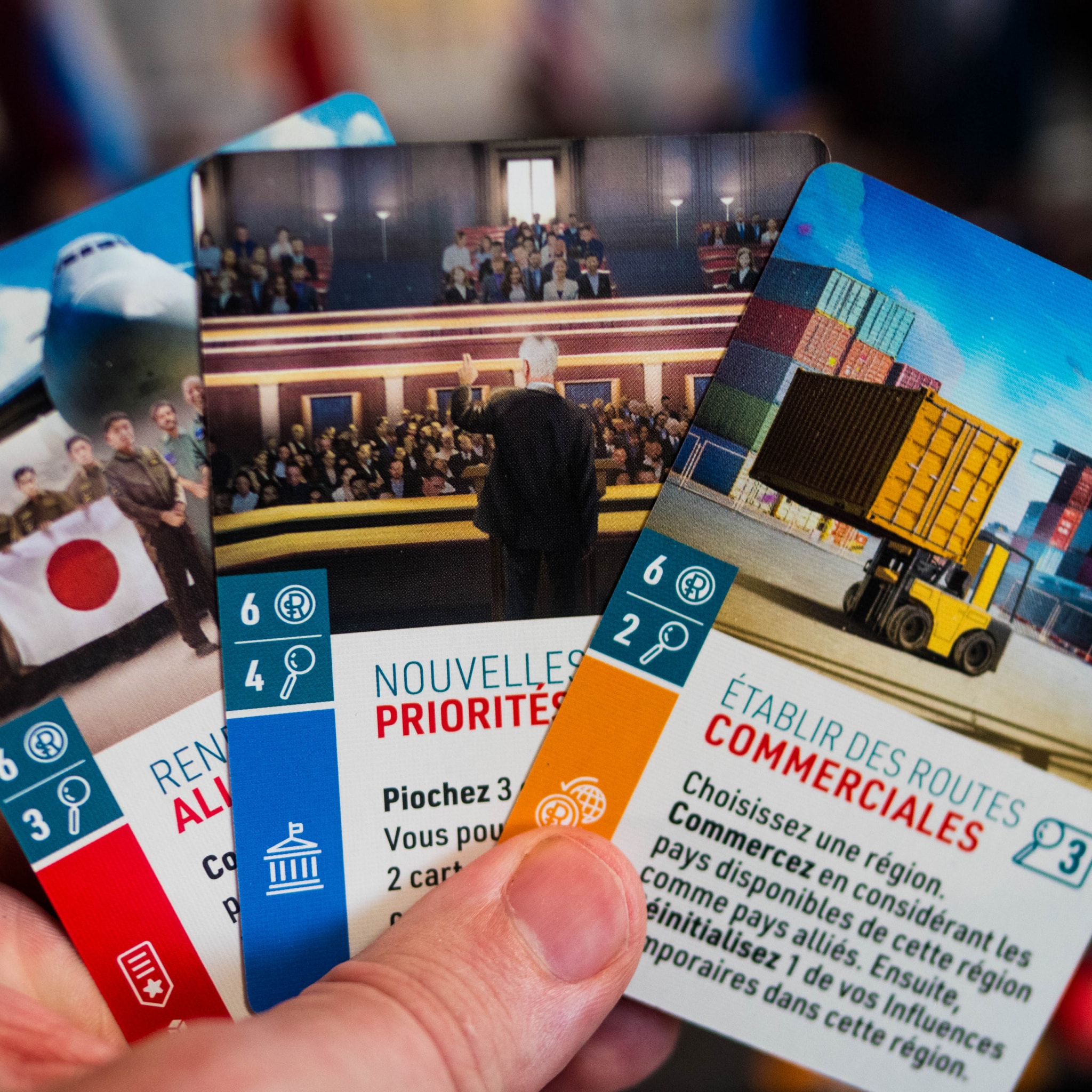
- Draw up to 6 Ability cards
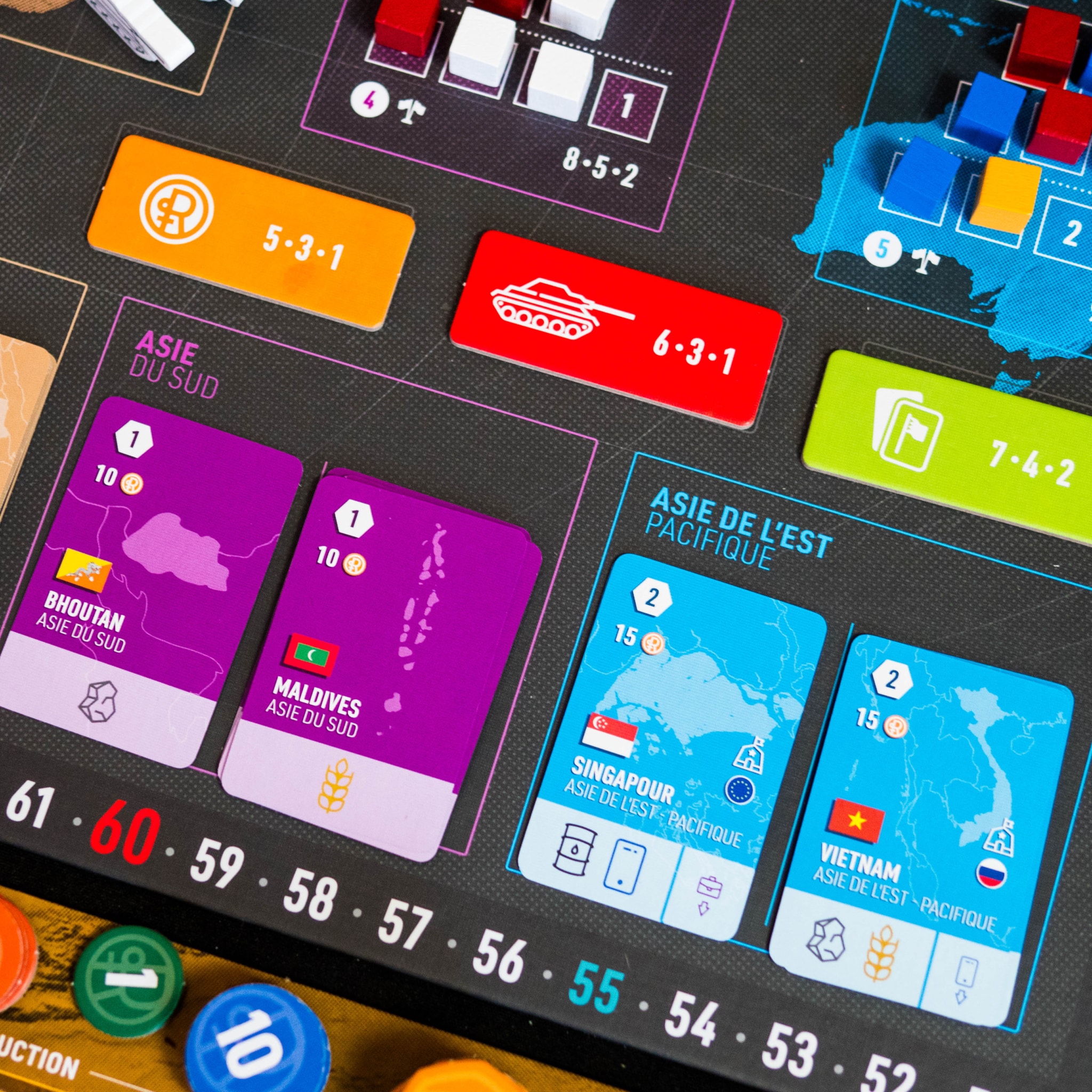
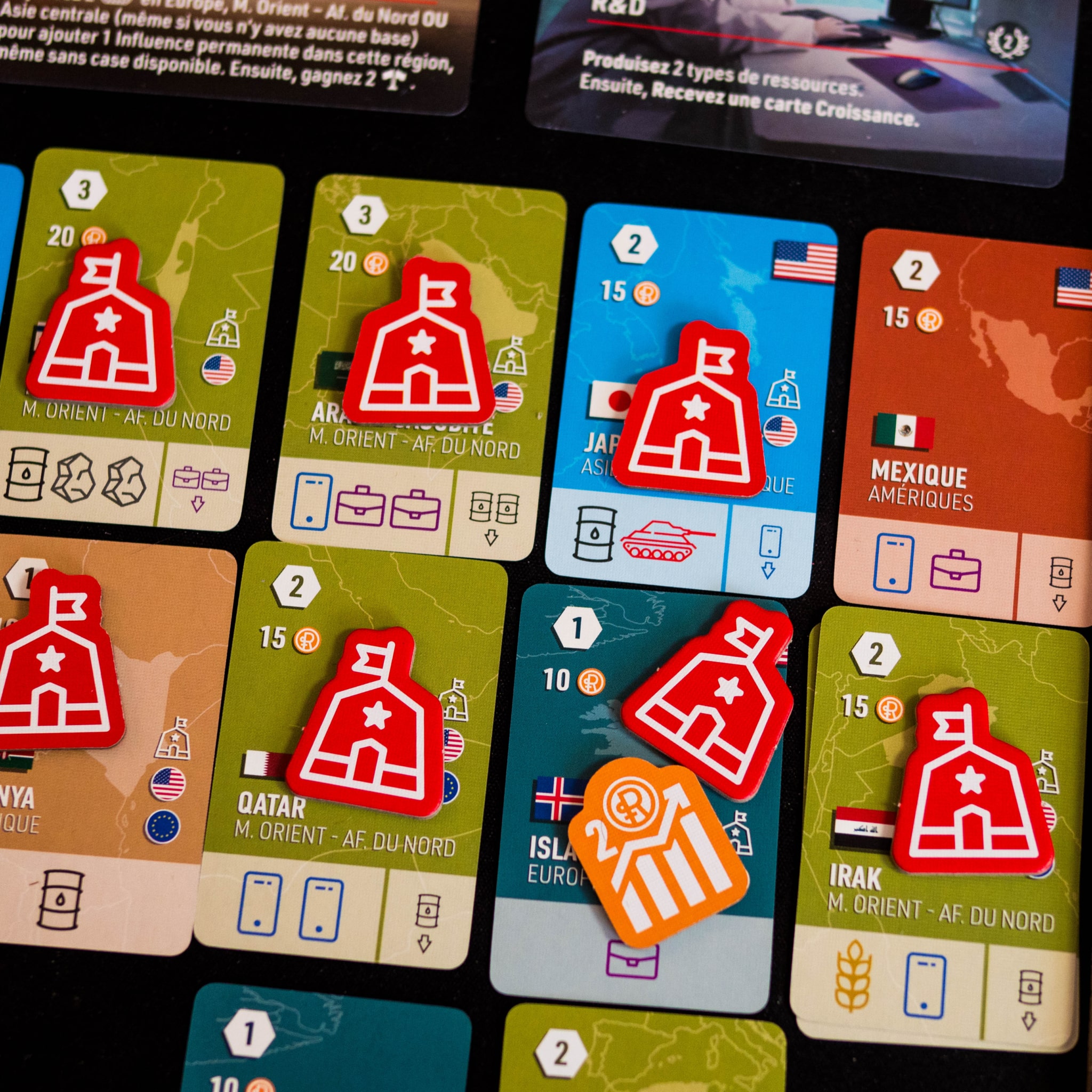
- Reveal new Country cards in each region
- Determine the turn order (the player who is behind in the score chooses first)
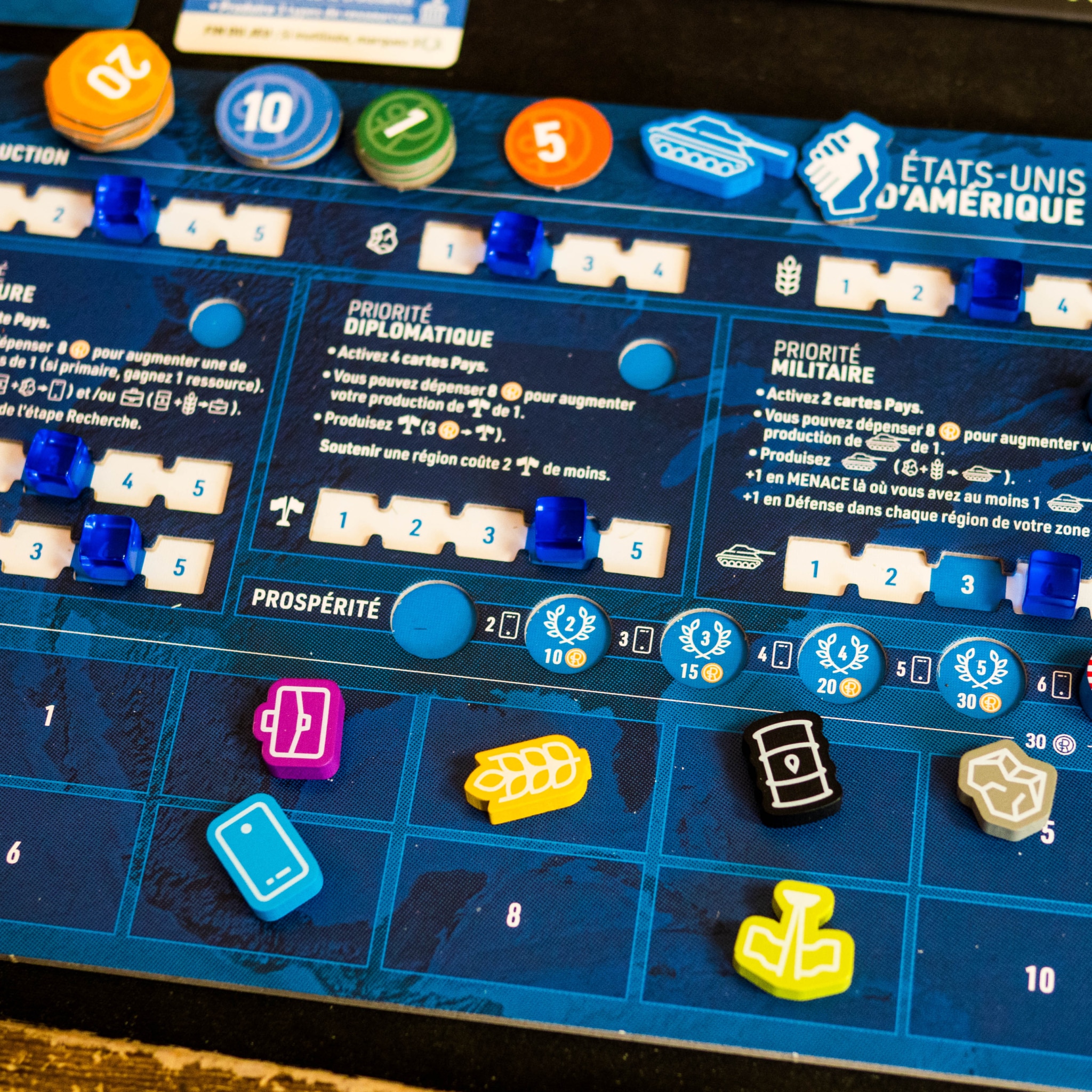
- To produce one’s own primary resources (energy, raw materials, food)
- Choose a round priority: domestic, diplomatic, or military — each offering a permanent bonus for the entire round.
2. Action Phase — the heart of the game, repeated over 4 rounds per player
Each turn, a player plays an Ability card from their hand (or passes/plays a Strategic Trump card), which unlocks one of the following actions:
| Action | Category | Main effect |
|---|---|---|
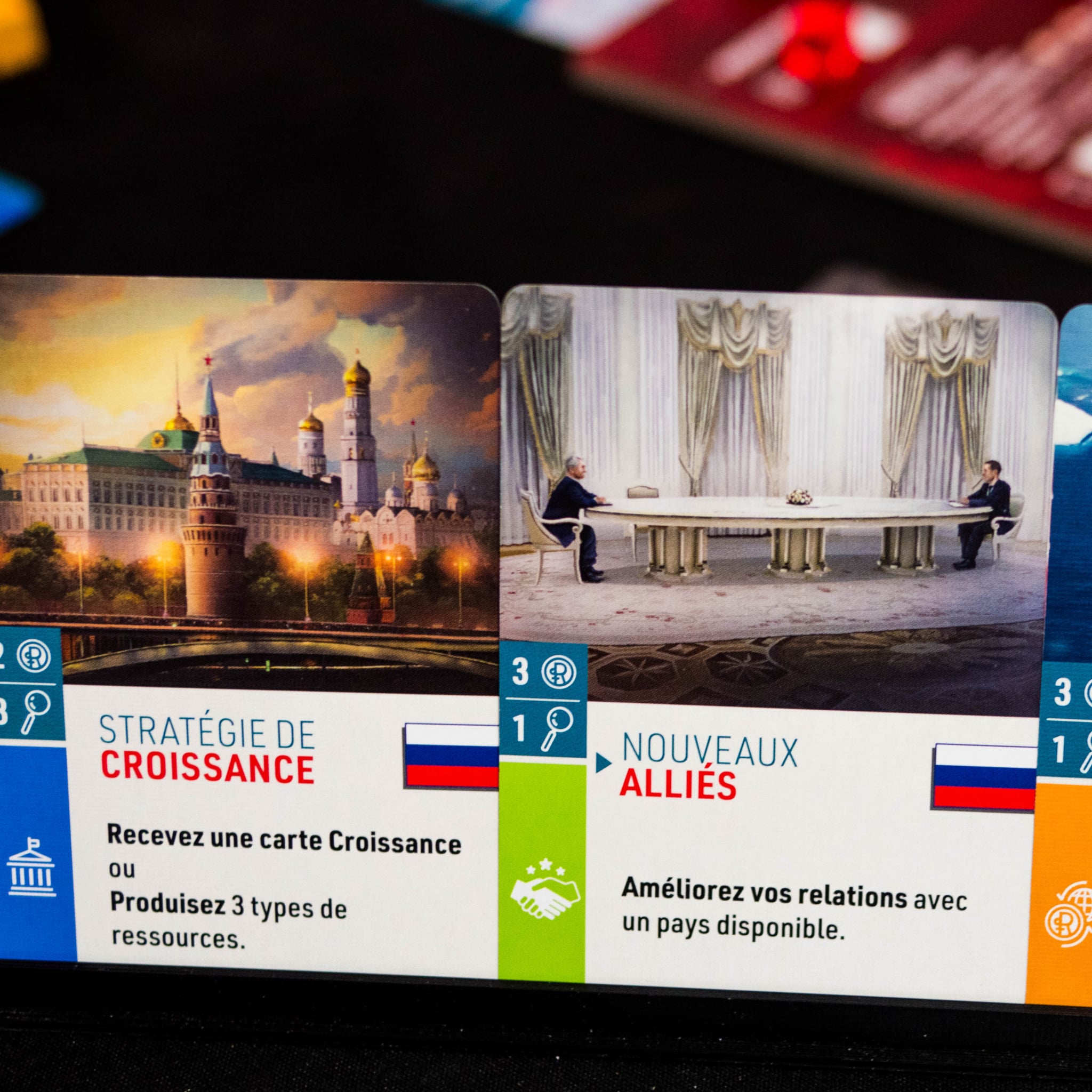
| Improving relationships | Diplomacy | To win over a new ally by paying its value in diplomacy |
| Sustain | Diplomacy | Adding Influence in a region where you are already allied |
| Trade | Economy | Exporting/importing resources for money |
| Invest | Economy | Exhausting an allied country for financial gain and influence |
| Move | Military | Sending armies into one’s area of interest or near a base |
| Build a base | Military | Establishing a permanent military presence in an allied country |
| Receive a Growth card | Interior | Unlock a permanent ability (per round tier) |
| Produce | Interior | Generate primary or secondary resources |
Once everyone has played their 4 turns, it’s time for the Research stage : unplayed cards are revealed, their bonuses are collected, and new cards are purchased on the Common Market using Research points.
3. Impact Phase
- Return on investment : IDE tokens staked generate revenue
- Threat Resolution : Each player compares their military presence (Defense) to that of their opponents in their areas of interest — being overtaken costs victory points.
- Increase prosperity : spend consumer goods to advance on the Prosperity Track
- Scoring (rounds 3 and 6 only): each region whose permanent spaces are full distributes victory points according to the Influence majorities, then the 3 global Majority tokens (money, armies, allied countries) are resolved.
End of game
After the scoring of the 6th round, each unused Strategic Advantage card is worth 2 VPs. The player with the most VPs wins (tiebreakers are determined by regional majorities, then by Influence cubes on the board).
Is it good?
World Order is one of those games with an unusual theme that aims for a modern and realistic feel. It’s a true contemporary geopolitical game where everything revolves around managing influence in different regions of the world, exerting military pressure without direct combat, and navigating a slight asymmetry between superpowers. You don’t just place simple cubes on the map; you try to build an engine and a strategy that blends trade, production, economic development, and military presence.
Mechanically, the game remains quite simple. The deckbuilding system, which involves playing purchased cards for the next round, proves very effective and defines our strategic path. The asymmetry between the four major powers is also an excellent idea, even if it’s not as pronounced as in Hegemony . It will still greatly influence your gameplay, as each nation possesses its own strengths and weaknesses.
The influence mechanic is particularly interesting thanks to its system of permanent and temporary cubes. You must constantly choose between securing a region in the long term or taking advantage of greater immediate gains. The game resembles a true Cold War without an open declaration of war: here, you simply deter your opponents, threaten them, and try to build bases in countries to deploy tanks. The trade aspect is very interesting and thematic, as the different powers do not produce the same resources, and this also applies to the different country cards.
In this game, you can negotiate with other players, but in a more “soft” way. It will mostly involve military threats, alliances, or pacts that might not hold. It’s still quite different from the pure negotiation aspect of Hegemony : in World Order , the atmosphere is much colder.
In World Order, everything seems extremely logical and thematic: improving relations with nations to exert influence in the region makes sense, as does the impact of financial investments in different countries on influence. Furthermore, you can’t send tanks to a region until you’ve built a military base in a country. Everything fits together perfectly when you look at the details of the actions.
But of course, it’s not all sunshine and roses. The game has a real learning curve due to the sheer amount of information to absorb in the first few rounds. It’s also quite long, even if the time flies by (perhaps five rounds would have been enough?). The card-buying and searching aspect is interesting, but it slows down the pace of the game somewhat by creating a lull while all the players take turns making their purchases.
Finally, if you’re looking for interaction, it remains rather indirect in the base game. Fortunately, the two expansions remedy this by introducing direct interaction between players, more diplomacy, and personal objectives that add even more depth to the experience.
Ultimately, World Order offers a rich, original, and thematic experience. Its combination of deckbuilding, territory control, economics, and diplomacy gives it a very distinctive identity that should appeal to players looking for a deep and contemporary game about international relations.
World Order review
Positives
- Excellent balance between diplomacy, economics and military
- A modern geopolitical theme perfectly exploited
- Original and clever majority control
- Four asymmetric powers
- Great strategic depth
- Efficient and satisfying deck building
Negatives
- Fairly steep learning curve
- Fairly long games with 4 players
- Primarily indirect interaction
- Investments become less attractive towards the end of the game.
- A few lulls between rounds
- Few flashy moves or spectacular combos