- Publisher : Matagot
- Designer(s) : Jamey Stegmaier
- Artist(s) : Andrew Bosley, Rom Brown
- Players : 1–5
- Playing time : 90–120 Min
- Weight BGG : 2.95
What's this?
In Tapestry, each player embodies a civilization whose objective is to develop through several historical eras by choosing various paths.
How do you play?
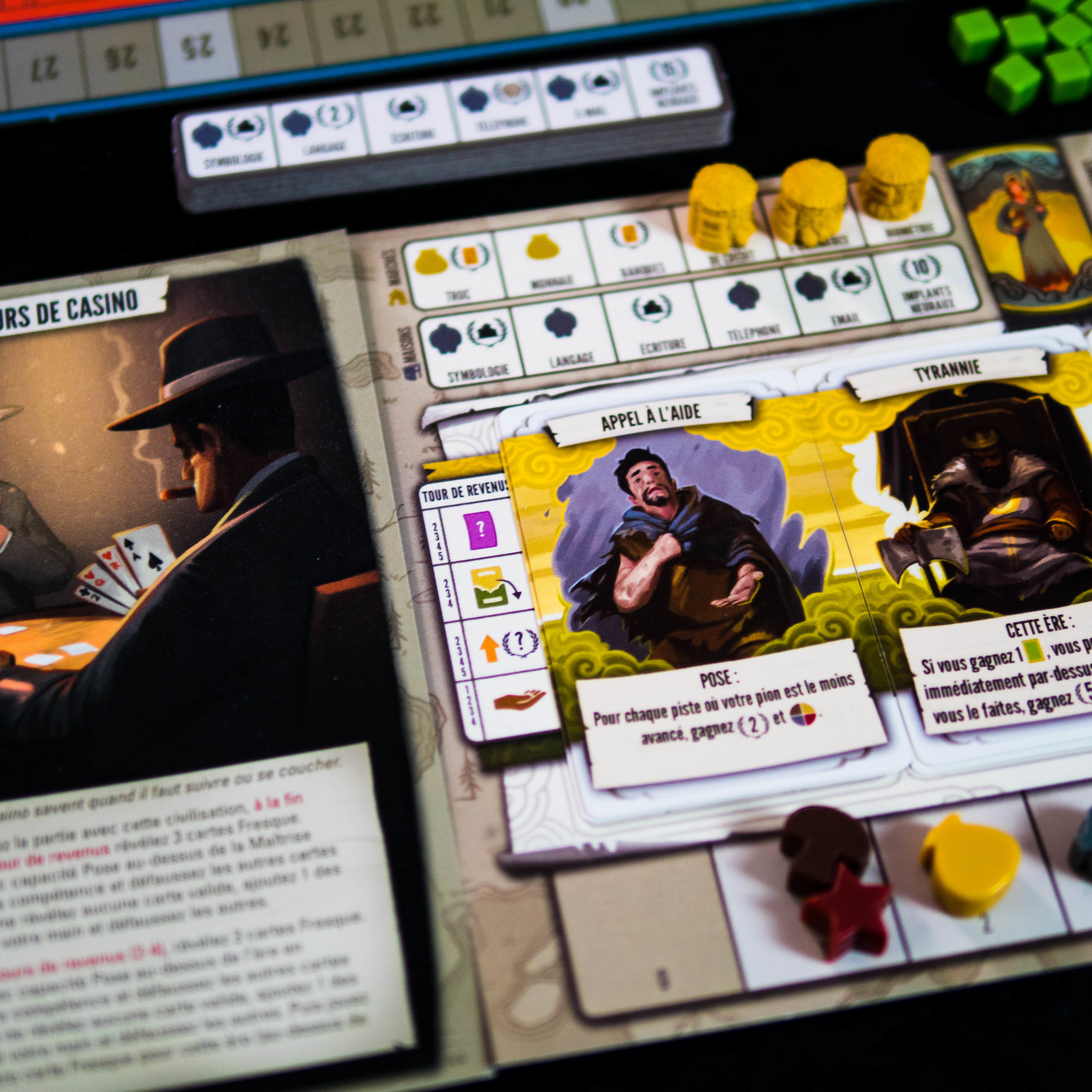
➡️ Action Turns: The majority of turns consist of advancing along a development track, which allows the player to perform actions related to the track and pay the necessary resource costs.
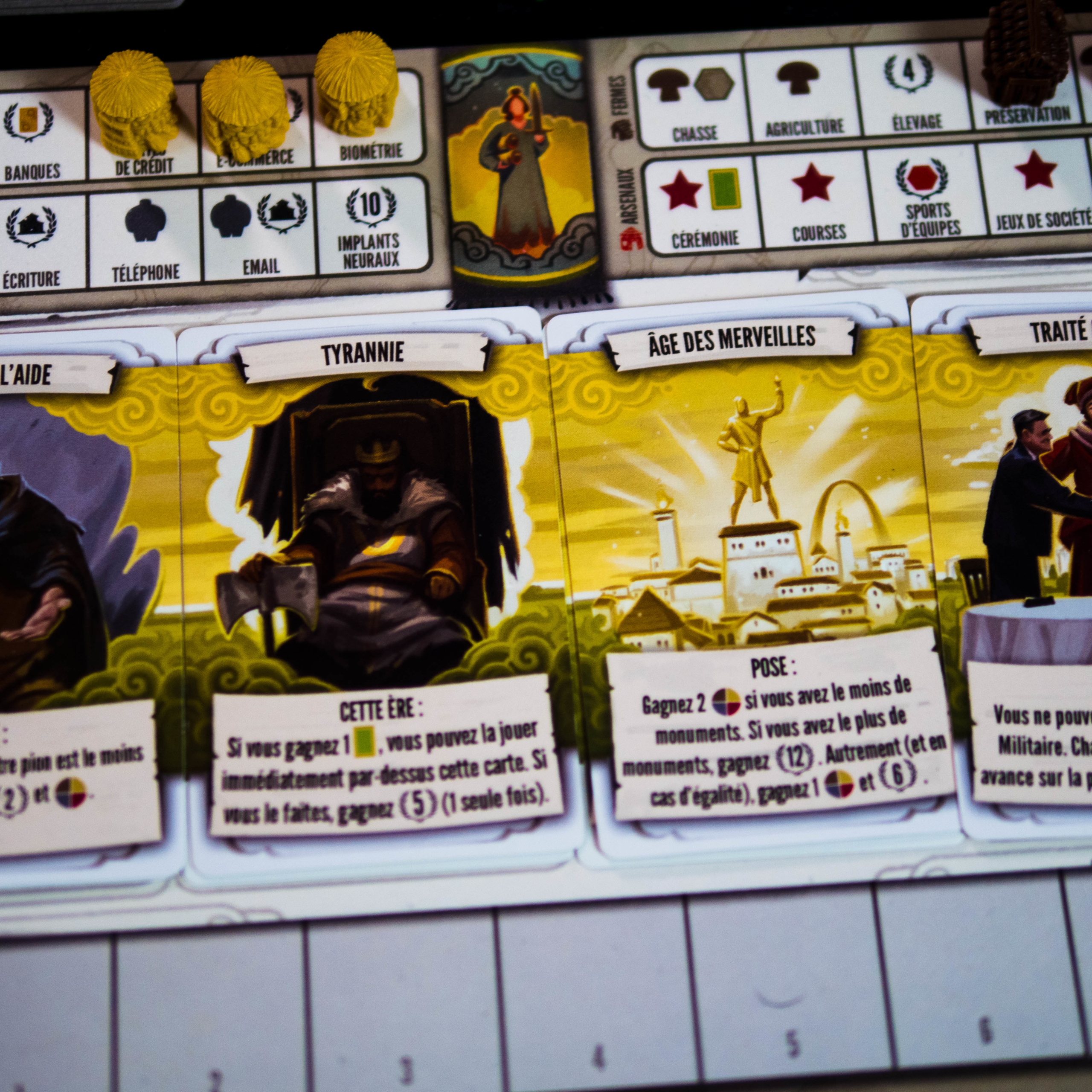
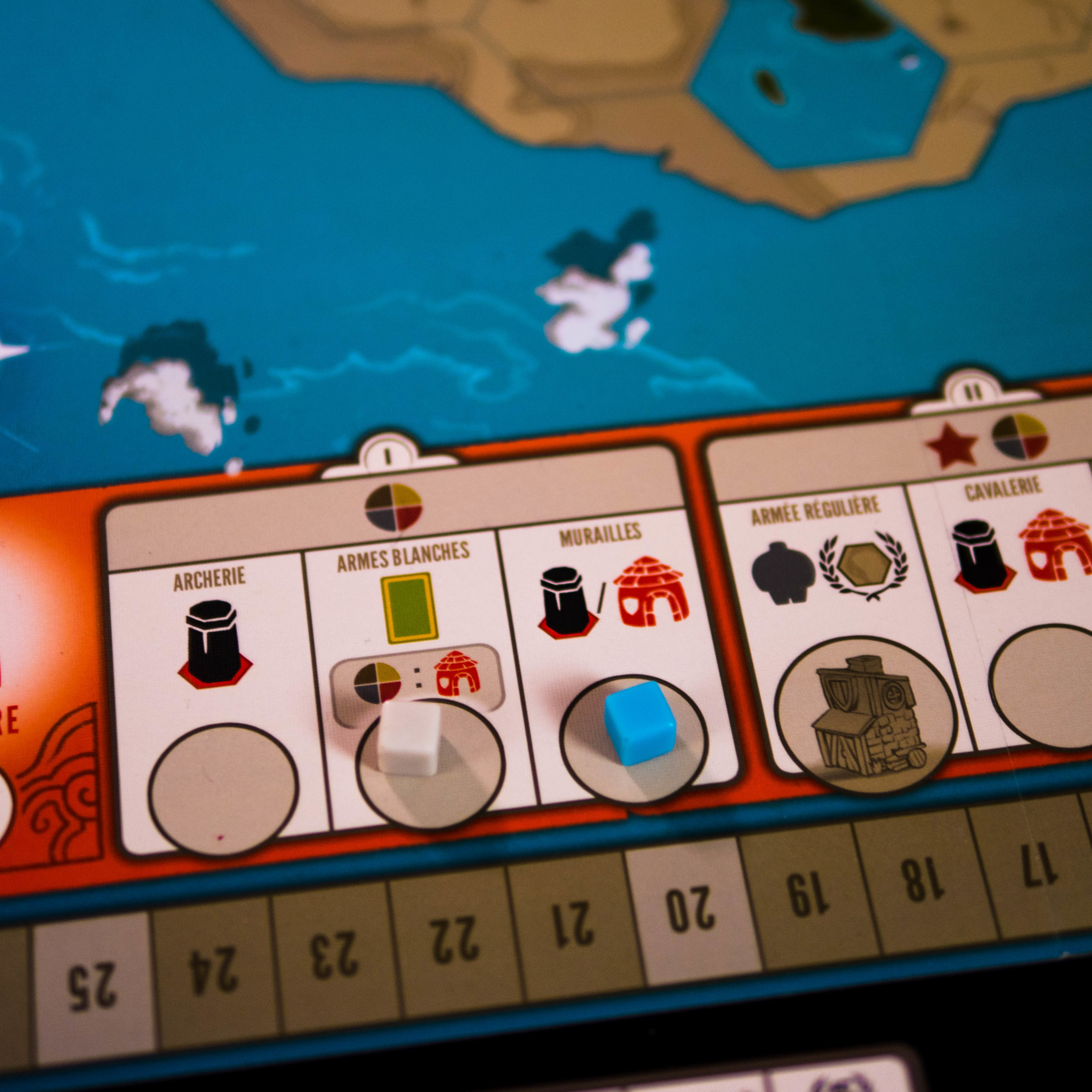
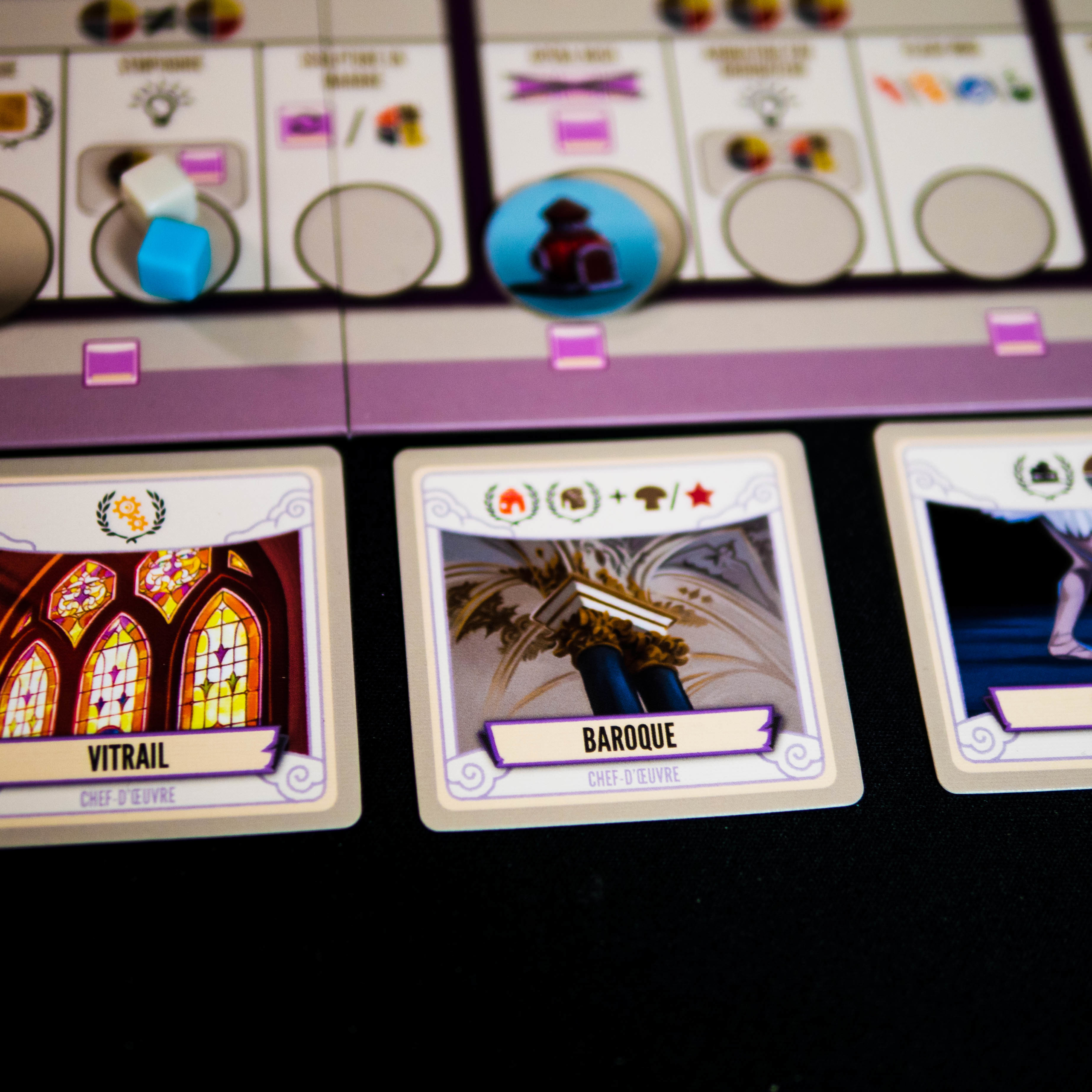
➡️ Development Tracks: The game has four major development tracks – science, technology, exploration, and military. Each track offers specific bonuses and landmarks for the first players to reach certain levels, while also providing various benefits such as victory points, resources, and special abilities.
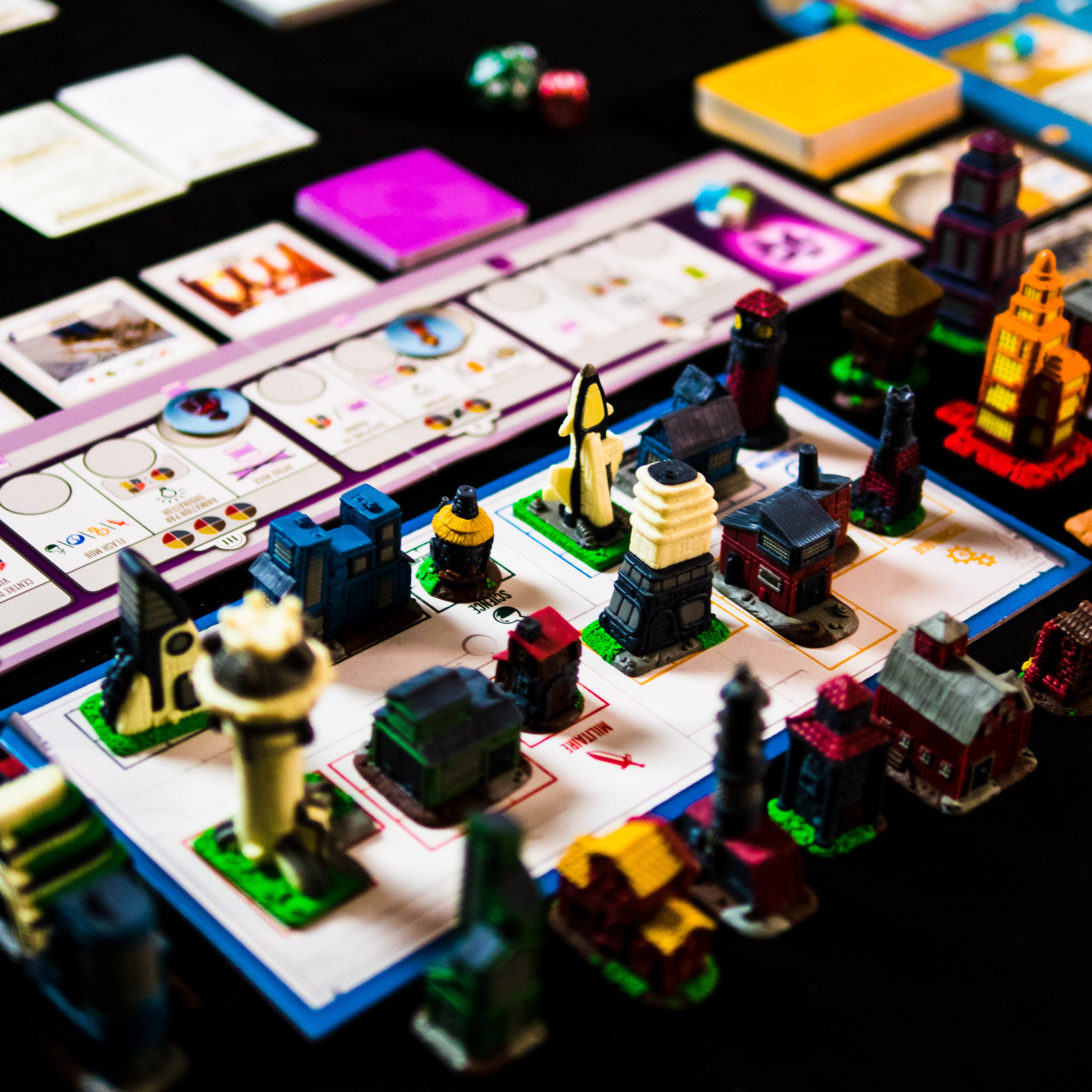
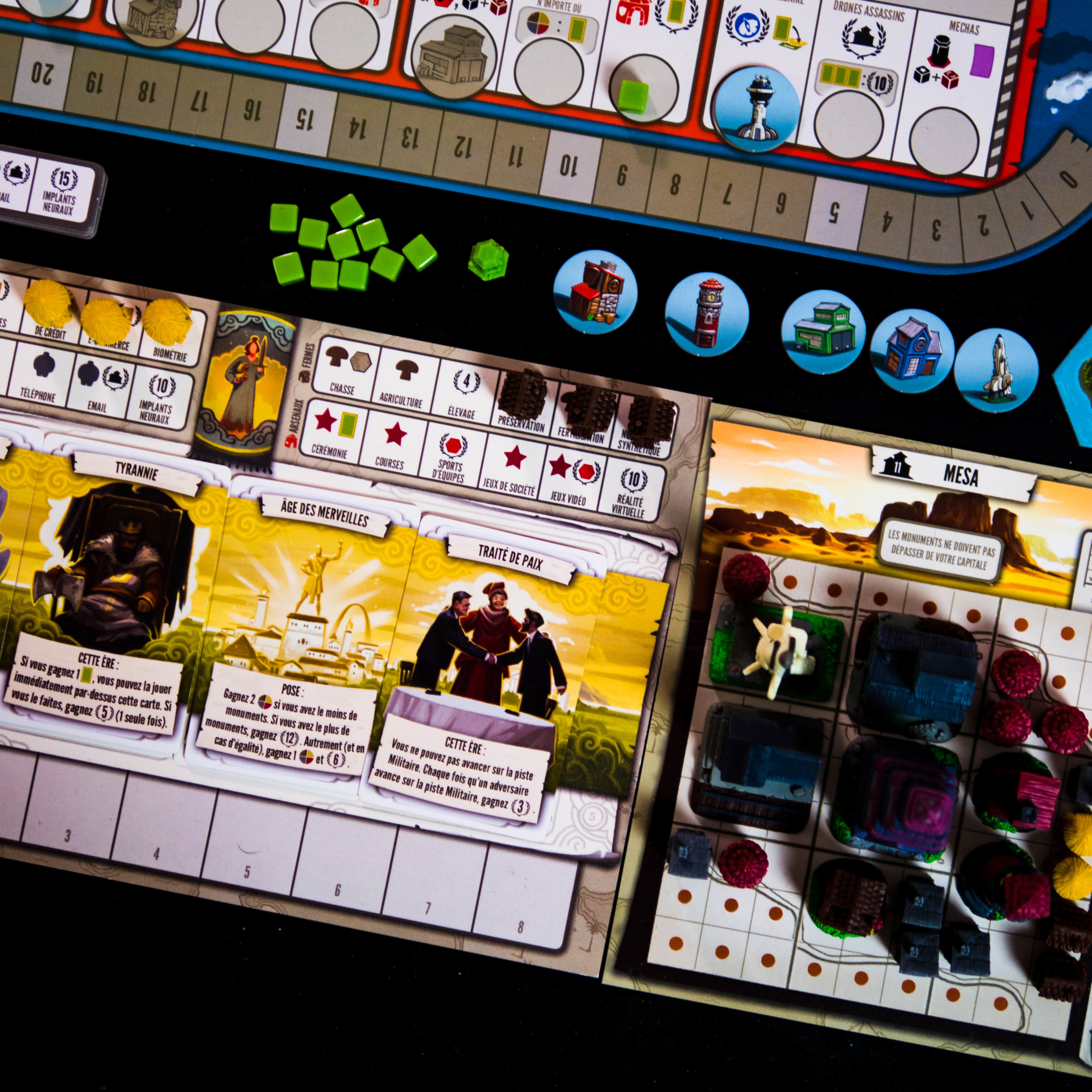
➡️ Capitals and Buildings: Each player has a board representing their capital. Buildings, earned during the game, are placed on it to form rows, columns, and districts, which earn points and resources.
Income Phase: Players trigger this phase to start a new era, activating their civilization’s abilities and gaining resources based on the squares visible on their board.
The game ends when each player has completed their fifth income turn.
Is it good?
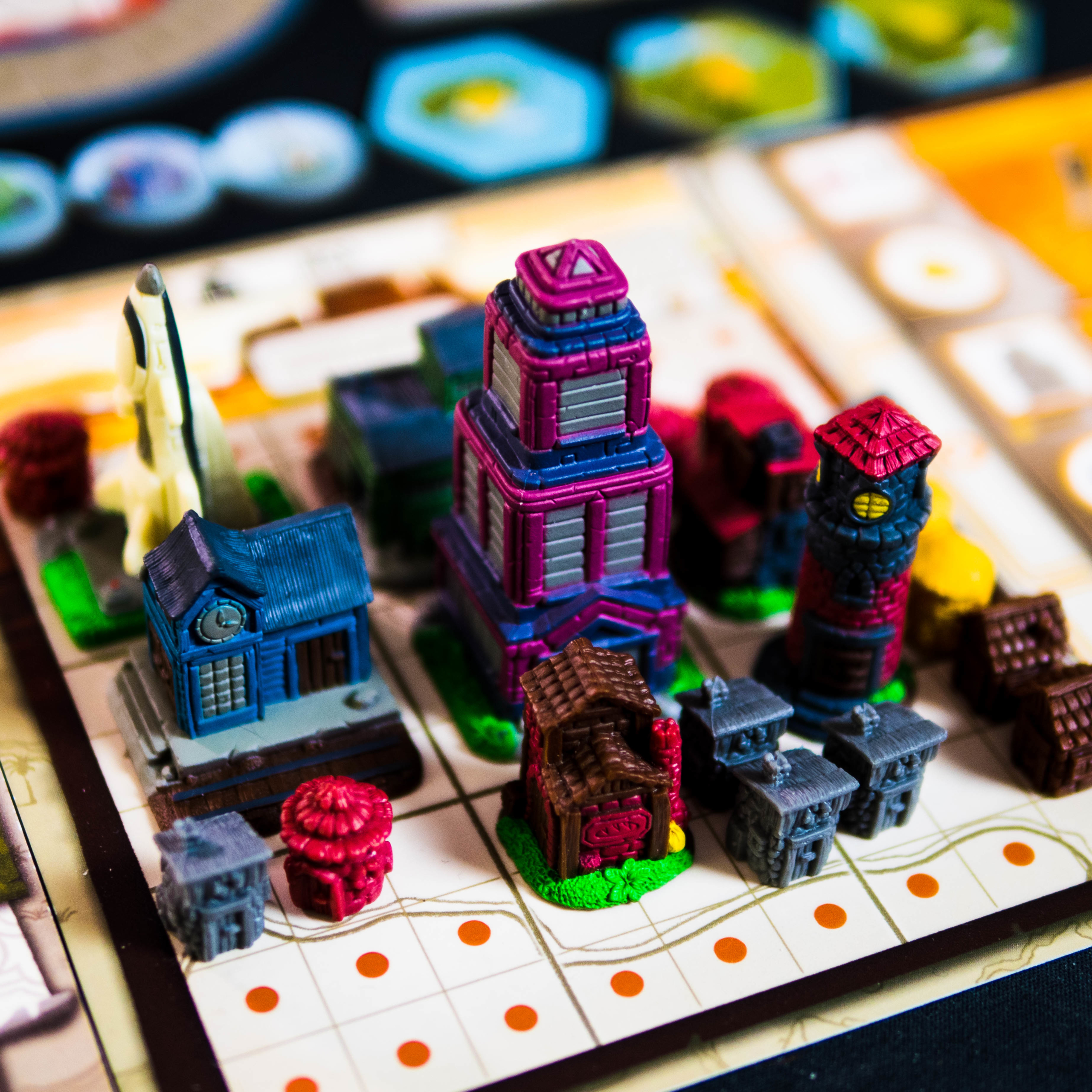
The first thing that strikes you when you discover Tapestry is the quality of its material. The small painted monuments, although more aesthetic than functional, add a touch of charm to the whole.
The rules are relatively simple to understand: players progress on different tracks to unlock bonuses and perform actions. Efficient resource management is essential to optimize this progression and trigger interesting combinations.
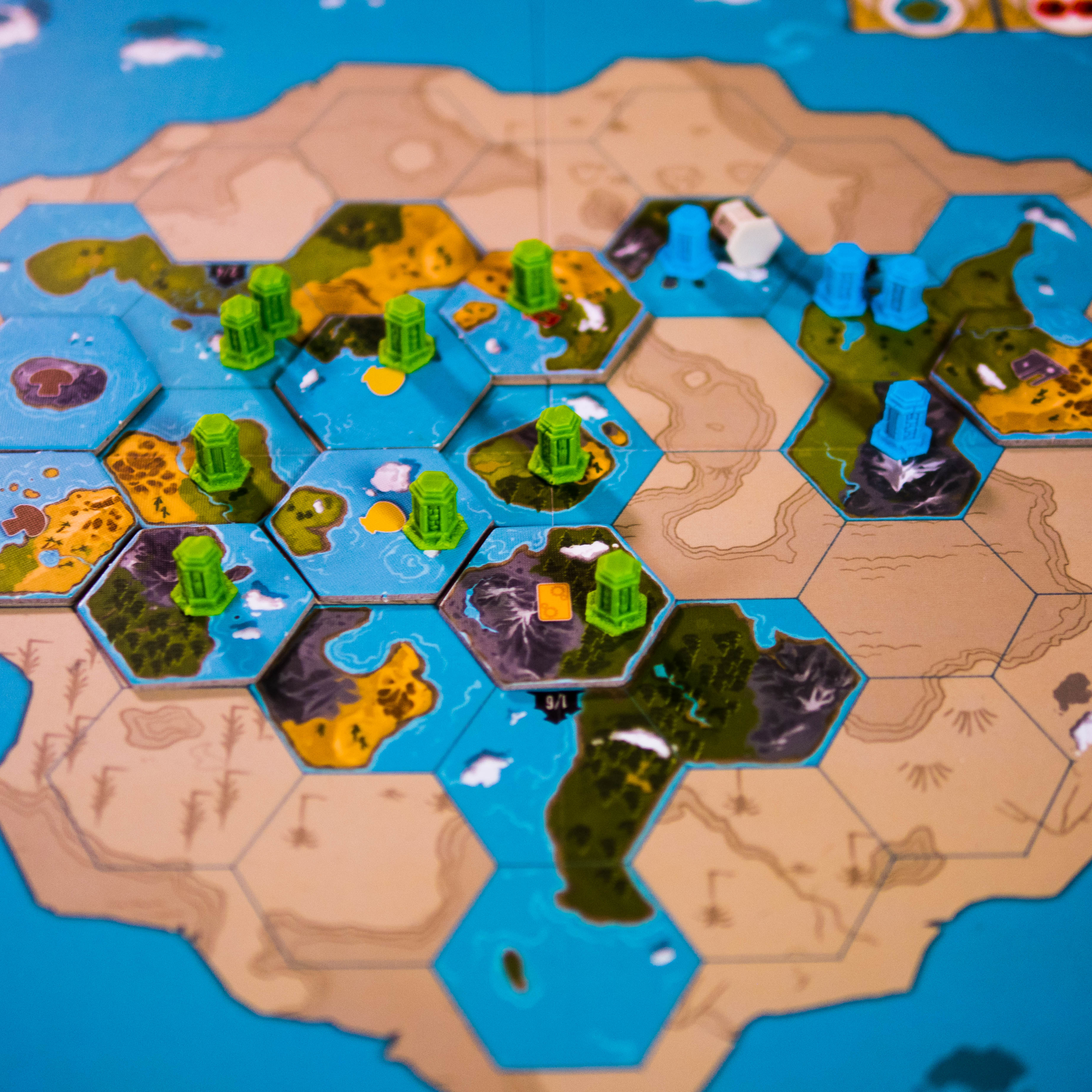
The game offers a certain strategic variety thanks to these thematic tracks (exploration, science, military, etc.), encouraging players to adopt different approaches. A race also begins to acquire certain buildings before the others, adding a competitive dimension.
Direct interaction between players is limited, focusing mainly on the discovery of territories and a few skirmishes. So don’t expect a classic civilization game where you patiently build your empire. Tapestry offers a more abstract and lighter vision of civilization, where the chronological order of discoveries can sometimes be surprising.
In summary, Tapestry is a visually pleasing and mechanically simple game, ideal for those who enjoy lighter style civilization games. It offers a pleasant, no-nonsense gameplay experience, and allows you to discover a variety of strategies
Review Tapestry
Positives
- Aesthetics and Material
- Simple Rules
- A Light Civilization Game
Negatives
- Civilization Imbalance (which has been fixed)
- No feeling of developing a civilization
- Limited interaction
