- Publisher(s) : Blackrock Games
- Designer(s) : Wolfgang Kramer
- Artist(s) : Melanie Friedli
- Players : 2–5
- Playing time : 30–60 Min
- Weight BGG : 1.33
What's this?
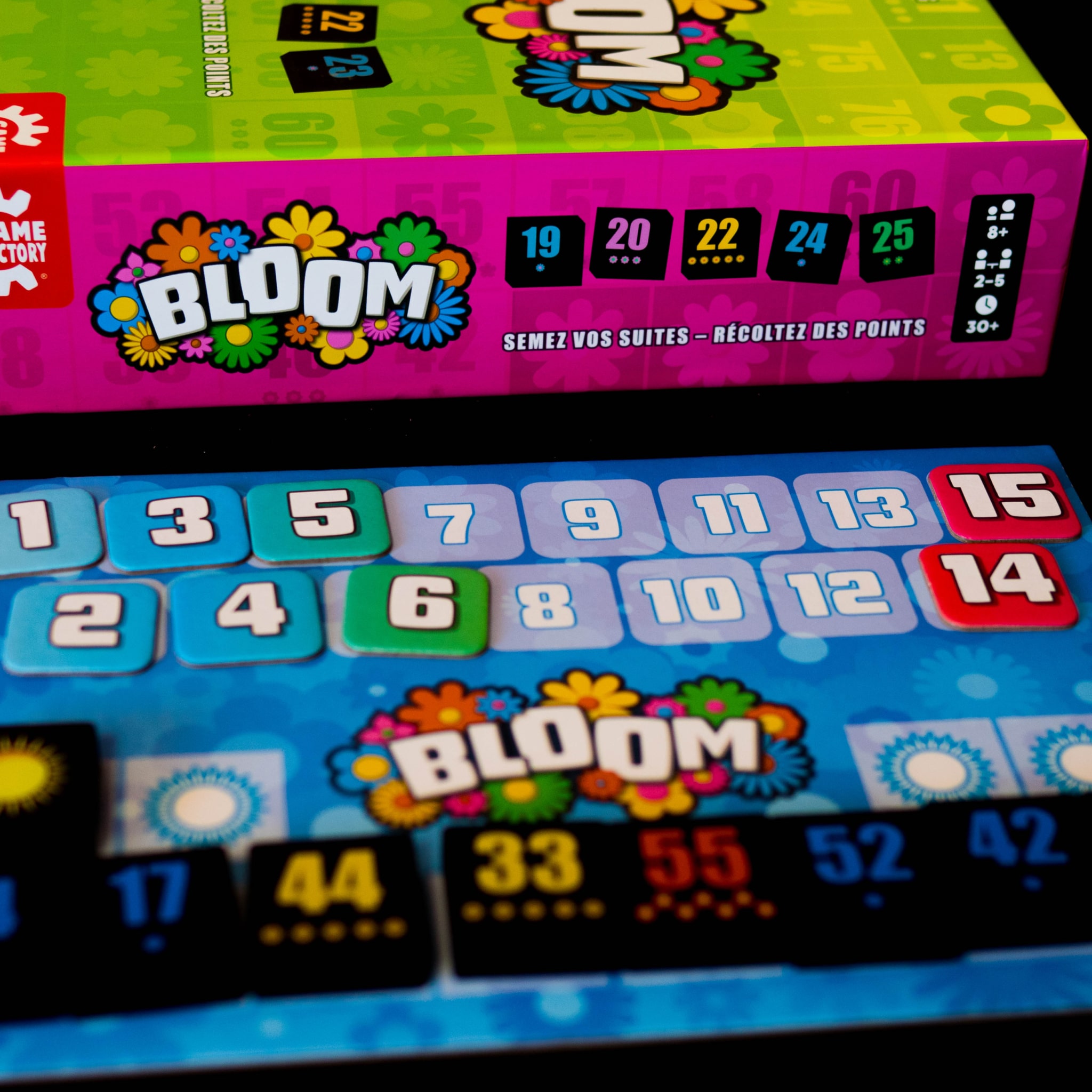
Bloom is a tile-placement and combination game for 2 to 5 players, ages 8 and up, created by the renowned Wolfgang Kramer . In this digital garden, you must create sequences of numbers (flowers) to collect victory points (Reward tokens) .
How do you play?
In turn, a player chooses only one action from three :
1. Draw 1 or 2 tiles
The player takes up to 2 tiles:
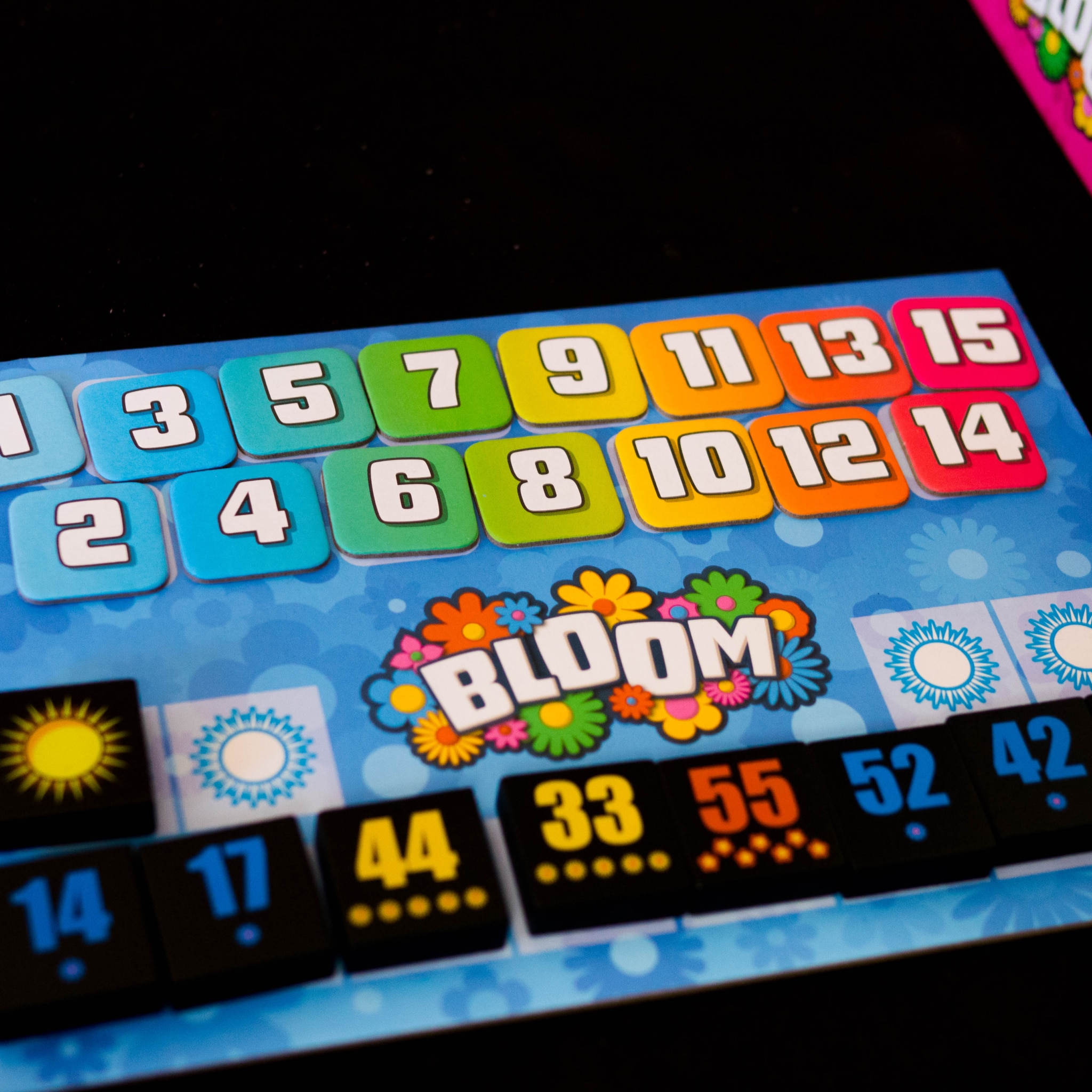
- from the visible flowerbed,
- and/or from the hidden pickaxe.
Visible tiles that have been removed are immediately replaced.
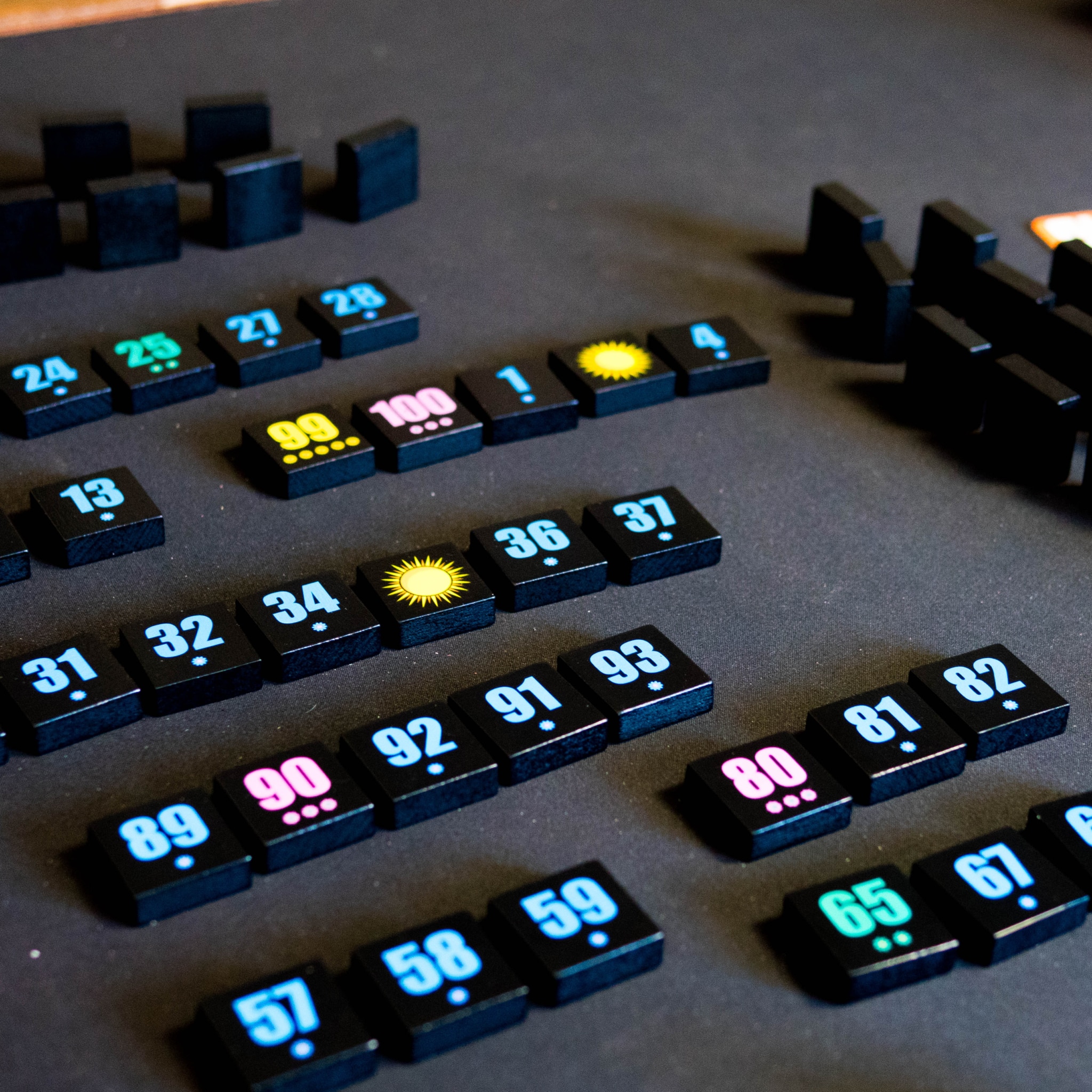
2. Establish a sequence
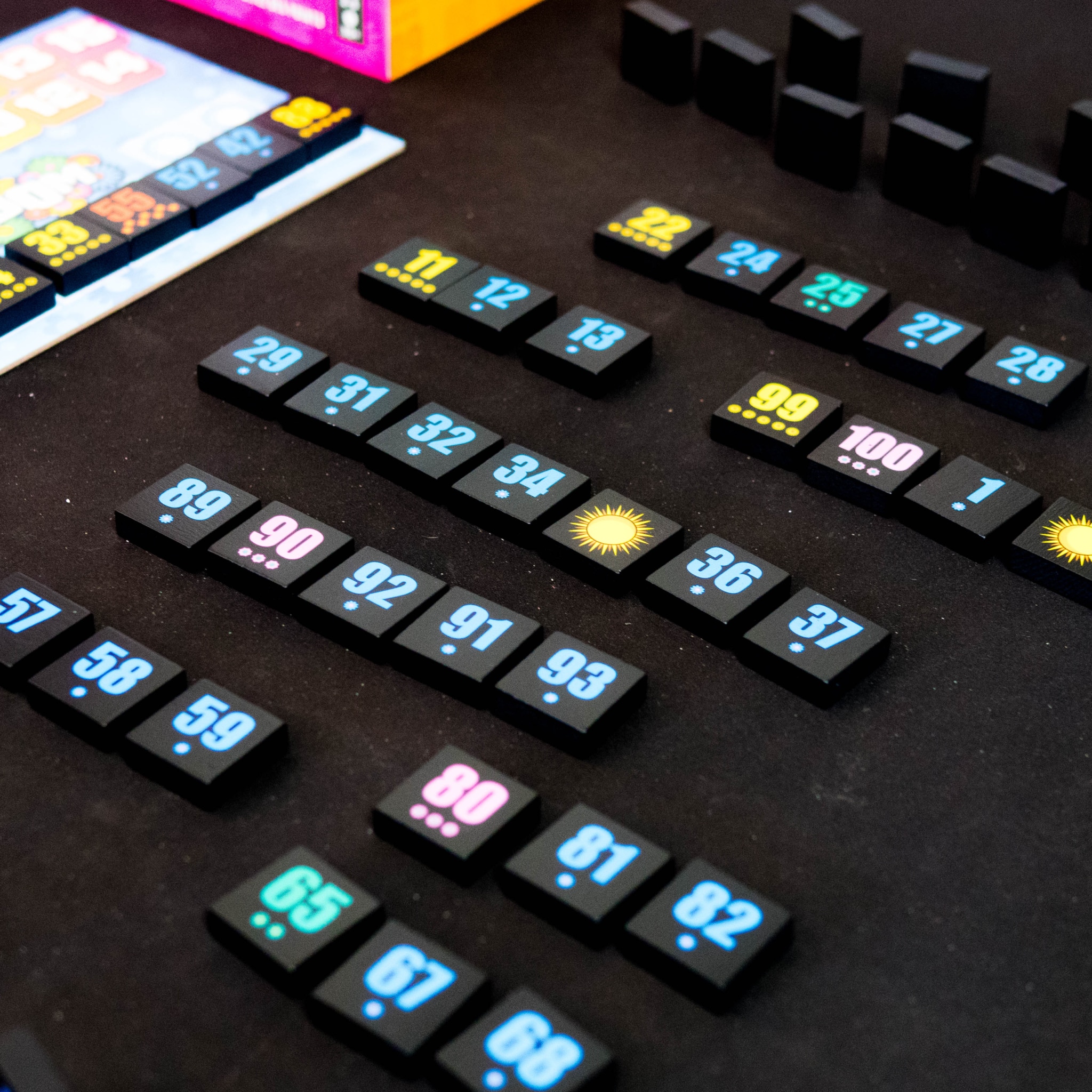
The player places a new sequence in front of him.
Rules of a sequence:
- minimum 3 tiles
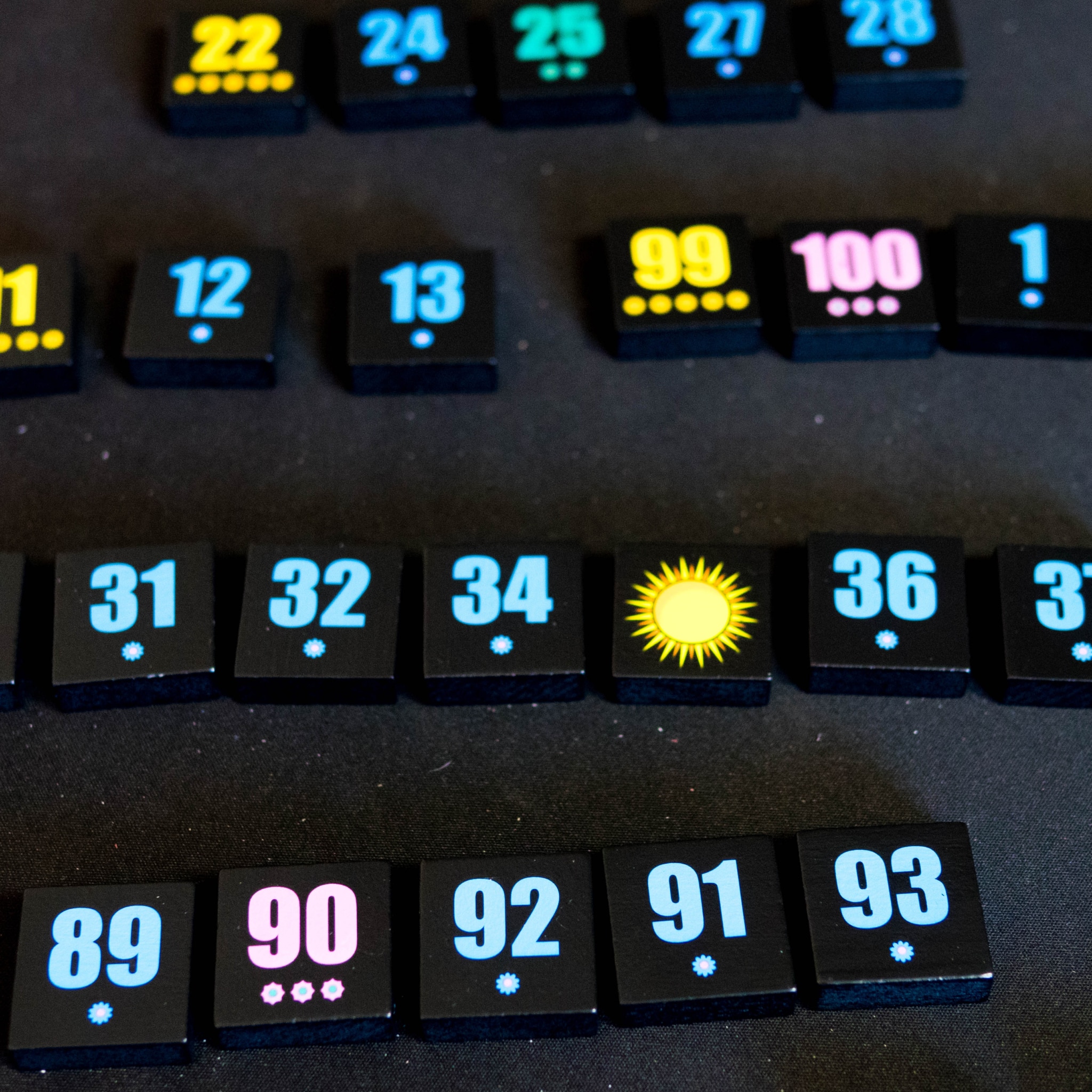
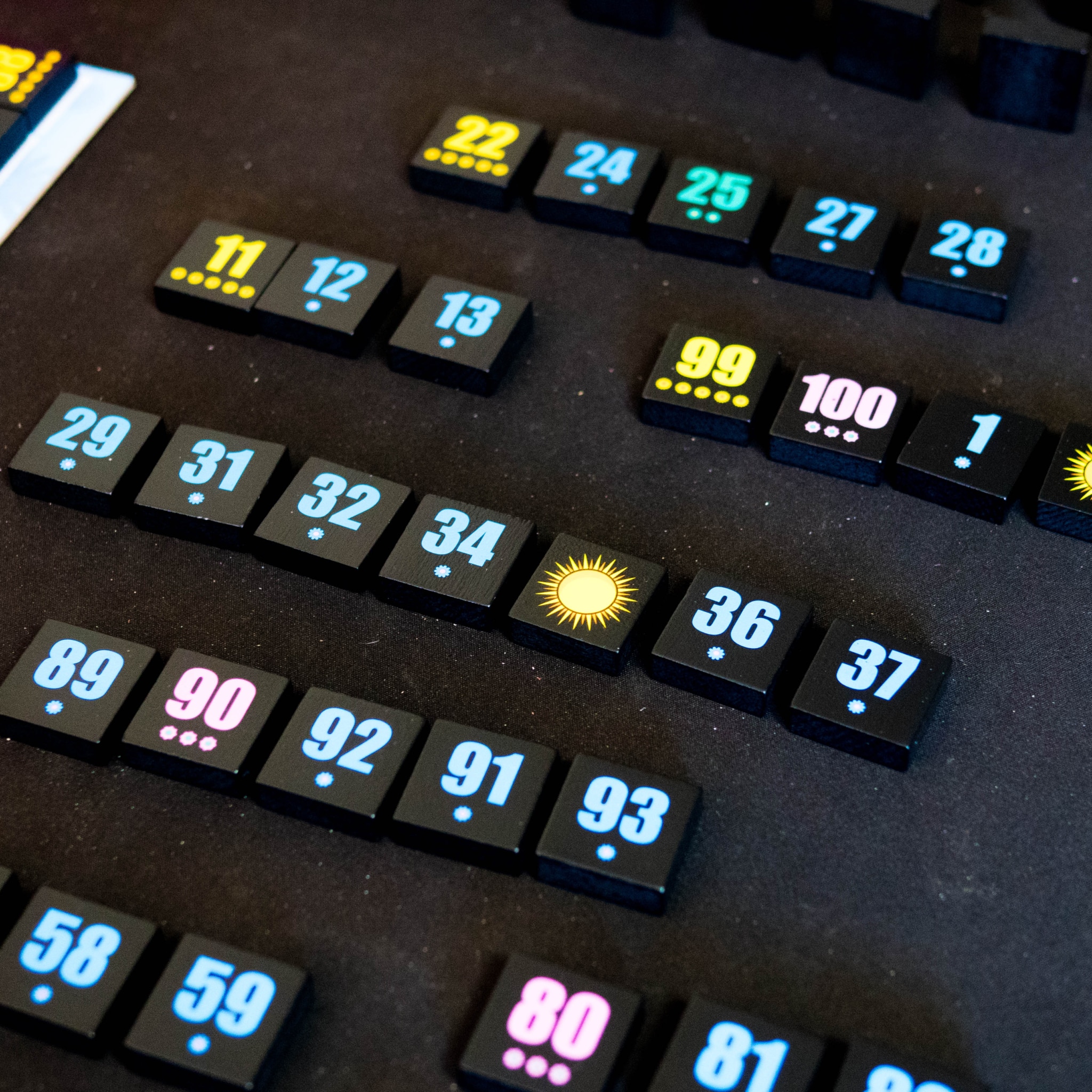
- the difference between two neighboring numbers must never exceed 2
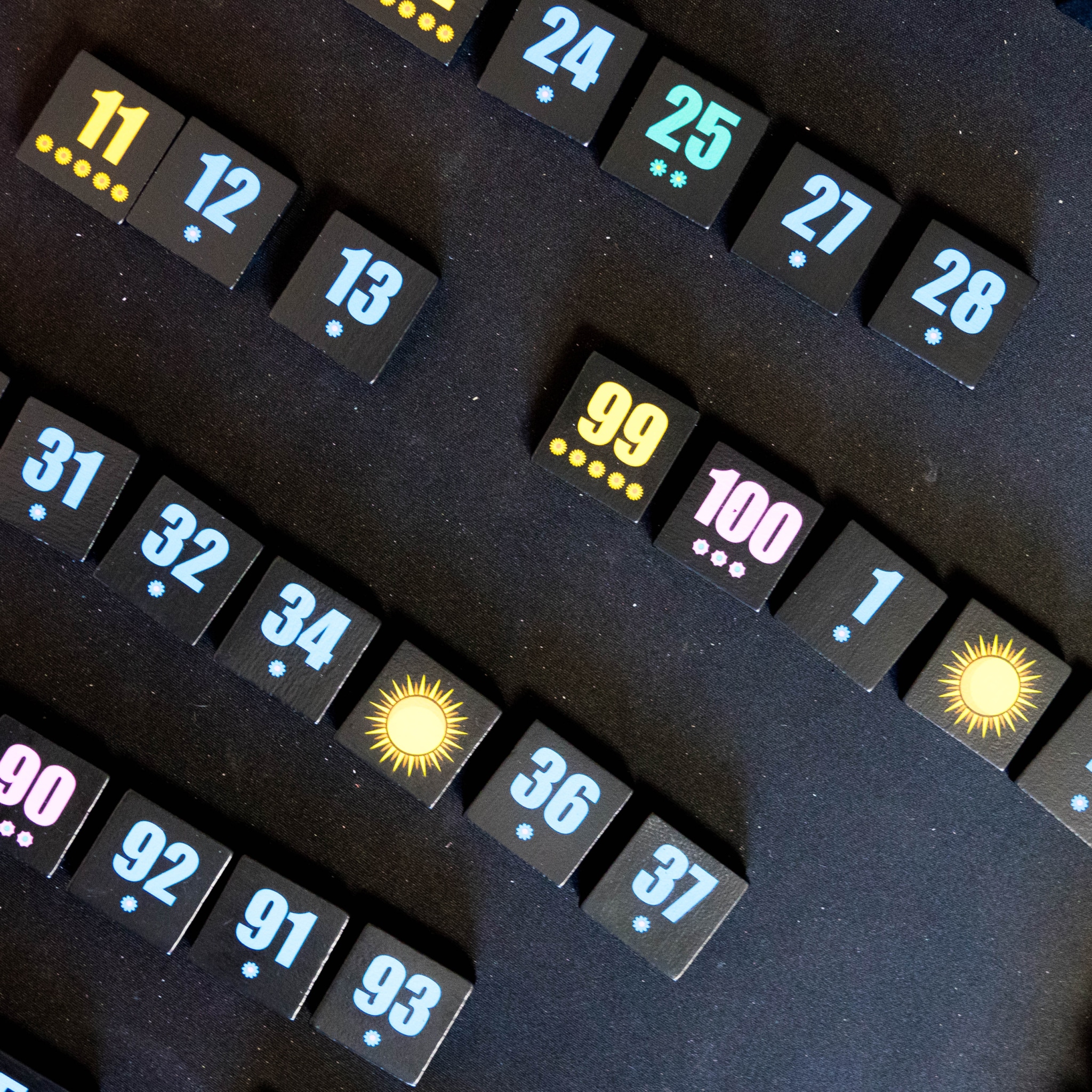
- A sequence can exceed 100 and then start again at 1.
Example: 98 – 99 – 100 – 1
Once the next question has been posed:
- We count the number of flowers present on the tiles.
- we take the corresponding Reward token.
If this token is no longer available, we take the nearest lower value that is still free.
Tile theft
When choosing this action, you can also:
- take 1 or 2 tiles from a sequence already laid,
- create a new sequence with your own tiles.
Both suites must remain valid after the flight.
3. Extending an existing sequence
The player adds as many tiles as they want to a sequence already laid down:
- at first
- at the end
- or in the middle
This action does not earn any tokens , but allows you to empty your hand faster.
Is it good?
Flowers is a tile-laying game that has flown under the radar in the gaming world, despite being very effective. It’s quick to explain, fluid to play, but with enough choices to remain interesting from beginning to end.
It is a game of opportunism and optimization which requires you, on each turn, to make the right choices: place a sequence immediately to secure a Reward token, wait for a better opportunity, or on the contrary get rid of your tiles before the end of the round.
There is this constant tension where you hesitate to place your tiles to collect a big Reward token… before seeing, on the next turn, an opponent steal it from you.
There’s also this successful interaction that allows you to grab one or two tiles from your opponents’ sequences, which forces you to constantly monitor what the other players are building. You never play in isolation. It’s clever, opportunistic, and particularly satisfying when you manage to turn an opponent’s sequence to your advantage.
This is typically the kind of game that is easy to release, capable of appealing to a wide audience thanks to its short playing time and immediate accessibility.
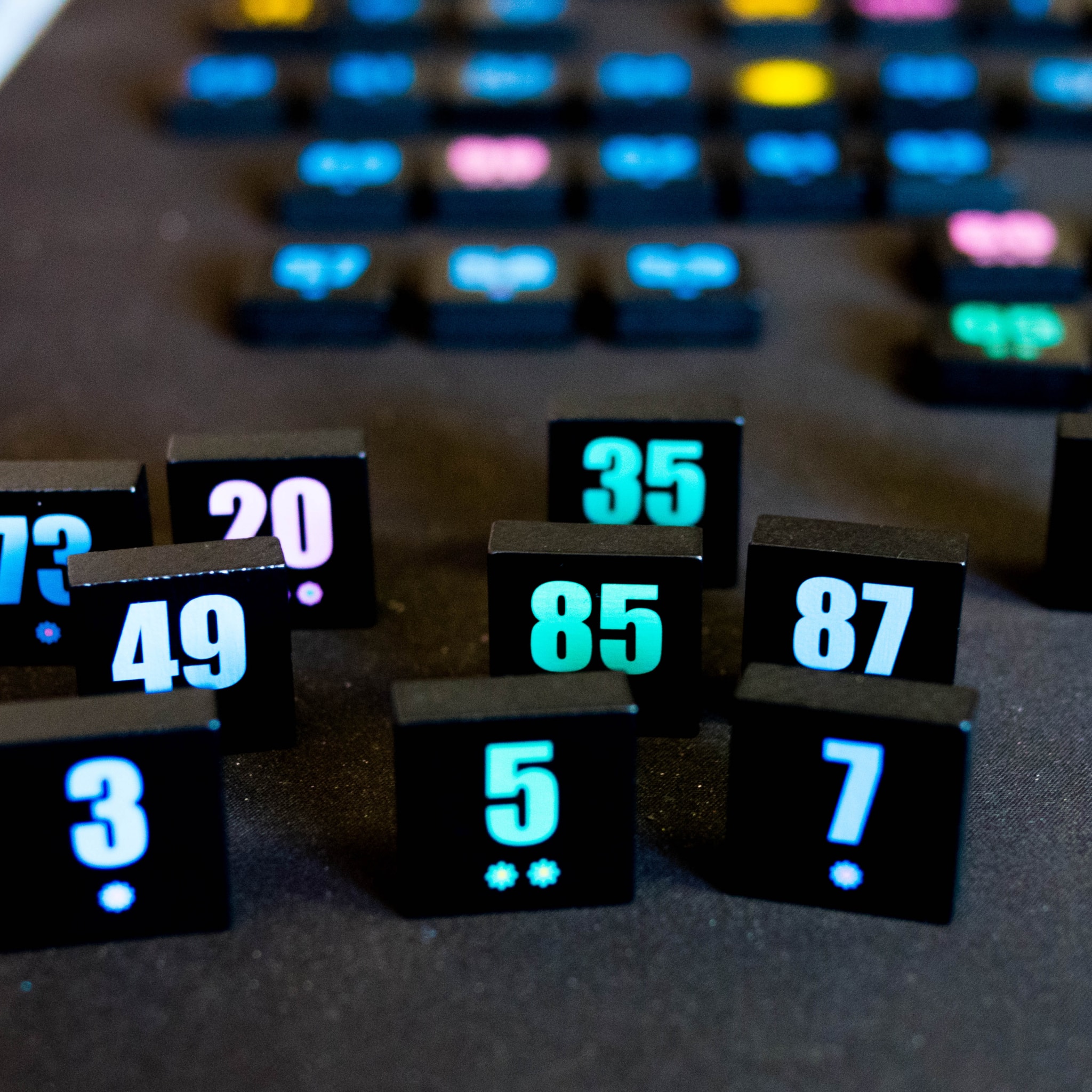
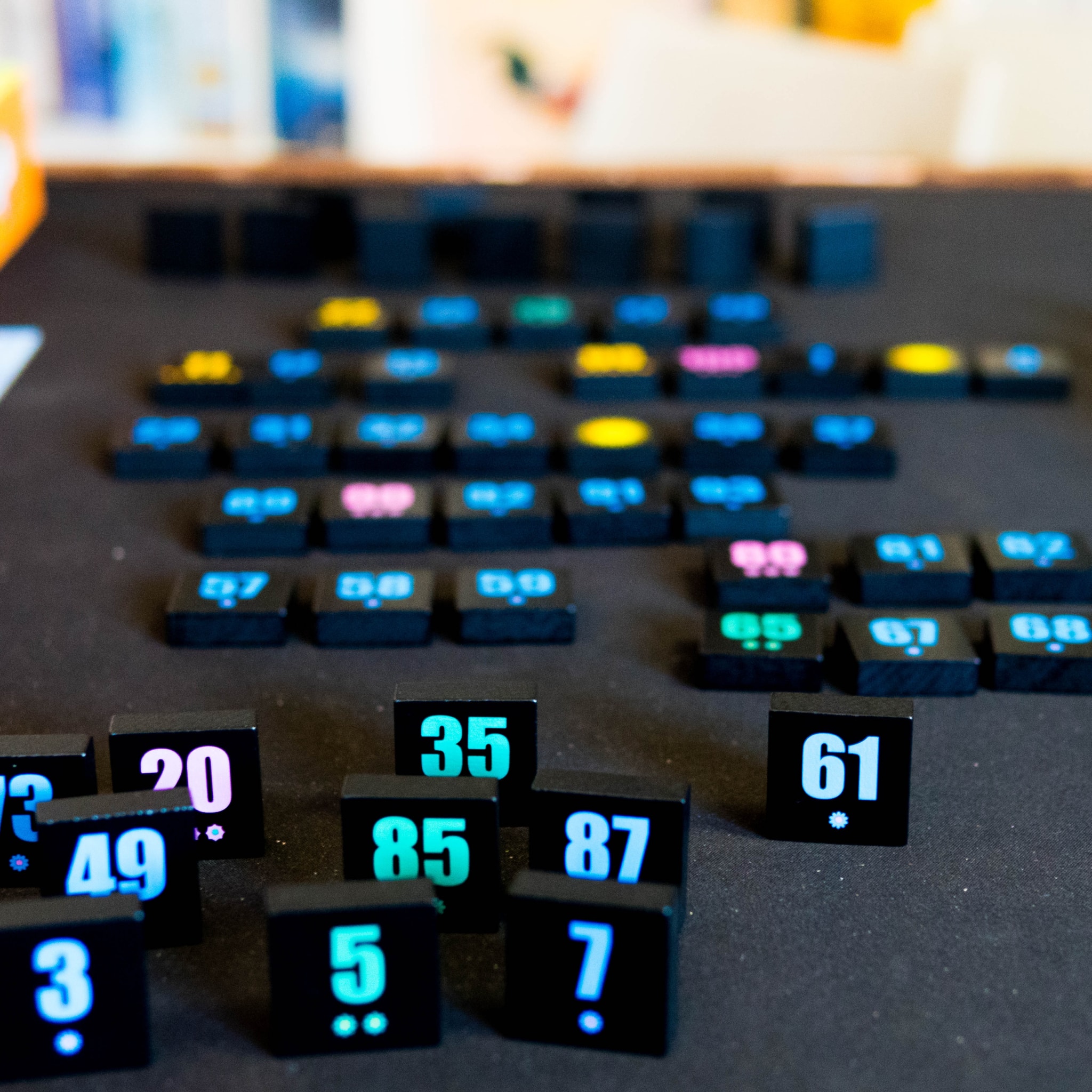
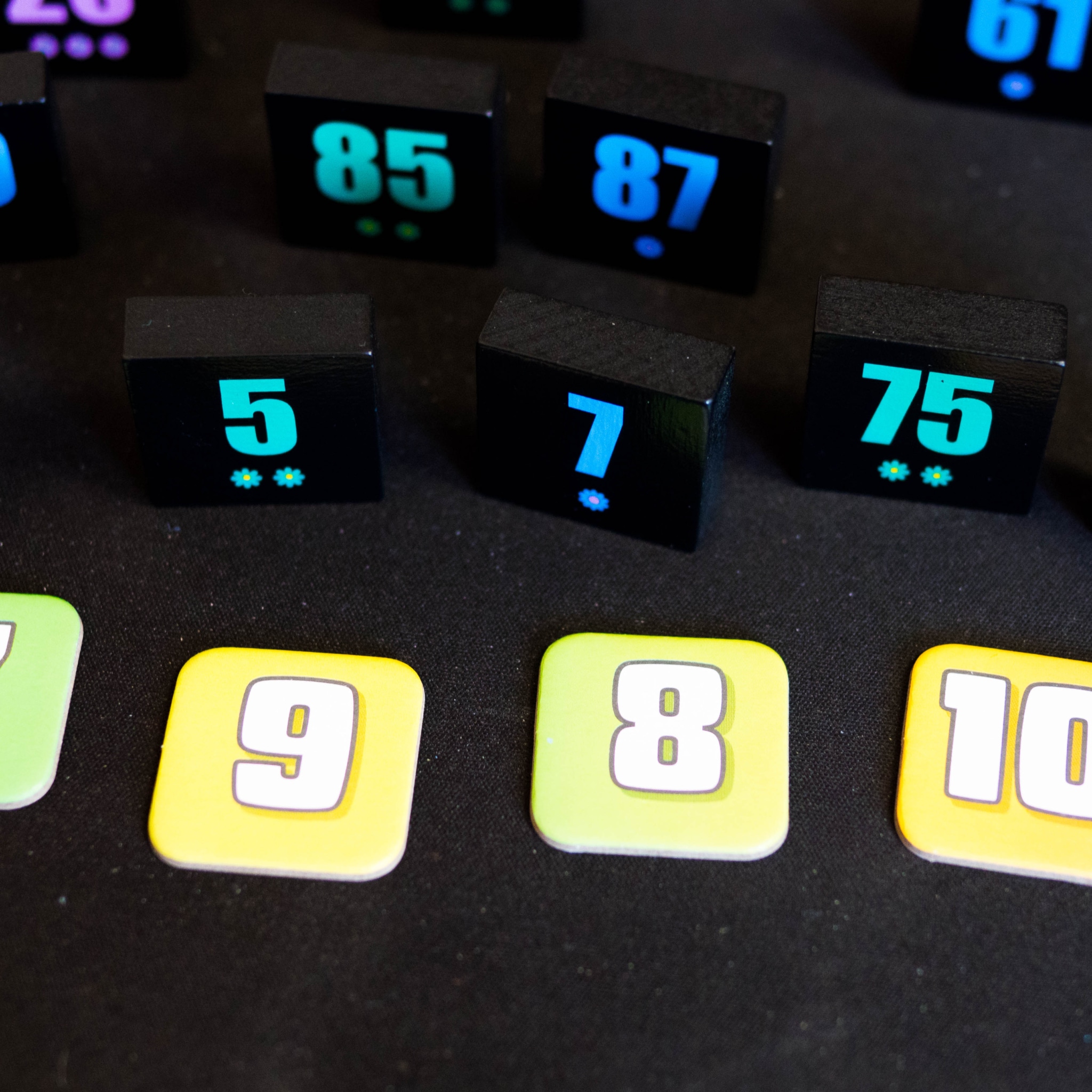
On the downside, the luck of the draw can sometimes be a factor, especially if another player gets several ideal tiles at the right time… and you don’t. The theme, very abstract, remains fairly subtle, and visually the game isn’t necessarily the most appealing at first glance, even if the wooden components are very pleasant to handle.
But Flowers remains a good, accessible, and tactical game where every decision counts: play now, wait for a better combination, or extend an existing sequence to get rid of your tiles.
Bloom Review
Positives
- Simple rules that are quick to explain
- Short, rhythmic sections
- A good dose of tactics and opportunism
- Accessible to a wide audience
Negatives
- The randomness of the pickaxe can sometimes be frustrating.
- Visually quite understated
- Can slow down with overly calculating players
- Too classic?