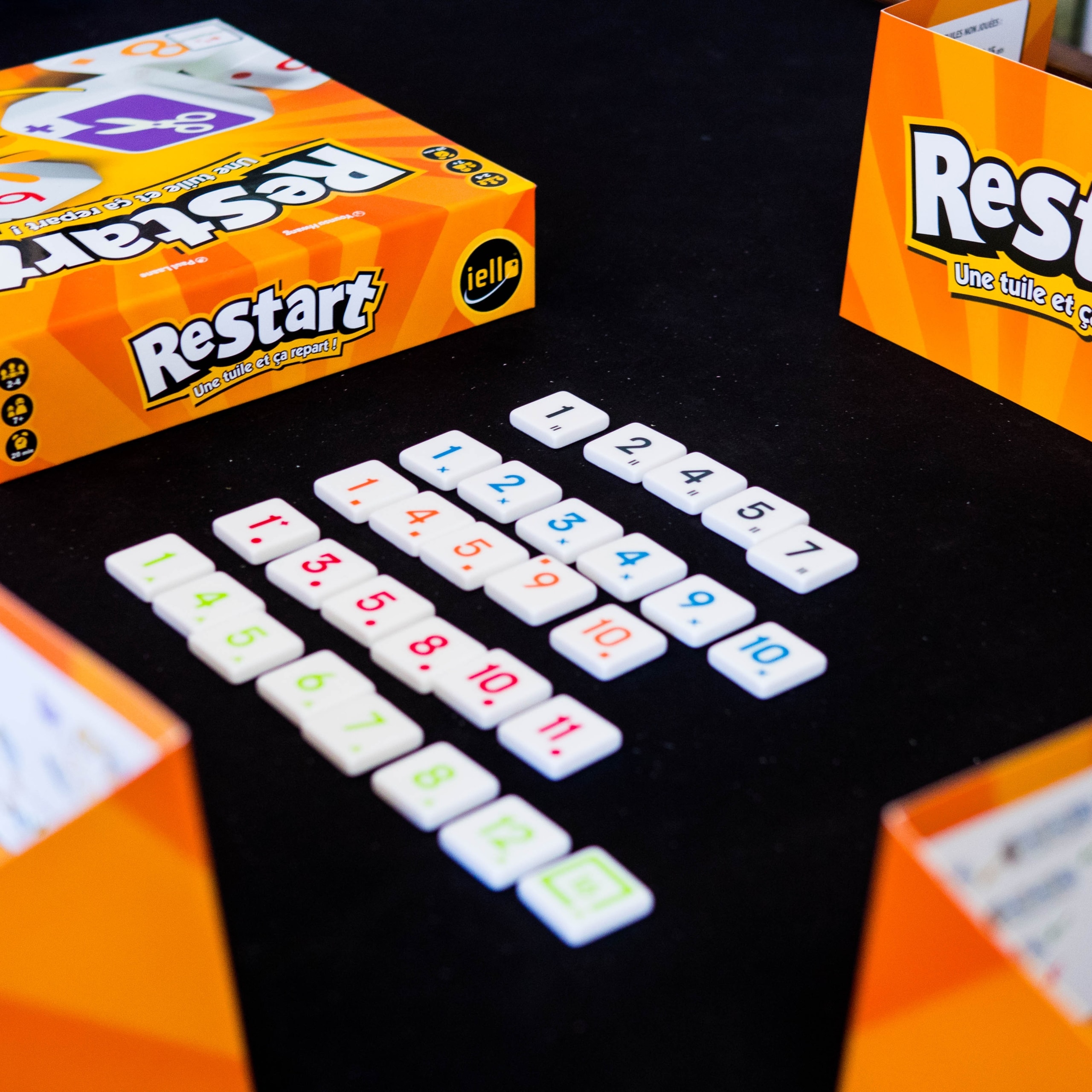
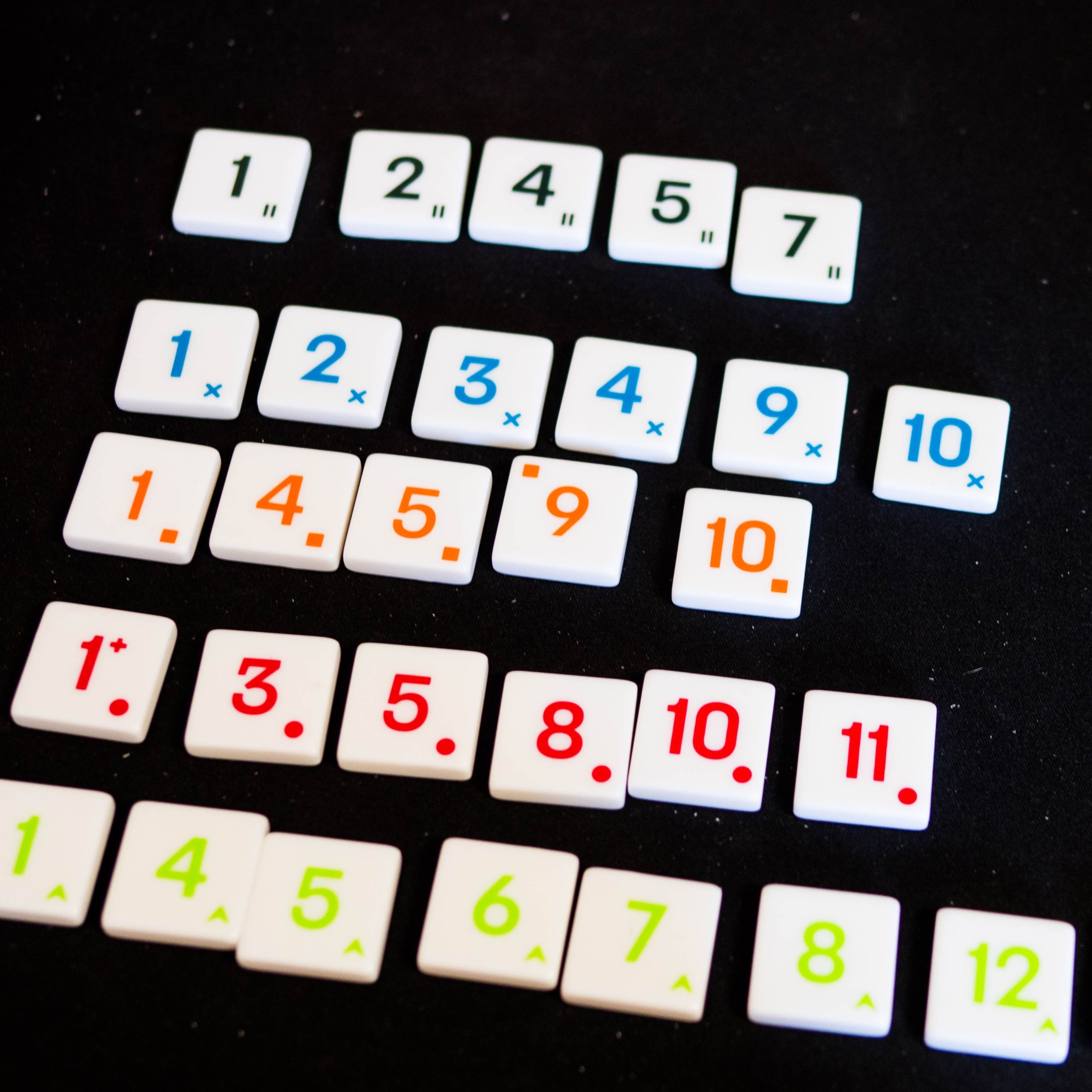
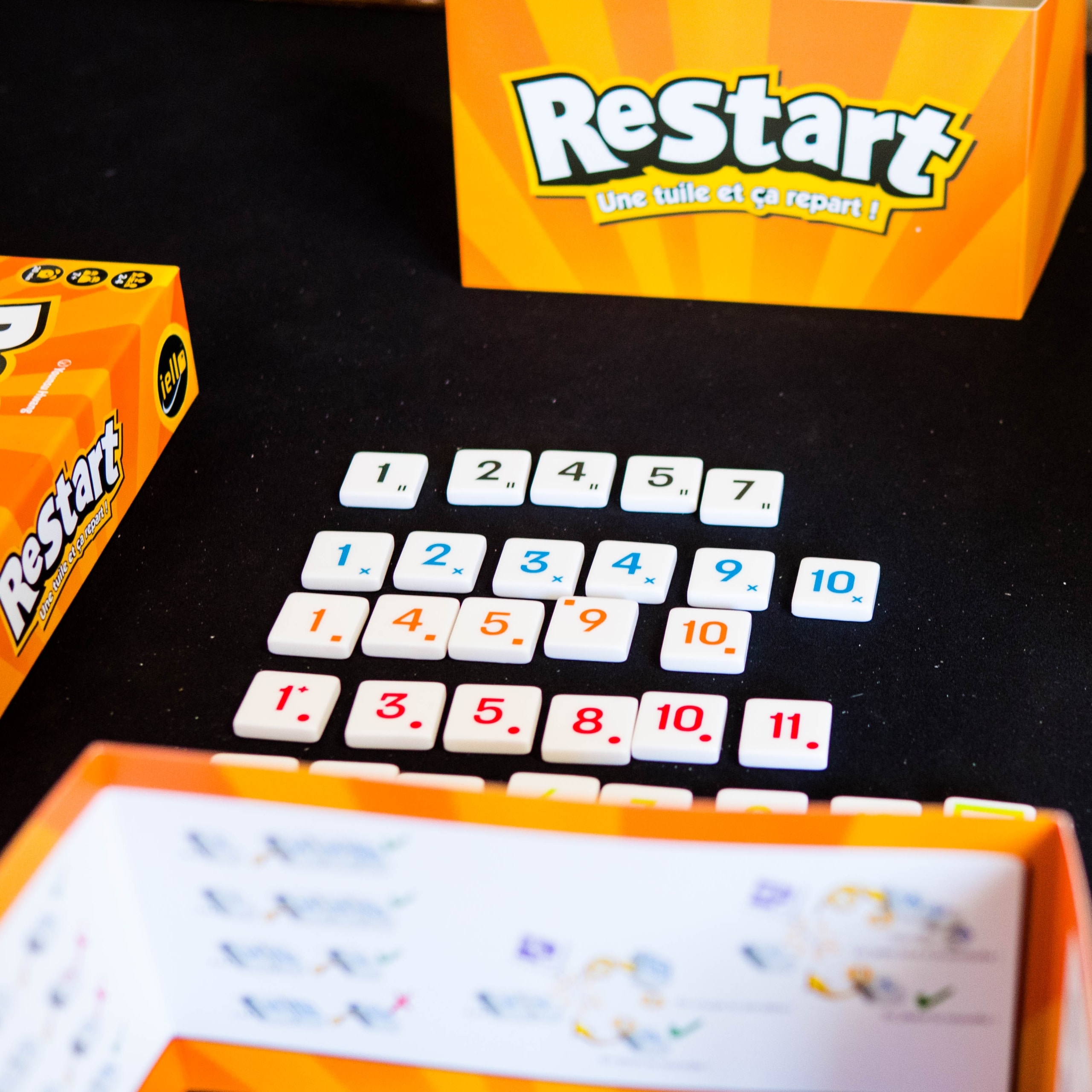
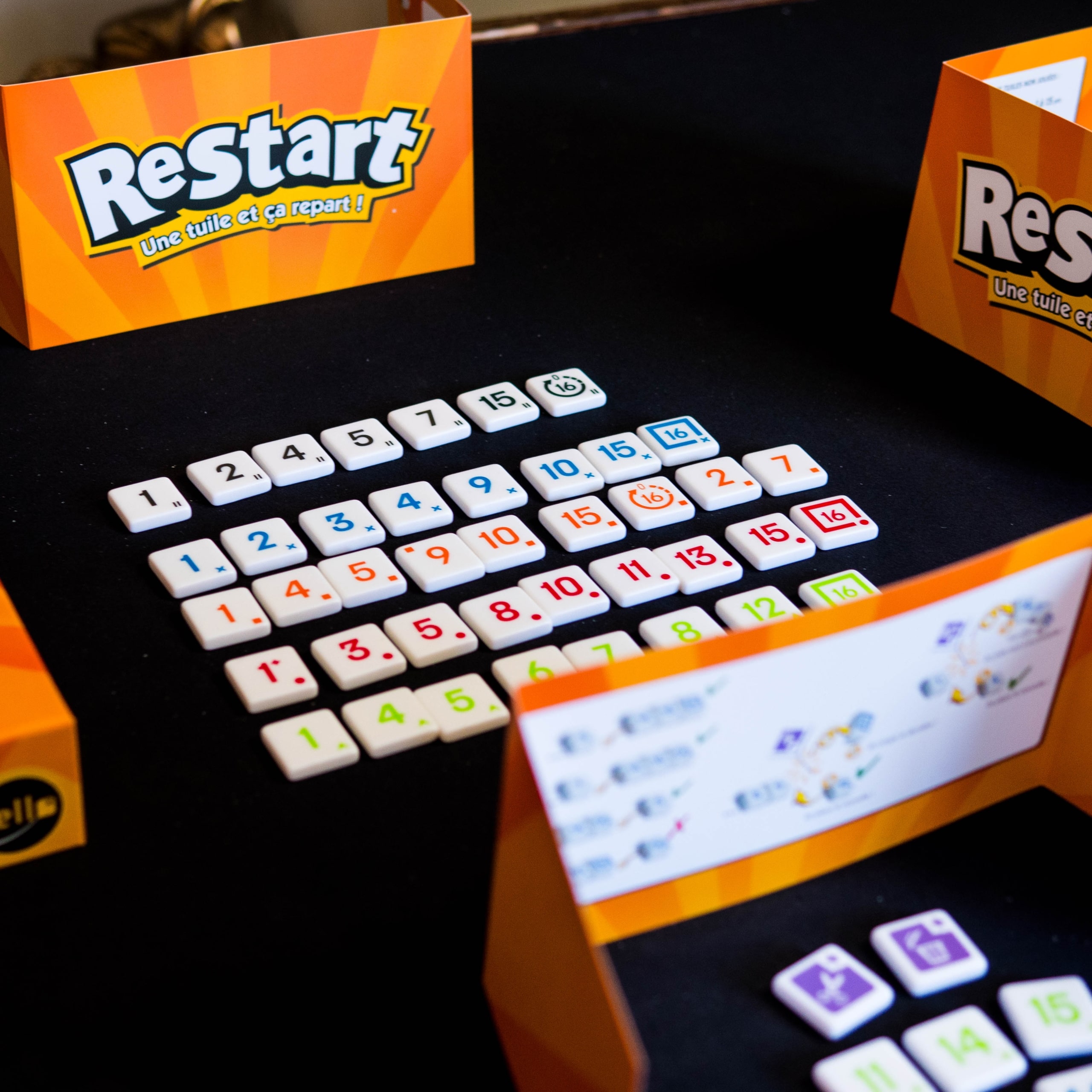
Restart has perfectly succeeded in its goal: to offer a game that is simple to explain in order to introduce board games to the widest possible audience.
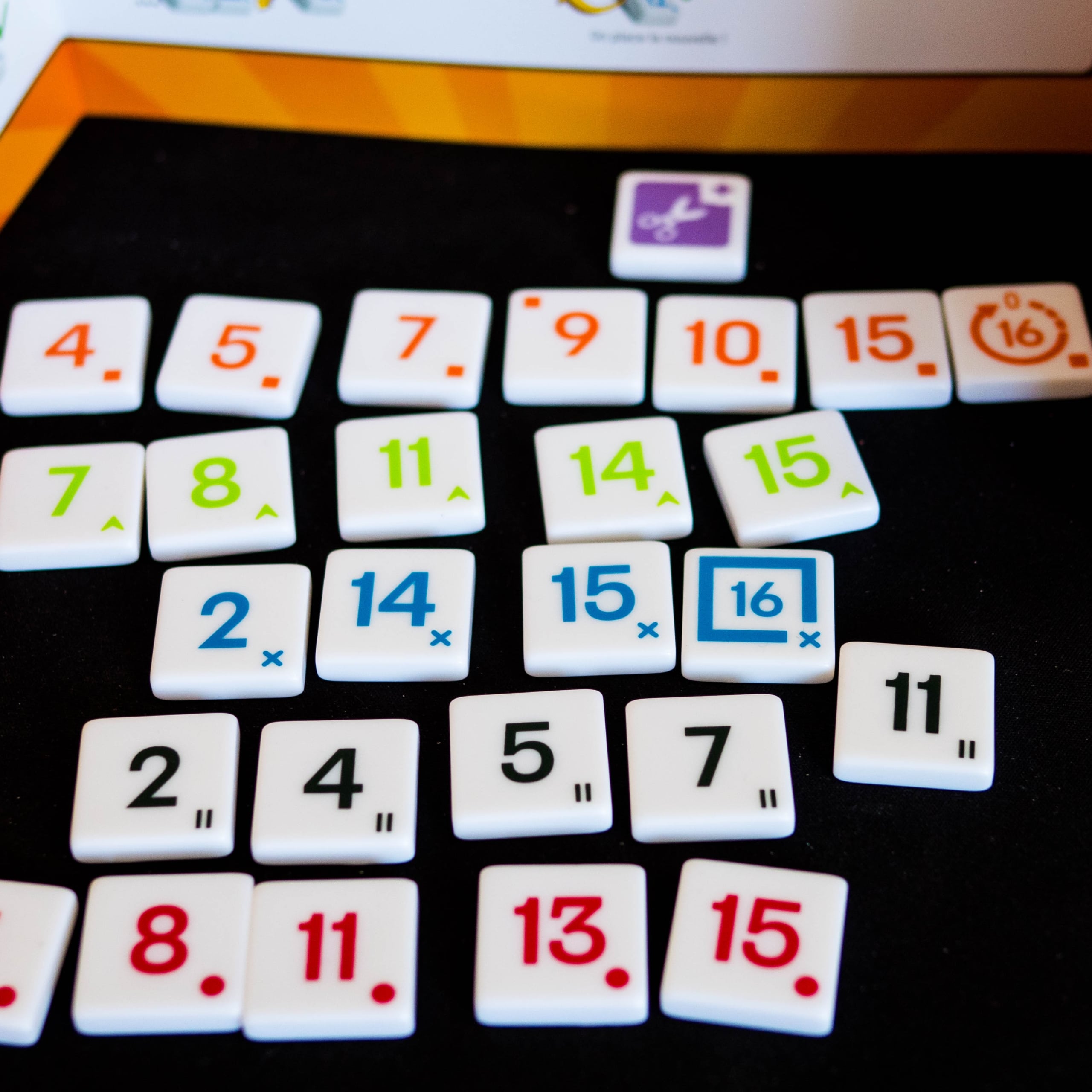
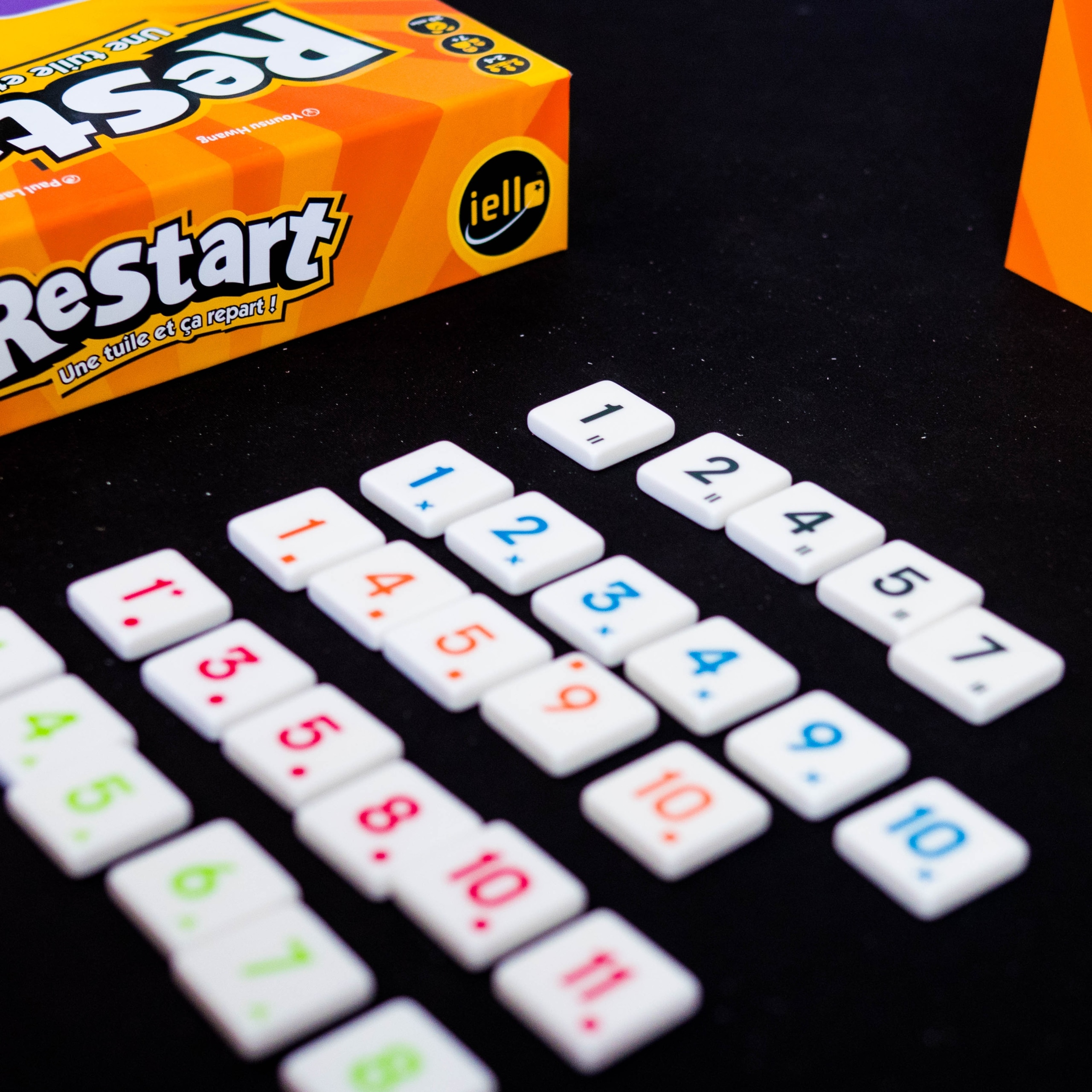
The tile-laying mechanic, with its ascending sequences, is immediately intuitive, allowing for smooth, fast-paced gameplay. However, it does create dilemmas: should you quickly play low-value tiles to get rid of them, or place high-value tiles to hinder and block your opponents? Because yes, this game is going to cause some grumbling around the table! Restart is first and foremost a timing game, which can prove fatal if you wait too long. You’ll observe the other players closely, anticipate their moves, and try to seize the perfect moment to place your tiles.
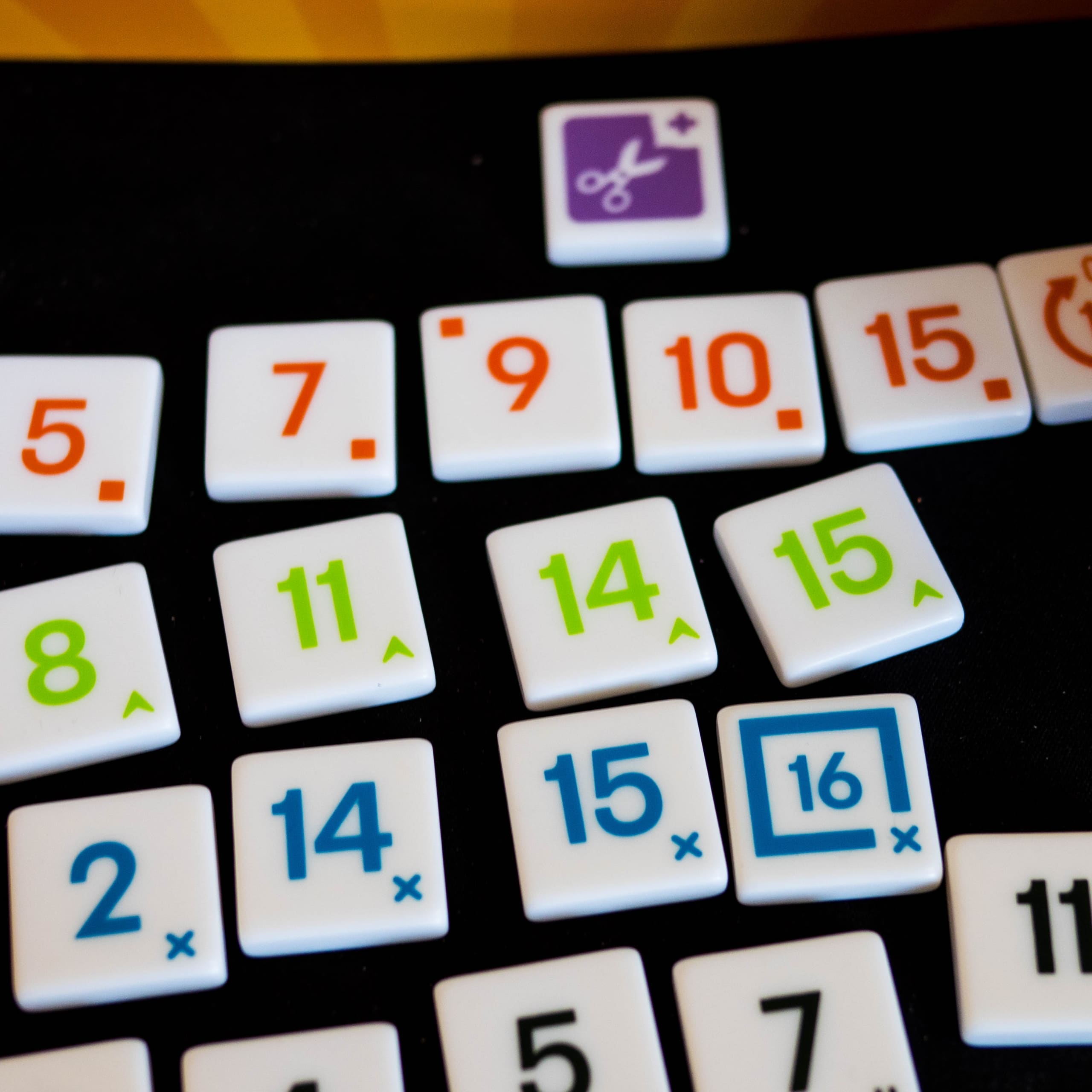
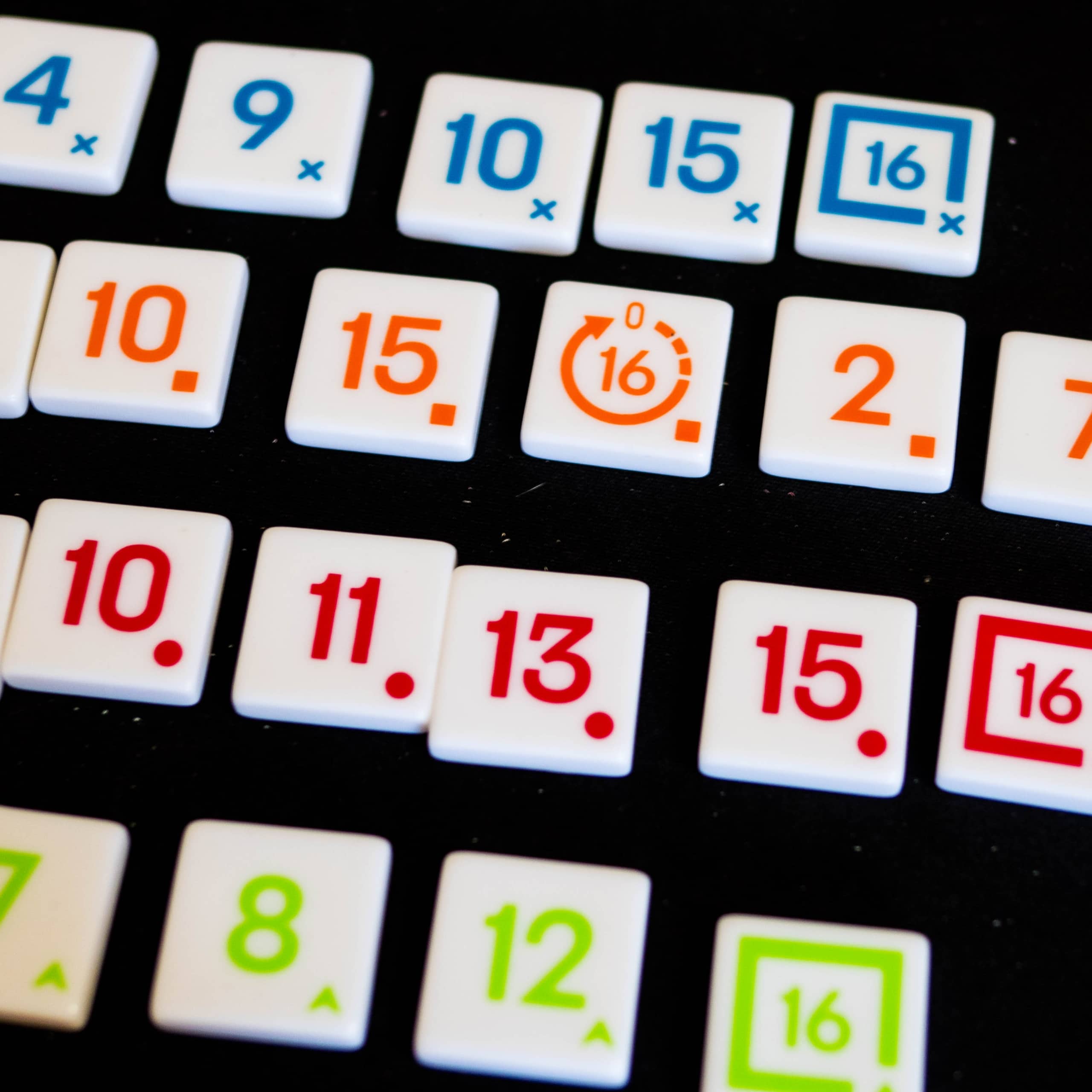
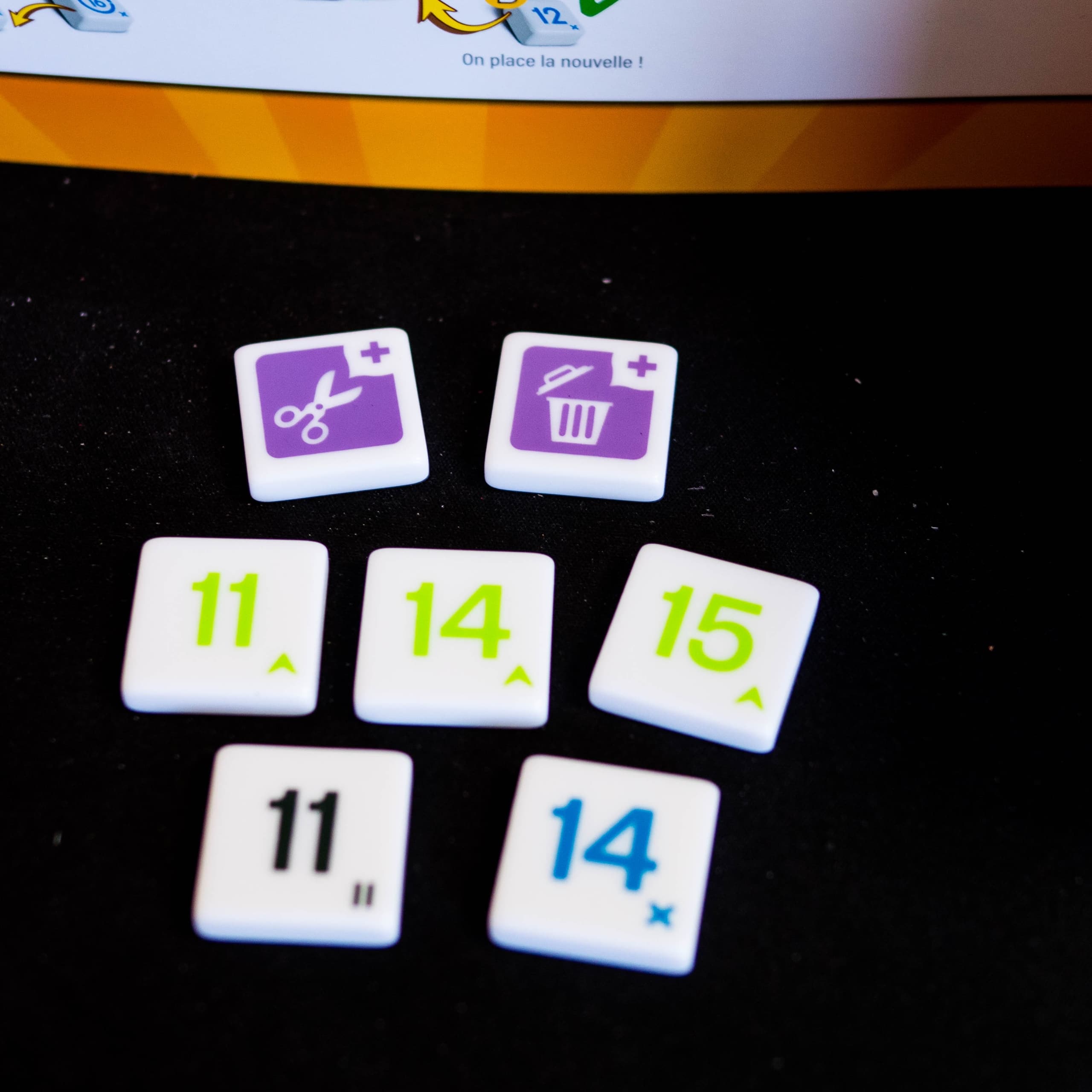
Interaction is very much present, especially thanks to the special tiles that allow you to block, break, or restart lines. They bring about sometimes brutal reversals of fortune, breaking the blockages set up by your opponents.
But don’t expect a game of significant strategic depth: Restart is a pure family game, perfect for Sunday afternoon sessions with children and grandparents. The gameplay remains fairly abstract, with often obvious moves, even if the special tiles add a touch of surprise. However, we would have liked to see more special tiles to offer greater tactical choices and better replayability.
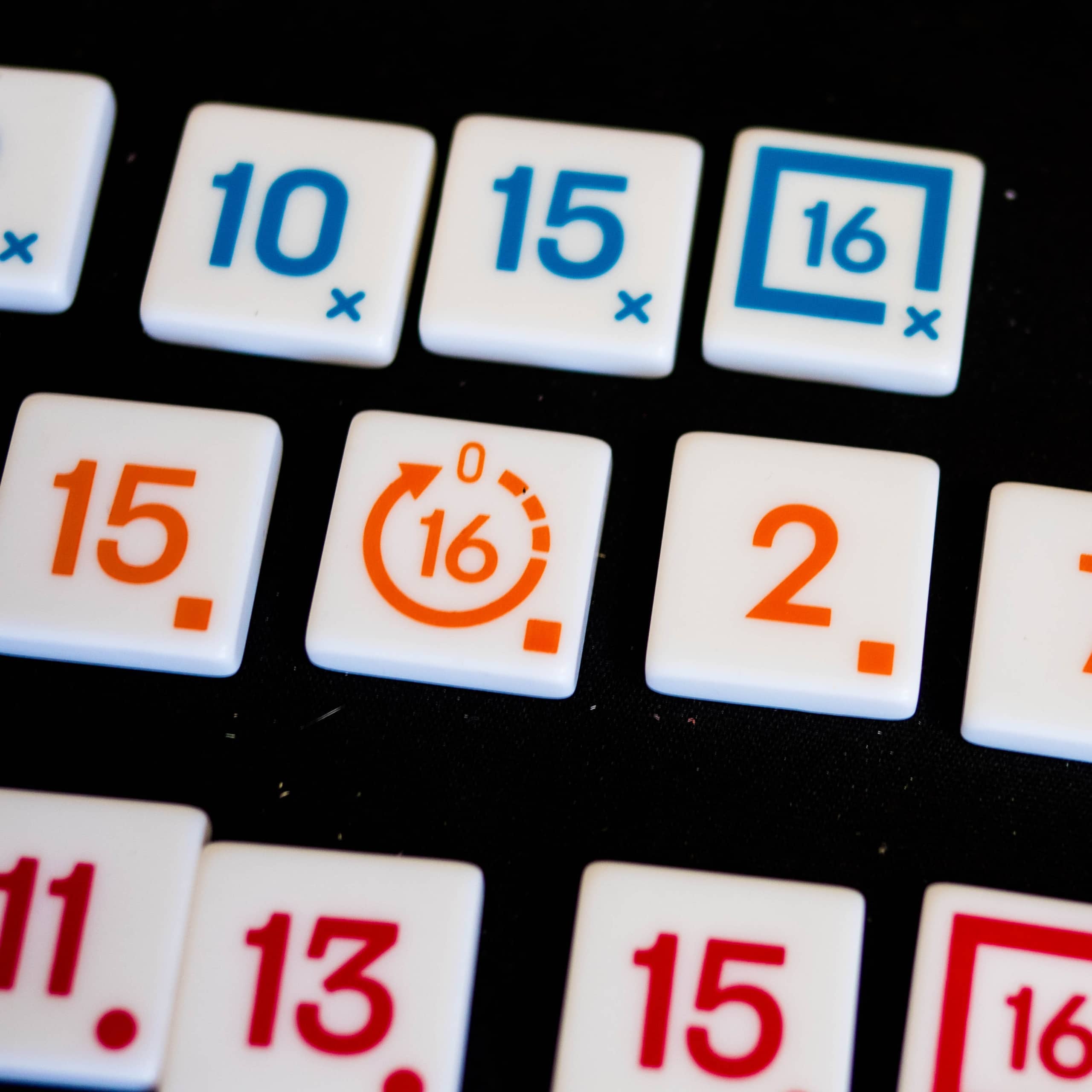
The material is of very good quality, and it’s a real pleasure to handle the plastic tiles.
In the end, Restart is a good family game, efficient and fluid, which focuses on timing and opportunism rather than long-term strategy.