Skip to content Skip to sidebar Skip to footer

Rebirth: when Knizia resurrects playful elegance

What's this?

Rebirth is a land placement and area control game designed by Reiner Knizia , in which players take on the roles of Scottish clans seeking to rebuild their lands after great catastrophes. The objective is simple: score more points than your opponents by developing farms, founding communities, controlling castles, and completing missions related to cathedrals.

How do you play?

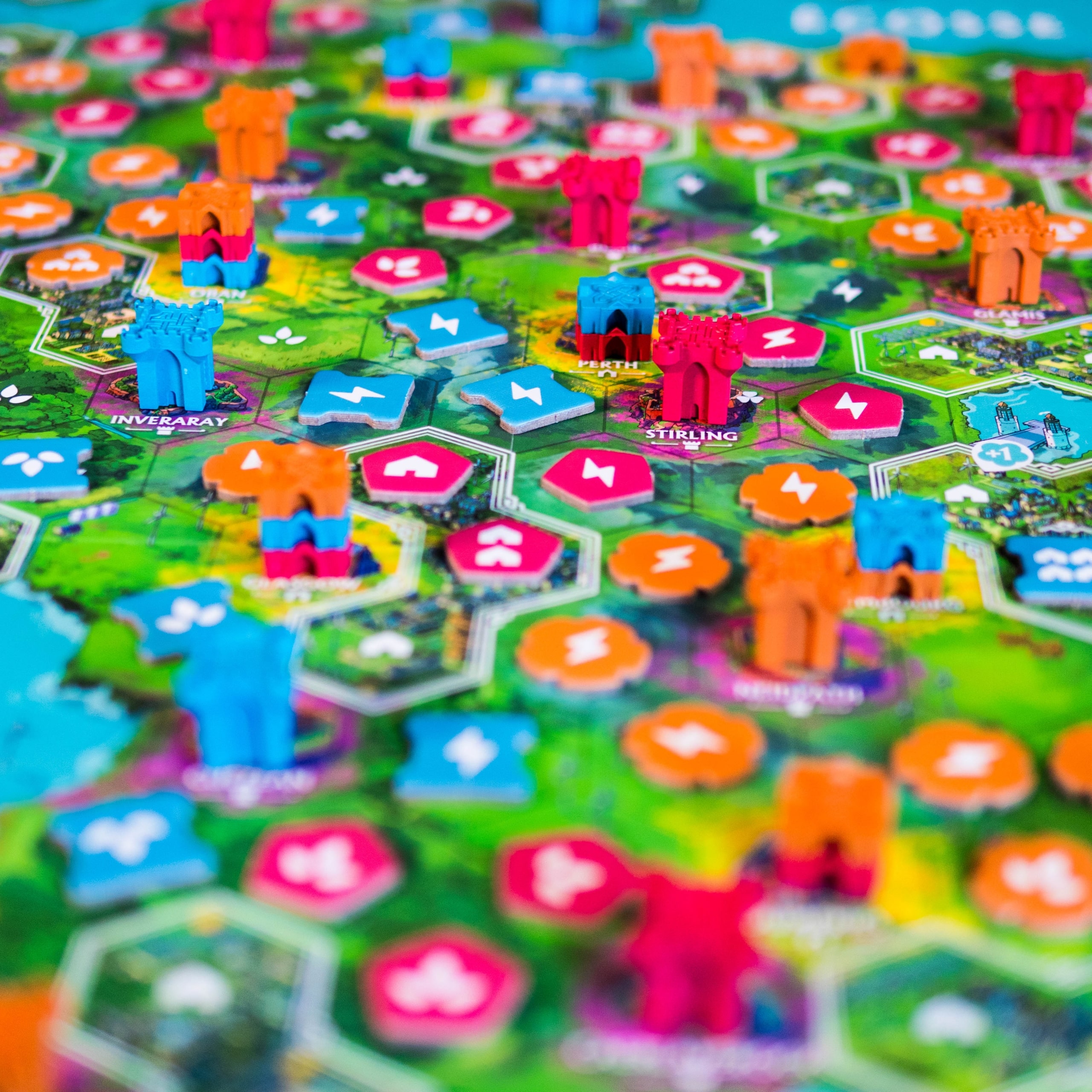
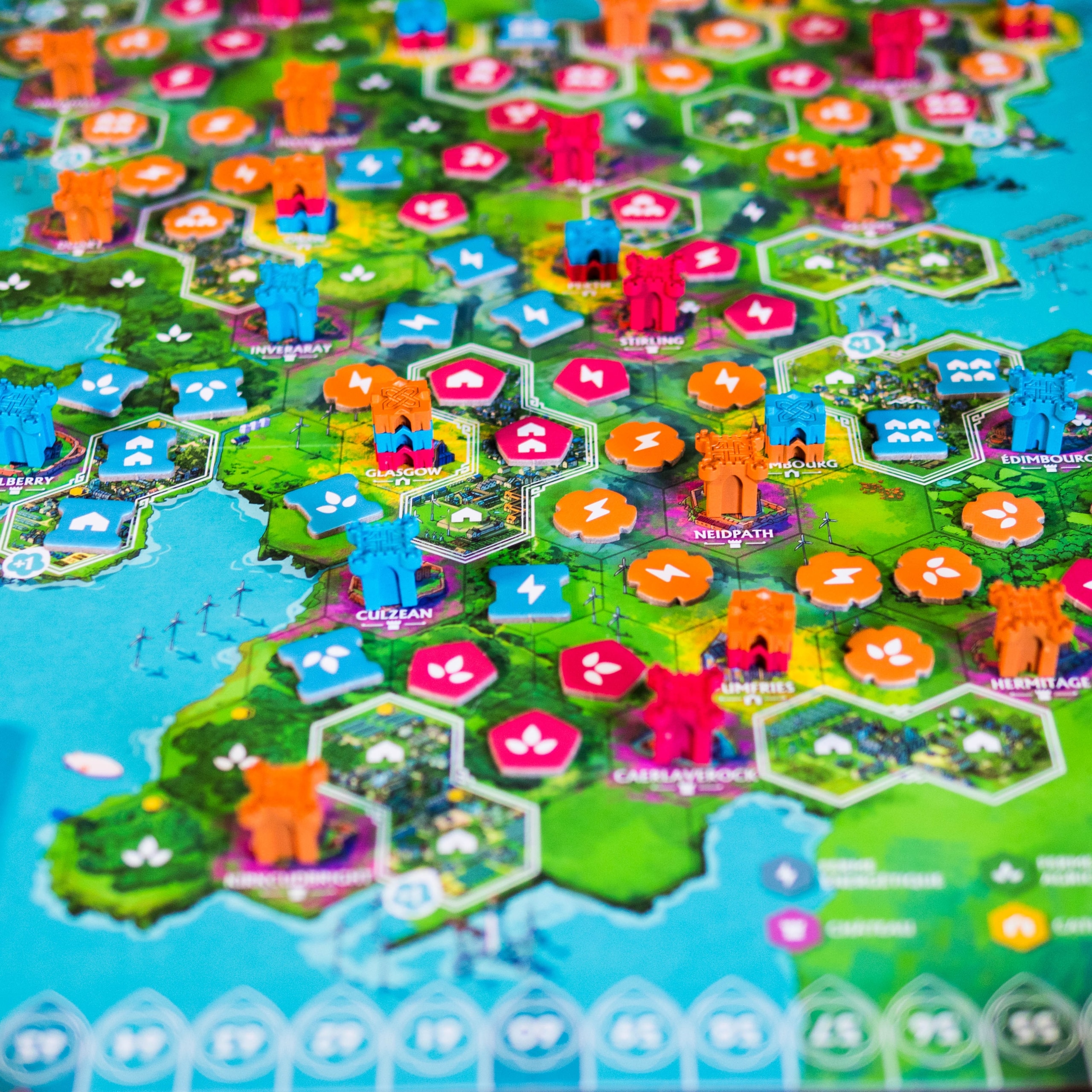
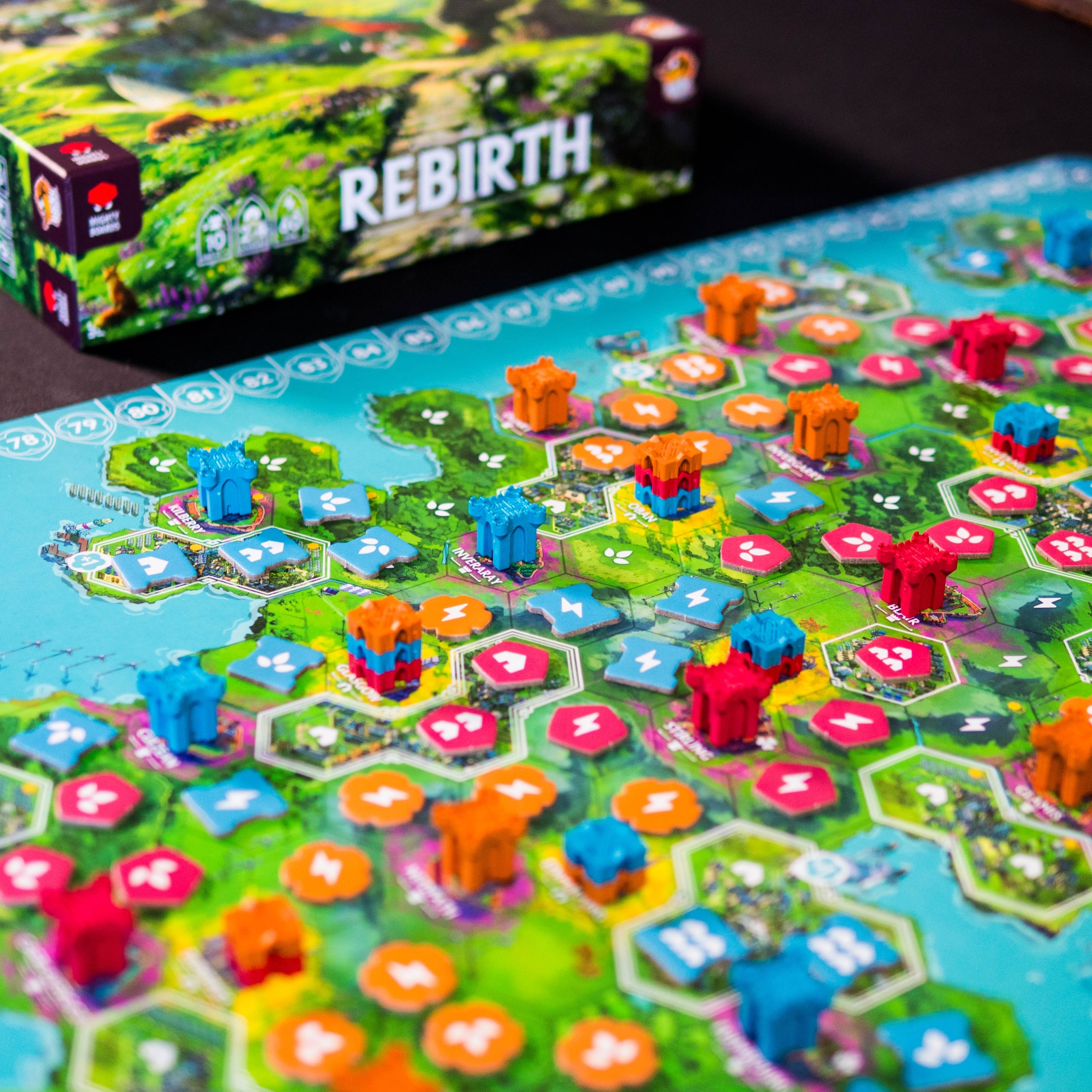
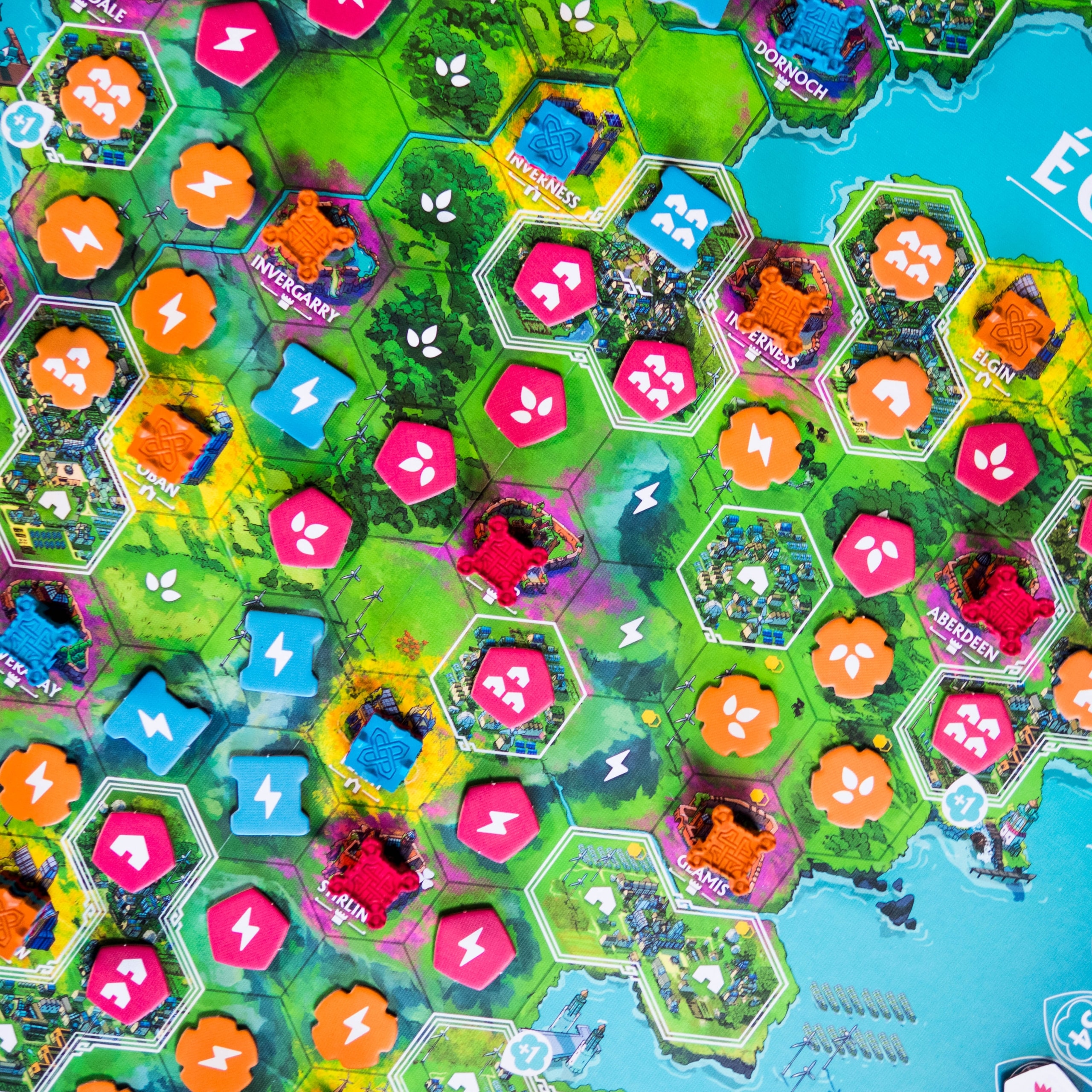
The game takes place on a board representing Scotland or Ireland. Each player has a set of tiles of their color (farms, energy farms, and communities). On their turn, a player places a tile , immediately scores the associated points , and then draws a new tile .
The game ends when all the tiles have been placed.

1. Place a tile

The active player places a tile from their hand onto an empty space on the board corresponding to their type:

  • Farms : are placed on agricultural or neutral spaces.

  • Energy farms : are placed on energy or neutral spaces

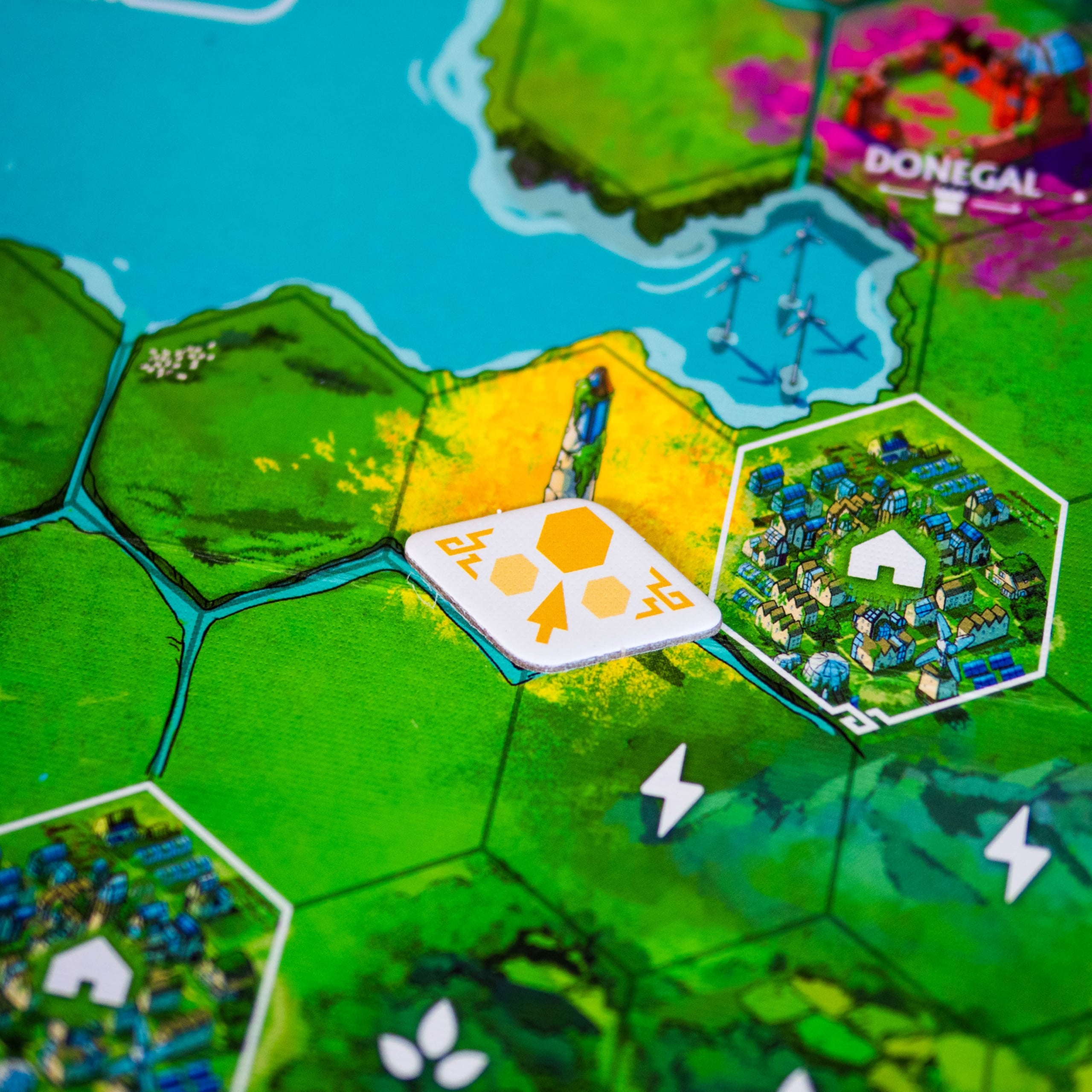
  • Communities : can only be placed on city tiles

The Castle and Cathedral spaces can never accommodate tiles.
Agricultural and energy farms cannot form mixed groups.

2. Count the points

The score is calculated immediately after the tile is placed.

🏘️ Communities and cities

Cities are made up of 1 to 3 squares (small, medium, or large). Scoring only takes place when the city is completely filled.

  • Modest town (1 space)
    The player scores as many points as the influence value of their community.

  • Medium-sized city (2 spaces):
    The most influential community scores 5 points , the second 3 points .
    A single player can score both if they occupy both spaces.

  • Important City (3 spaces):
    The player with the most tiles scores 8 points , the second player 5 points .
    In case of a tie, the player who placed the last tile is disadvantaged.

🌾 Agricultural farms and ⚡ energy farms

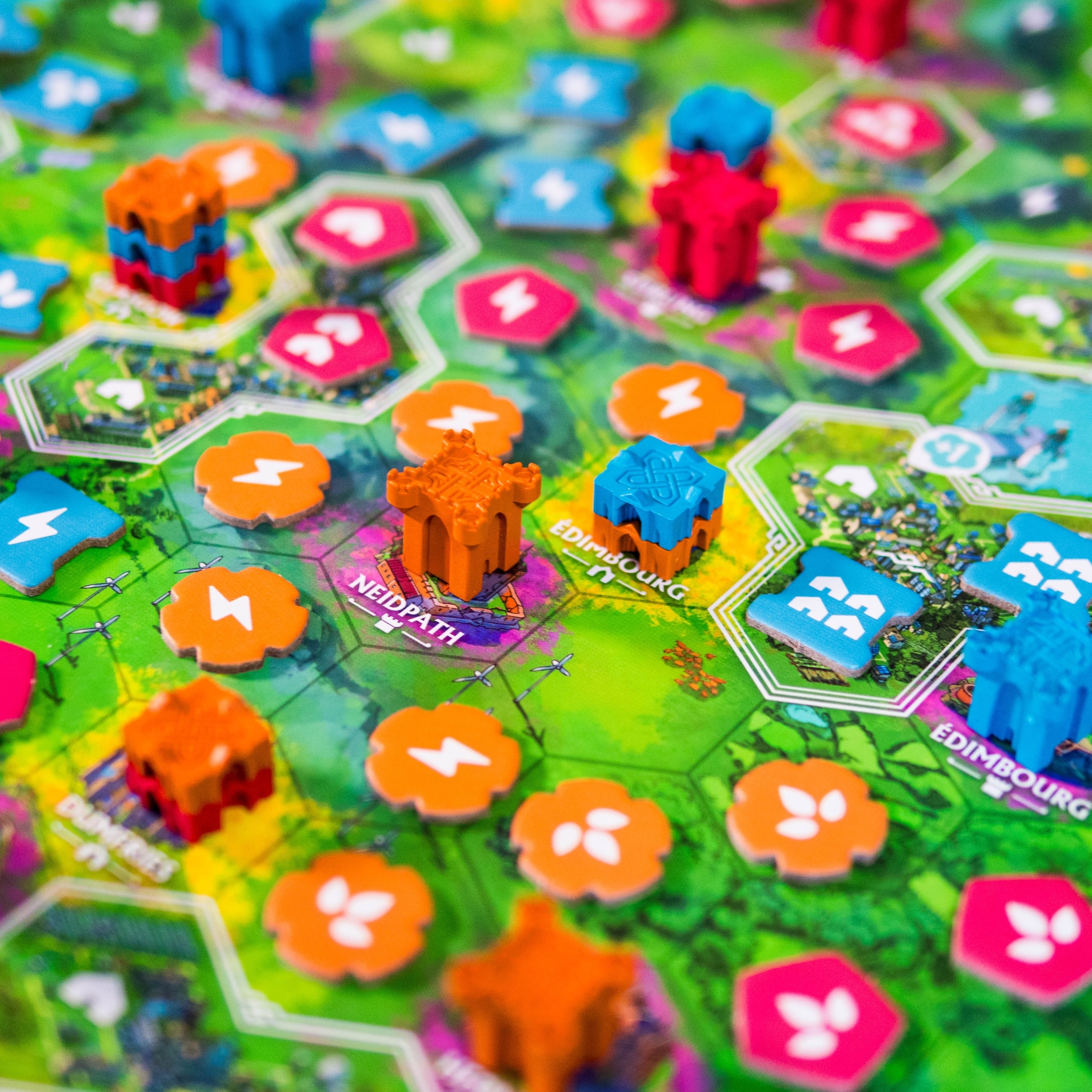
When a player places a farm, they score 1 point per tile in the group they have just created or expanded (including the new tile).

  • The groups are made up of farms of the same type and color.

  • The larger the group, the greater the immediate gain.

⚓ Ports

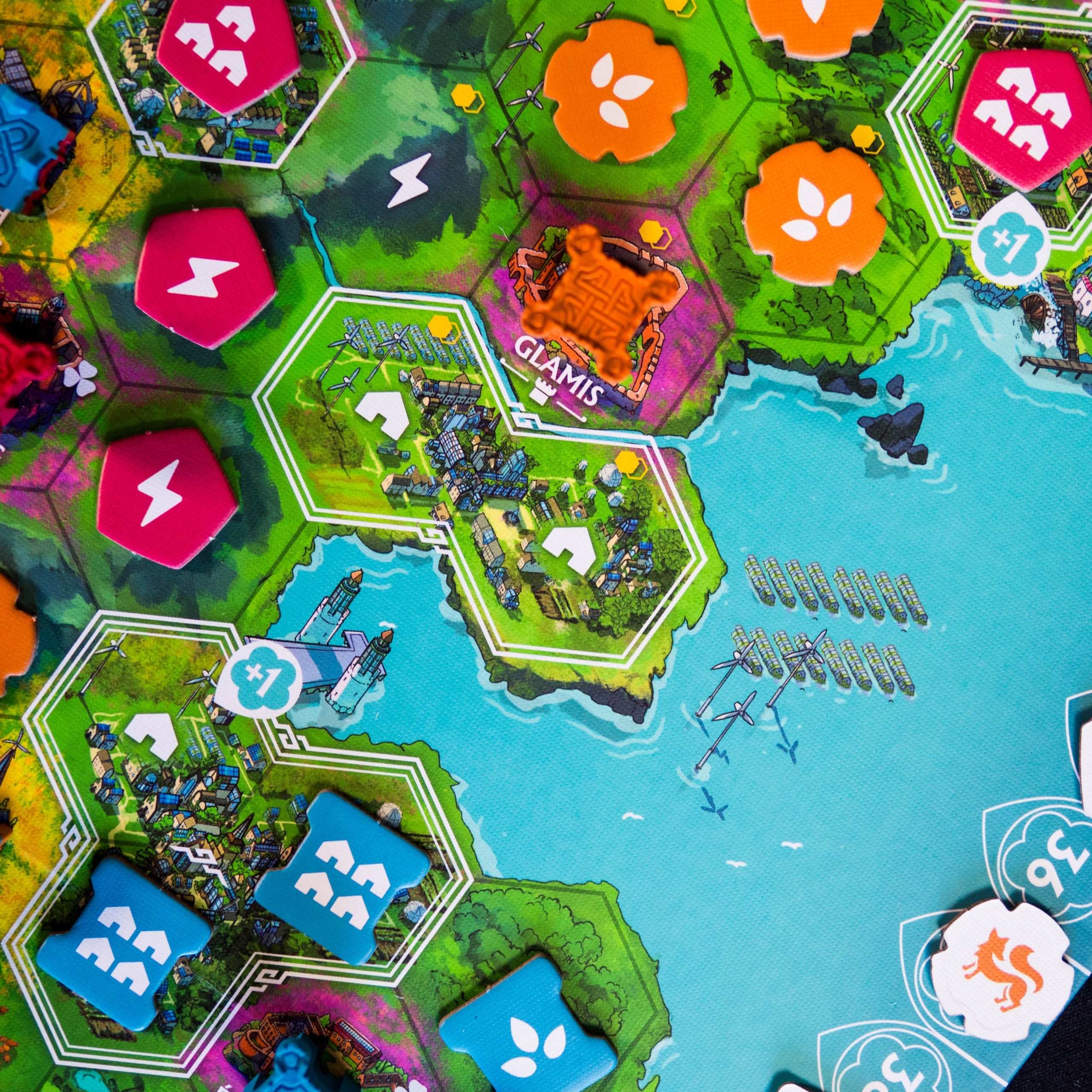
If a tile is placed on a space with the port icon (1+) , the player immediately scores 1 point , in addition to any other scoring.

🏰 Castles

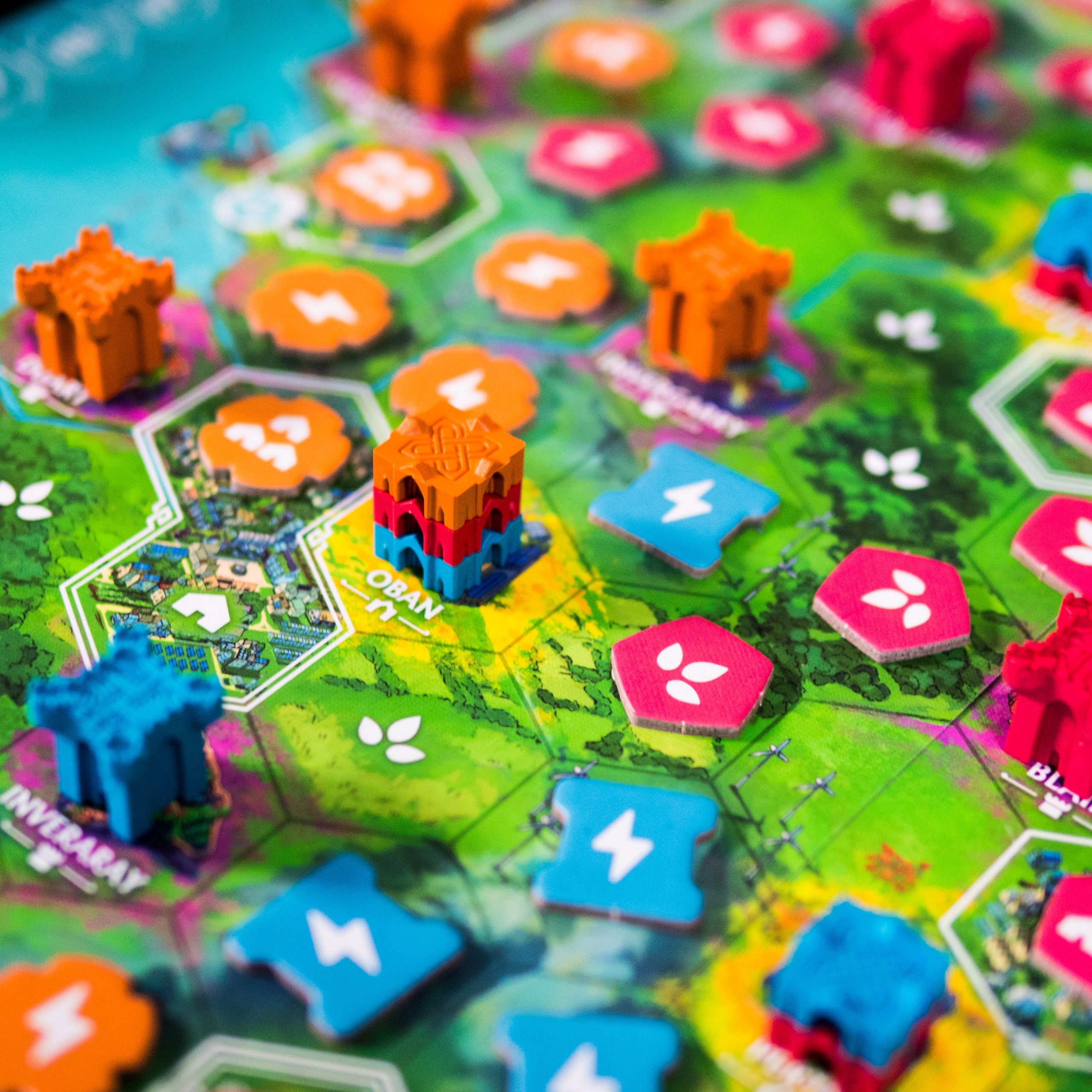
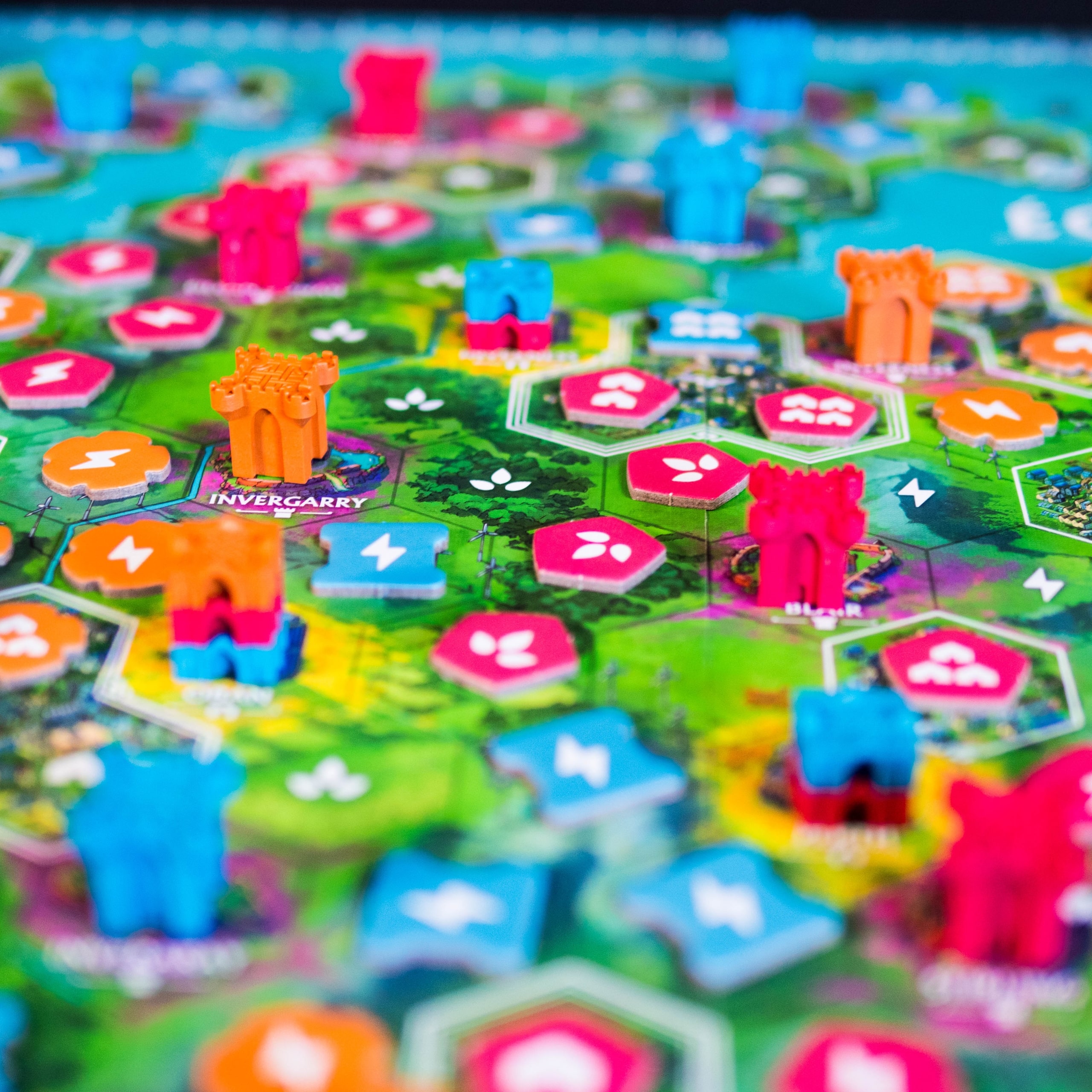
Castles are controlled by the player who occupies the most adjacent squares .

  • When a player takes control of a castle, they place a token of their color there.

  • In case of a tie, the number of adjacent farms is compared.

  • Each castle controlled is worth 5 points at the end of the game.

⛪ Cathedrals and private missions

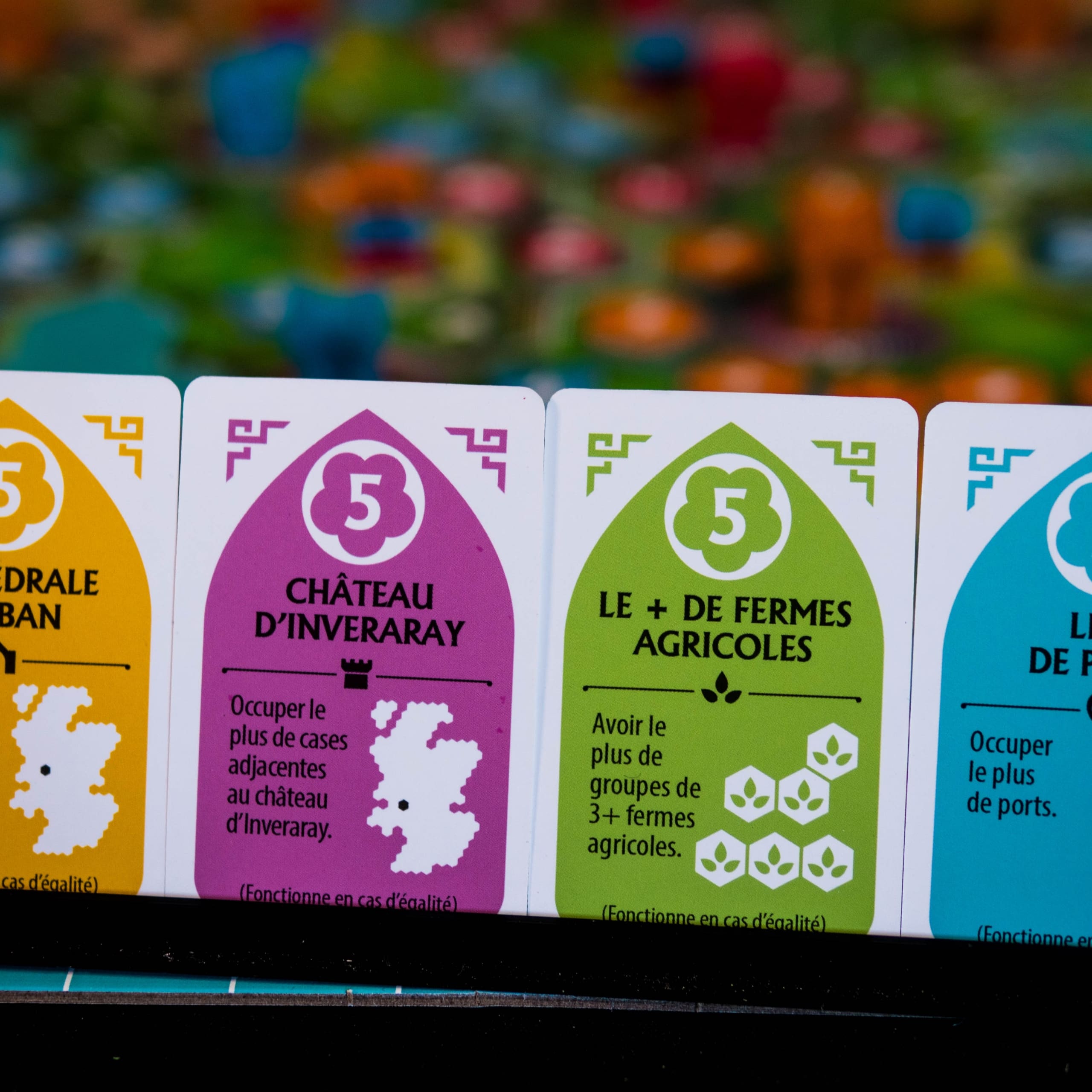
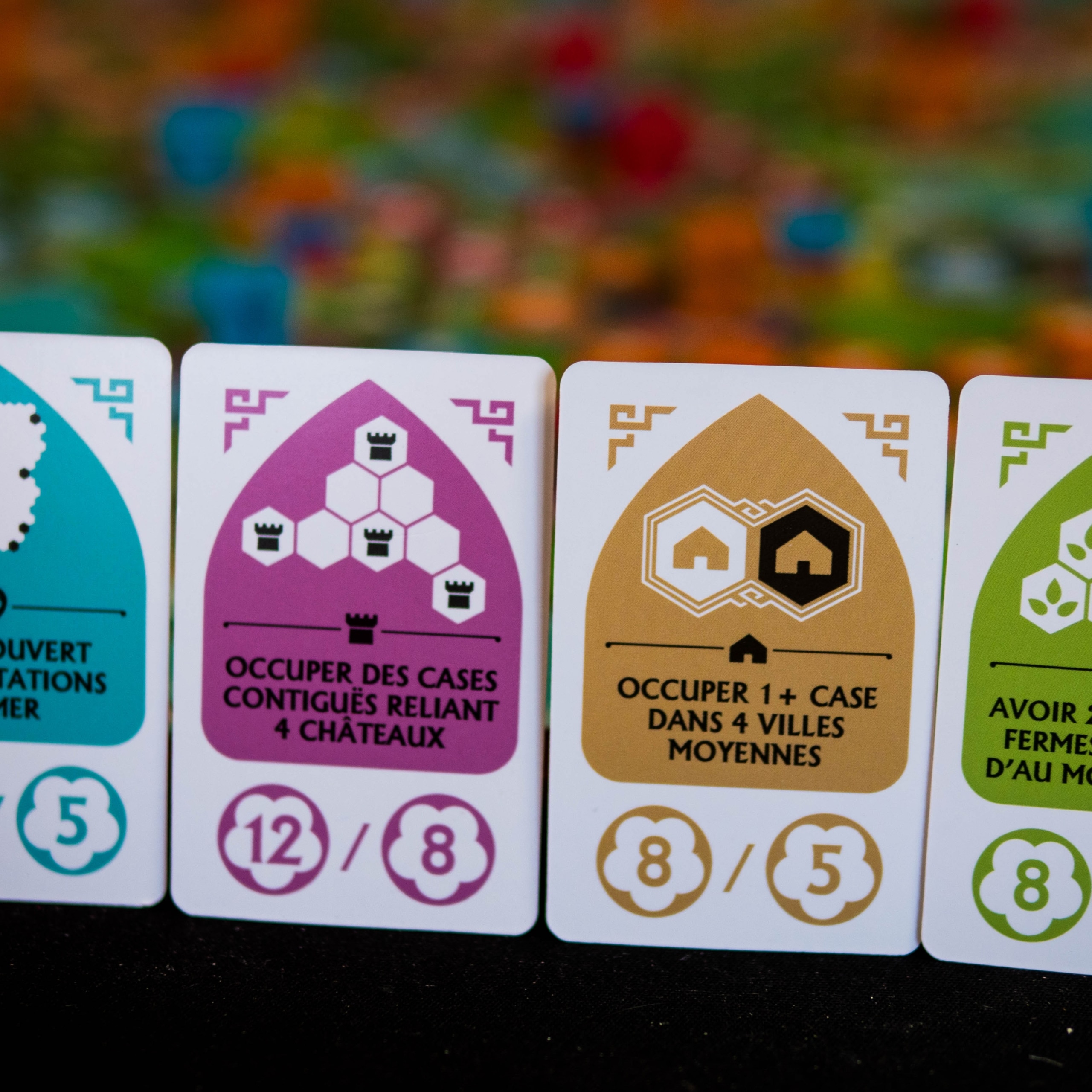
The first time a player places a tile adjacent to a cathedral, they receive a Private Mission card .

  • These missions award points at the end of the game if their objective is completed.

  • Some cards award 3 points immediately , without any conditions.

3. Draw a new tile

The player draws a tile from their personal supply to replenish their hand.
The turn then passes to the next player.

End of game and final tally

Once all the tiles have been placed, the final count takes place:

  • Incomplete cities : each community is marked as a modest city

  • Castles checked : 5 points per castle

  • Private missions : points awarded based on objectives achieved

The player with the highest score wins the game.

Is it good?

Rebirth stands out as an excellent placement and area control game, both accessible in its rules and demanding in its choices, where every decision matters. The game fully succeeds in its quest for pure elegance.

Behind a very streamlined mechanic lies a real strategic depth, where each tile placed has an immediate impact on the score and on the opportunities offered or taken away to opponents.

The game shines particularly in its constant tension: the struggle for cities, the control of castles and the timing of placements create a permanent interaction between players.

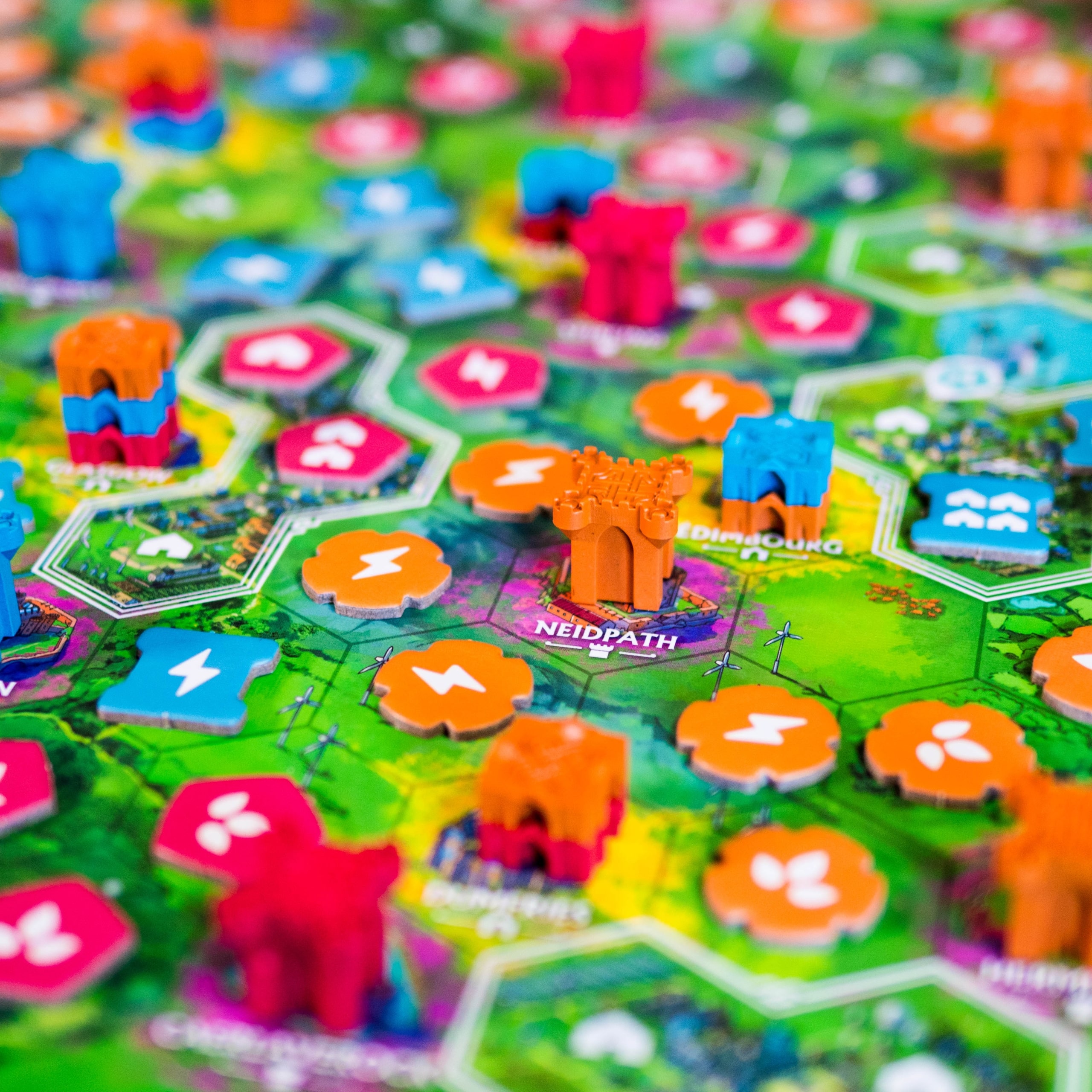
It also impresses with its exemplary fluidity and meticulous production design, which transforms an otherwise abstract mechanic into a highly appealing visual experience. Watching these colorful little castles land on the board is undeniably stylish.

However, it can be criticized for the potential frustration when the tile draw proves unlucky at a crucial moment in the game, as well as a slight lack of long-term replayability. We would like more: more scoring cards, more game boards, more variety.

Rebirth is ultimately a model of playful elegance, capable of making tile placement strategic, accessible, and visually stunning. A fluid and impactful title that proves, once again with Reiner Knizia, that mechanical simplicity can offer real depth of decision-making.

If you enjoy the content and would like to support the site, please purchase your games through our affiliate links. The price remains the same for you, but it allows us to earn a small commission. Thank you for your support!

Rebirth Review
8.5Very Good
Rebirth is an elegant placement and area control game, where streamlined mechanics conceal genuine strategic depth and constant player interaction. Despite potential frustration with the draw and limited long-term replayability, it stands out as a brilliant demonstration of Reiner Knizia's signature game design.

Positives

  • Simple and very accessible rules
  • Excellent tension related to majorities and timing
  • Constant interaction between players
  • High-quality material
  • The rounds follow one another without a break.

Negatives

  • Chance of the draw
  • A rather abstract universe and set of sensations.
  • The gameplay might lack variety for fans of complex, "expert" games.

Leave a Comment

0.0/10

If you enjoy the content and want to support the site, purchase your games through our affiliate links. The price remains the same for you, but we earn a small commission. Thank you for your support!